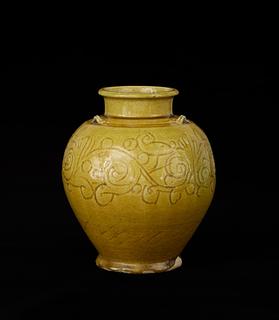
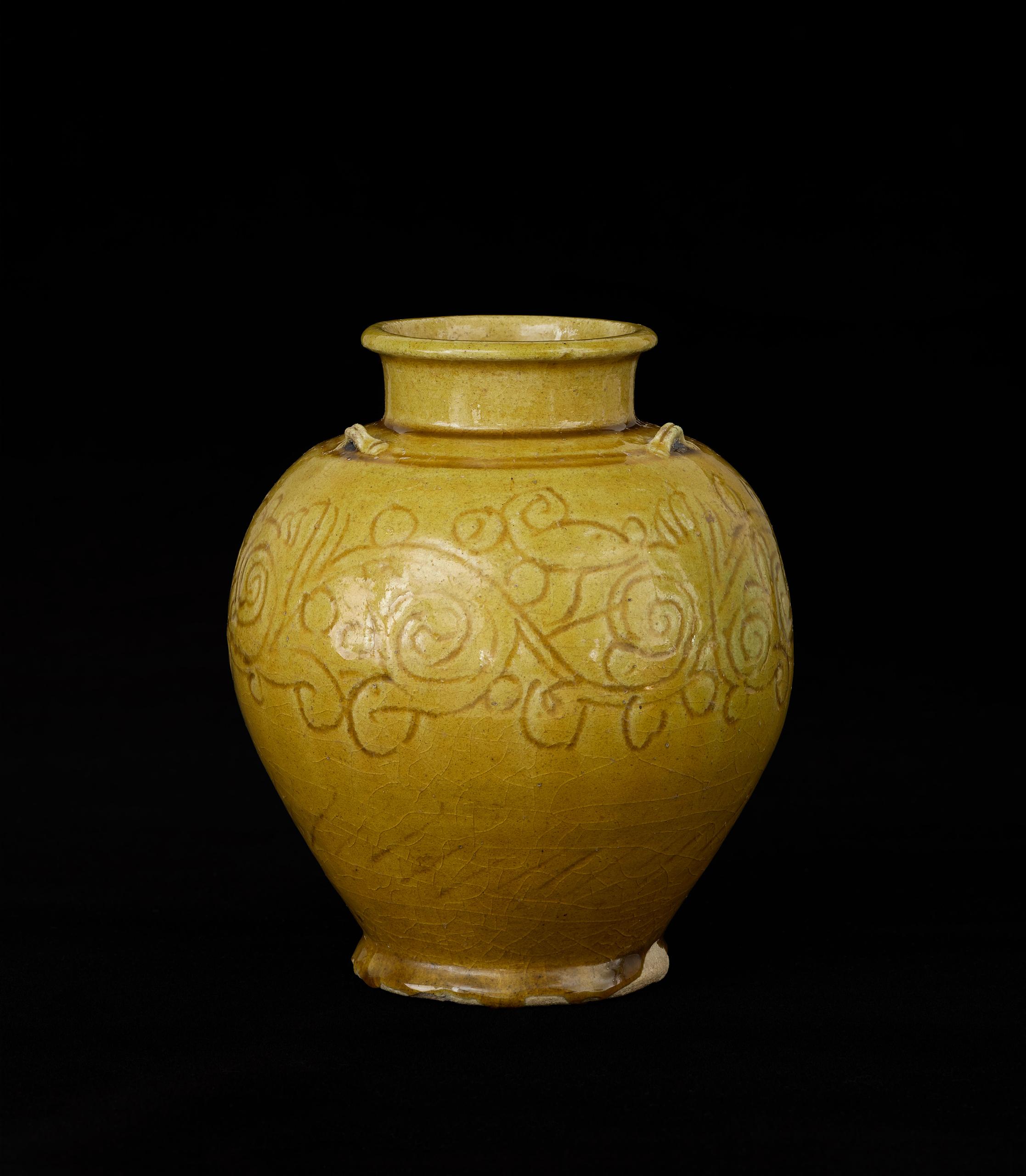
Fritware jar with incised decoration under yellow glaze
Egypt; late 11th century or 12th century
H: 16.5; Diam: 14.5 cm
Inventory number 21/2018
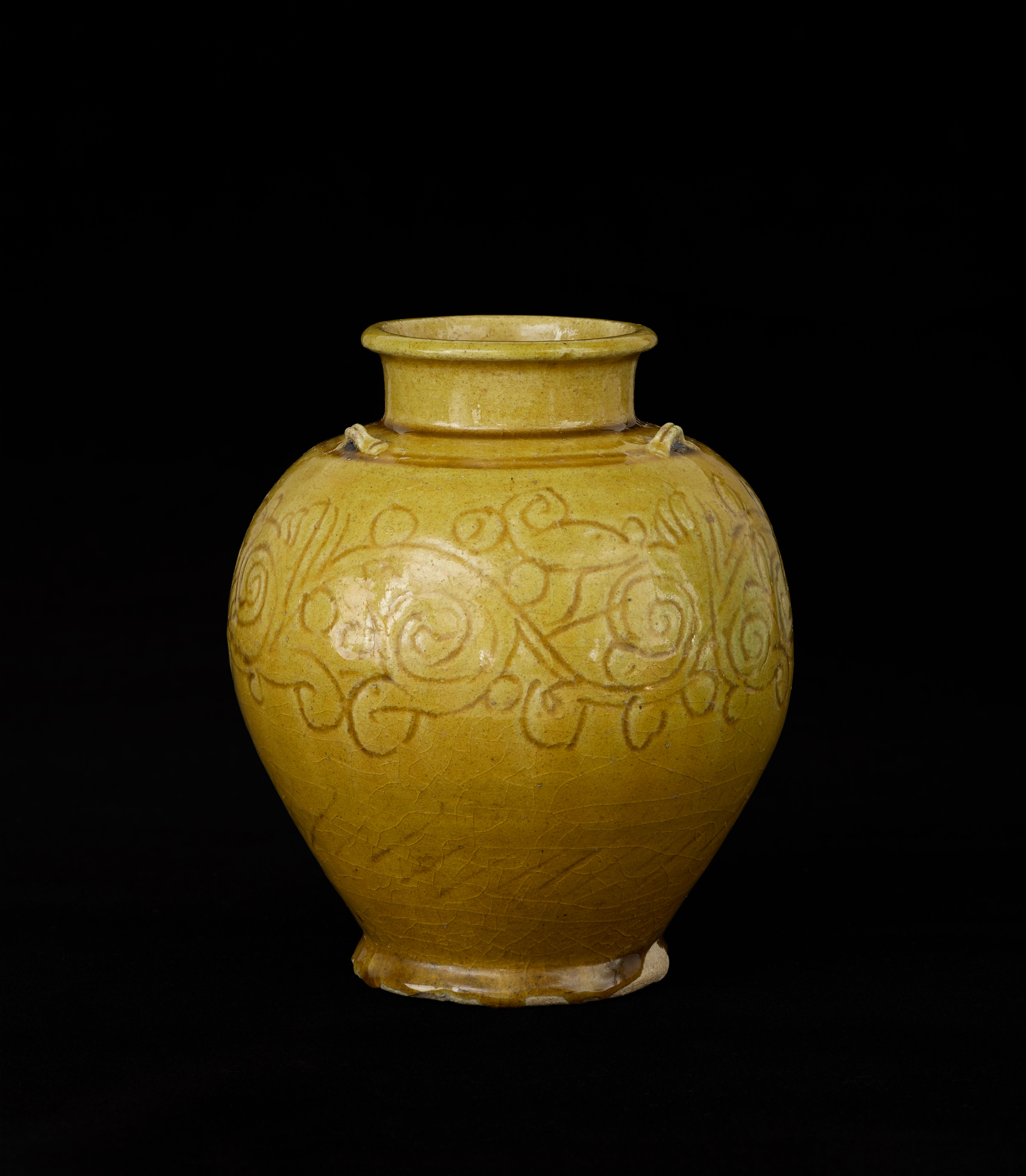
Prior to glazing, this jar has been embellished with incised designs in the form of a wide, meandering vine as well as several rings and diagonal lines. The glaze has subsequently pooled naturally in these grooves, making them appear darker than the rest of the surface.
Jars, dishes and bowls in this style were made in eleventh and twelfth century Egypt, and are especially associated with the city of Fustat. The incision technique is known as sgraffito (from the Italian sgraffiare, ‘to scratch’), and hence this type of pottery is known as Fatimid Fustat Sgraffito.1
Objects of this type are most often glazed in a single colour, which may be a dark blue, green or, as here, a honey yellow. The monochrome aesthetic is clearly inspired by Chinese porcelain, which was imported into Egypt from the tenth century onwards. While the Chinese originals were luxury items reserved for the upper classes, jars like this offered a local alternative for a less affluent audience.
The sgraffito technique is also used on Iranian and Central Asian pottery from the tenth century. Here, incisions would be made into a white slip to expose the reddish clay underneath, creating a marked colouristic effect under the transparent glaze (2/1965, 1/1967). On incised fritware from Fustat, the contrast between decoration and background is less prominent due to the light base colour of the material used.
Jars, dishes and bowls in this style were made in eleventh and twelfth century Egypt, and are especially associated with the city of Fustat. The incision technique is known as sgraffito (from the Italian sgraffiare, ‘to scratch’), and hence this type of pottery is known as Fatimid Fustat Sgraffito.1
Objects of this type are most often glazed in a single colour, which may be a dark blue, green or, as here, a honey yellow. The monochrome aesthetic is clearly inspired by Chinese porcelain, which was imported into Egypt from the tenth century onwards. While the Chinese originals were luxury items reserved for the upper classes, jars like this offered a local alternative for a less affluent audience.
The sgraffito technique is also used on Iranian and Central Asian pottery from the tenth century. Here, incisions would be made into a white slip to expose the reddish clay underneath, creating a marked colouristic effect under the transparent glaze (2/1965, 1/1967). On incised fritware from Fustat, the contrast between decoration and background is less prominent due to the light base colour of the material used.
Published in
Published in
Kent Antiques: Islamic and Indian Art: Works of Art from the Islamic World and Orientalist Paintings, [texts by Bora Keskiner], London 2018, cat.no. 14;
Footnotes
Footnotes
1.
George T. Scanlon: ‘Fusṭāṭ Expedition: Preliminary Report 1965: Part II’, Journal of the American Research Center in Egypt, 1967, 6, pp. 65-86 + plates I-X, p. 83.
Ceramics
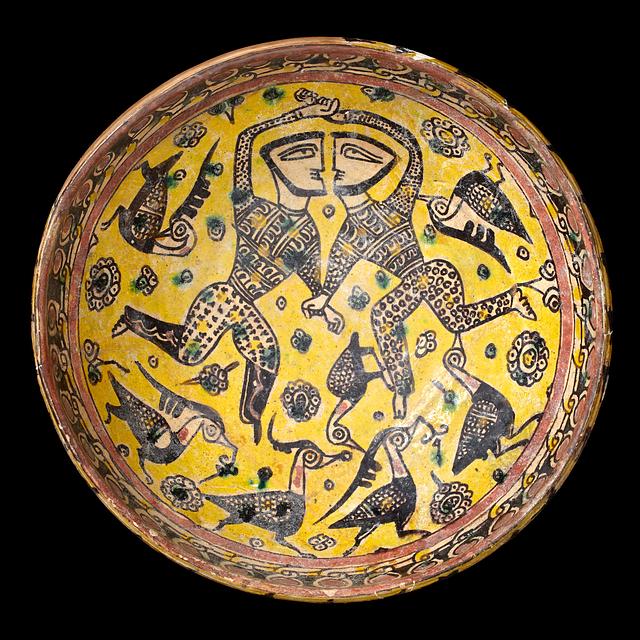
Earthenware bowl, covered with a white slip and painted in black, yellow, and green under a transparent glaze
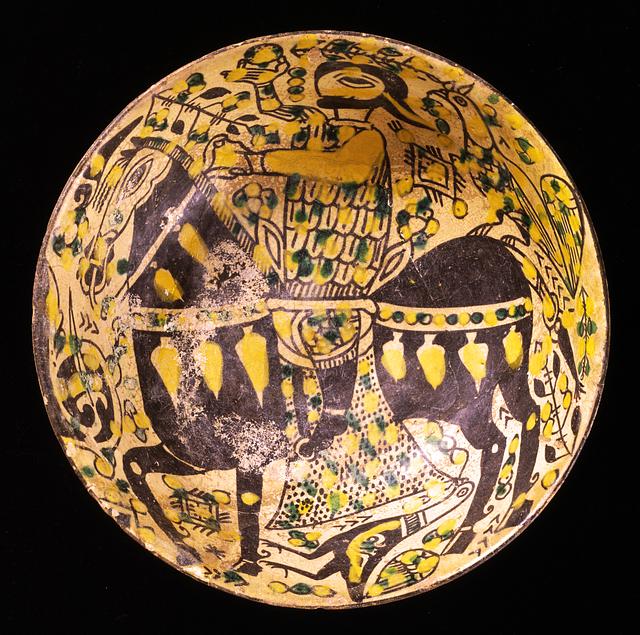
Earthenware bowl, covered with a white slip and painted in black, yellow, and green under a transparent glaze
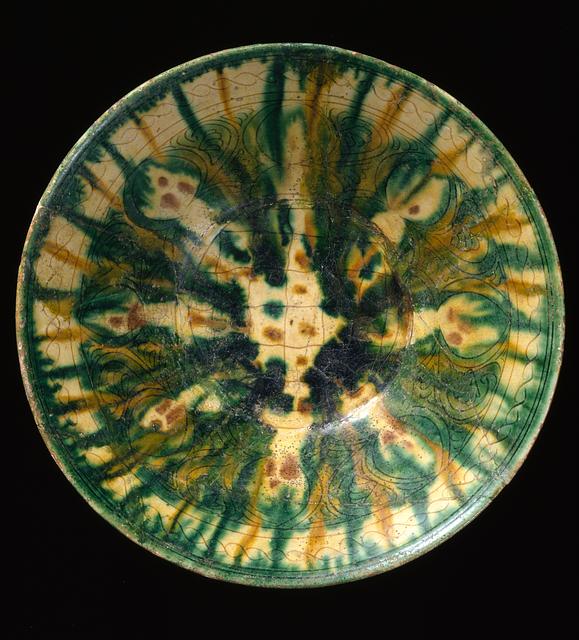
Earthenware bowl, covered by a white slip with incised ornamentation and decorated with splashes of color in a transparent glaze
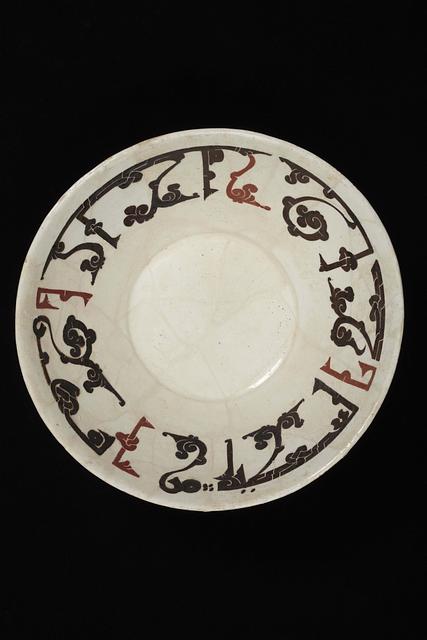
Earthenware bowl, covered with a white slip and painted in a brown and red slip under a transparent glaze