Earthenware bowl, painted in lustre over a white glaze
Egypt; 11th – early 12th century
H: 5.5; Diam: 20.5 cm
Inventory number 4/1992
While the motifs on figurative bowls painted in lustre in Abbasid Iraq were stylized, a number of quite naturalistic depictions of courtiers, dancers, wrestlers, etc. are known from Fatimid Egypt.
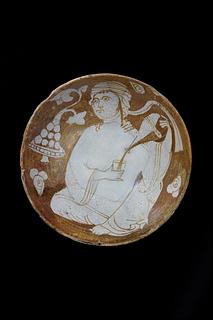
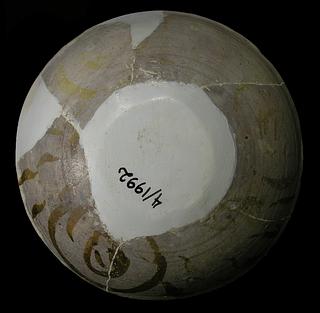
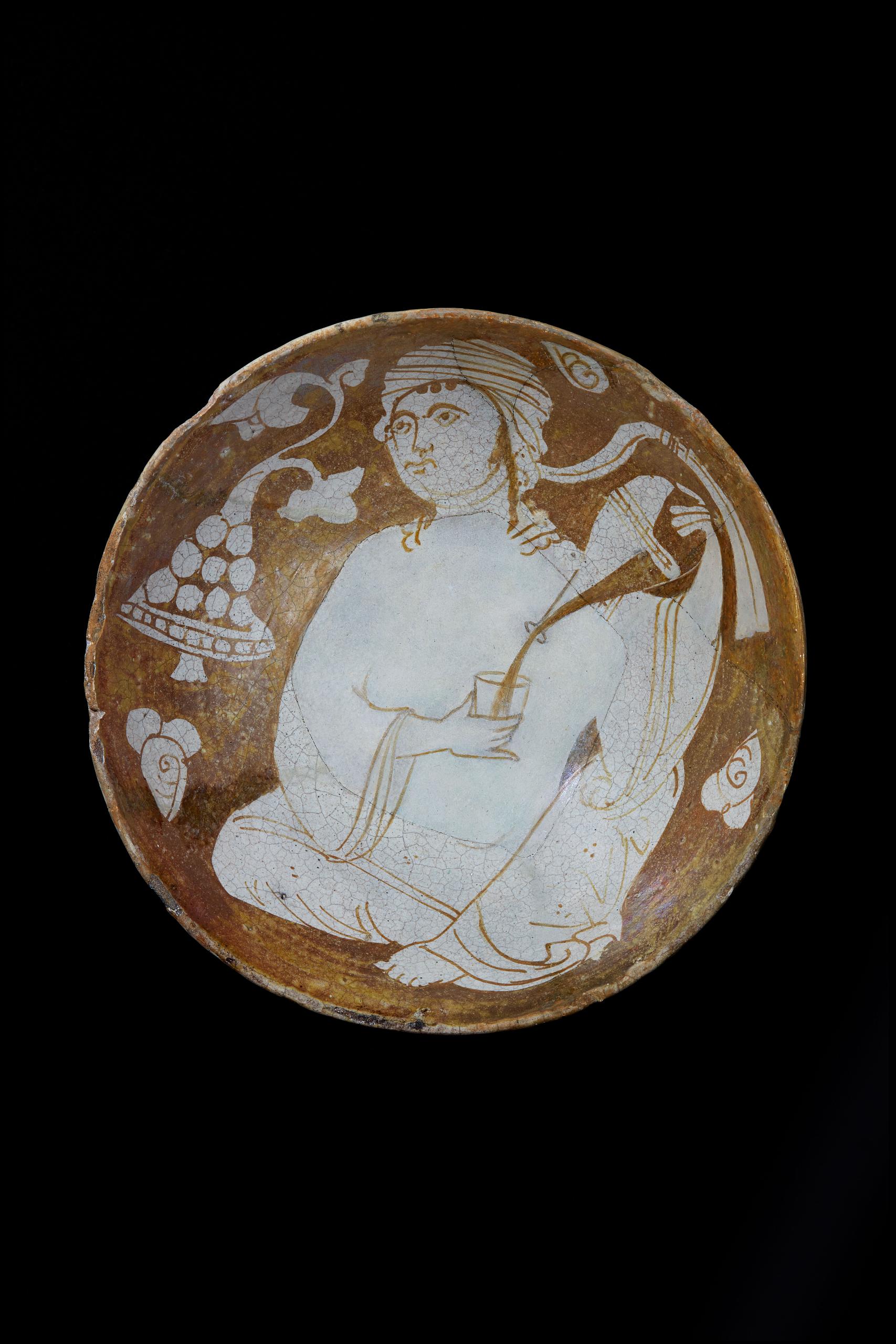
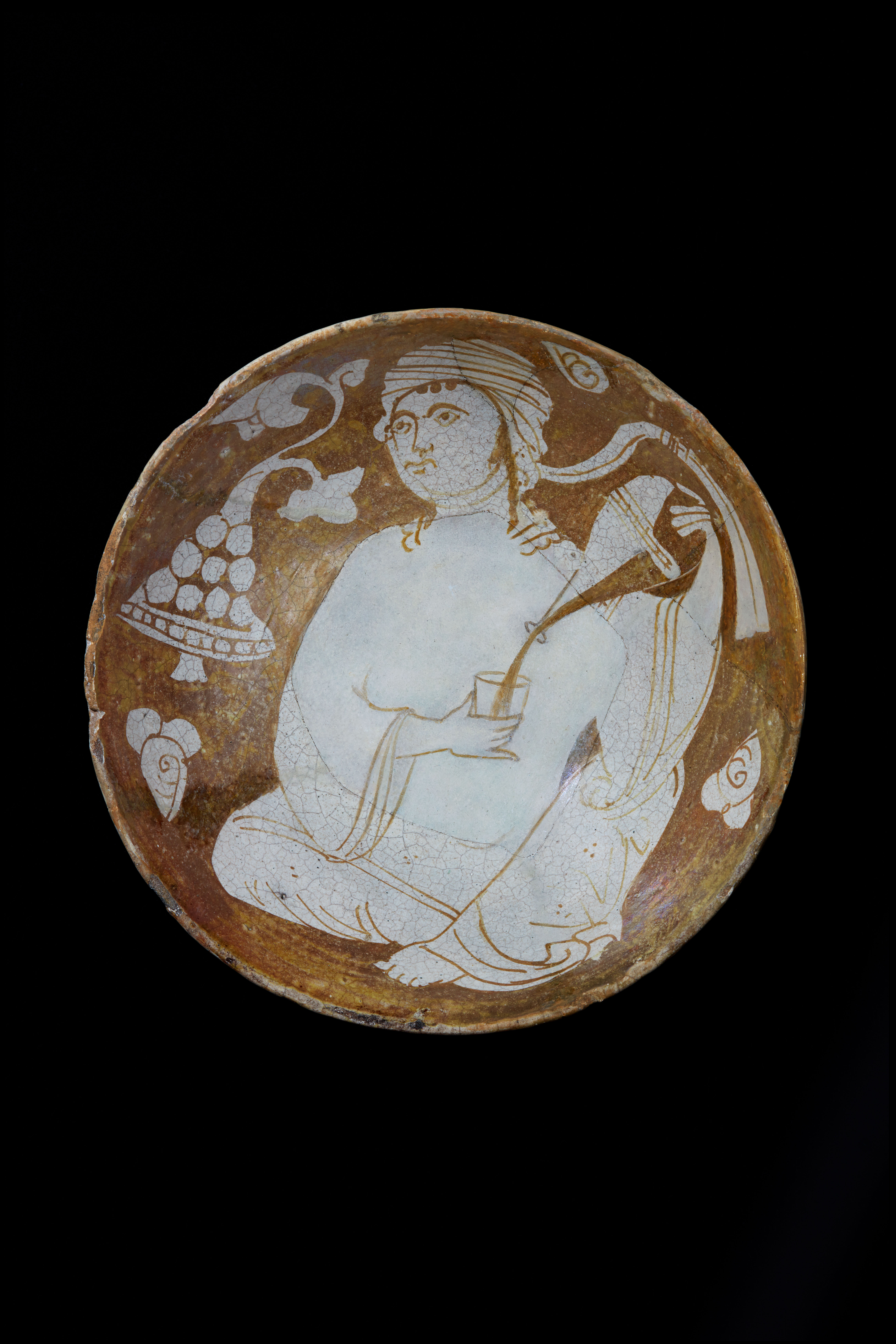
Here we have a young man in a long-sleeved tunic with a tiraz band and wearing an elaborately wound turban. He is pouring a dark drink, presumably wine, from a glass decanter into a beaker, which is a reconstruction, since the bowl is missing three shards. Beside him stands a dish with cakes or fruit from which a palmette grows.
There are many figurative elements in Fatimid art, something that should perhaps be seen in the context of the region’s Coptic Christian tradition.
Here we have a young man in a long-sleeved tunic with a tiraz band and wearing an elaborately wound turban. He is pouring a dark drink, presumably wine, from a glass decanter into a beaker, which is a reconstruction, since the bowl is missing three shards. Beside him stands a dish with cakes or fruit from which a palmette grows.
There are many figurative elements in Fatimid art, something that should perhaps be seen in the context of the region’s Coptic Christian tradition.
Published in
Published in
Emma Brunner-Traut, Hellmut Brunner, Johanna Zick-Nissen: Osiris, Kreuz und Halbmond: die drei Religionen Ägyptens, Mainz am Rhein 1984, cat.no. 199;
Kjeld von Folsach, Torben Lundbæk and Peder Mortensen (eds.): Sultan, Shah and Great Mughal: the history and culture of the Islamic world, The National Museum, Copenhagen 1996, cat.no. 120;
Kjeld von Folsach: Art from the World of Islam in The David Collection, Copenhagen 2001, cat.no. 129;
Sheila S. Blair and Jonathan M. Bloom (eds.): Cosmophilia. Islamic Art from the David Collection, Copenhagen, McMullen Museum of Art, Boston College, Boston 2006, cat.no. 10;
Kjeld von Folsach, Joachim Meyer: The Human Figure in Islamic Art – Holy Men, Princes, and Commoners, The David Collection, Copenhagen 2017, cat.no. 8;
Farzaneh Pirouz-Moussavi: Cerámica entre dos mares: De Bagdad a la talavera de Puebla = Clay between two seas: from Baghdad to the talavera of Puebla, Mexico 2017, p. 50;
Axel Langer (ed.): In the name of the image : Figurative representation in Islamic and Christian cultures, Museum Rietberg, Zürich, Berlin 2022, cat. 108, pp. 194-196, 199;
Kjeld von Folsach, Torben Lundbæk and Peder Mortensen (eds.): Sultan, Shah and Great Mughal: the history and culture of the Islamic world, The National Museum, Copenhagen 1996, cat.no. 120;
Kjeld von Folsach: Art from the World of Islam in The David Collection, Copenhagen 2001, cat.no. 129;
Sheila S. Blair and Jonathan M. Bloom (eds.): Cosmophilia. Islamic Art from the David Collection, Copenhagen, McMullen Museum of Art, Boston College, Boston 2006, cat.no. 10;
Kjeld von Folsach, Joachim Meyer: The Human Figure in Islamic Art – Holy Men, Princes, and Commoners, The David Collection, Copenhagen 2017, cat.no. 8;
Farzaneh Pirouz-Moussavi: Cerámica entre dos mares: De Bagdad a la talavera de Puebla = Clay between two seas: from Baghdad to the talavera of Puebla, Mexico 2017, p. 50;
Axel Langer (ed.): In the name of the image : Figurative representation in Islamic and Christian cultures, Museum Rietberg, Zürich, Berlin 2022, cat. 108, pp. 194-196, 199;
Ceramics
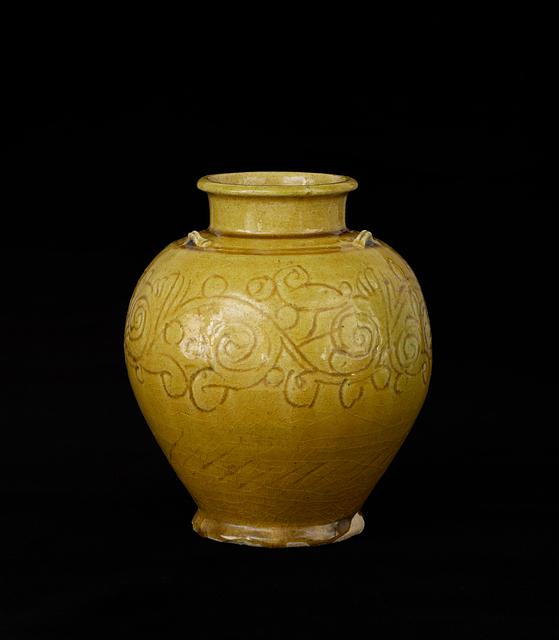
Fritware jar with incised decoration under yellow glaze
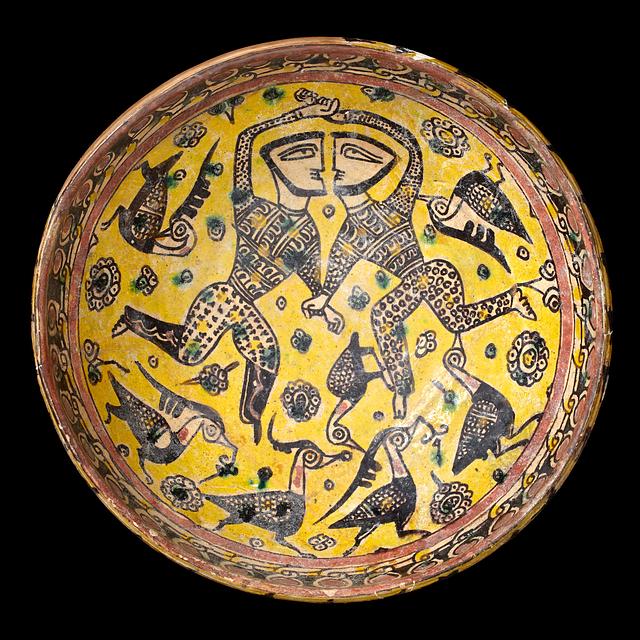
Earthenware bowl, covered with a white slip and painted in black, yellow, and green under a transparent glaze
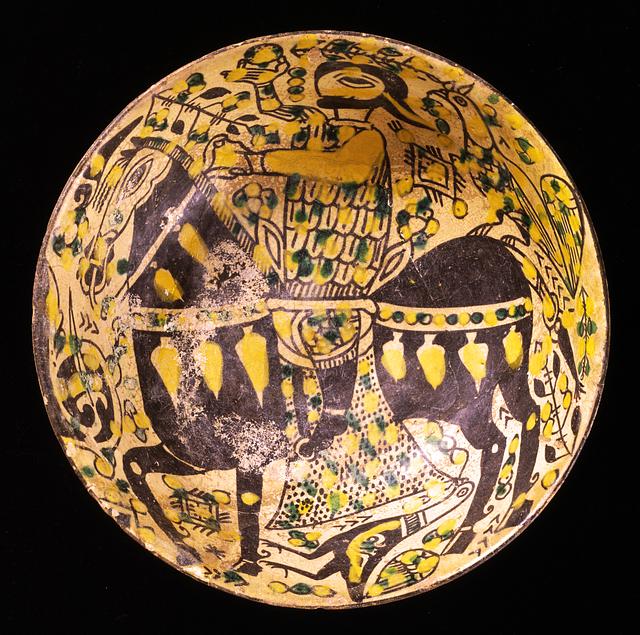
Earthenware bowl, covered with a white slip and painted in black, yellow, and green under a transparent glaze
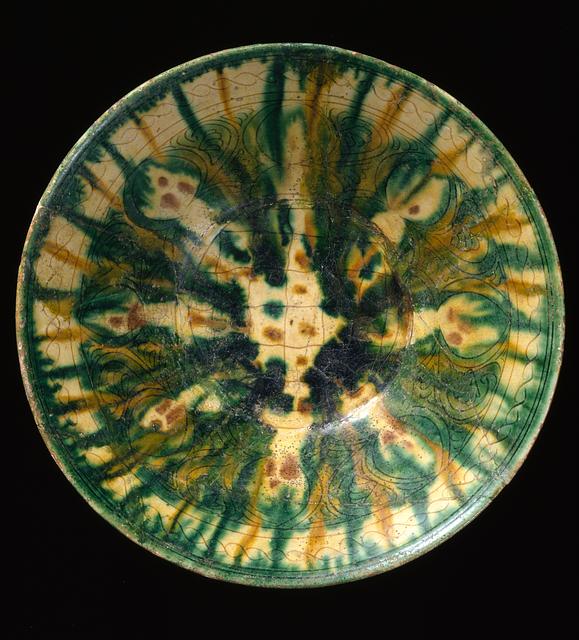
Earthenware bowl, covered by a white slip with incised ornamentation and decorated with splashes of color in a transparent glaze