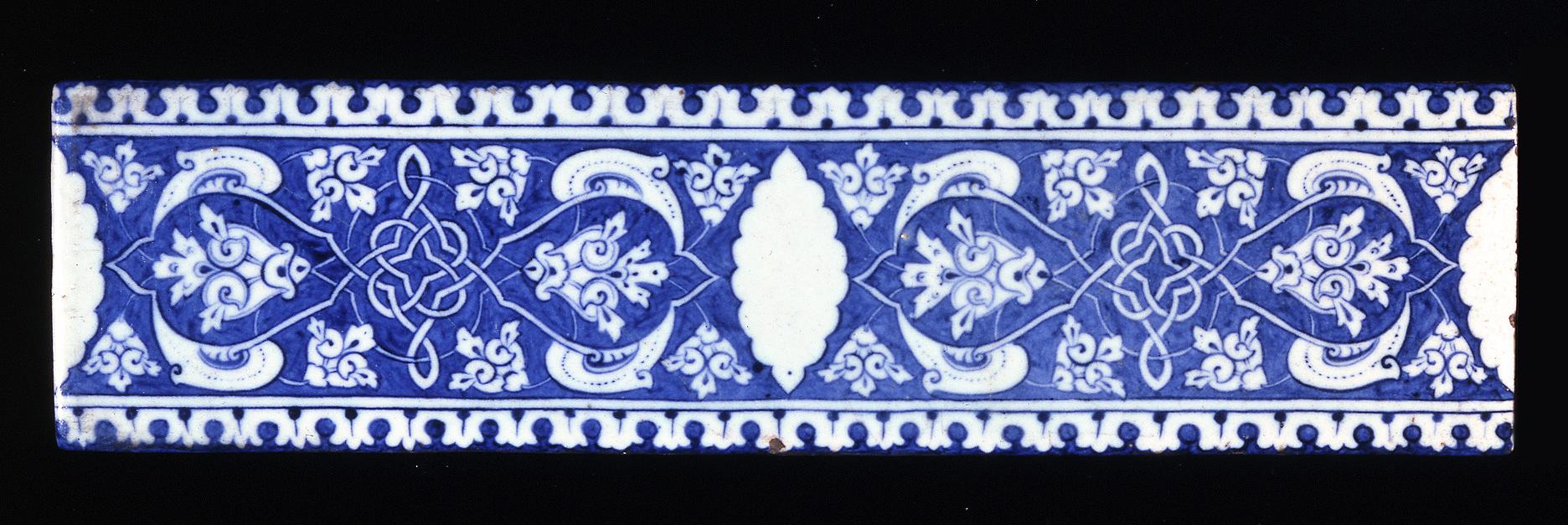
Fritware tile, painted in blue under a transparent glaze
Turkey, Iznik; c. 1505
H: 9; W: 36 cm
Inventory number 93a/2003
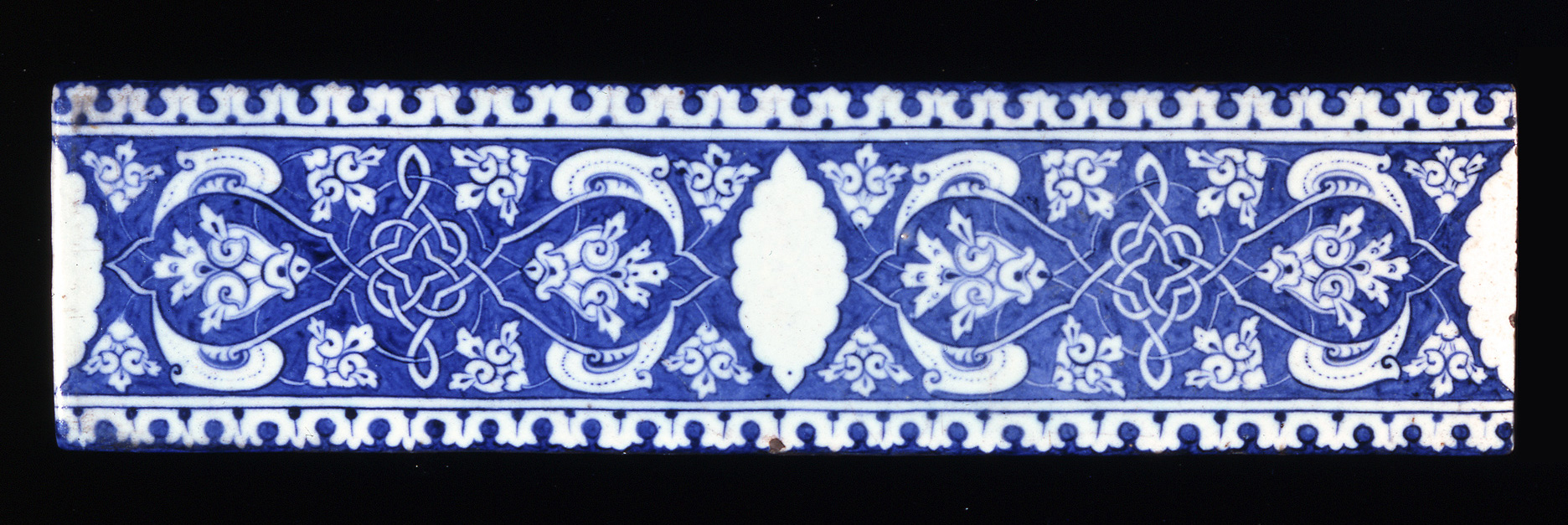
Tiles identical to this one embellish the mausoleum of Prince Mahmud in Bursa, completed in 912 H (1506-1507). Stylistically, the tile belongs to the earliest group of famous Ottoman Iznik pottery, which was made in the city formerly called Nicaea, from the 15th century.
The style, a further development of the Timurid, is characterized by the use of palmettes, stems that often form knots or geometric patterns and feature very unnaturalistic little flowers. Formerly, the style was associated with a potter known only as Abraham of Kütahya, but now it is frequently called the Baba Nakkas style, after an Ottoman court designer who was active from the 1480s.
The style, a further development of the Timurid, is characterized by the use of palmettes, stems that often form knots or geometric patterns and feature very unnaturalistic little flowers. Formerly, the style was associated with a potter known only as Abraham of Kütahya, but now it is frequently called the Baba Nakkas style, after an Ottoman court designer who was active from the 1480s.
Published in
Published in
Sheila S. Blair and Jonathan M. Bloom (eds.): Cosmophilia. Islamic Art from the David Collection, Copenhagen, McMullen Museum of Art, Boston College, Boston 2006. cat.no. 88, p. 163;
Ceramics
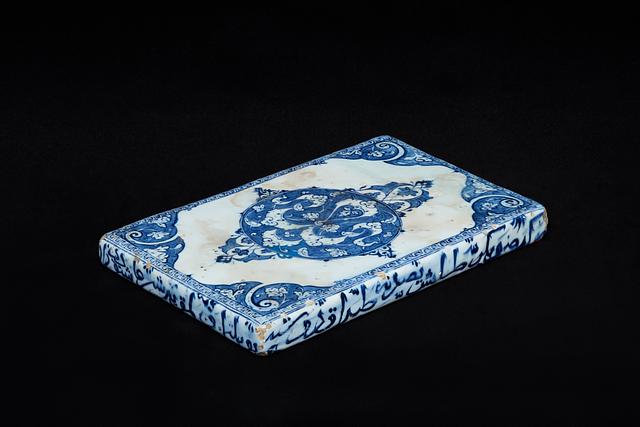
Plaque of fritware with a white slip, painted in blue under a transparent glaze
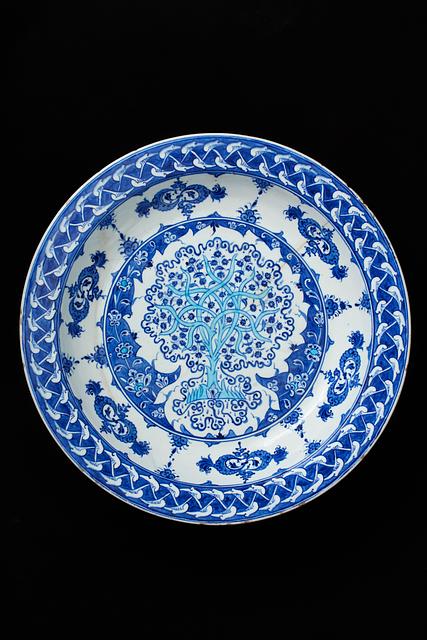
Fritware dish, painted in blue and turquoise under a transparent glaze
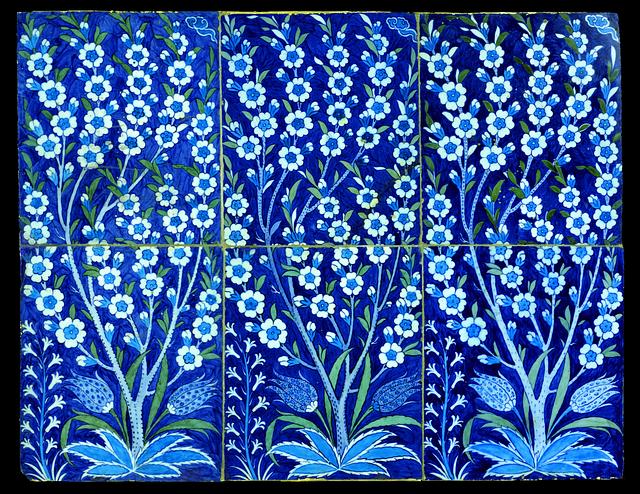
Fritware tile panel, painted in blue, turquoise, and moss green under a transparent glaze
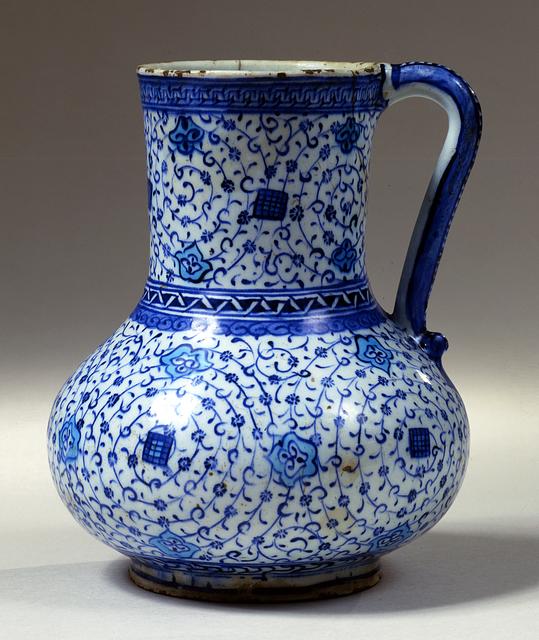
Fritware jug, painted in blue and turquoise under a transparent glaze