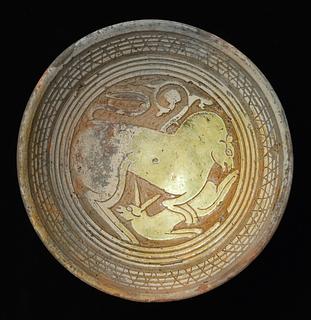
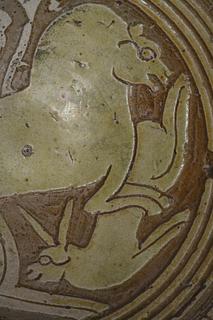
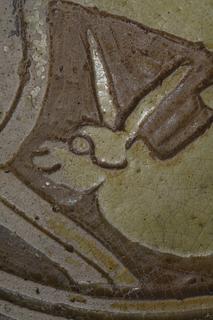
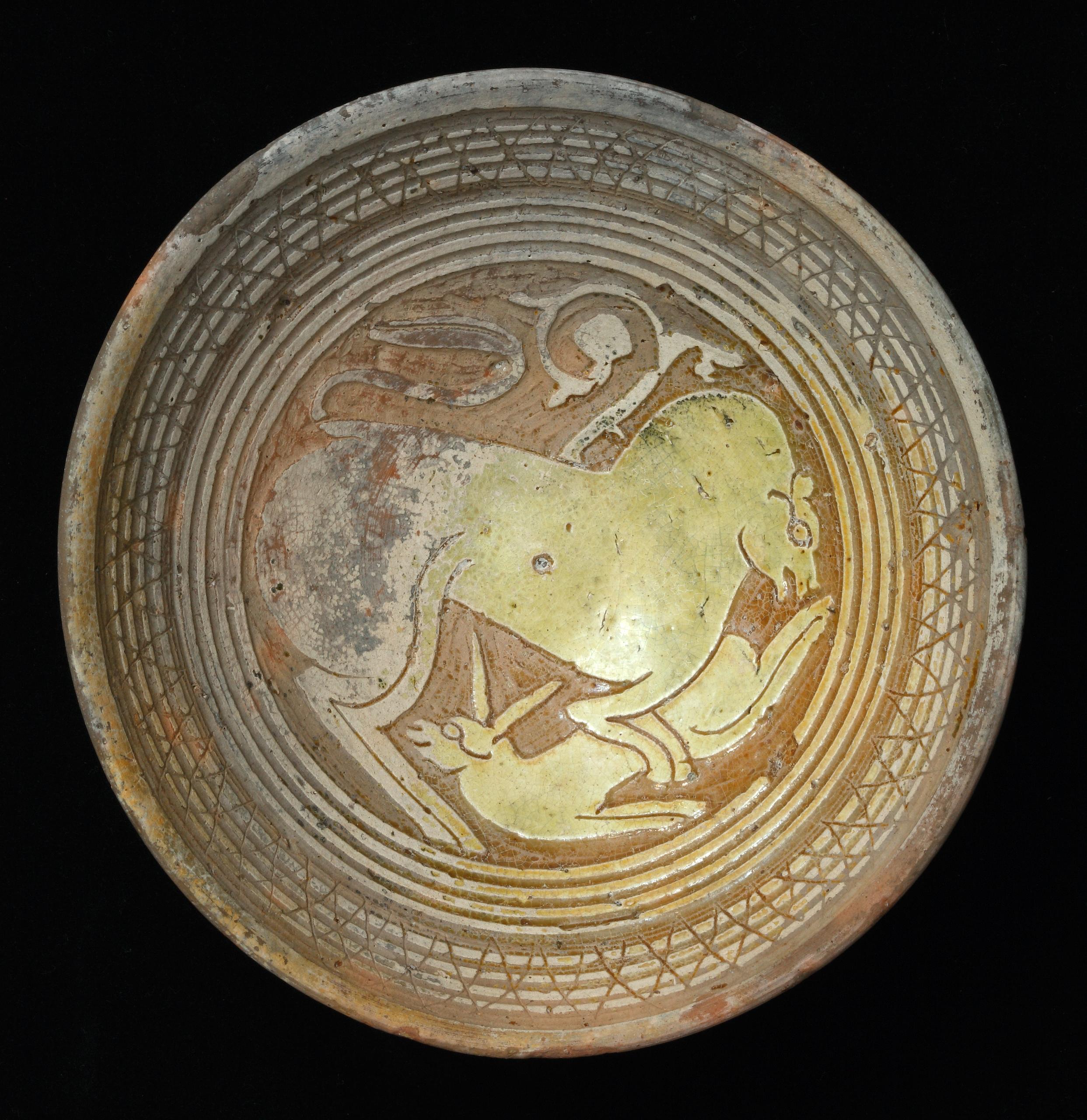
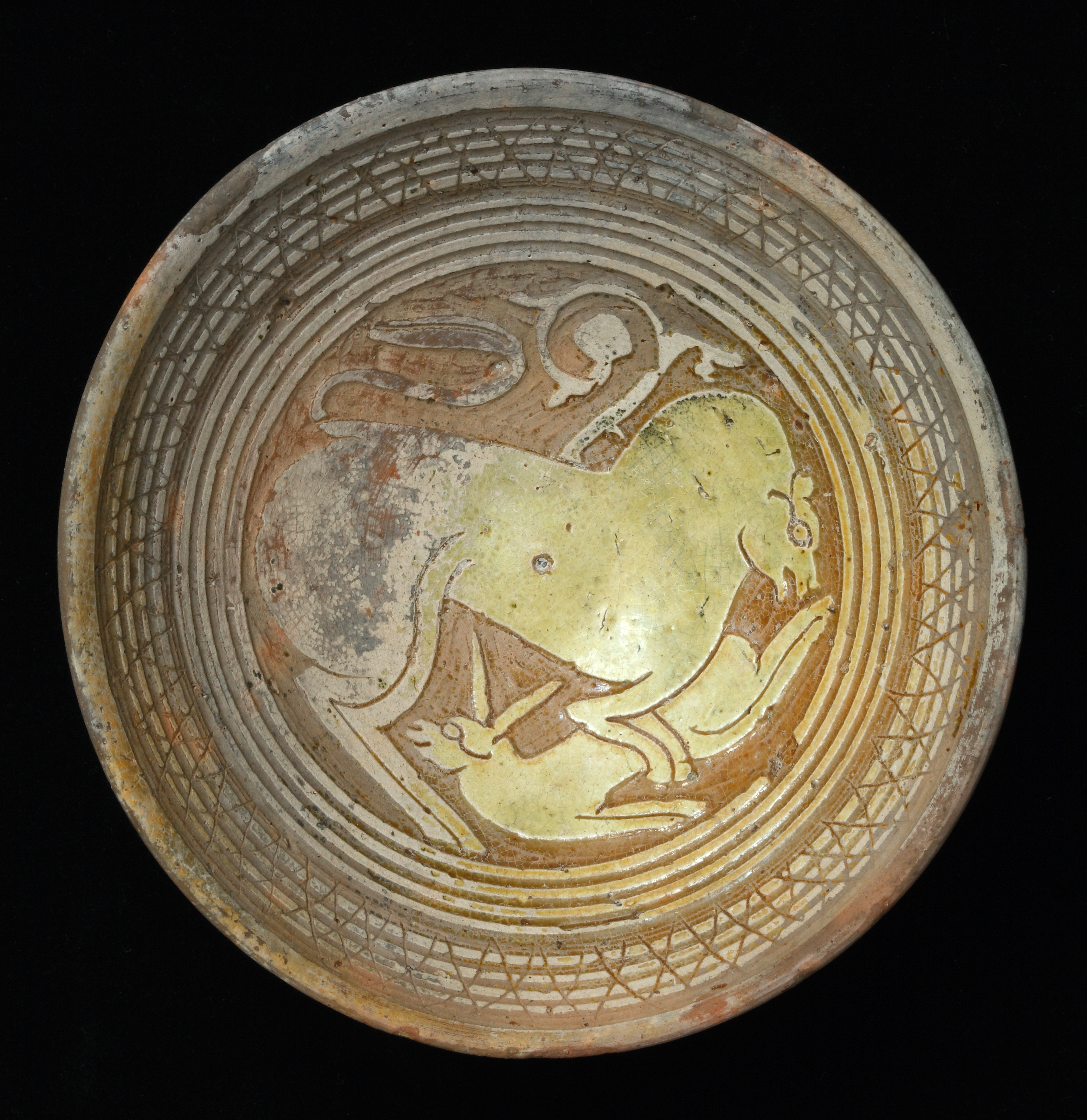
Earthenware bowl with incised and carved decoration in a white slip under a yellowish glaze
Byzantium, Corinth?; 12th century
H: c. 6; Diam: 16.5 cm
Inventory number 30/1969
While segments of Byzantine art – painting, work in ivory and metal, textiles, etc. – were of a very high technical and artistic quality, ceramics production was fairly simple and never reached the level of the many types known in the Islamic world.
This bowl was made using a combination of the sgraffito and champlevé techniques familiar from contemporary and slightly earlier Islamic ceramics. The animal-combat motif, which is also found in both cultures, goes back to the art of Antiquity.
The bowl was found in the sea, and the salty water had disintegrated most of the glaze over time.
This bowl was made using a combination of the sgraffito and champlevé techniques familiar from contemporary and slightly earlier Islamic ceramics. The animal-combat motif, which is also found in both cultures, goes back to the art of Antiquity.
The bowl was found in the sea, and the salty water had disintegrated most of the glaze over time.