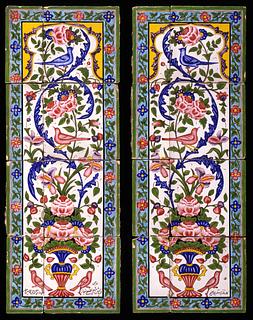
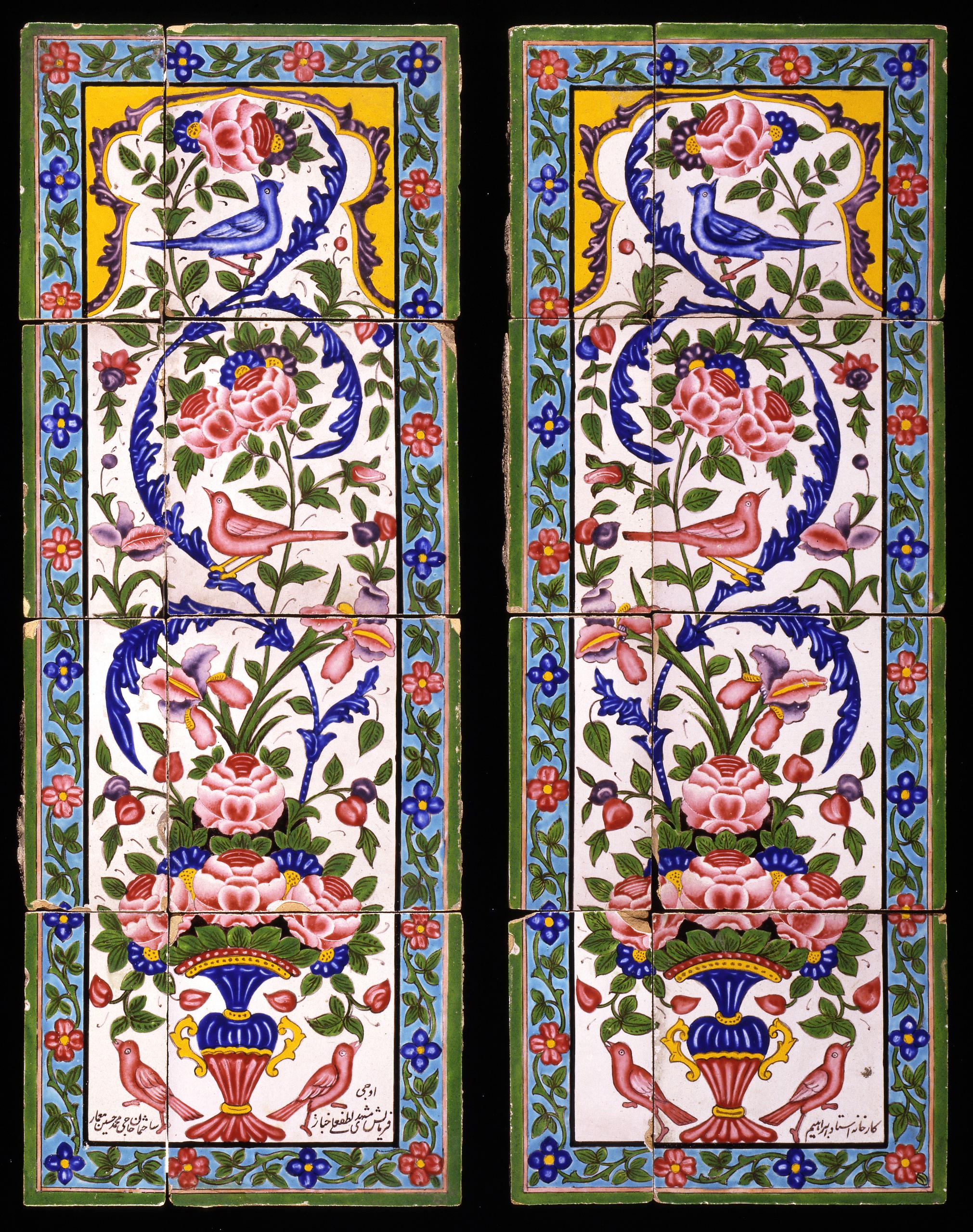
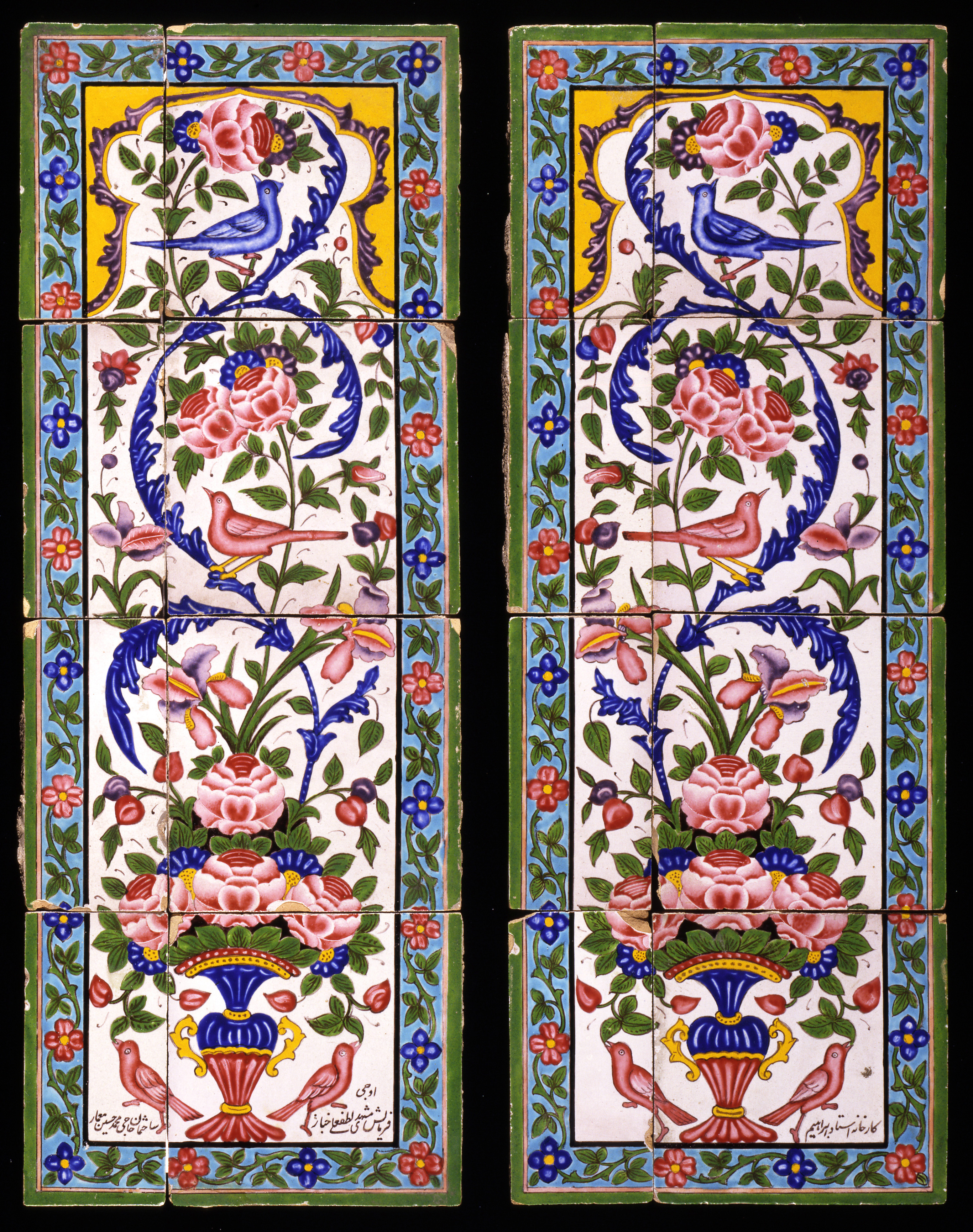
Two panels of earthenware tiles, painted in polychrome glazes over a white glaze
Iran; first half of 19th century
Each panel: H: 81.5; W: 30.5 cm
Inventory number 44/2002
These colorful panels from the Qajar period can be seen as continuing the Safavid tile tradition from the 17th century, with the addition to the palette of the distinctive pink color in the first half of the 19th century. A new element is the artists’ deliberate work with light and shadow, under the influence of European art.
The inscriptions, which are rarely found, state that the tiles were ordered by Loftali the baker, who had made a pilgrimage to Mashhad, and that they were made in the workshop of master Ibrahim for a building constructed by Hajji Ali Muhammad Husayn.
The inscriptions, which are rarely found, state that the tiles were ordered by Loftali the baker, who had made a pilgrimage to Mashhad, and that they were made in the workshop of master Ibrahim for a building constructed by Hajji Ali Muhammad Husayn.
Published in
Published in
Sheila S. Blair and Jonathan M. Bloom (eds.): Cosmophilia. Islamic Art from the David Collection, Copenhagen, McMullen Museum of Art, Boston College, Boston 2006, cat. 87;
Kjeld von Folsach: Flora islamica: plantemotiver i islamisk kunst, Davids Samling, København 2013, cat. 46;
Joachim Meyer, Rasmus Bech Olsen and Peter Wandel: Beyond words: calligraphy from the World of Islam, The David Collection, Copenhagen 2024, cat. 111, pp. 280-281;
Kjeld von Folsach: Flora islamica: plantemotiver i islamisk kunst, Davids Samling, København 2013, cat. 46;
Joachim Meyer, Rasmus Bech Olsen and Peter Wandel: Beyond words: calligraphy from the World of Islam, The David Collection, Copenhagen 2024, cat. 111, pp. 280-281;
Ceramics
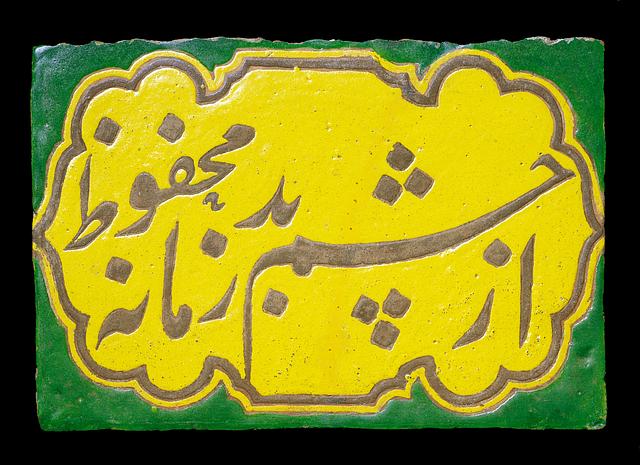
Earthenware tile, decorated in the cuerda seca technique with yellow, green, and manganese glazes
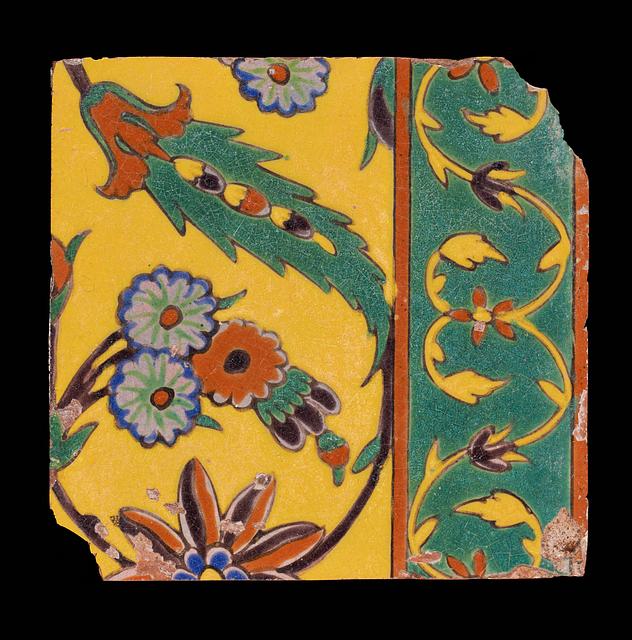
Earthenware tile, decorated in the cuerda seca technique with polychrome glazes
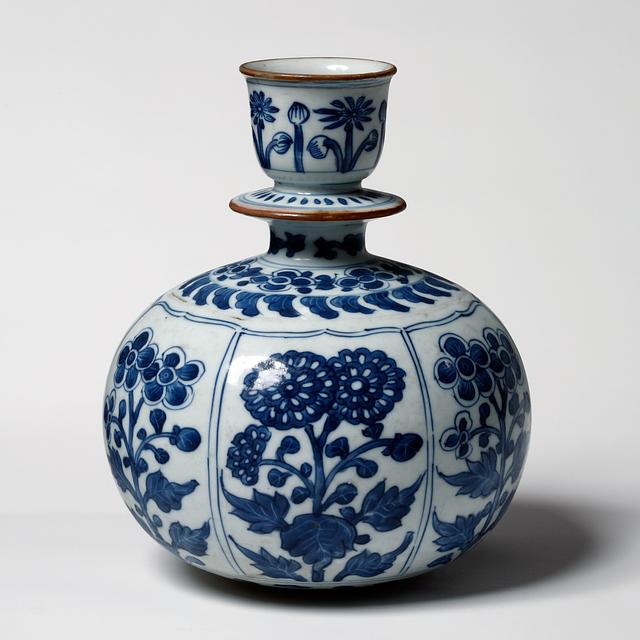
Huqqa (water pipe), porcelain
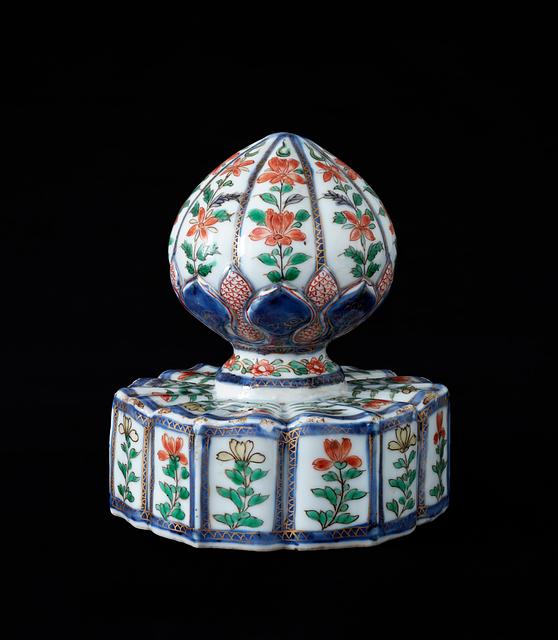
Porcelain carpet weight, painted dark blue under a transparent glaze and covered with famille verte enamels in black, green, red, yellow, and blue as well as with gilding