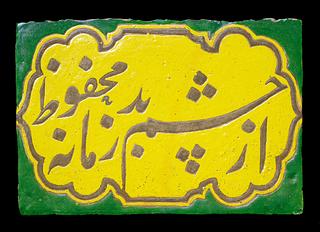
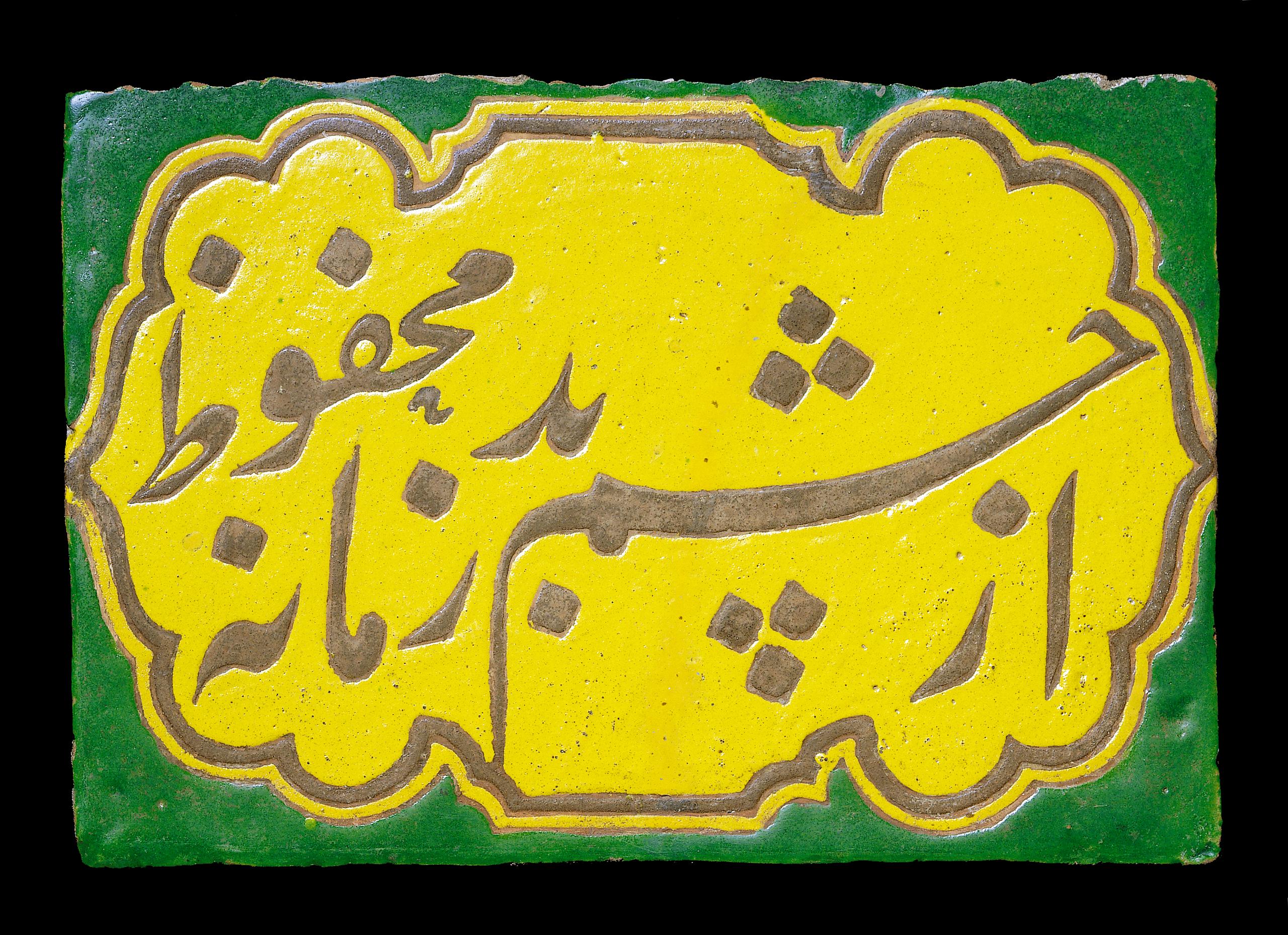
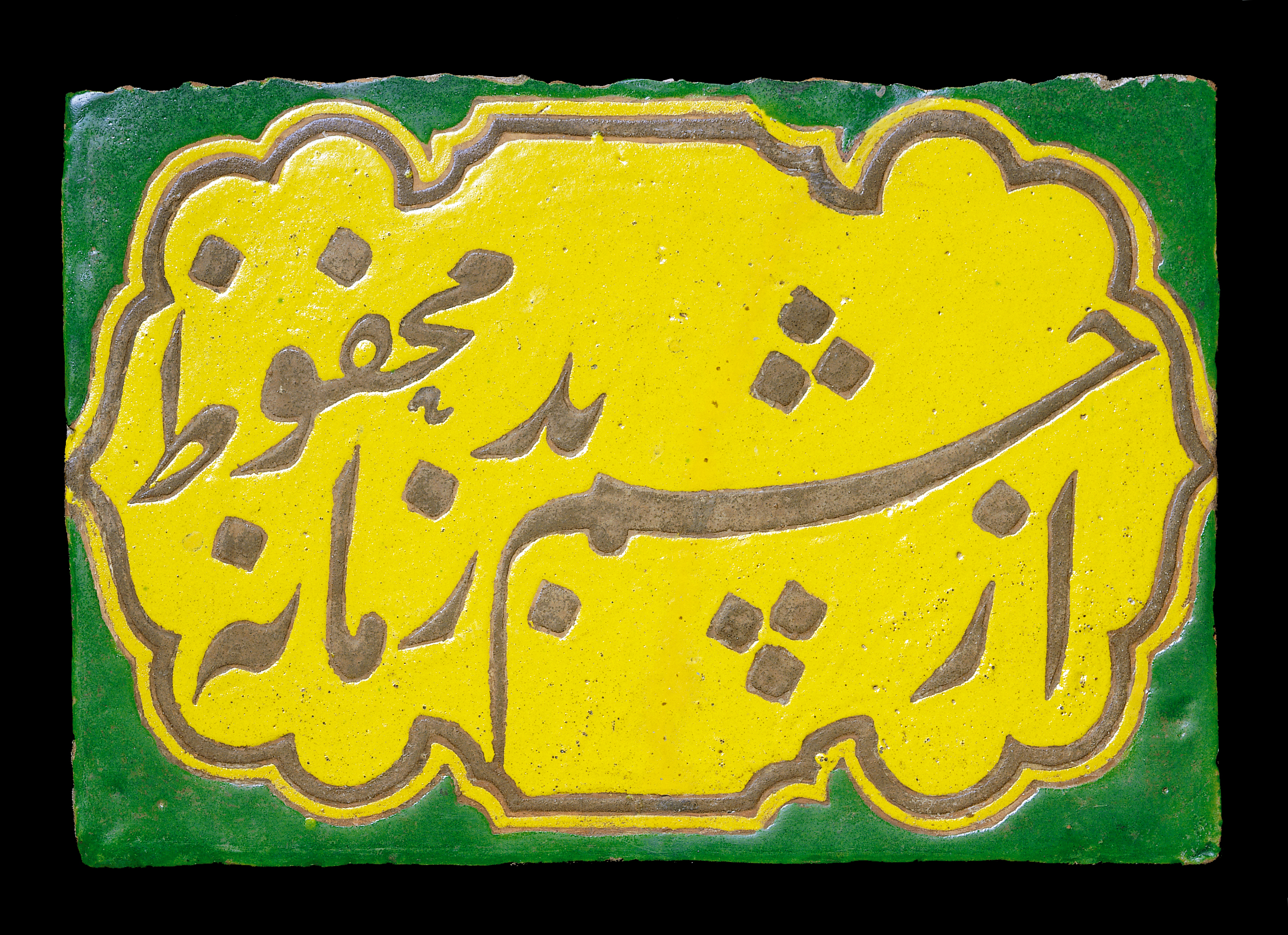
Earthenware tile, decorated in the cuerda seca technique with yellow, green, and manganese glazes
Northern India; 17th century
H: 26.5; W: 39; D: 3.5 cm
Inventory number 51/1999
Ceramic tiles with calligraphy were used in the Mughal period in buildings of both stone and brick. A tile like this one was probably embedded in a wall separate from the other decoration. The text in a lobed cartouche was designed in elegant Nastaliq and reads, “Protected against the evil eye of misfortune.”
Tile decorations were much rarer in India than in Iran and the Ottoman Empire. The Mughals, however, renovated numerous older sepulchral monuments and mosques in the 17th century, and many were decorated with colorful tiles in the process. Today it is impossible to say where a tile like this one comes from.
Tile decorations were much rarer in India than in Iran and the Ottoman Empire. The Mughals, however, renovated numerous older sepulchral monuments and mosques in the 17th century, and many were decorated with colorful tiles in the process. Today it is impossible to say where a tile like this one comes from.
Published in
Published in
Spink & Son: Passion and tranquility: Indian & Islamic works of art, London 1998, p. 71, cat. 43a
Kjeld von Folsach: Art from the World of Islam in The David Collection, Copenhagen 2001, cat. 290
Joachim Meyer, Rasmus Bech Olsen and Peter Wandel: Beyond words: calligraphy from the World of Islam, The David Collection, Copenhagen 2024, cat. 125, pp. 300-301;
Kjeld von Folsach: Art from the World of Islam in The David Collection, Copenhagen 2001, cat. 290
Joachim Meyer, Rasmus Bech Olsen and Peter Wandel: Beyond words: calligraphy from the World of Islam, The David Collection, Copenhagen 2024, cat. 125, pp. 300-301;
Ceramics
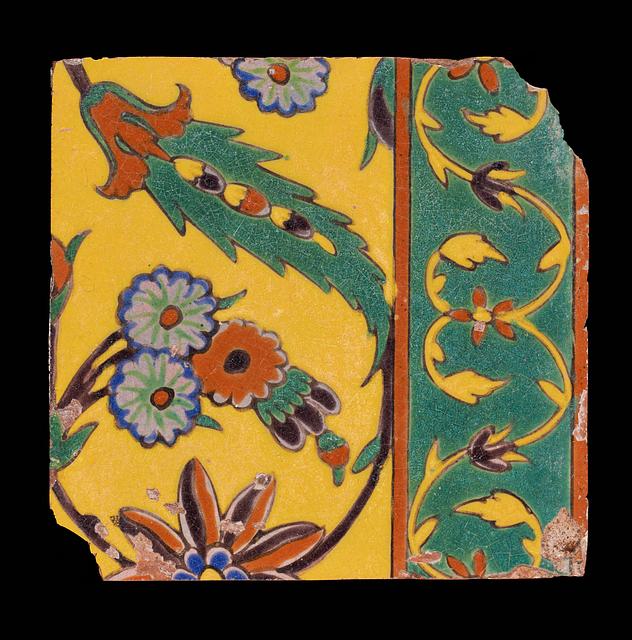
Earthenware tile, decorated in the cuerda seca technique with polychrome glazes
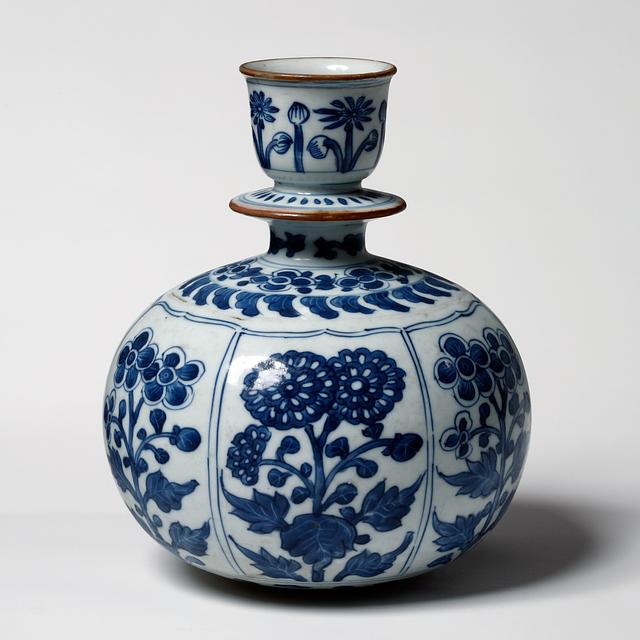
Huqqa (water pipe), porcelain
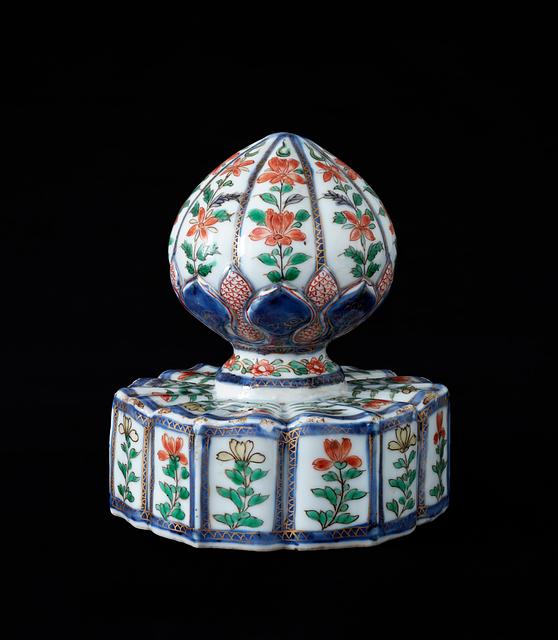
Porcelain carpet weight, painted dark blue under a transparent glaze and covered with famille verte enamels in black, green, red, yellow, and blue as well as with gilding
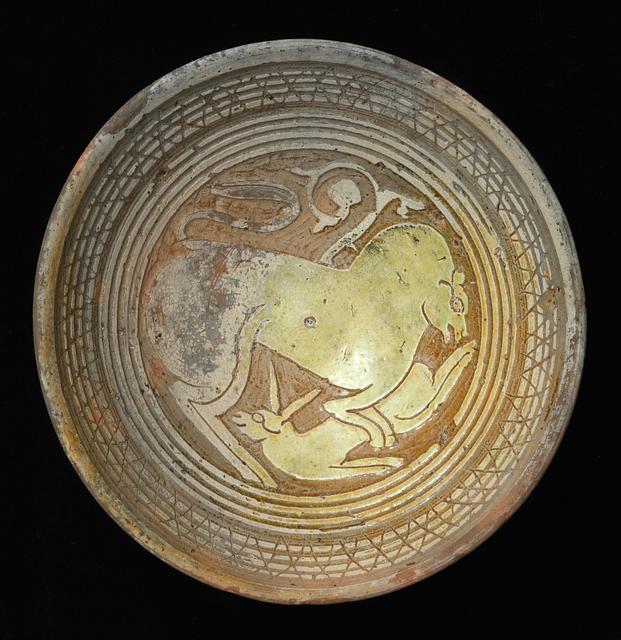
Earthenware bowl with incised and carved decoration in a white slip under a yellowish glaze