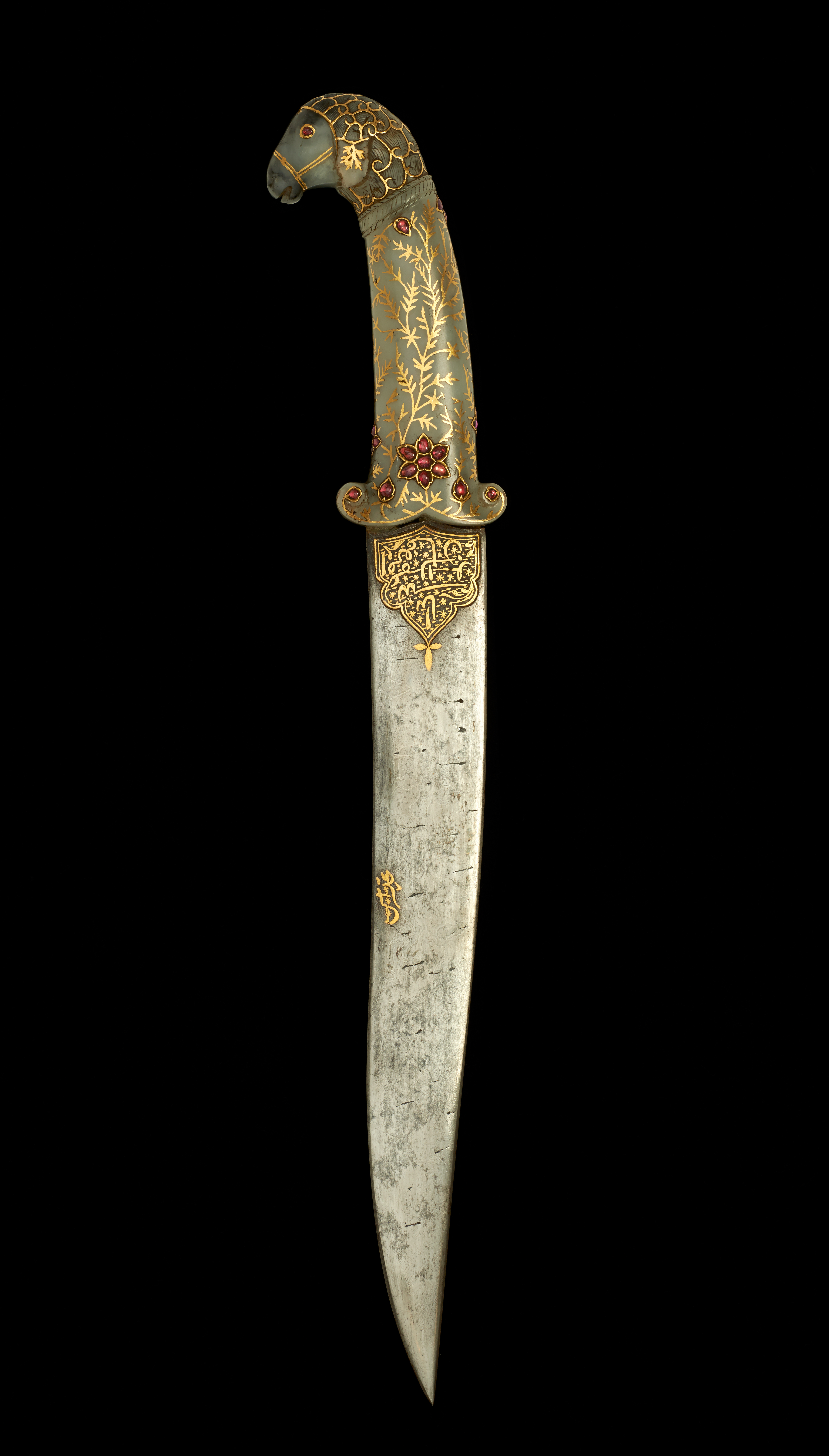
Dagger with hilt of carved jade, inlaid with gold and rubies
India; end of 17th century
L: 35.6 cm
Inventory number 32/1979
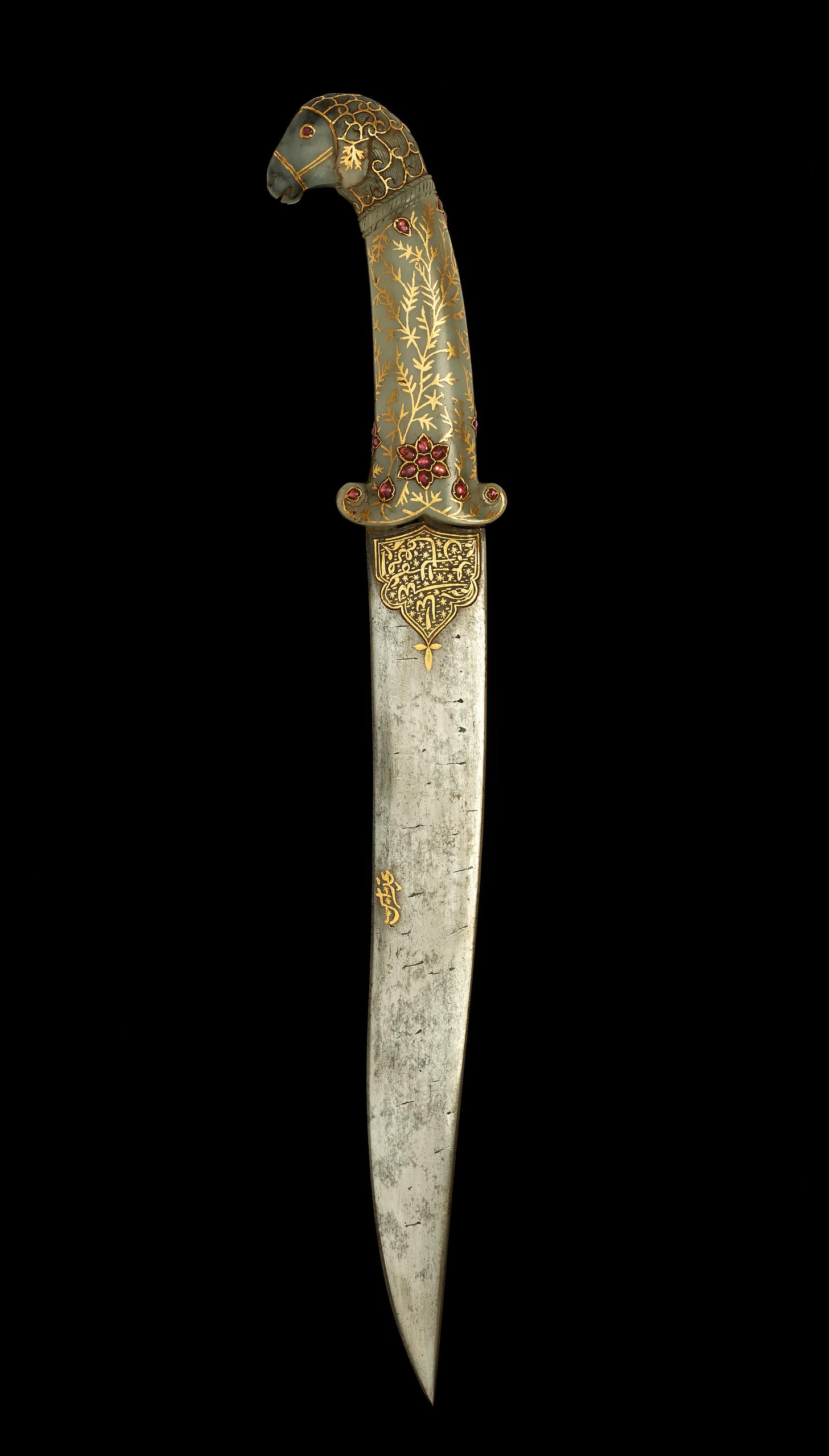
In the Mughal period, the curved end of the dagger’s hilt that kept it firmly in the user’s grasp was frequently shaped as an animal head of different kinds. The horse was most popular, probably because it was especially appropriate for a mounted warrior. In this case we have a ram.
A dagger like this was not just for show. The worn blade of the finely carved, inlaid hilt was replaced at a later stage, and given a false Persian inscription in gold. It states that the blade was ostensibly made by one of the 17th century’s most famous Safavid armorers – Asad Allah of Isfahan.
A dagger like this was not just for show. The worn blade of the finely carved, inlaid hilt was replaced at a later stage, and given a false Persian inscription in gold. It states that the blade was ostensibly made by one of the 17th century’s most famous Safavid armorers – Asad Allah of Isfahan.
Published in
Published in
Kjeld von Folsach: Islamic art. The David Collection, Copenhagen 1990, cat.no. 367;
Kjeld von Folsach: Art from the World of Islam in The David Collection, Copenhagen 2001, cat.no. 570;
Kjeld von Folsach, Joachim Meyer and Peter Wandel: Fighting, Hunting, Impressing. Arms and Armour from the Islamic World 1500-1850, The David Collection, Copenhagen 2021, cat.no. 94 and Appendix, p. 278;
Kjeld von Folsach: Art from the World of Islam in The David Collection, Copenhagen 2001, cat.no. 570;
Kjeld von Folsach, Joachim Meyer and Peter Wandel: Fighting, Hunting, Impressing. Arms and Armour from the Islamic World 1500-1850, The David Collection, Copenhagen 2021, cat.no. 94 and Appendix, p. 278;