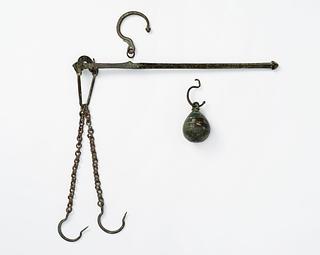
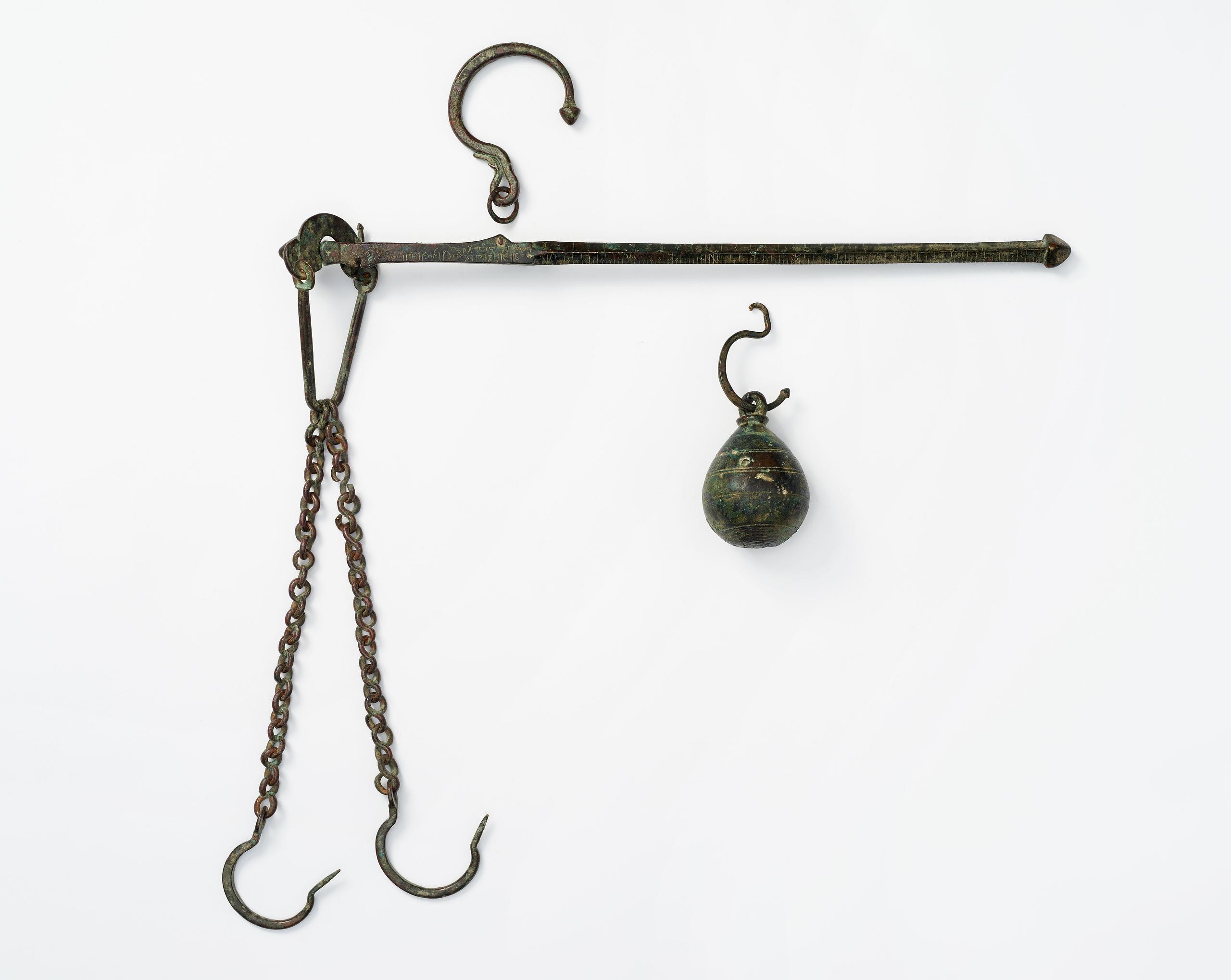
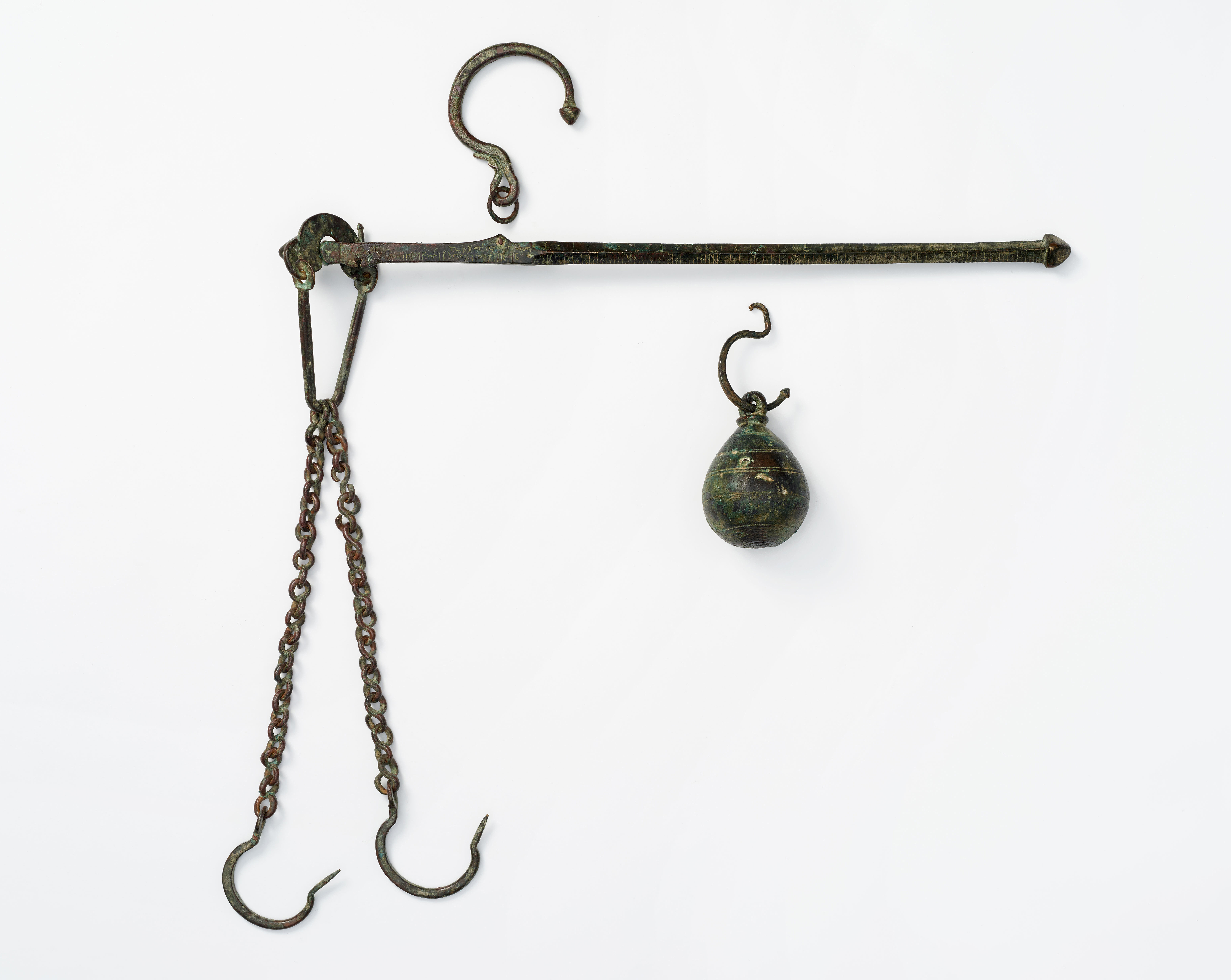
Steelyard, bronze with engraved inscription
Middle East; 8th-9th century
L (arm): 52.5 cm
Inventory number 12/1994
The use of steelyards dates back to before the Christian era in the Mediterranean region. A counterweight is moved along the arm until it and the object to be weighed are in balance. The arm can typically be turned, since it has several balance points and their scales, making it possible to weigh both heavy and light objects.
Steelyards were used since the advent of Islam, and the earliest datable example in the Islamic sphere bears the name of the Umayyad caliph Marwan II (744-750).
The museum’s steelyard is engraved not only with numerals and a weight indicator, ratl, but also an early religious inscription in Kufi: “In the name of the merciful and compassionate God/ there is no god but God, He alone, He has no equal/ Muhammad is the messenger of God.”
Steelyards were used since the advent of Islam, and the earliest datable example in the Islamic sphere bears the name of the Umayyad caliph Marwan II (744-750).
The museum’s steelyard is engraved not only with numerals and a weight indicator, ratl, but also an early religious inscription in Kufi: “In the name of the merciful and compassionate God/ there is no god but God, He alone, He has no equal/ Muhammad is the messenger of God.”
Published in
Published in
Kjeld von Folsach, Torben Lundbæk and Peder Mortensen (eds.): Sultan, Shah and Great Mughal: the history and culture of the Islamic world, The National Museum, Copenhagen 1996, cat.no. 184;
Sonja Brentjes (ed.): Routledge handbook on science in the Islamicate world: practices from the 2nd/8th to the 13th/19th centuries, Abingdon 2022, fig. 1.9.3, p. 123;
Sonja Brentjes (ed.): Routledge handbook on science in the Islamicate world: practices from the 2nd/8th to the 13th/19th centuries, Abingdon 2022, fig. 1.9.3, p. 123;