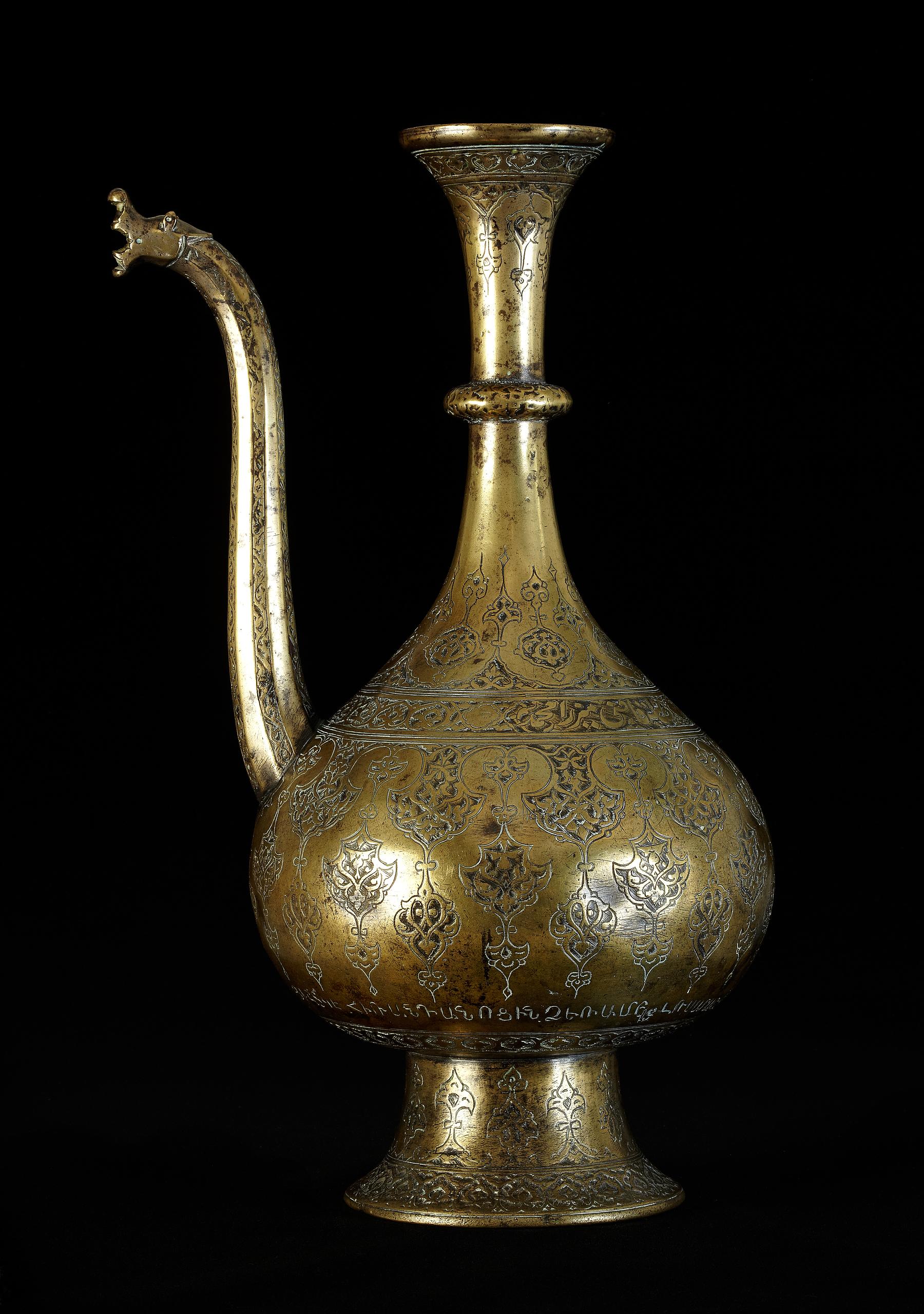
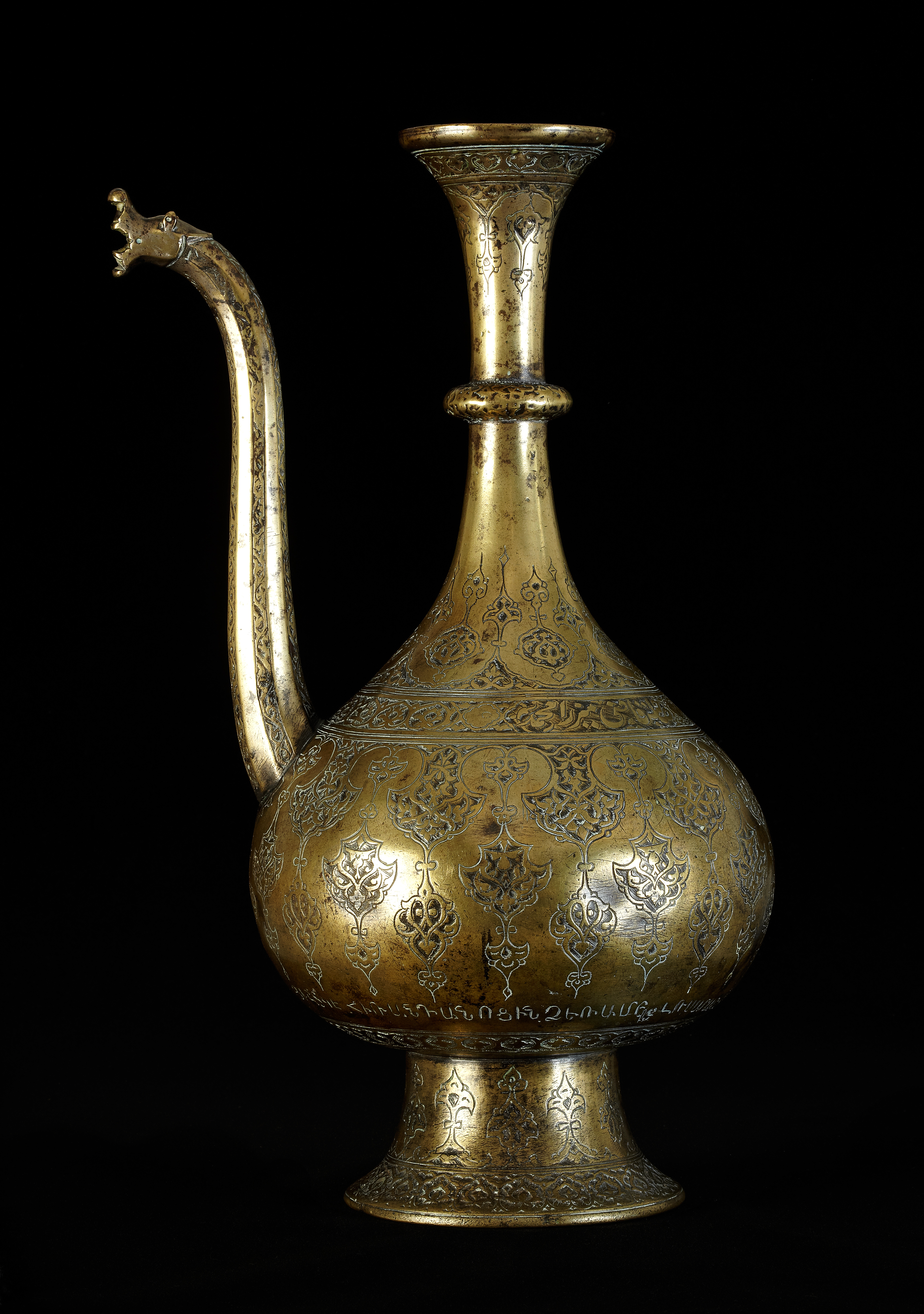
Brass jug, cast and engraved
Iran; 17th century
H: 40 cm
Inventory number 23/2008
The shape of the jug originated in Chinese porcelain jars and flasks. In Iran, pieces of this kind were made of brass, both as jugs and as flasks without a spout, which was mounted after the flask was cast. They held water for washing and were originally often accompanied by a brass basin to receive the water.
This jug has an Arabic inscription in the band that joins the spout with the body giving the name of the original owner: “the judge Mirza Muhamad.”
An Armenian inscription over the foot relates that in 1801, the jug was donated to a hospital by the sexton Ter Yohannes. Christian Armenians were deported at the beginning of the 17th century to Isfahan, where an Armenian quarter can still be found
This jug has an Arabic inscription in the band that joins the spout with the body giving the name of the original owner: “the judge Mirza Muhamad.”
An Armenian inscription over the foot relates that in 1801, the jug was donated to a hospital by the sexton Ter Yohannes. Christian Armenians were deported at the beginning of the 17th century to Isfahan, where an Armenian quarter can still be found