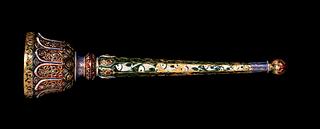
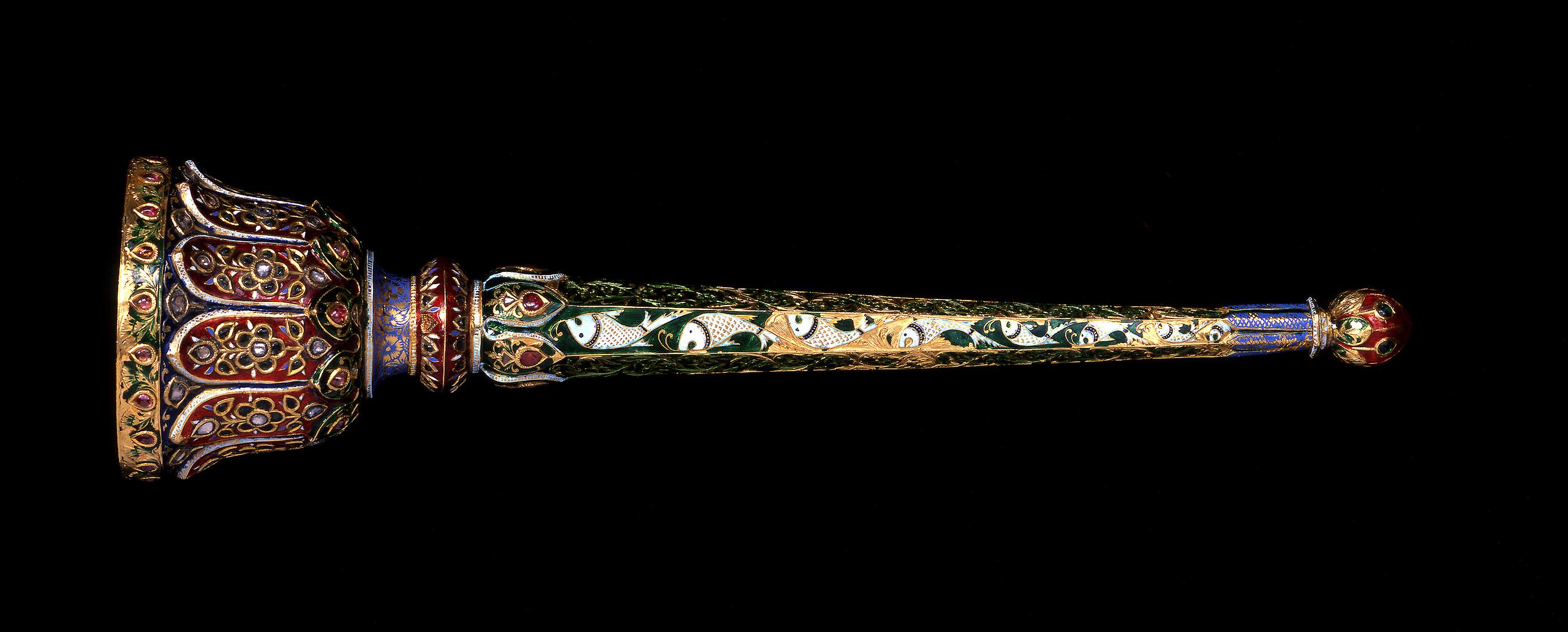
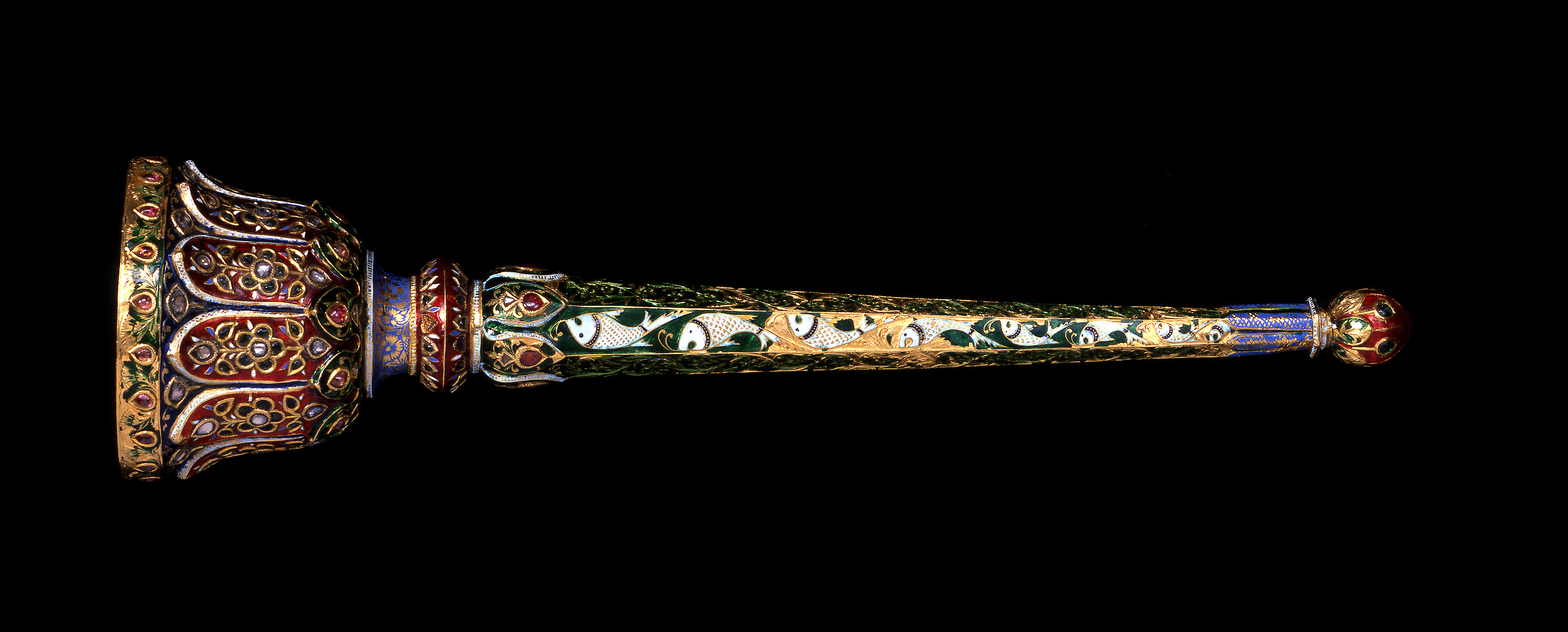
Handle of a fly whisk, enameled gold set with diamonds, rubies, and emeralds
India, Jaipur (?); 18th-19th century
L: 32,5 cm
Inventory number 5/1982
Richly conceived fans and whisks had been a symbol of princely rank from ancient times, and this symbol was adopted at an early stage in an Islamic context. When the ruler appeared in ceremonies, he was accompanied by a servant who kept insects away with a whisk of this kind fitted with a yak tail.
This substantial piece was made of solid gold. It has the character of a regalia item and is both conspicuously magnificent and quite elegant. The three colors of the precious stones are matched by the enameled decoration designed on the shaft as stylized white fish swimming in an emerald-green, transparent sea.
This substantial piece was made of solid gold. It has the character of a regalia item and is both conspicuously magnificent and quite elegant. The three colors of the precious stones are matched by the enameled decoration designed on the shaft as stylized white fish swimming in an emerald-green, transparent sea.
Published in
Published in
Kjeld von Folsach: Islamic art. The David Collection, Copenhagen 1990, cat.no. 386;
Kjeld von Folsach, Torben Lundbæk and Peder Mortensen (eds.): Sultan, Shah and Great Mughal: the history and culture of the Islamic world, The National Museum, Copenhagen 1996, cat.no. 343;
Mark Zebrowski: Gold, silver and bronze from Mughal India, London 1997, fig. 58;
Kjeld von Folsach: Art from the World of Islam in The David Collection, Copenhagen 2001, cat.no. 593;
Kjeld von Folsach, Torben Lundbæk and Peder Mortensen (eds.): Sultan, Shah and Great Mughal: the history and culture of the Islamic world, The National Museum, Copenhagen 1996, cat.no. 343;
Mark Zebrowski: Gold, silver and bronze from Mughal India, London 1997, fig. 58;
Kjeld von Folsach: Art from the World of Islam in The David Collection, Copenhagen 2001, cat.no. 593;