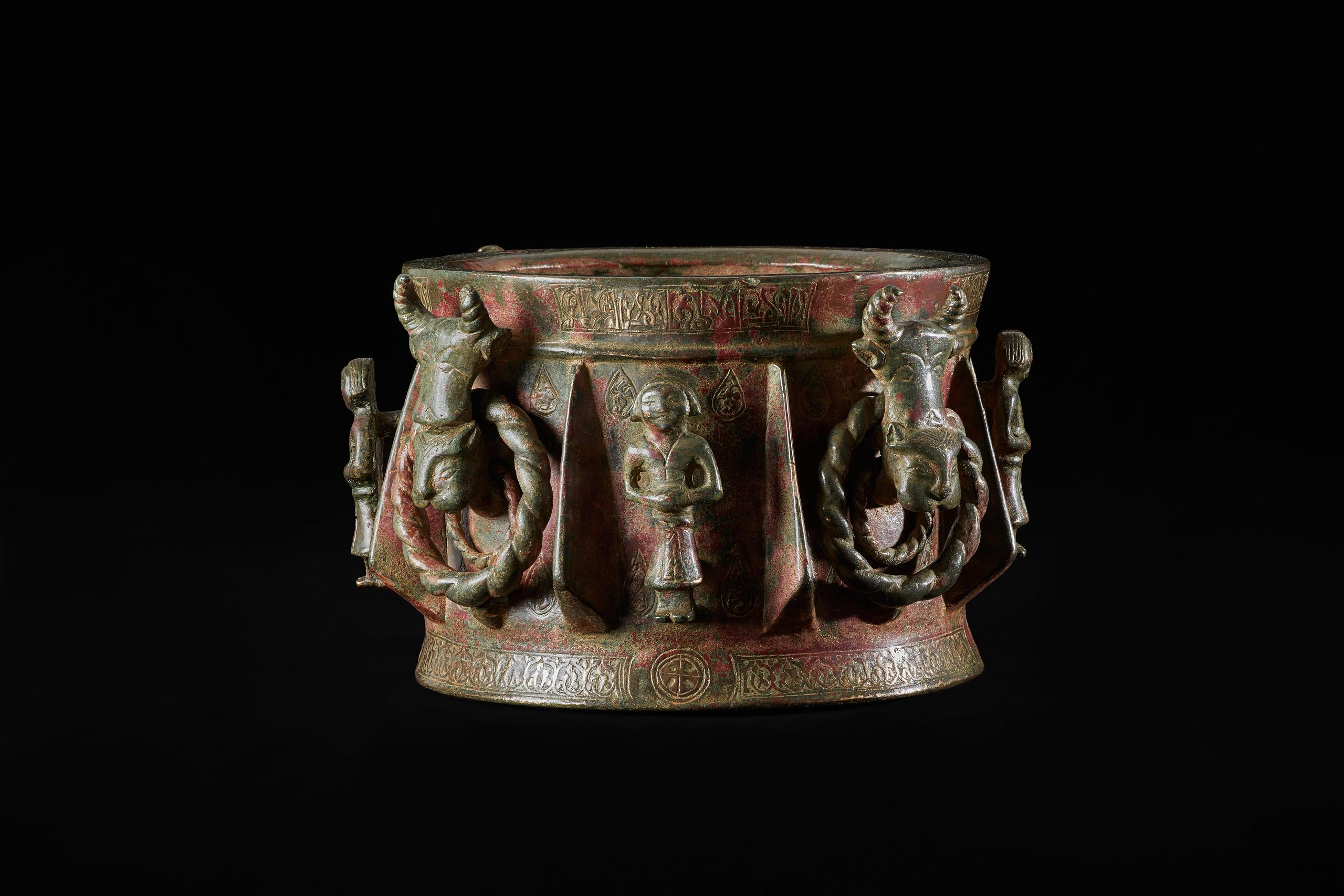
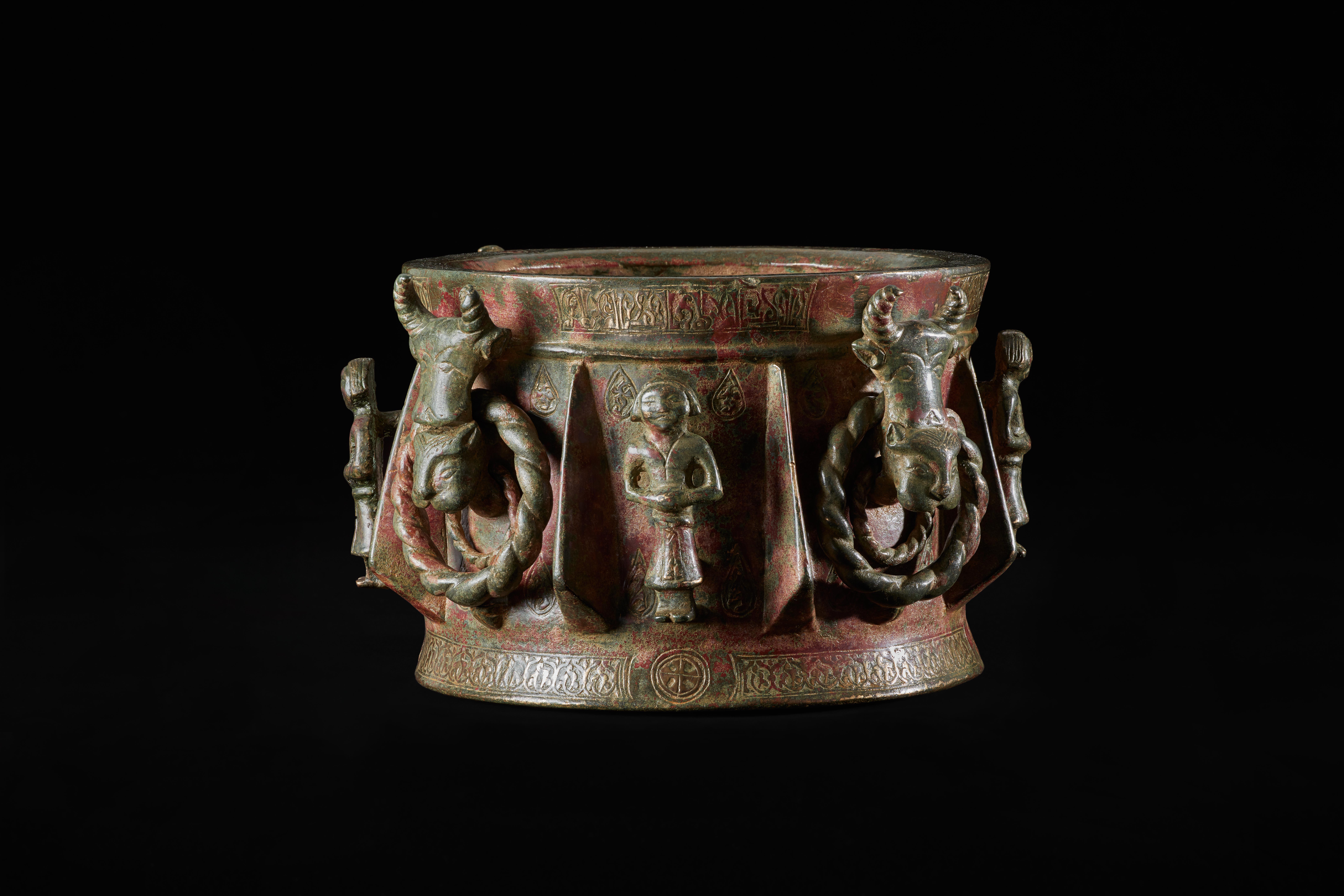
Mortar, cast bronze, engraved and inlaid with copper
Eastern Iran or Afghanistan; 12th century
H: 16.3; Diam: 23.3 cm
Inventory number 2/1998
This monumental mortar is unusual, not only due to its size, but also because of its freely sculptured figurative decoration. The only comparable mortar is found in Tehran. It is smaller and has no lion’s heads. Its four figures, in turn, are depicted as individual musicians.
The mortar was cast using the cire perdue method. The rings were cast first, after which they were placed in a wax model of the mortar. The model was covered in stages with several layers of liquid clay. After the “mold” was dry, the wax was melted out of it and the piece was cast in one process with the rings in place. Work like this is unusual in the Middle East, while Indian bronze-casters were masters of the technique.
The mortar was cast using the cire perdue method. The rings were cast first, after which they were placed in a wax model of the mortar. The model was covered in stages with several layers of liquid clay. After the “mold” was dry, the wax was melted out of it and the piece was cast in one process with the rings in place. Work like this is unusual in the Middle East, while Indian bronze-casters were masters of the technique.
Published in
Published in
Kjeld von Folsach: Art from the World of Islam in The David Collection, Copenhagen 2001, cat.no. 477;
Kjeld von Folsach, Joachim Meyer: The Human Figure in Islamic Art – Holy Men, Princes, and Commoners, The David Collection, Copenhagen 2017, cat.no. 4;
Kjeld von Folsach, Joachim Meyer: The Human Figure in Islamic Art – Holy Men, Princes, and Commoners, The David Collection, Copenhagen 2017, cat.no. 4;