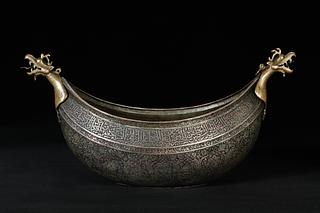
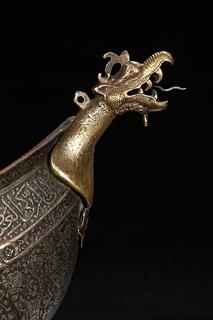
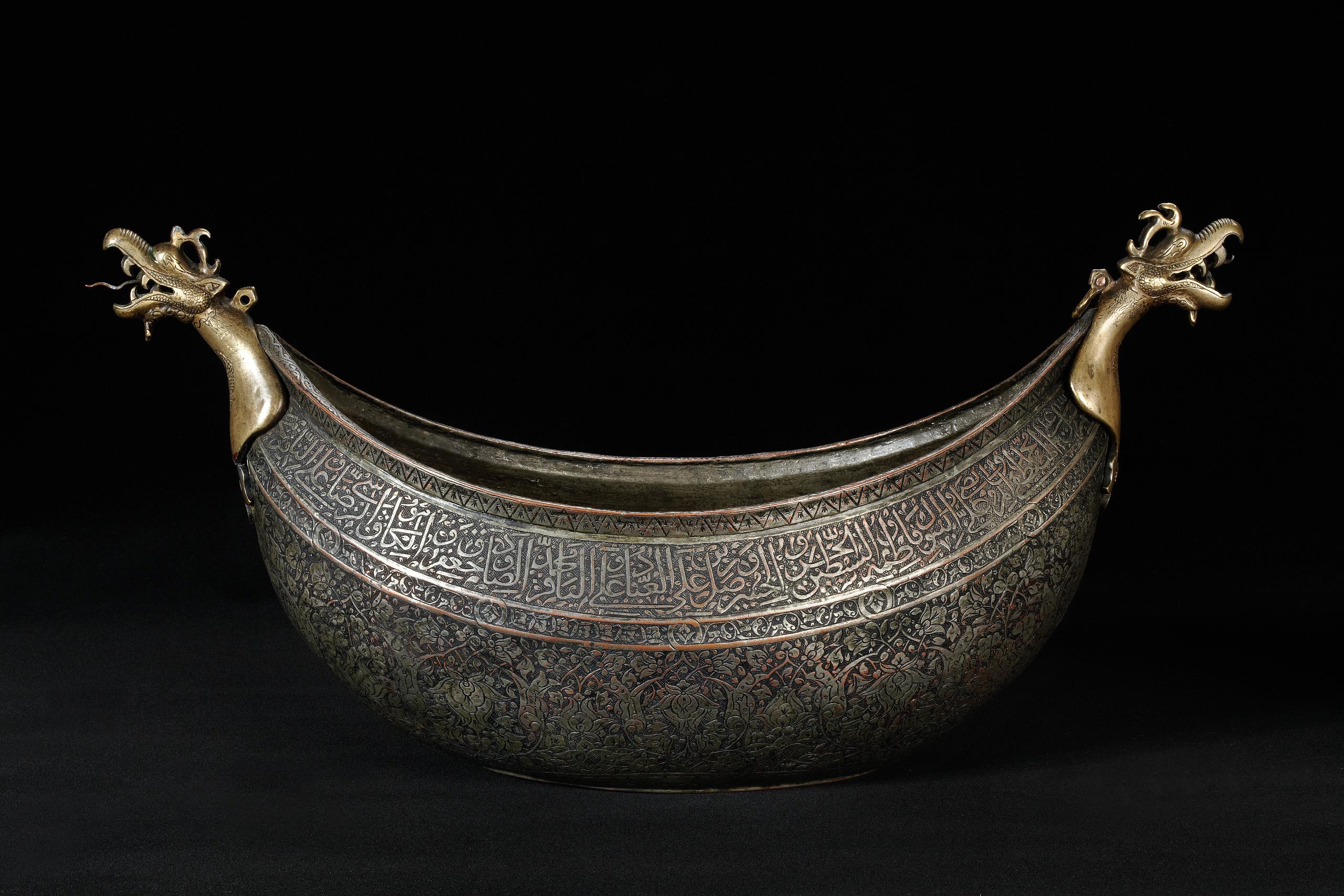
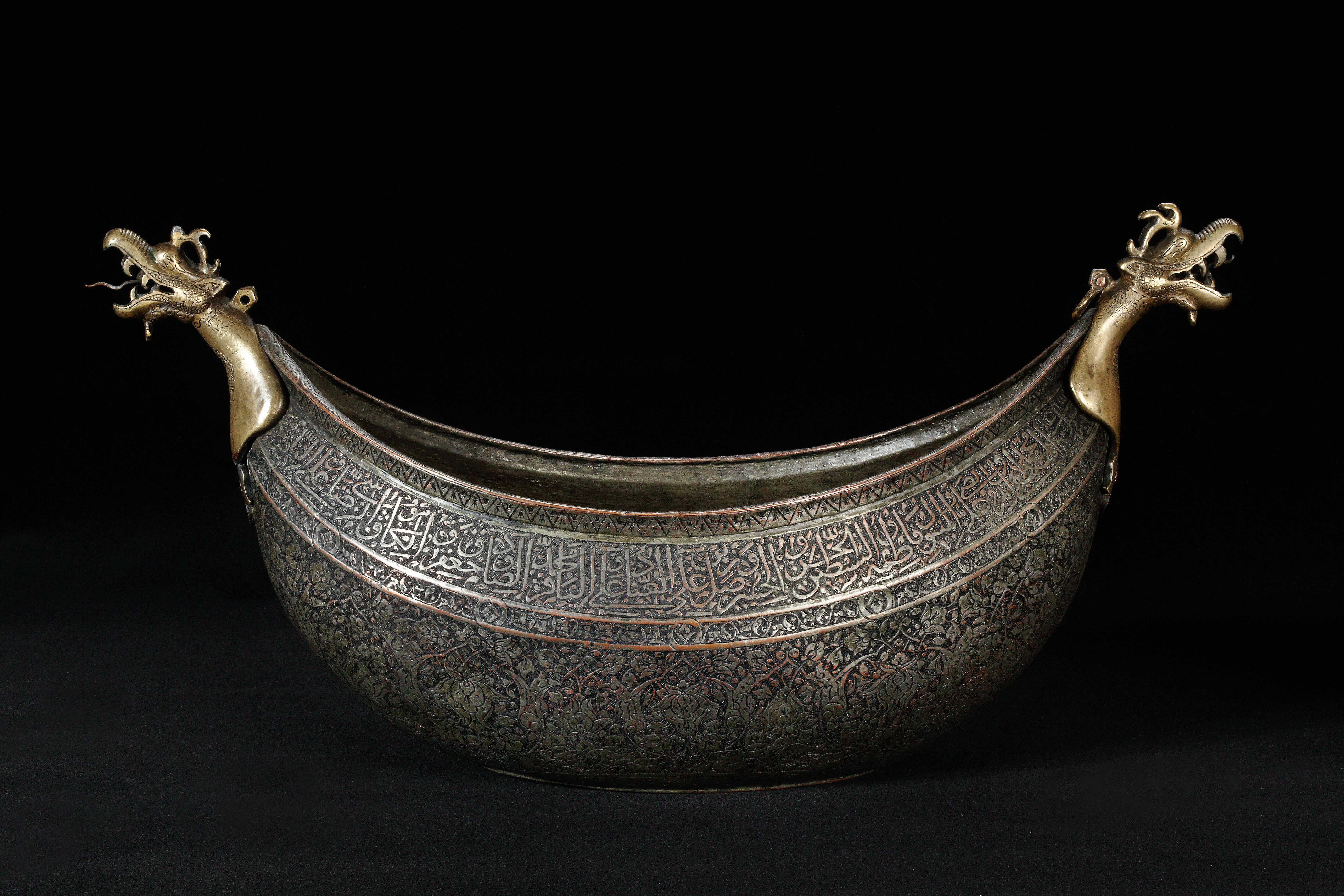
Kashkul (begging bowl), engraved, tinned copper (probably beaten), with points of cast brass
Iran; 1st half of 16th century
H: 25,5; L: 52; W: 20 cm
Inventory number 3/2009
Begging bowls made of coco de mer, wood, or metal were typical accessories for many wandering dervishes, along with staffs and certain articles of clothing. This piece, however, which has retained its original tinning, cannot have belonged to a poor dervish, and probably hung in a religious building. Its size and decoration make the bowl one of the most impressive that has been preserved from the Safavid period.
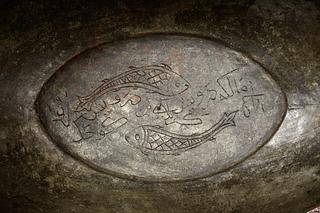
On the outside, a wide inscription band with Shiite invocations surmounts arabesque ornamentation typical of the day. In addition, it is engraved with the names of various owners, including the dervish Karbalai, son of the dervish Kuchak Ali.
On the outside, a wide inscription band with Shiite invocations surmounts arabesque ornamentation typical of the day. In addition, it is engraved with the names of various owners, including the dervish Karbalai, son of the dervish Kuchak Ali.
Published in
Published in
Joachim Meyer and Peter Wandel: Sufisme. Islams mystiske vej, Davids Samling, Copenhagen 2011, pp. 16-17;
Yusuf Cetin: Türk Sanatında Ejder Ikonografisi, Ankara 2025, fig. 143, p. 174;
Yusuf Cetin: Türk Sanatında Ejder Ikonografisi, Ankara 2025, fig. 143, p. 174;