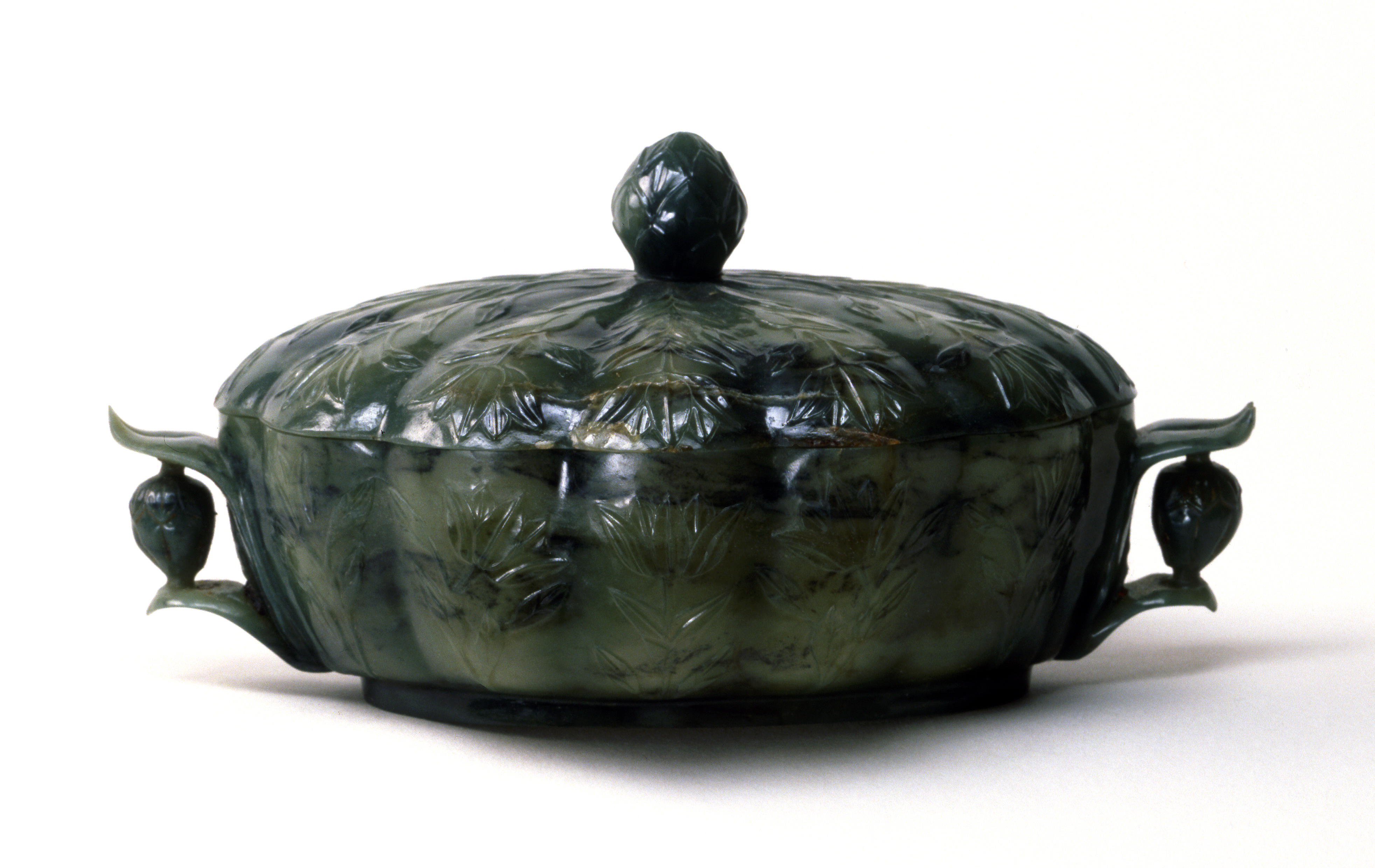
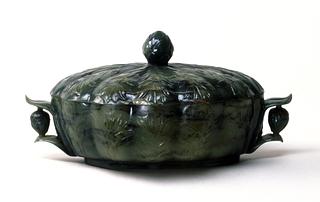
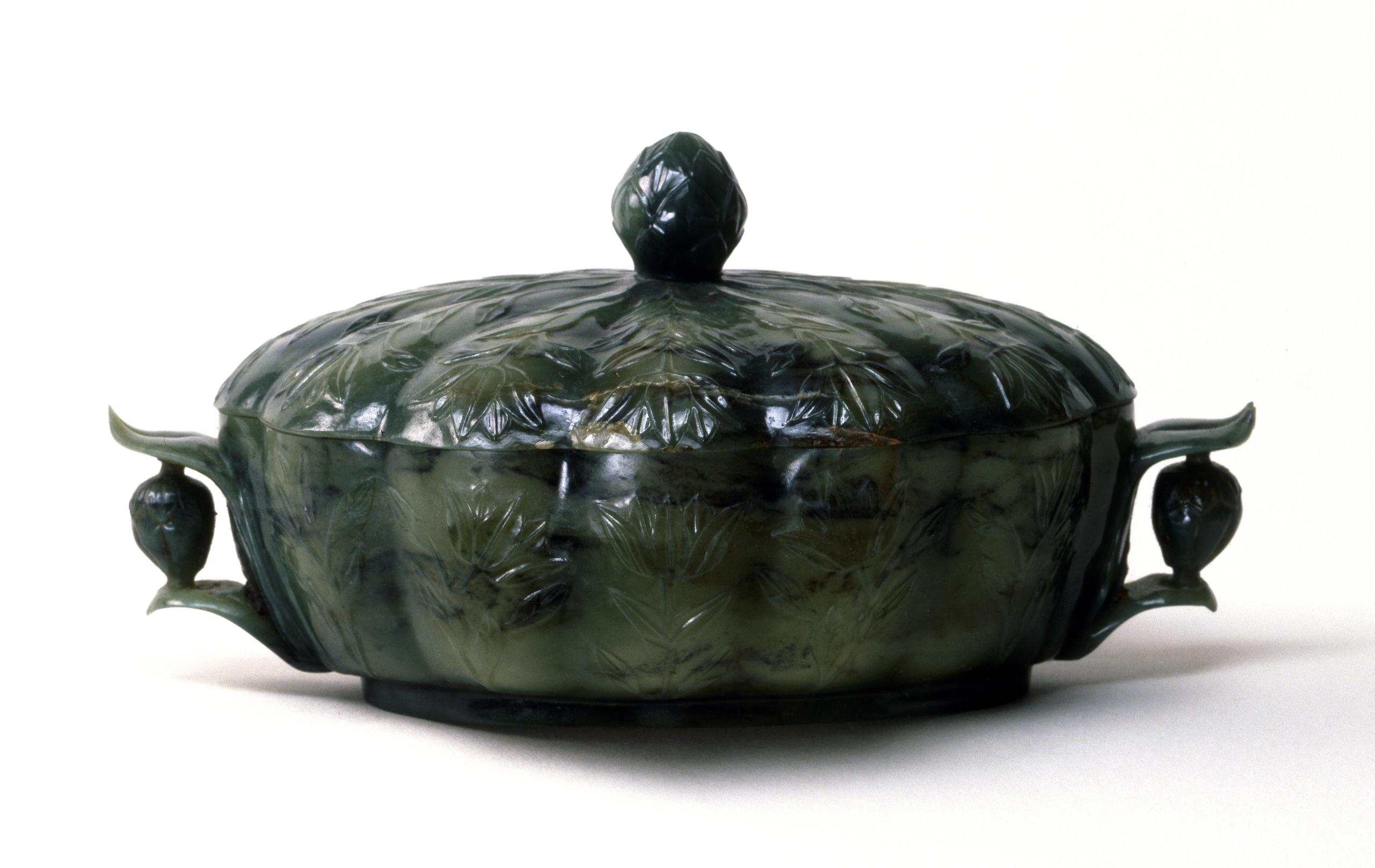
Covered bowl, green jade
India; 18th century
H: 10.7; B: 13.3; L: 21.5 cm
Inventory number 69/1980
China had a millennia-long tradition of making objects from jade – a tradition that the Central Asian Timurids adopted in the 15th century along with other elements from Chinese art.
The Mughals were the descendants of the Timurids and inherited their love of the material, something that is reflected in the many Indian jade pieces from the 17th-18th century that have been preserved. Work with jade was perfected in this era, designed in keeping with the Mughal period’s interest in flowers and vegetal shapes.
At the same time, however, there was also an exchange of crafts and styles with China, and the collections of the Chinese emperors held jades from “Hindustan” that were admired for their exotic forms.
The Mughals were the descendants of the Timurids and inherited their love of the material, something that is reflected in the many Indian jade pieces from the 17th-18th century that have been preserved. Work with jade was perfected in this era, designed in keeping with the Mughal period’s interest in flowers and vegetal shapes.
At the same time, however, there was also an exchange of crafts and styles with China, and the collections of the Chinese emperors held jades from “Hindustan” that were admired for their exotic forms.
Published in
Published in
Kjeld von Folsach: Islamic art. The David Collection, Copenhagen 1990, cat.no. 265;
Kjeld von Folsach: Art from the World of Islam in The David Collection, Copenhagen 2001, cat.no. 378;
Kjeld von Folsach: Art from the World of Islam in The David Collection, Copenhagen 2001, cat.no. 378;
.-The-David-Collection_Copenhagen_Photo-Pernille-Klemp.jpg)