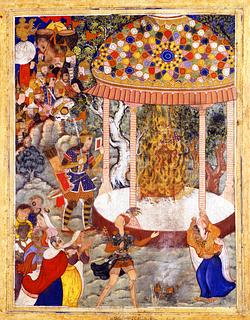
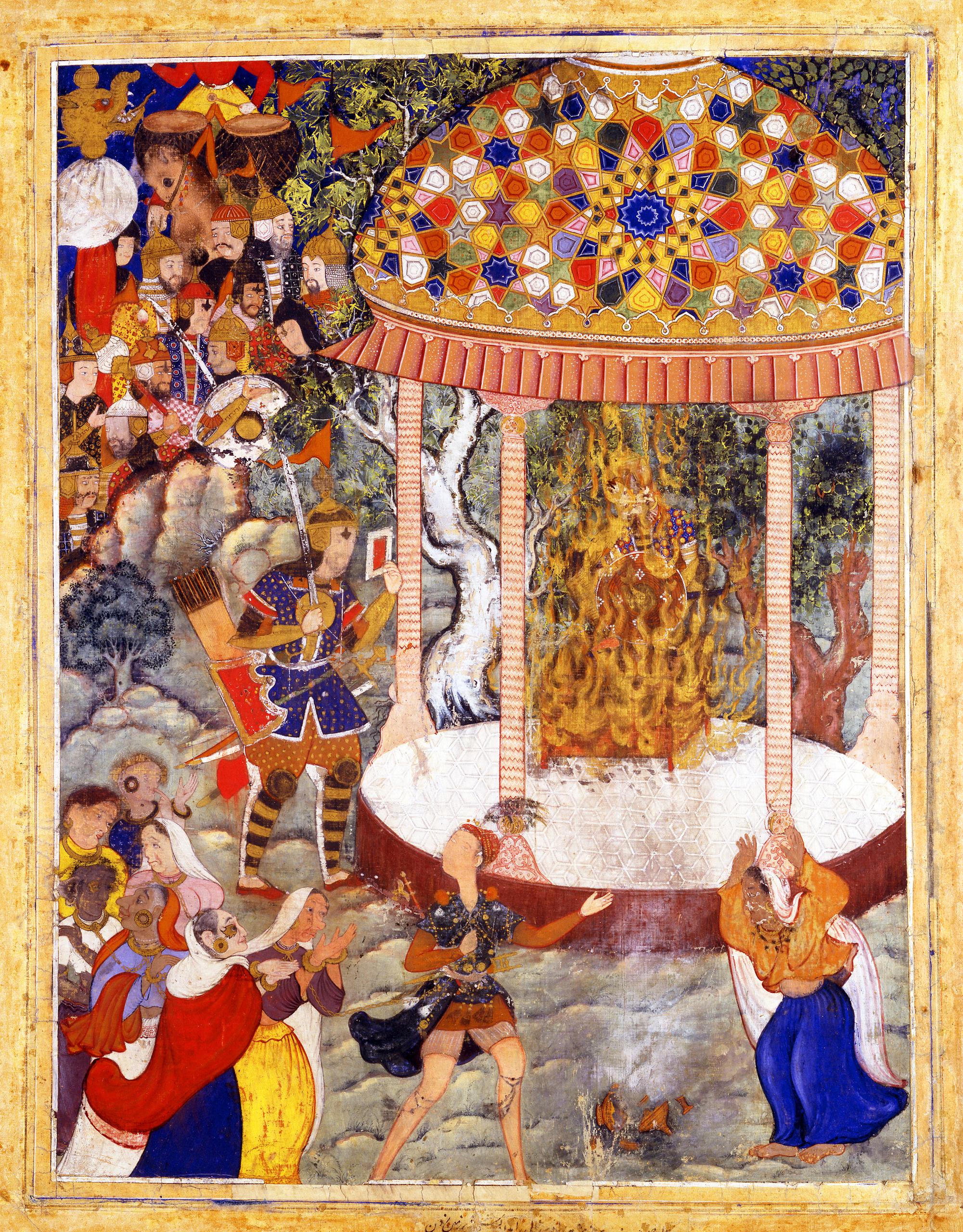
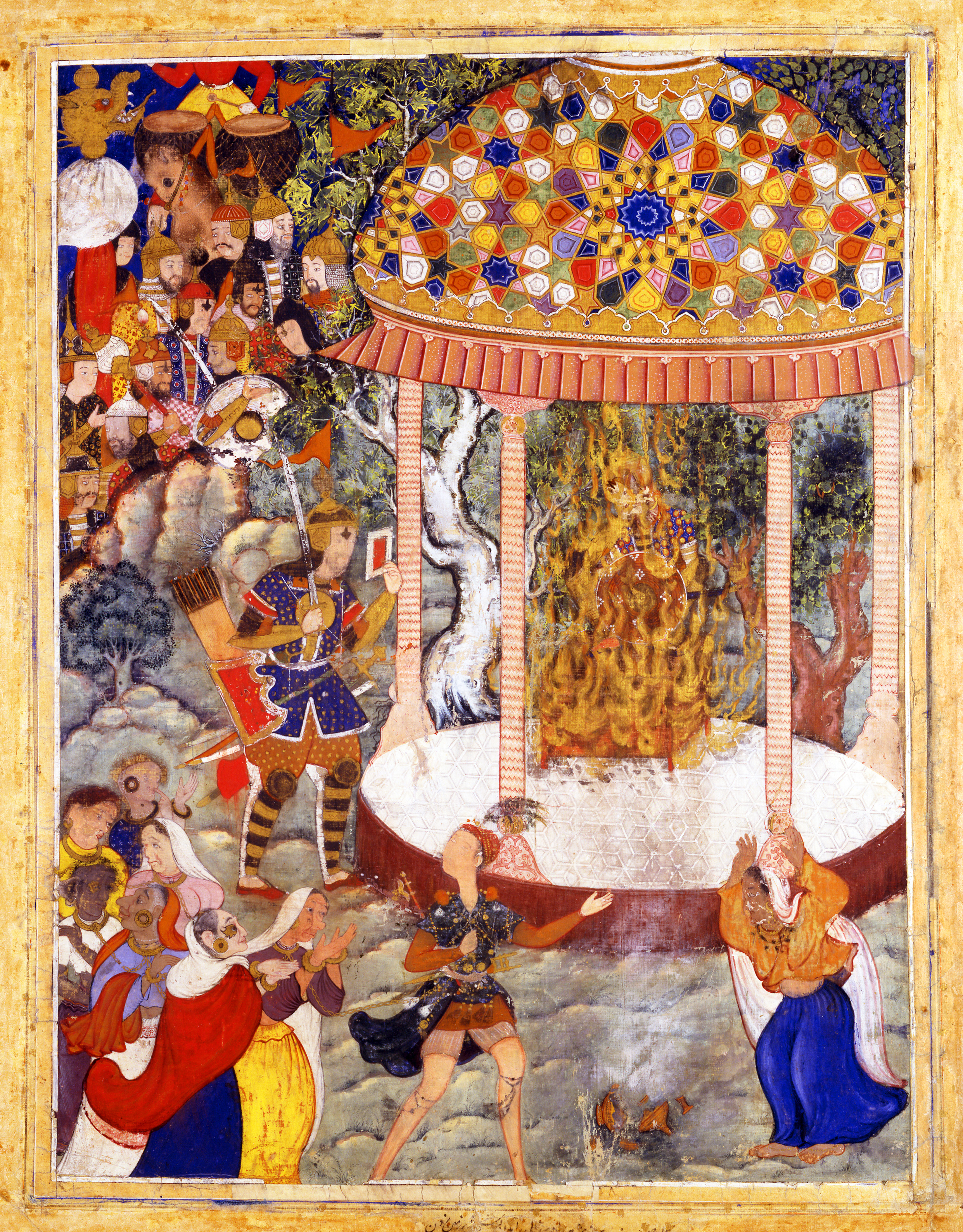
Miniature on cotton tabby from a copy of the Hamzanama. “Hamza Burns Zarthust’s Chest and Shatters the Urn with his Ashes”
India, Mughal; c. 1570
Miniature: 68 × 51.4 cm
Formerly in the Art Institute of Chicago
Formerly in the Art Institute of Chicago
Inventory number 72/1998
It took some 15 years to complete the Great Mughal Akbar’s copy of the Hamzanama, which originally contained about 1400 miniatures. This was a gigantic project in every respect, a collaborative effort by Persian and Indian artists that is considered a pioneering work of early Mughal painting.
The book is a fictitious account of the life Hamza, the Prophet Muhammad’s uncle. Here we see Hamza in the process of burning and destroying the earthly remains of the Persian founder of Zoroastrianism, called Zarthust in the manuscript. Zarthust’s granddaughter, Manut, who raises her hands in horror, and the ugly women on the left are depicted as sorceresses.
The book is a fictitious account of the life Hamza, the Prophet Muhammad’s uncle. Here we see Hamza in the process of burning and destroying the earthly remains of the Persian founder of Zoroastrianism, called Zarthust in the manuscript. Zarthust’s granddaughter, Manut, who raises her hands in horror, and the ugly women on the left are depicted as sorceresses.
Published in
Published in
Heinrich Glück: Die indischen Miniaturen des Hæmzæ-romanes im Österreichischen Museum für Kunst und Industrie in Wien und in anderen Sammlungen, Zürich 1925, Abb. 47, p. 152;
Ernst J. Grube: Islamic paintings from the 11th to the 18th century in the Collection of Hans P. Kraus, New York 1972, p. 256, no. 4;
Sotheby’s, London, 16/4-1985, lot 478;
Kjeld von Folsach: Art from the World of Islam in The David Collection, Copenhagen 2001, cat.no. 56;
John Seyller: The adventures of Hamza: painting and storytelling in Mughal India, Arthur M. Sackler Gallery, Smithsonian Institution, Washington, DC 2002, cat.no. 73;
John Seyller: Die Abenteuer des Hamza: die schönsten Bilder des Hamzanama, mit Kurztexten , Museum Rietberg, Zürich 2003, cat.no. 42;
Kjeld von Folsach: For the Privileged Few: Islamic Miniature Painting from The David Collection, Louisiana, Humlebæk 2007, cat.no. 63;
Ernst J. Grube: Islamic paintings from the 11th to the 18th century in the Collection of Hans P. Kraus, New York 1972, p. 256, no. 4;
Sotheby’s, London, 16/4-1985, lot 478;
Kjeld von Folsach: Art from the World of Islam in The David Collection, Copenhagen 2001, cat.no. 56;
John Seyller: The adventures of Hamza: painting and storytelling in Mughal India, Arthur M. Sackler Gallery, Smithsonian Institution, Washington, DC 2002, cat.no. 73;
John Seyller: Die Abenteuer des Hamza: die schönsten Bilder des Hamzanama, mit Kurztexten , Museum Rietberg, Zürich 2003, cat.no. 42;
Kjeld von Folsach: For the Privileged Few: Islamic Miniature Painting from The David Collection, Louisiana, Humlebæk 2007, cat.no. 63;
Mughal India
.jpg)
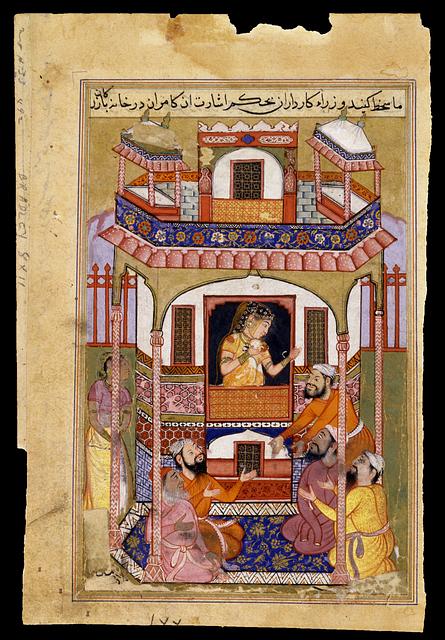
Miniature from a copy of the Tutinama. ‘A Young Woman Visited by the Sultan’s Viziers’
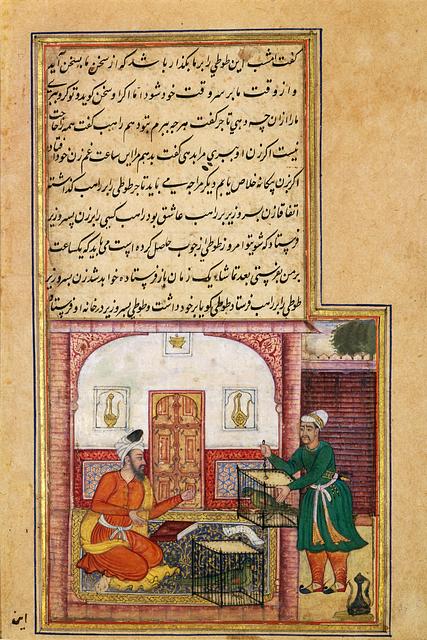
Miniature from a copy of the Tutinama (Tales of a Parrot). ‘The Sheikh with the Talking Parrot of Wood and the Mute Copy’
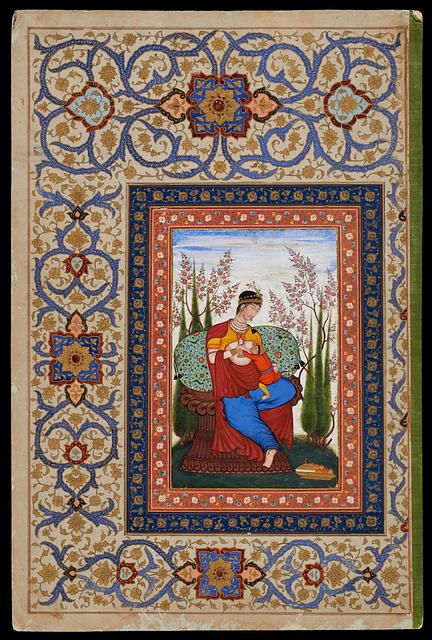
Miniature pasted on an album leaf. ‘A Nursing Princess’
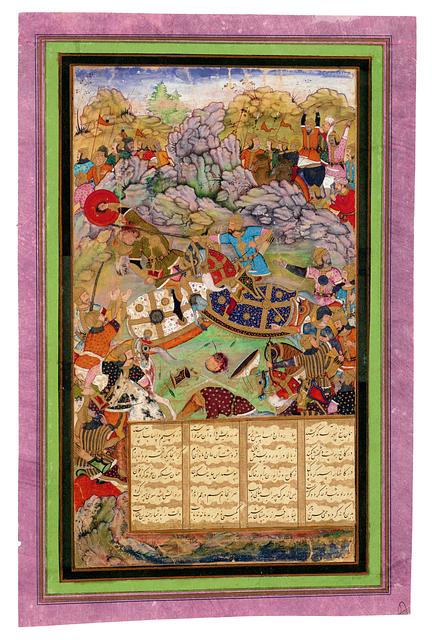
Miniature from a copy of the Baburnama, pasted on an album leaf. ‘Babur is Struck on the Head by his Cousin Sultan Ahmad Tambal’