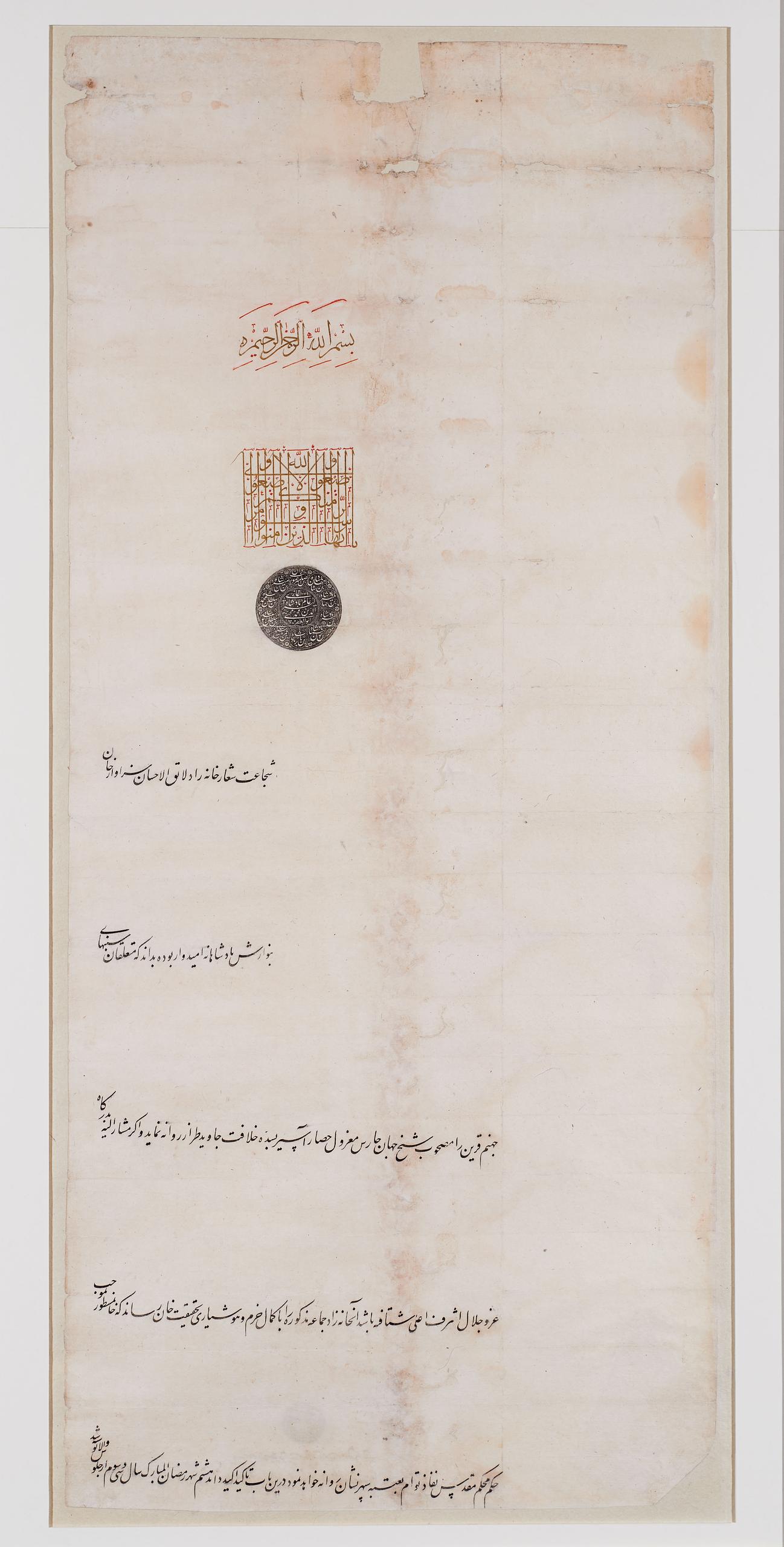
Firman issued by Alamgir Shah (Aurangzeb)
India; 1689
105 × 46 cm
Inventory number 21/1989
When the Great Mughals embarked on long journeys, they brought along not only large parts of the court and harem, but also the chancellery. The ruler followed political developments through daily councils and audiences, and couriers with firmans (imperial decrees) were dispatched from the camp.
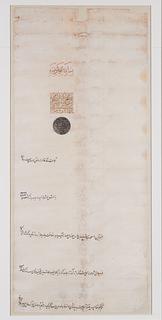
This firman, issued on the 8th day of the month of Ramadan in the 33rd year of Aurangzeb’s reign (June 27, 1689), begins with the traditional words, “In the name of God, the merciful, the compassionate,” followed by Aurangzeb’s tughra (his name in intricate calligraphy) and seal. The decree itself, written in Persian, is an order to a certain Asad Khan to take precautions against adherents of Sambha, the leader of a revolt who had been executed the year before.
This firman, issued on the 8th day of the month of Ramadan in the 33rd year of Aurangzeb’s reign (June 27, 1689), begins with the traditional words, “In the name of God, the merciful, the compassionate,” followed by Aurangzeb’s tughra (his name in intricate calligraphy) and seal. The decree itself, written in Persian, is an order to a certain Asad Khan to take precautions against adherents of Sambha, the leader of a revolt who had been executed the year before.
Published in
Published in
Kjeld von Folsach, Torben Lundbæk and Peder Mortensen (eds.): Sultan, Shah and Great Mughal: the history and culture of the Islamic world, The National Museum, Copenhagen 1996, cat.no. 334;
Finbarr Barry Flood: "Signs of silence: epigraphic erasure and the image of the word" in Christiane Gruber (red.): The image debate: figural representation in Islam and across the world, London 2019, fig. 23, p. 65;
Finbarr Barry Flood: "Signs of silence: epigraphic erasure and the image of the word" in Christiane Gruber (red.): The image debate: figural representation in Islam and across the world, London 2019, fig. 23, p. 65;
Mughal India
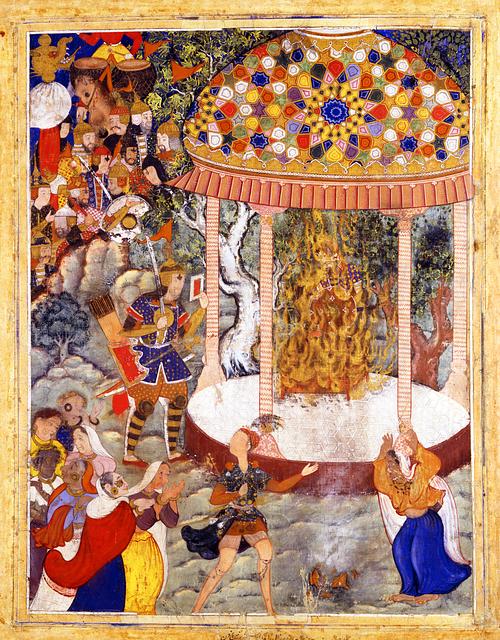
Miniature on cotton tabby from a copy of the Hamzanama. “Hamza Burns Zarthust’s Chest and Shatters the Urn with his Ashes”
.jpg)
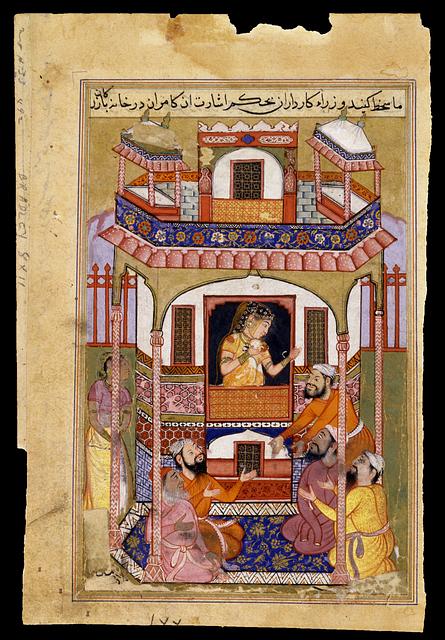
Miniature from a copy of the Tutinama. ‘A Young Woman Visited by the Sultan’s Viziers’
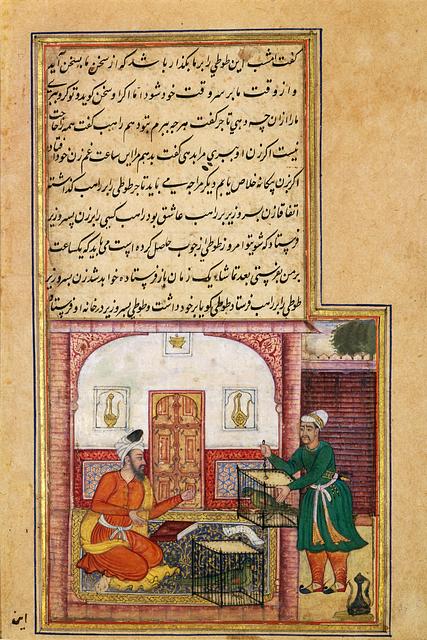
Miniature from a copy of the Tutinama (Tales of a Parrot). ‘The Sheikh with the Talking Parrot of Wood and the Mute Copy’
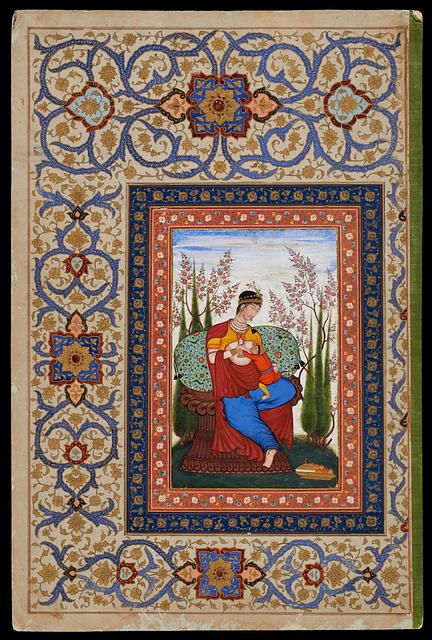
Miniature pasted on an album leaf. ‘A Nursing Princess’