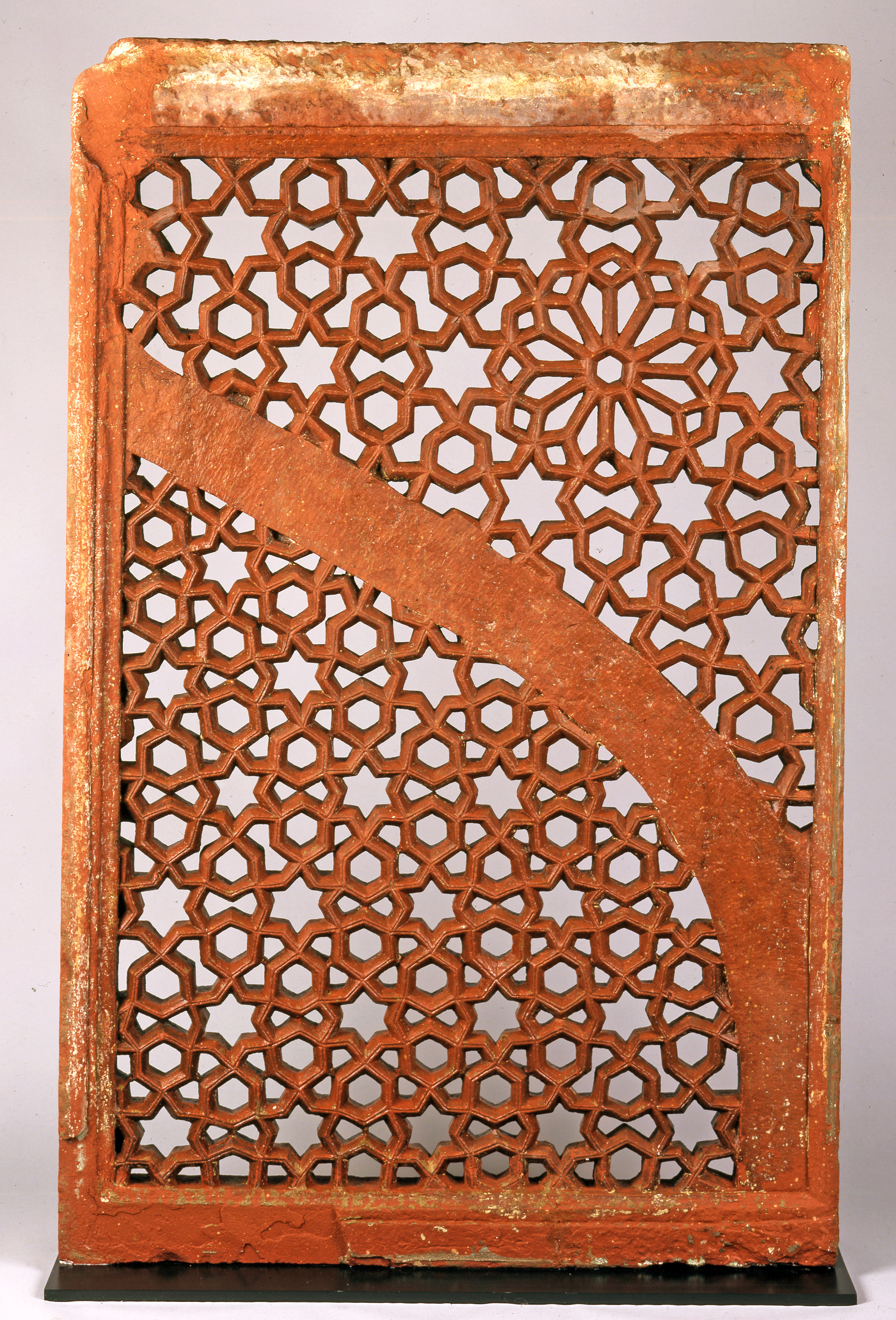
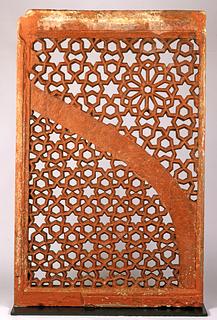
Jali, red sandstone
India, area around Delhi; end of 16th century
H: 144; W: 91.25 cm
Inventory number 31/1999
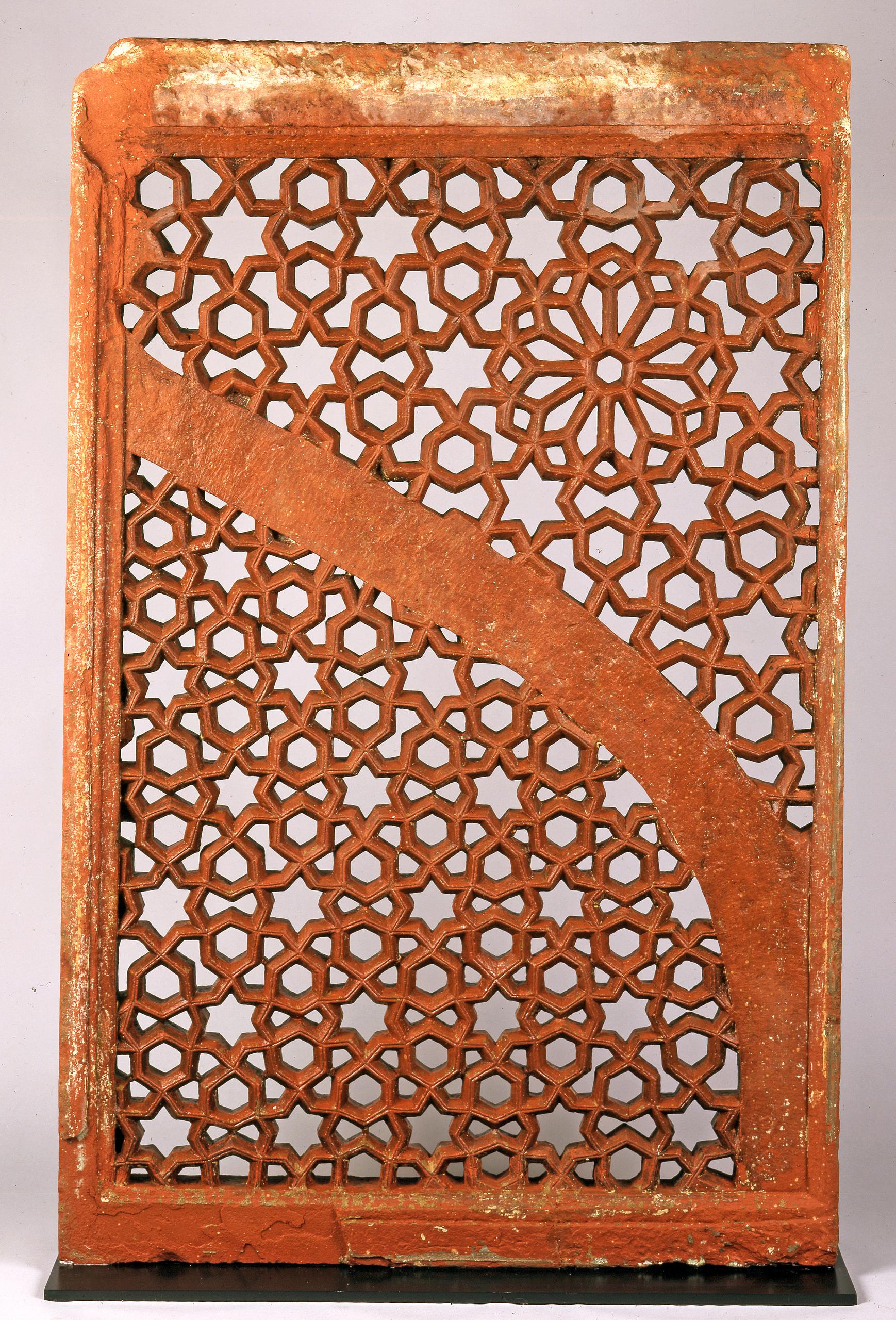
The jali originally had a mirror-image pendant on the left side, so that the broad band in the two jalis together made up a pointed arch. Similar jalis of marble or sandstone have been preserved in the palace city of Fatehpur Sikri, which the Mughal emperor Akbar had built in the second half of the 16th century.
There these jalis comprise a decidedly Islamic element in a building complex that in many other respects is characterized by Hindu architecture.
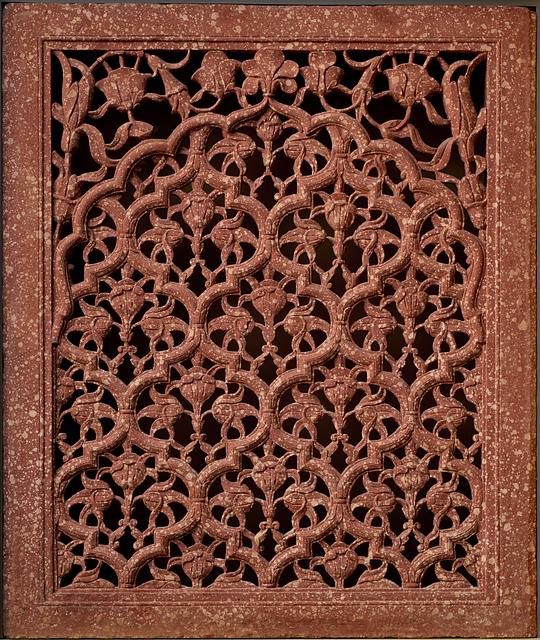
The geometric jalis of the Akbar period were succeeded in the first half of the 17th century by another type, in which the geometric structure was combined with a floral style.
There these jalis comprise a decidedly Islamic element in a building complex that in many other respects is characterized by Hindu architecture.
The geometric jalis of the Akbar period were succeeded in the first half of the 17th century by another type, in which the geometric structure was combined with a floral style.
Published in
Published in
Kjeld von Folsach: Art from the World of Islam in The David Collection, Copenhagen 2001, cat.no. 403;
.jpg)