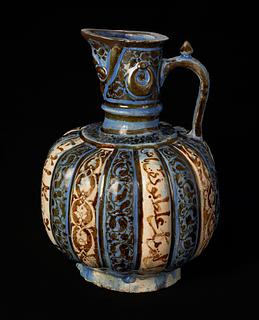
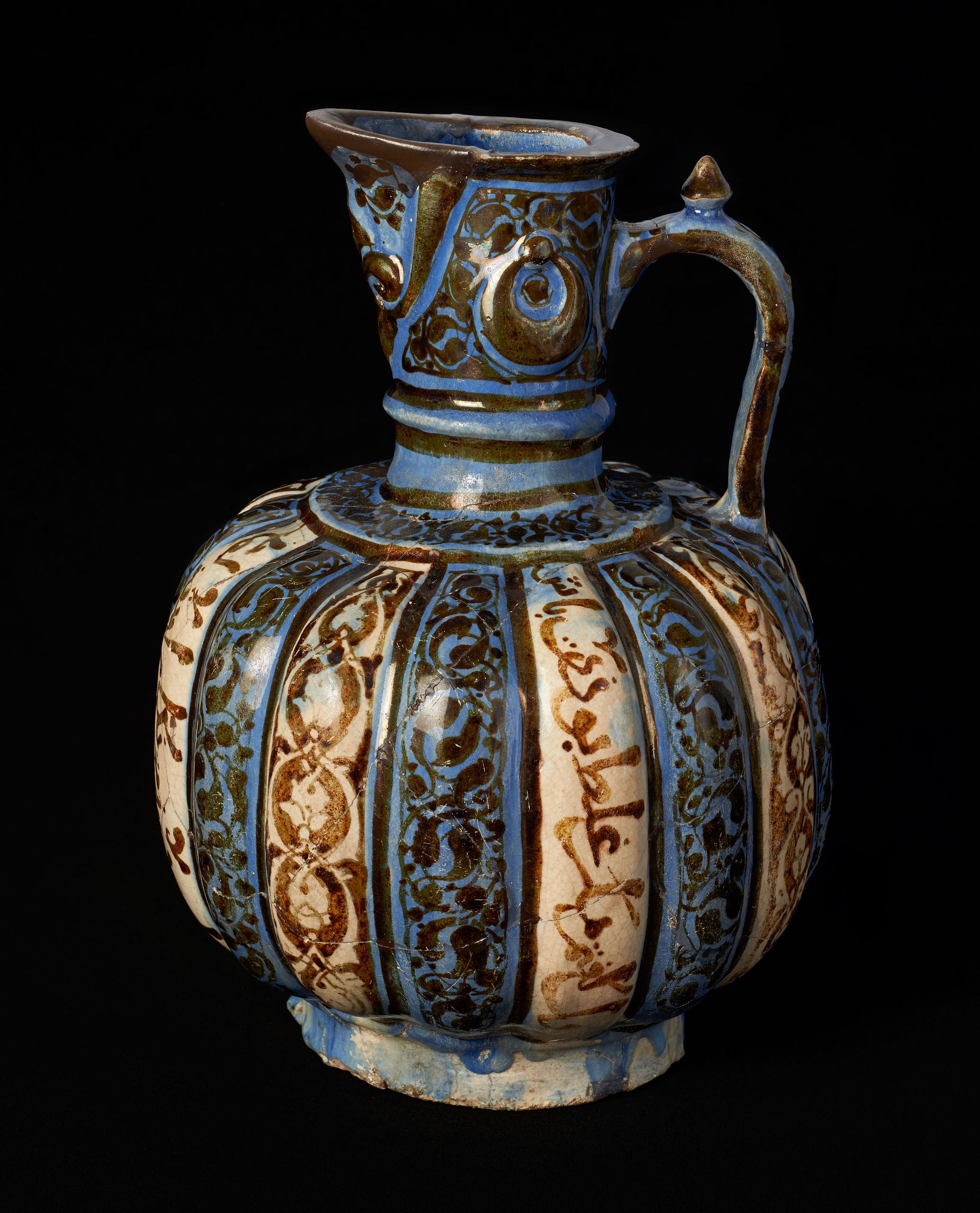
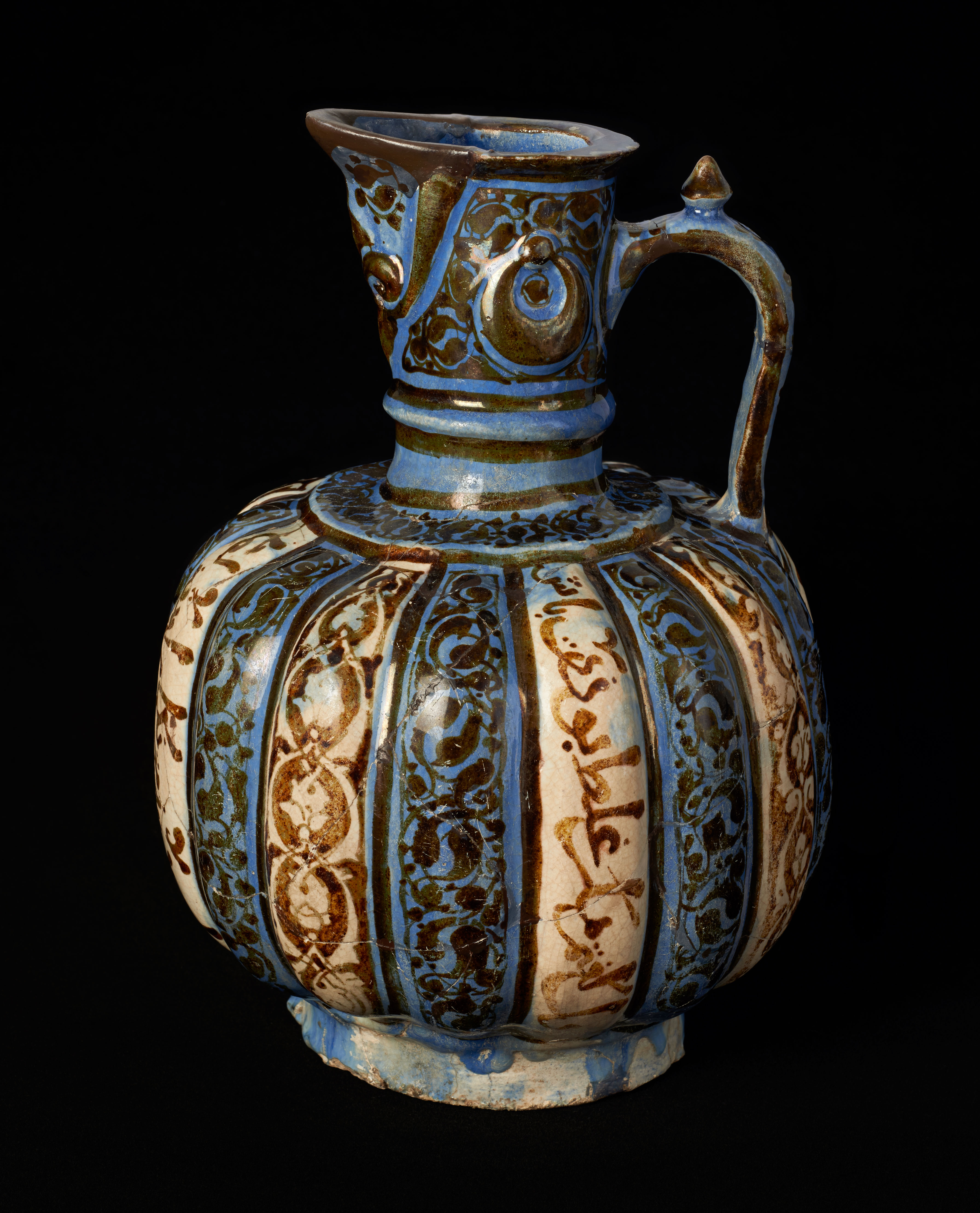
Fritware ewer, molded and painted in blue in, and in lustre over an opaque, white glaze
Iran; beginning of 13th century
H: 29; Diam: 21.5 cm
Inventory number Isl 88
The form of this ewer was copied from similar metal objects that were more expensive to make than ceramics.
The ewer’s vertical ribs are decorated with vegetal ornaments and with Persian love poems in cursive script. The handle has an Arabic inscription. Both Persian and Arabic are frequently found on the period’s works of art, especially on ceramics, and show that the population in the Iranian area at this point to some degree was bilingual.
The ewer’s vertical ribs are decorated with vegetal ornaments and with Persian love poems in cursive script. The handle has an Arabic inscription. Both Persian and Arabic are frequently found on the period’s works of art, especially on ceramics, and show that the population in the Iranian area at this point to some degree was bilingual.
Published in
Published in
Kjeld von Folsach: Islamic art. The David Collection, Copenhagen 1990, cat.no. 121;
Kjeld von Folsach: Art from the World of Islam in The David Collection, Copenhagen 2001, cat.no. 175;
Anne-Marie Keblow Bernsted: Early Islamic pottery: materials and techniques, London 2003, figs. 80-81, pp. 48-49;
Kjeld von Folsach: Art from the World of Islam in The David Collection, Copenhagen 2001, cat.no. 175;
Anne-Marie Keblow Bernsted: Early Islamic pottery: materials and techniques, London 2003, figs. 80-81, pp. 48-49;