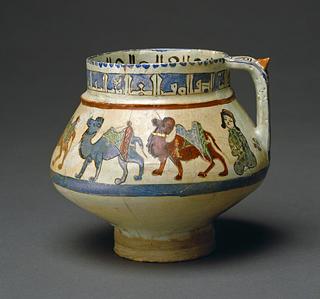
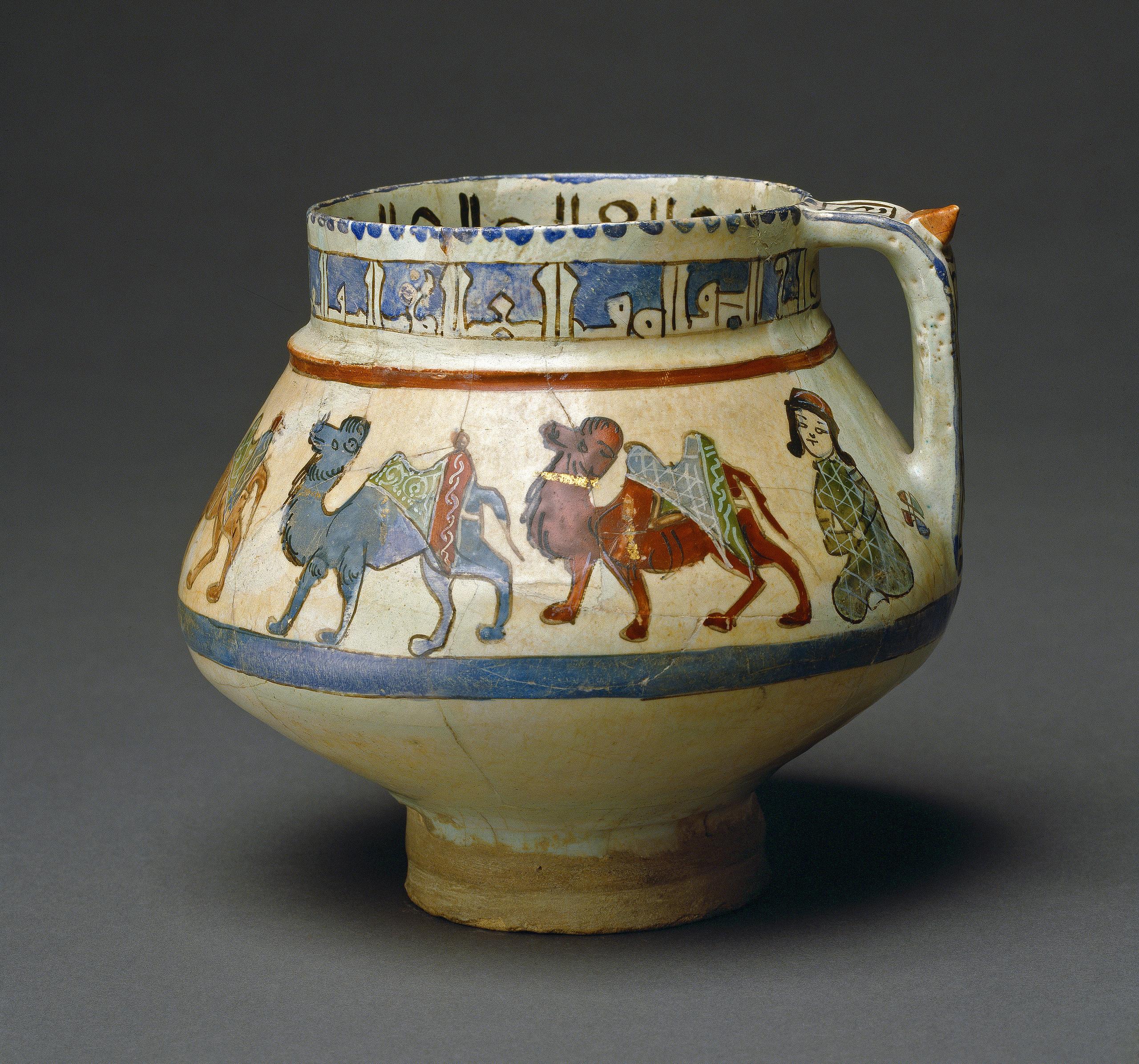
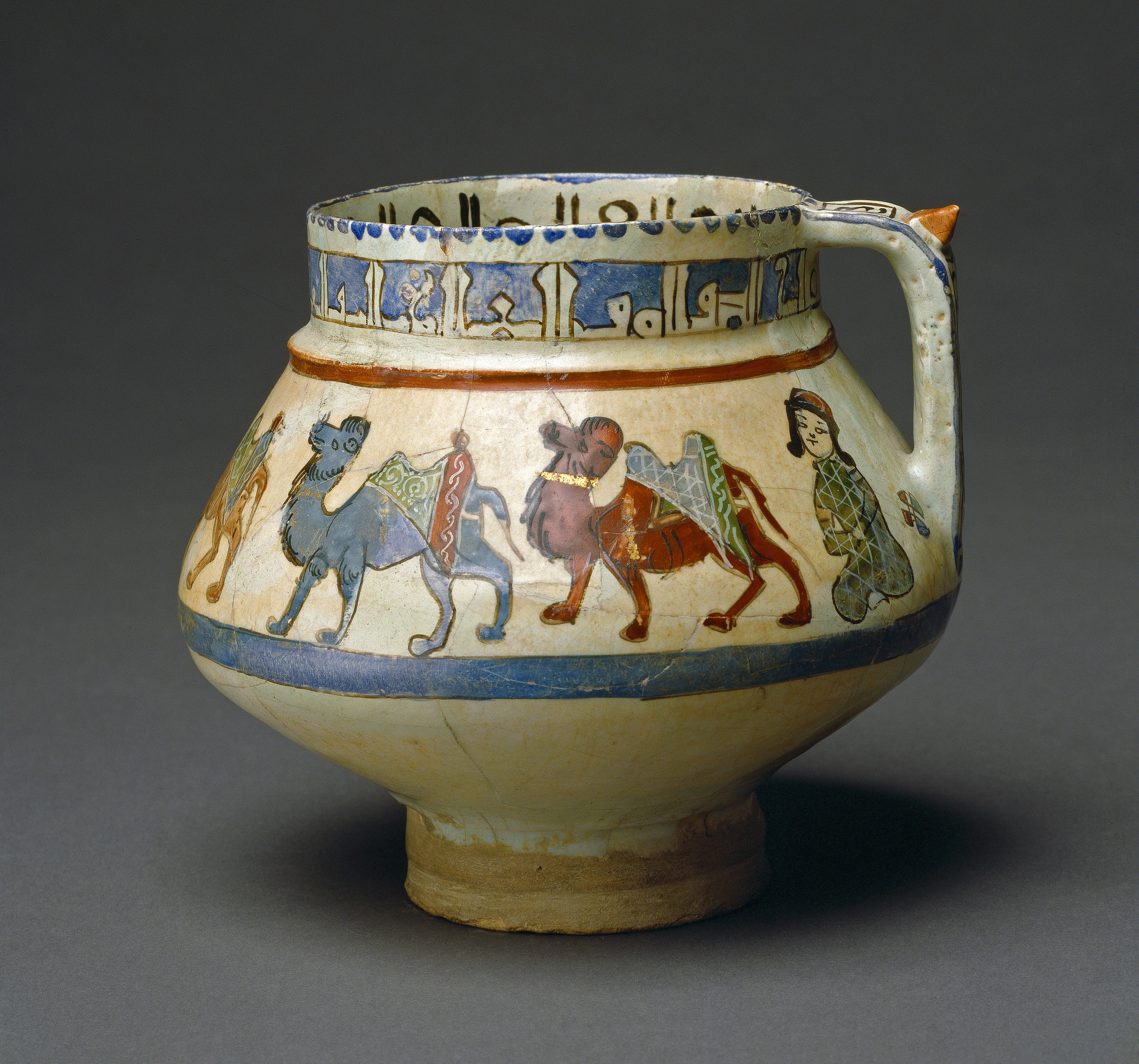
Fritware jug, with polychrome decoration and gold leaf in and over an opaque, white glaze. Minai type
Iran, Kashan; c. 1200
H: 12.4; Diam: 14 cm
Inventory number 56/1966
Minai ware was only produced in a short period under the Seljuks and their successors in around 1200. With the Mongols’ destruction of Kashan at the end of the 1220s, ceramics manufacture stopped for a few decades.
While Kashan reemerged as a ceramics center and high-quality lustreware was produced once again, colorful minai ware had evidently gone out of fashion. Although Abu al-Qasim al-Kashani (i.e. from Kashan) was able to describe the minai technique in his treatise on ceramics from 1301, he noted that the type was no longer produced.
While Kashan reemerged as a ceramics center and high-quality lustreware was produced once again, colorful minai ware had evidently gone out of fashion. Although Abu al-Qasim al-Kashani (i.e. from Kashan) was able to describe the minai technique in his treatise on ceramics from 1301, he noted that the type was no longer produced.
Published in
Published in
Jean Soustiel: “Introduction à l´art musulman: la céramique reflet de l´islam” in Art et curiosite, 1970;
C .L. Davids Samling. Fjerde Del : Jubilæumsskrift 1945-70, København 1970, cat.no. 6, p. 199;
André Leth: Davids Samling. Islamisk kunst = The David Collection. Islamic Art, København 1975, p. 59;
Art from the World of Islam. 8th-18th century, Louisiana, Humlebæk 1987, cat.no. 101;
Kjeld von Folsach: Islamic art. The David Collection, Copenhagen 1990, cat.no. 114;
Kjeld von Folsach, Torben Lundbæk and Peder Mortensen (eds.): Sultan, Shah and Great Mughal: the history and culture of the Islamic world, The National Museum, Copenhagen 1996, cat.no. 187;
Kjeld von Folsach: Art from the World of Islam in The David Collection, Copenhagen 2001, cat.no. 168;
C .L. Davids Samling. Fjerde Del : Jubilæumsskrift 1945-70, København 1970, cat.no. 6, p. 199;
André Leth: Davids Samling. Islamisk kunst = The David Collection. Islamic Art, København 1975, p. 59;
Art from the World of Islam. 8th-18th century, Louisiana, Humlebæk 1987, cat.no. 101;
Kjeld von Folsach: Islamic art. The David Collection, Copenhagen 1990, cat.no. 114;
Kjeld von Folsach, Torben Lundbæk and Peder Mortensen (eds.): Sultan, Shah and Great Mughal: the history and culture of the Islamic world, The National Museum, Copenhagen 1996, cat.no. 187;
Kjeld von Folsach: Art from the World of Islam in The David Collection, Copenhagen 2001, cat.no. 168;
The Seljuks and their Successors
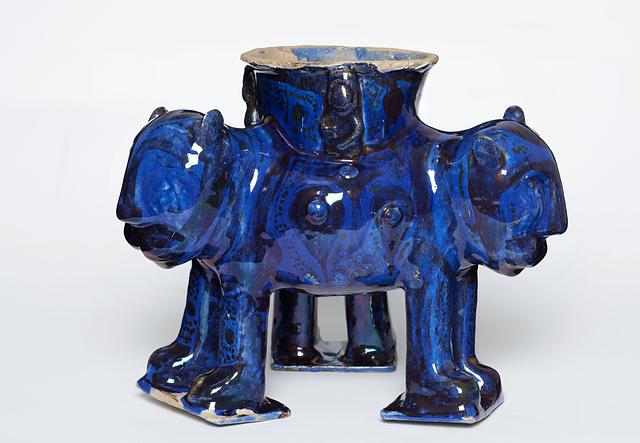
Fritware stand, molded in the form of three lions, covered with a blue glaze and painted in lustre
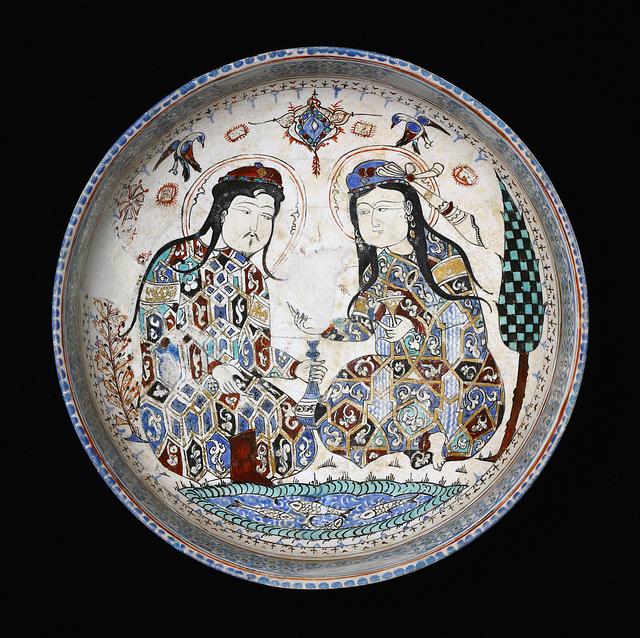
Fritware bowl, with polychrome decoration and gold leaf in and over an opaque, white glaze. Minai type
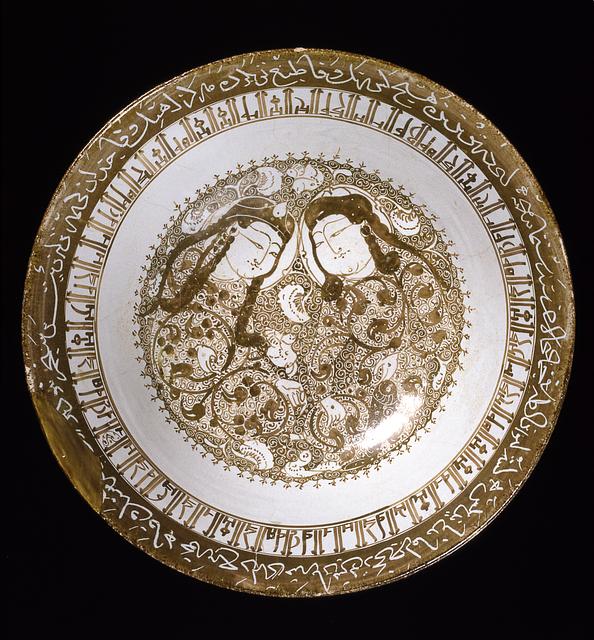
Fritware bowl, painted in lustre over a white glaze
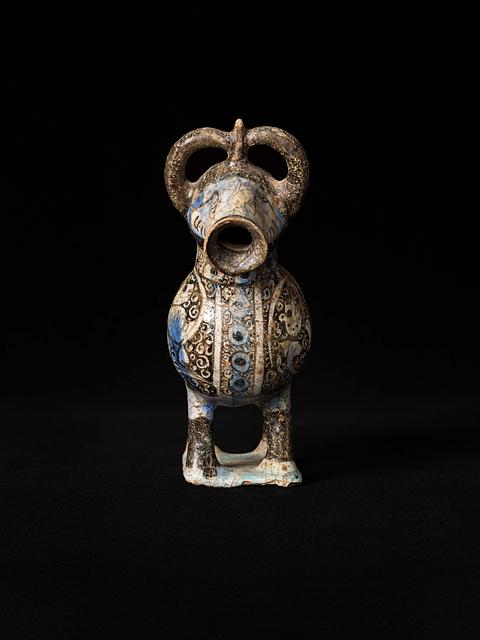
Ewer (aquamanile) in the form of an ox. Fritware painted in black and blue under a clear glaze