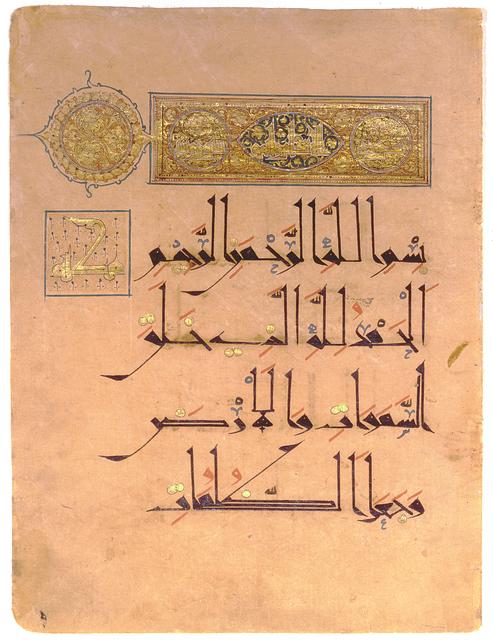
Paper leaf from a Koran written in eastern Kufi
Iran; 11th-12th century
31.1 × 20.9 cm
Inventory number 6/2004
The famous Koran from which this leaf comes was in 30 parts. It contained some 4,500 pages, all of which had the same painstakingly executed, rich arabesque background for the text. It was written in eastern Kufi, which is more vertical than classical Kufi. The tall upstrokes that often have left-facing serifs and curved downstrokes are typical of the style. The various diacritical marks that facilitate reading are carefully marked with red, blue, and black. The verses are separated by a “sun” ornament, and the ornament in the left margin denotes khams ayat (five verses) in cursive script.
Eastern Kufi was introduced in the 10th century at the same time as paper became the preferred material for Korans in the eastern Islamic world.
Eastern Kufi was introduced in the 10th century at the same time as paper became the preferred material for Korans in the eastern Islamic world.
Published in
Published in
Anthony Welch: “The Arts of the Book: The Arab Lands” in Toby Falk (ed.): Treasures of Islam, Musée d’art et d’histoire, Geneve, London 1985, cat.no. 13;
Sheila S. Blair og Jonathan M. Bloom (eds.): Cosmophilia. Islamic Art from the David Collection, Copenhagen, McMullen Museum of Art, Boston College, Boston 2006. cat.no. 26;
Marie Rehakova: Koran: vyvoj umelecke tradice, Plzen 2013, fig. 20, p. 49;
Sheila S. Blair og Jonathan M. Bloom (eds.): Cosmophilia. Islamic Art from the David Collection, Copenhagen, McMullen Museum of Art, Boston College, Boston 2006. cat.no. 26;
Marie Rehakova: Koran: vyvoj umelecke tradice, Plzen 2013, fig. 20, p. 49;


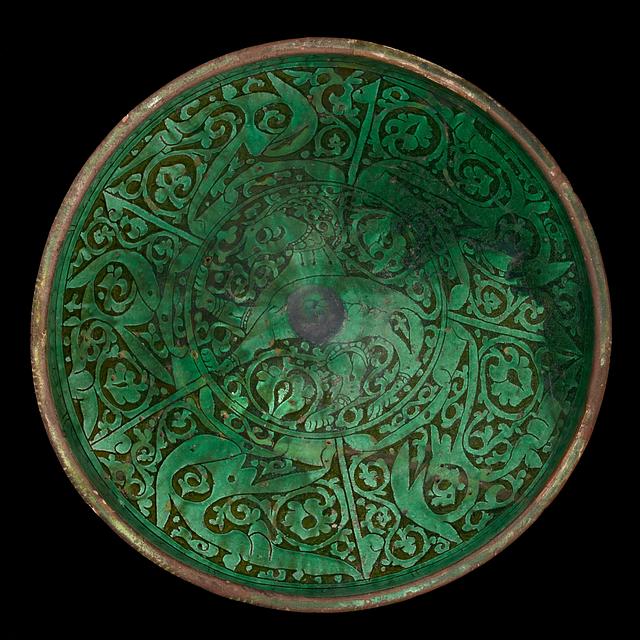
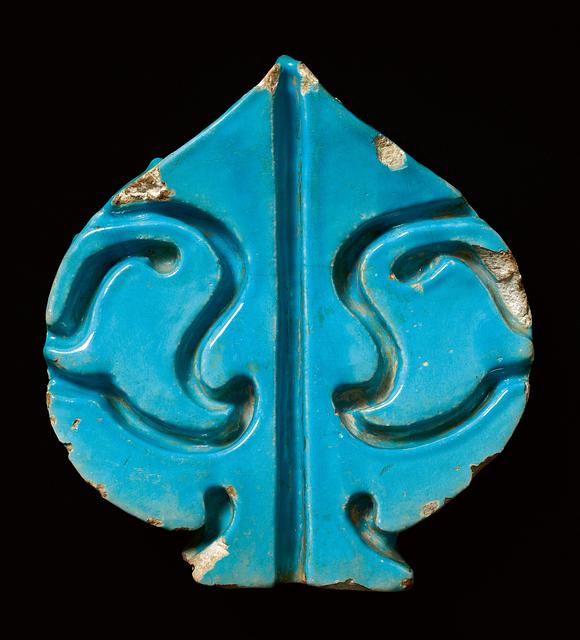
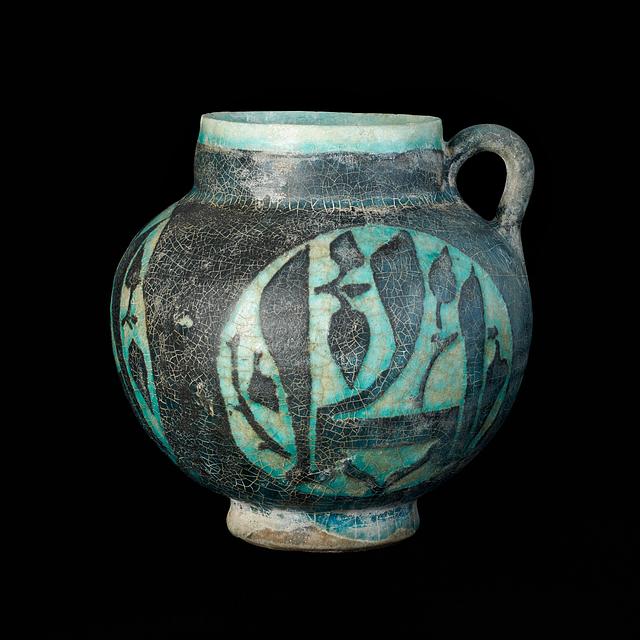
The Seljuks and their Successors