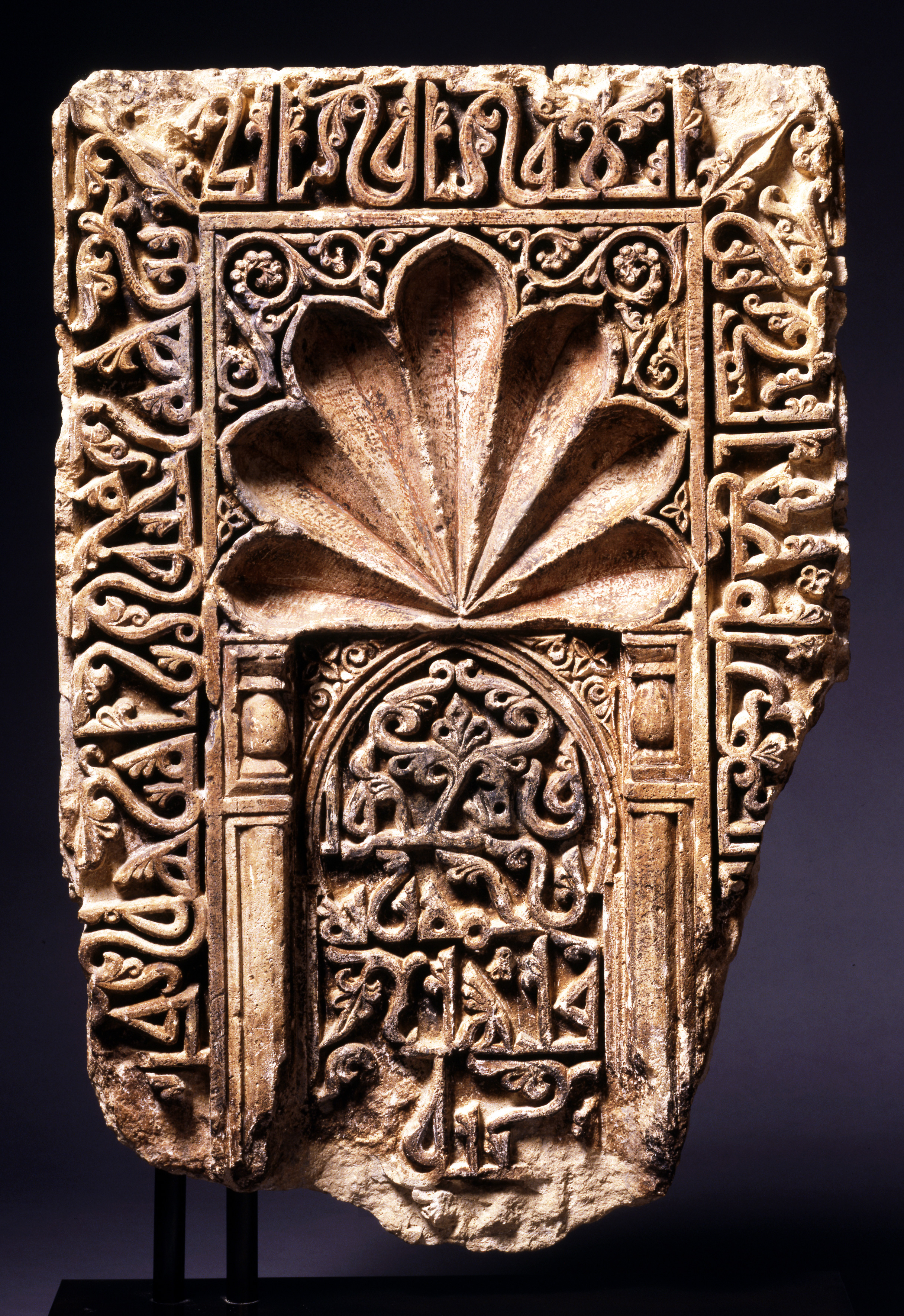
Tombstone, carved marble
Jazira; 12th century?
H: 72.5; W: 48; D: 8.5 cm
Inventory number 28/2001
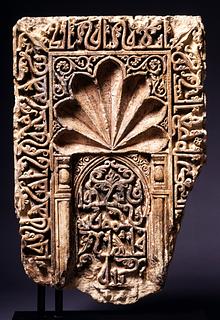
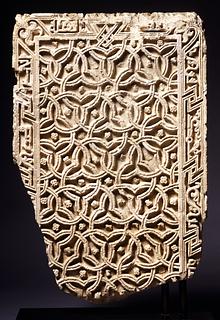
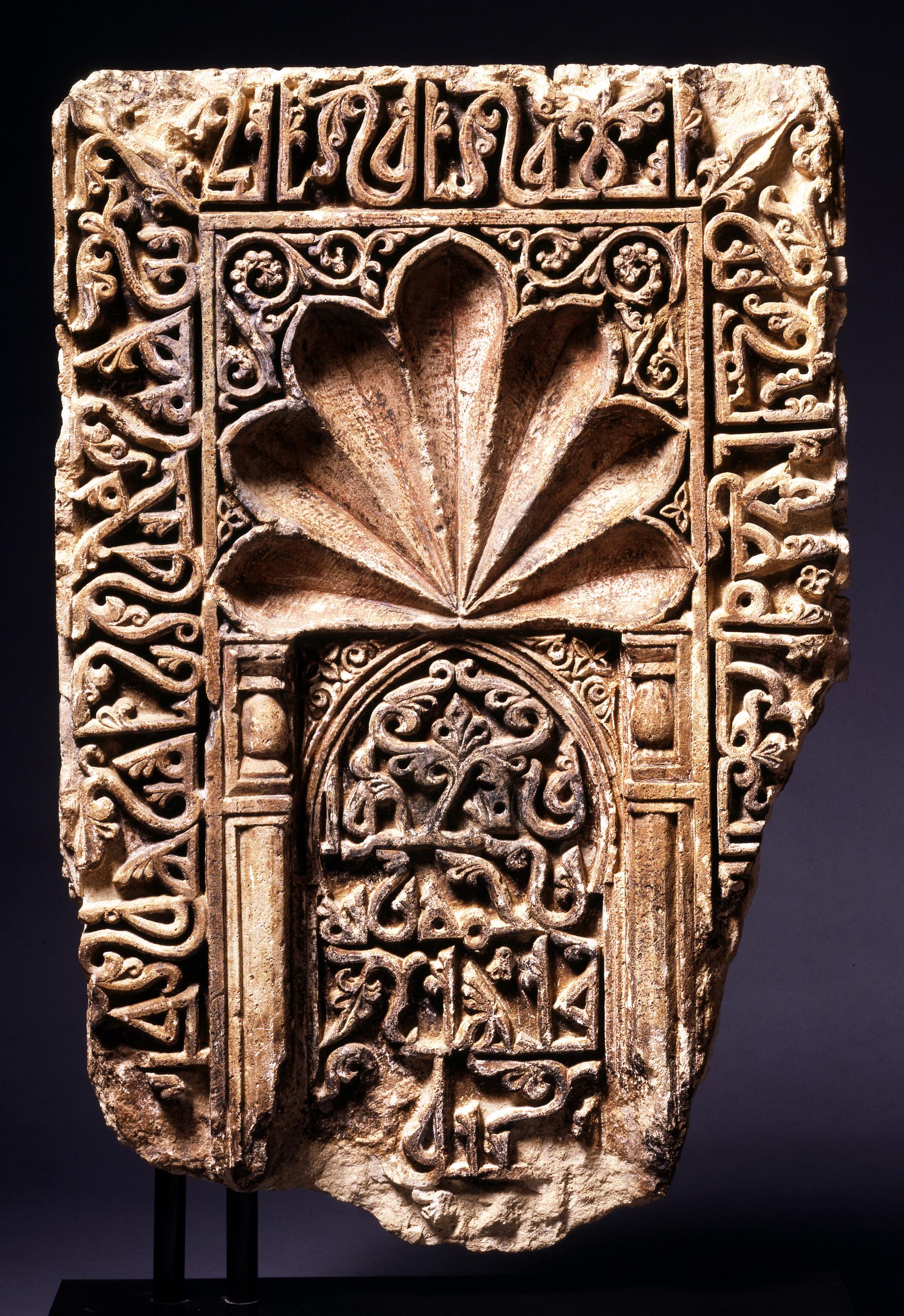
The stone, which is also decorated on the back and along the edge, is one of the stones that were placed at the foot and the head of a grave. The text, in floral Kufi, consists of passages from the Koran that deal with the fear of the other world and God’s compassion. Paired tombstones are found in large parts of the Islamic world, but this stone probably comes from Jazira.
Its scalloped niche, borne by columns, is related to the mihrabs that were made in Mosul in the 12th century.
The stone was masterfully carved with several different types of decoration, and the stonemason himself, Ibn Muhammad ibn Abdalla al-Jassas, placed his name along the side.
Its scalloped niche, borne by columns, is related to the mihrabs that were made in Mosul in the 12th century.
The stone was masterfully carved with several different types of decoration, and the stonemason himself, Ibn Muhammad ibn Abdalla al-Jassas, placed his name along the side.
Published in
Published in
Sheila S. Blair and Jonathan M. Bloom (eds.): Cosmophilia. Islamic Art from the David Collection, Copenhagen, McMullen Museum of Art, Boston College, Boston 2006, cat.no. 106;