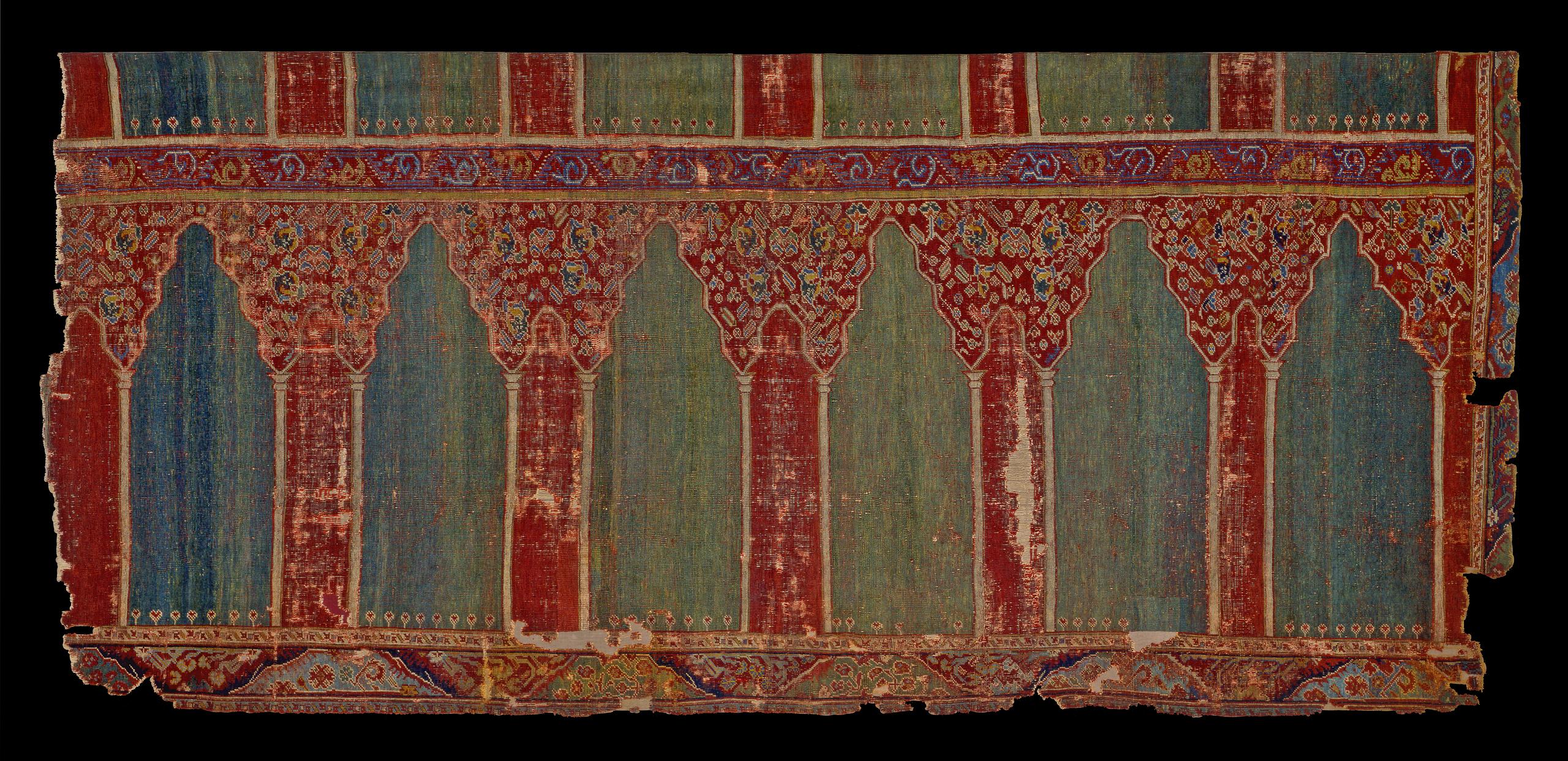
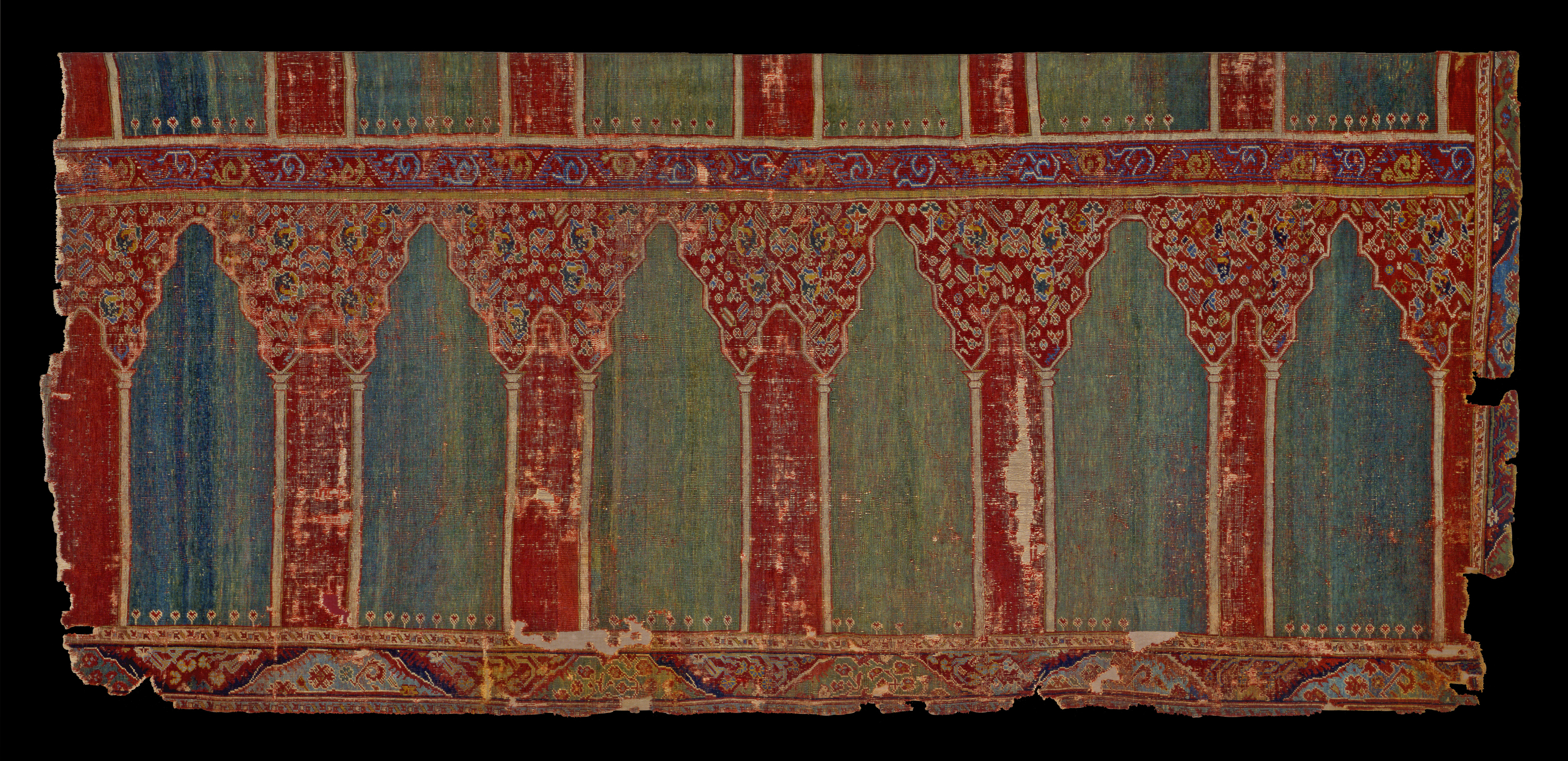
Fragment of a knotted, woolen prayer rug with multiple niches (saff)
Turkey, Ushak region; 2nd half of 17th century
H: 196; W: 435 cm
Inventory number 21/1994
This large fragment makes up the lower right corner of a carpet that probably consisted of three rows parallel with the qibla wall, each with at least seven architecturally conceived prayer niches. A carpet unit like this could be sewn together with corresponding pieces until it covered the entire floor of a mosque. The border has been partly preserved at the bottom and on the right side, and there are fragments from the same rug or identical ones in other collections.
Prayer rugs are not obligatory, but because of their form, they denote the direction of prayer towards Mecca. In addition to having an aesthetic function, they also insulate and provide comfortable padding for those performing their prayers. Large prayer rugs with multiple niches moreover denote a place for each believer in the mosque.
Prayer rugs are not obligatory, but because of their form, they denote the direction of prayer towards Mecca. In addition to having an aesthetic function, they also insulate and provide comfortable padding for those performing their prayers. Large prayer rugs with multiple niches moreover denote a place for each believer in the mosque.
Published in
Published in
Kjeld von Folsach, Torben Lundbæk and Peder Mortensen (eds.): Sultan, Shah and Great Mughal: the history and culture of the Islamic world, The National Museum, Copenhagen 1996, cat.no. 26;
Kjeld von Folsach: Art from the World of Islam in The David Collection, Copenhagen 2001, cat.no. 687;
Kjeld von Folsach: Art from the World of Islam in The David Collection, Copenhagen 2001, cat.no. 687;