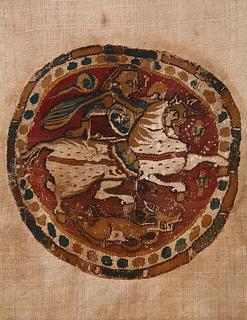
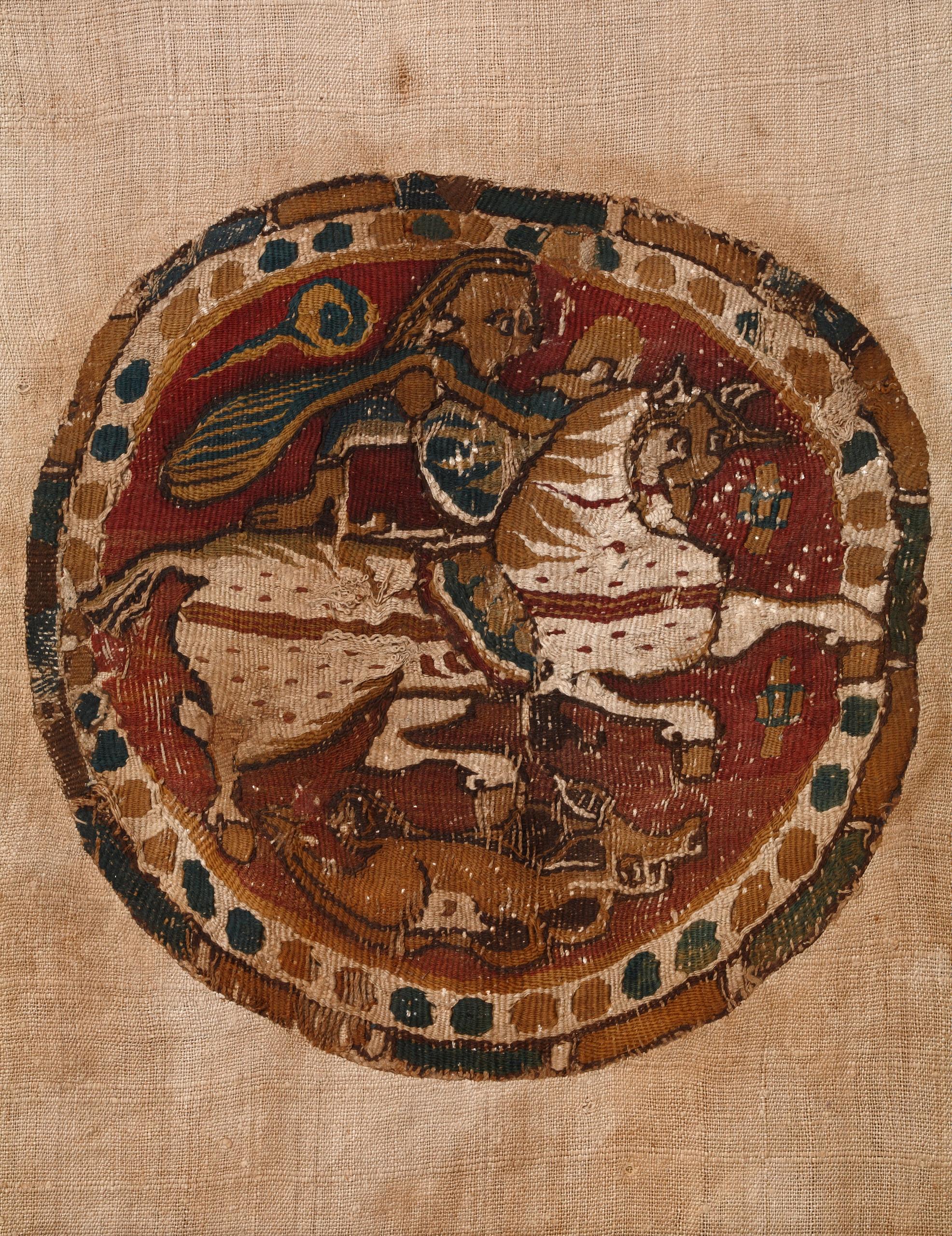
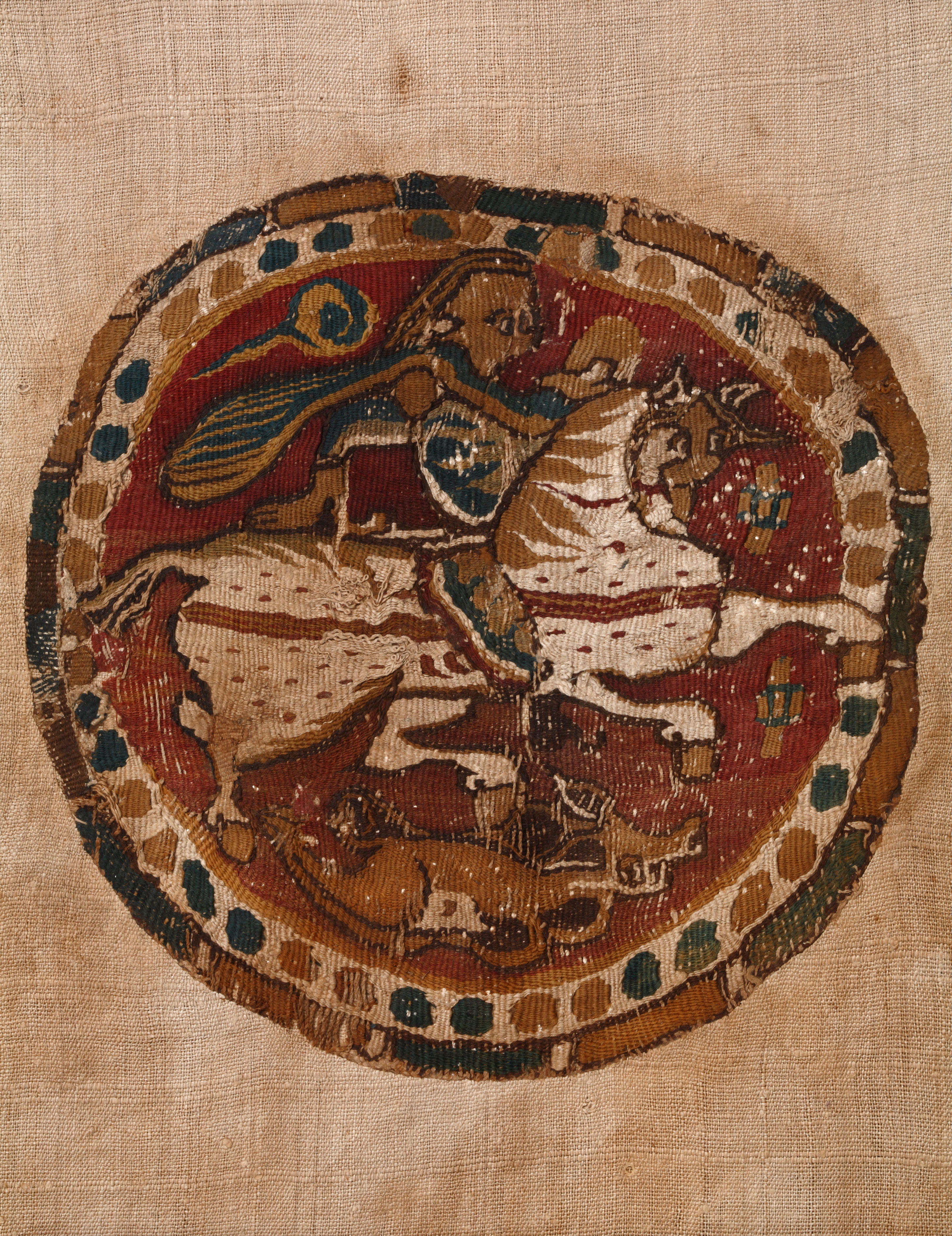
Tapestry with horseman, dyed wool and undyed linen
Egypt (Coptic); 7th century
Diam: 20 cm
Inventory number 3/2006
A dry climate has preserved large numbers of colorful tapestries that were produced in Egypt by Coptic Christians both before and after the Muslim conquest in 641. Their decoration first and foremost reflects the motifs of Late Antiquity, but also the textiles that were woven by the Byzantines, who had ruled Egypt for periods.
The use of the tapestry or kilim techniques and wool and linen as materials continued to dominate in Egypt after the Muslim conquest. Tulunid textiles, but also many Fatimid pieces, are directly indebted to the Coptic tradition.
The use of the tapestry or kilim techniques and wool and linen as materials continued to dominate in Egypt after the Muslim conquest. Tulunid textiles, but also many Fatimid pieces, are directly indebted to the Coptic tradition.
Published in
Published in
Les Enluminurea: L'image tissee: textiles de l'antiquité à la renaissance: exposition/vente, Paris 2006, cat.no. 5;
Anne Hedeager Krag: “Textiles from Egypt's first millennium AD in Danish museum collections” in Antoine De Moor, Cäcilia Fluck and Petra Linscheid (eds.): Explorers, first collectors and traders of textiles from Egypt of the 1st millennium AD, [Antwerpen] 2021, fig. 17, p. 70;
Anne Hedeager Krag: “Textiles from Egypt's first millennium AD in Danish museum collections” in Antoine De Moor, Cäcilia Fluck and Petra Linscheid (eds.): Explorers, first collectors and traders of textiles from Egypt of the 1st millennium AD, [Antwerpen] 2021, fig. 17, p. 70;