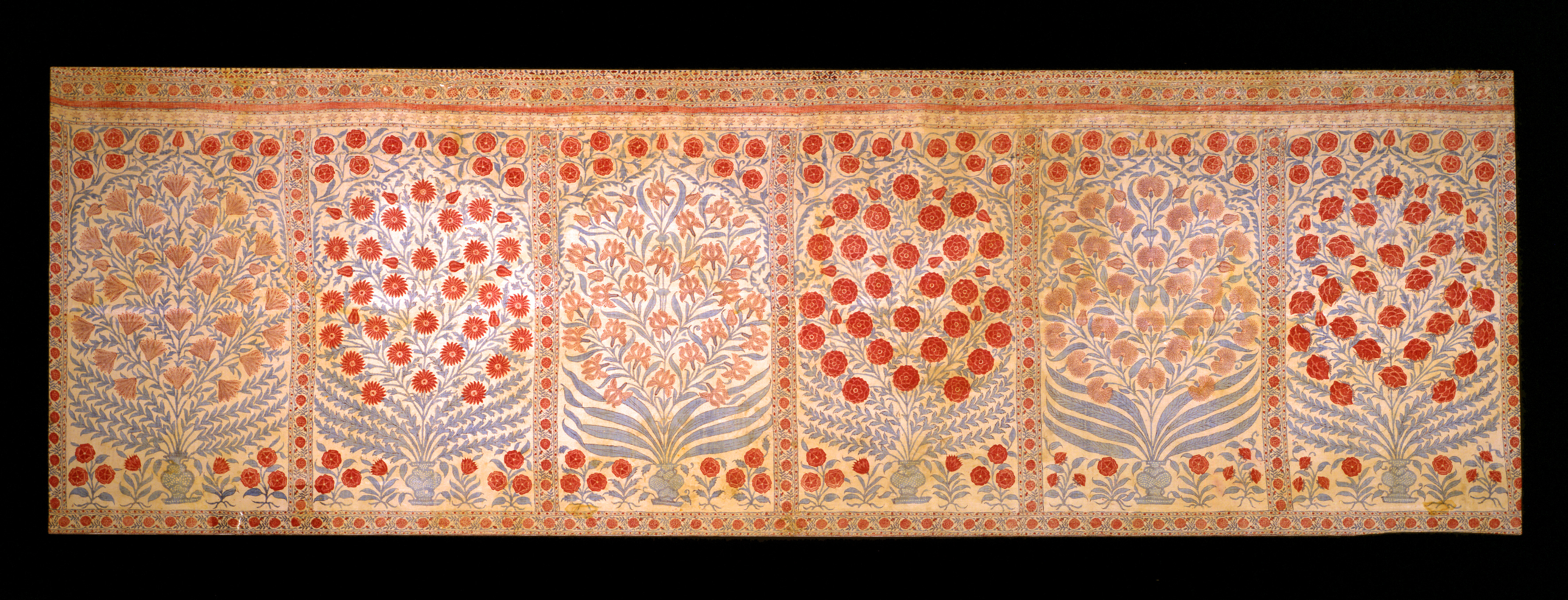
Tent panel, cotton with printed and painted decoration
India, Burhanpur(?); c. 1700
H: 102; W: 330 cm
Inventory number 25/1991
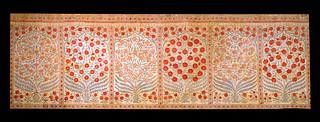
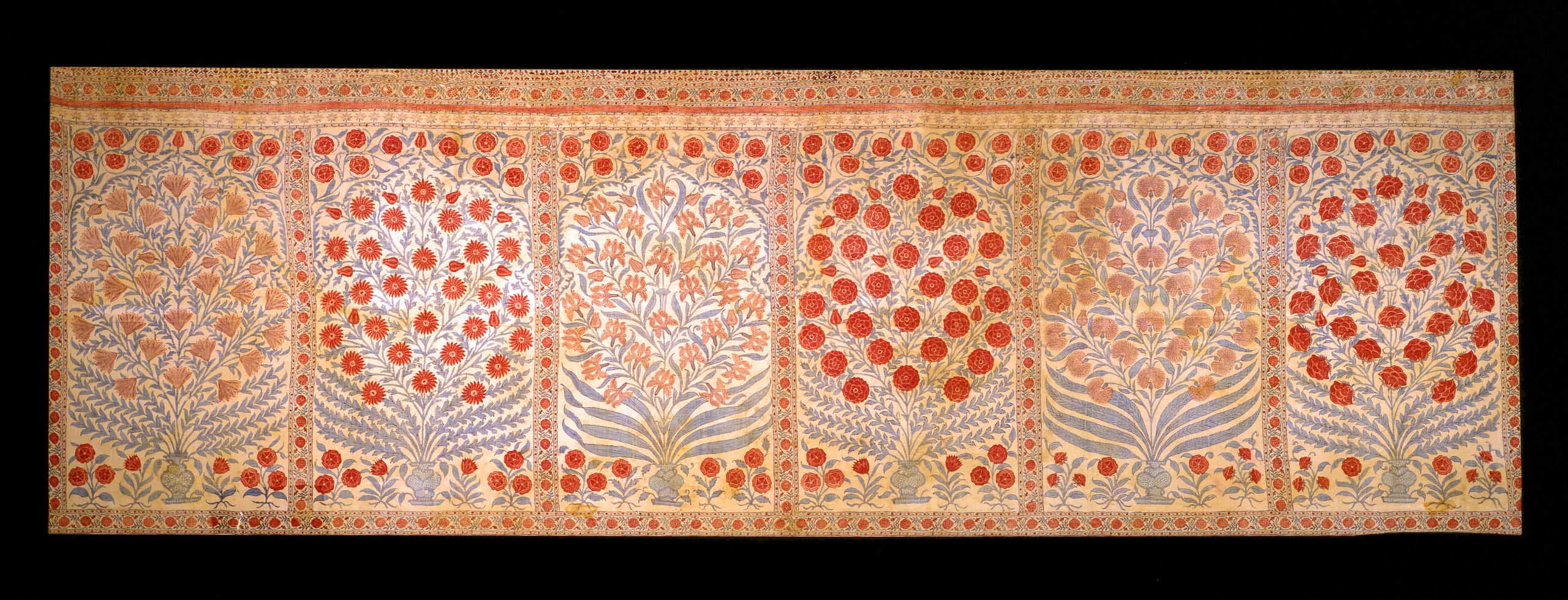
Printed cotton fabrics were a decorative but inexpensive version of figurative woven or embroidered textiles. Some were made in western India, from which they were exported far and wide and in large quantities. They were manufactured for clothing and carpets and also, as here, as decorations for tents.
First the arches, the vases, and the stems were printed. Then came the individual flowers. Finally, the leaves were painted on freehand. The individual niches seem identical, but closer inspection shows the many differences that keep these fabrics from rarely seeming static or boring.
First the arches, the vases, and the stems were printed. Then came the individual flowers. Finally, the leaves were painted on freehand. The individual niches seem identical, but closer inspection shows the many differences that keep these fabrics from rarely seeming static or boring.
Published in
Published in
Kjeld von Folsach, Torben Lundbæk and Peder Mortensen (eds.): Sultan, Shah and Great Mughal: the history and culture of the Islamic world, The National Museum, Copenhagen 1996, cat.no. 329;
Kjeld von Folsach: Art from the World of Islam in The David Collection, Copenhagen 2001, cat.no. 680;
Rahul Jain: Rapture: the art of Indian textiles, New Delhi 2011, cat.no. 37, pp. 116-119;
Steven Cohen: “Two outstanding Mughal qanat panels in the David Collection, with technical analyses and drawings of weaving structures by Anne-Marie Keblow Bernsted” in Journal of the David Collection, 4, 2014, p. 174, fig. 4;
Kjeld von Folsach: Art from the World of Islam in The David Collection, Copenhagen 2001, cat.no. 680;
Rahul Jain: Rapture: the art of Indian textiles, New Delhi 2011, cat.no. 37, pp. 116-119;
Steven Cohen: “Two outstanding Mughal qanat panels in the David Collection, with technical analyses and drawings of weaving structures by Anne-Marie Keblow Bernsted” in Journal of the David Collection, 4, 2014, p. 174, fig. 4;