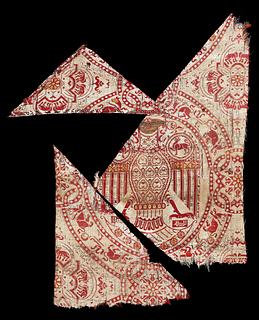
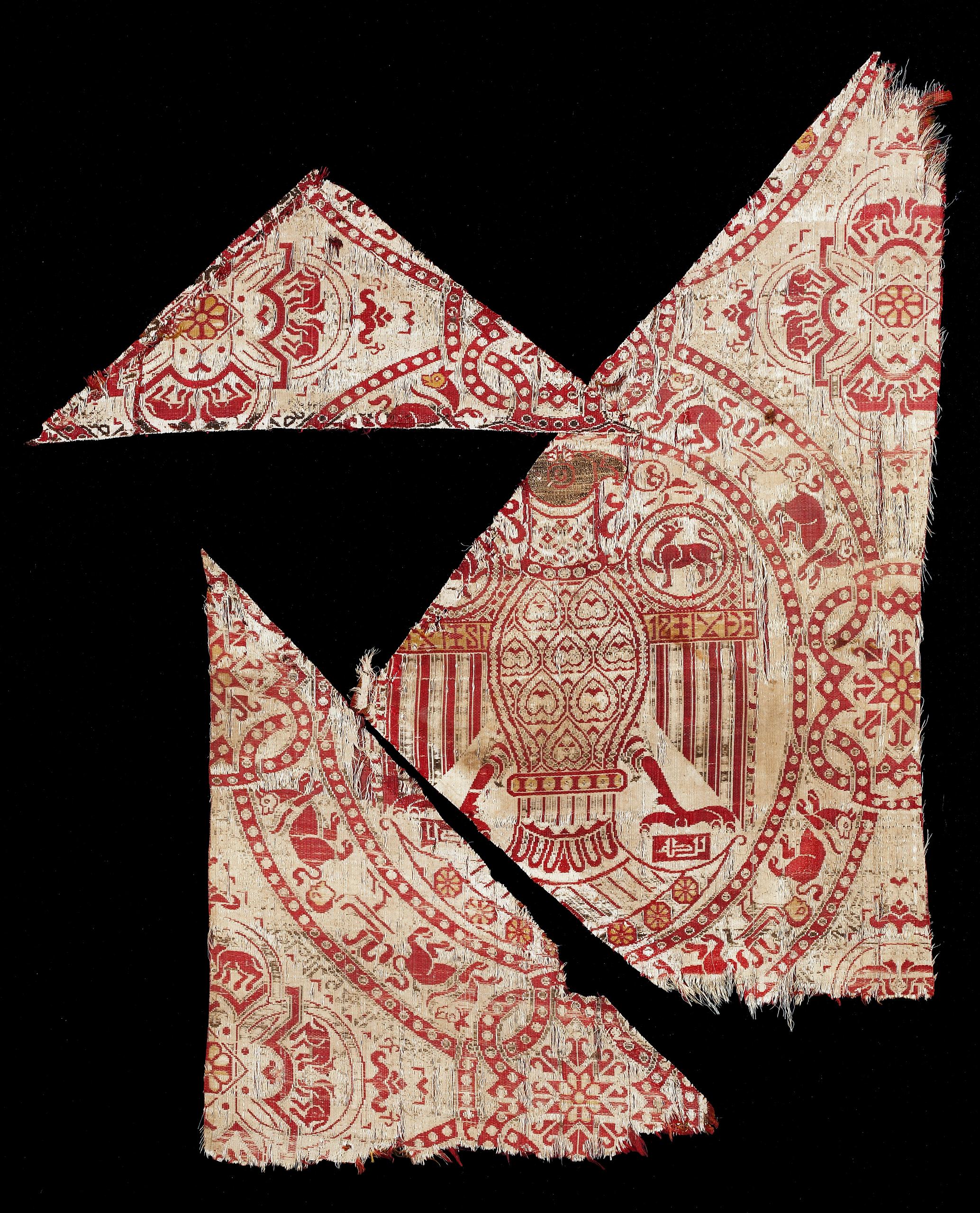
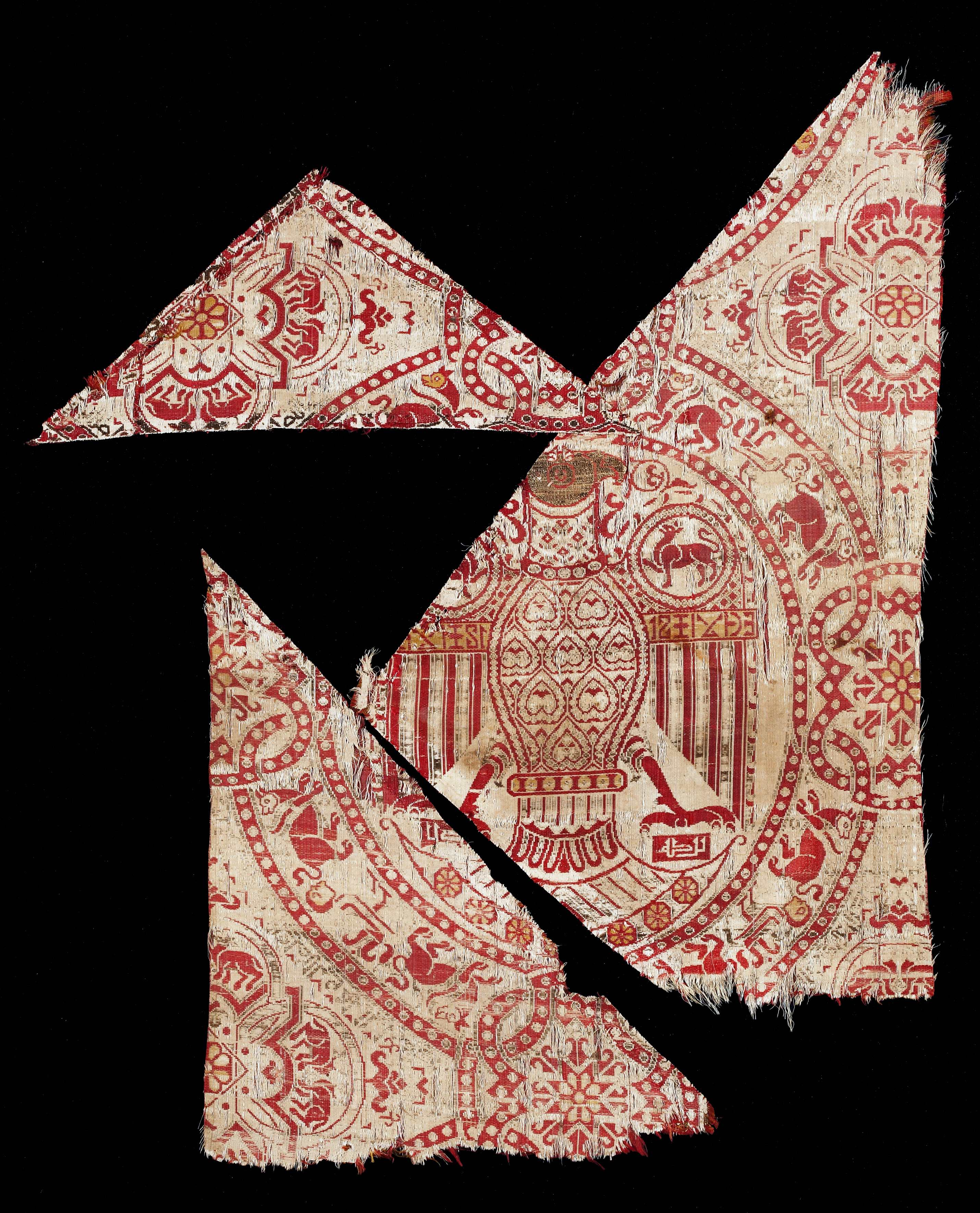
Three fragments of a lampas-woven textile, silk and gilded animal substrate spun around a silk core
Spain, Almeria?; 1st half of 12th century
Largest fragment: H: 40; W: 25 cm
Inventory number 9/2001
This is only one of many related textiles that were made in Almoravid Spain, and one fragment bears the name of the ruler Ali bin Yusuf bin Tashufin (1106-1143). The stylized double eagle is covered with non-naturalistic ornamentation, including a pseudo-Latin inscription, and under its claws is the word baraka (blessing). The classical medallion pattern features griffins and harpies, and outside it are faint traces of a Kufi inscription.
These fragments and others come from the reliquary of St. Librada that was donated to the church in Siguenza by Alfonso VII of Castile and Leon in 1147. Like many other pieces, they show that Christian Spaniards appreciated decorative art made in the Muslim cultural sphere, which was superior in many respects.
These fragments and others come from the reliquary of St. Librada that was donated to the church in Siguenza by Alfonso VII of Castile and Leon in 1147. Like many other pieces, they show that Christian Spaniards appreciated decorative art made in the Muslim cultural sphere, which was superior in many respects.
Published in
Published in
Barbara H. Rosenwein: A short story of the middle ages, 5. ed., Toronto 2018, pl. 5.5, p. 170;
Esra Akin-Kivanc: Muthanna / mirror writing in Islamic calligraphy : history, theory, and aesthetics, Bloomington 2020, pp. 144-145, fig. 5.14
Esra Akin-Kivanc: Muthanna / mirror writing in Islamic calligraphy : history, theory, and aesthetics, Bloomington 2020, pp. 144-145, fig. 5.14
Textiles, Carpets and Leather
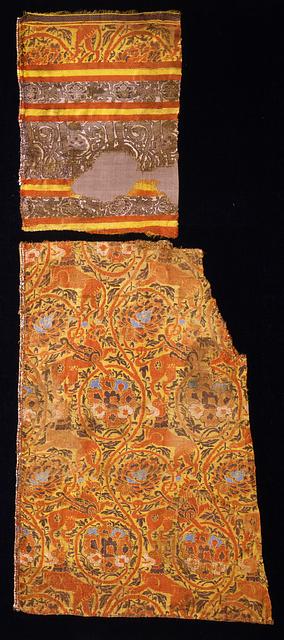
Two samitum-woven textile fragments, silk and silvered paper lamella
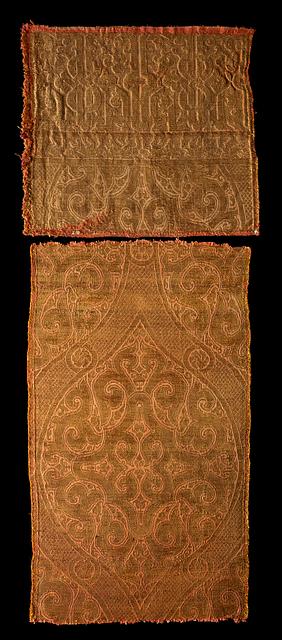
Two lampas-woven textile fragments, silk and gilded lamella of animal substrate, both spun around a silk core and woven flat
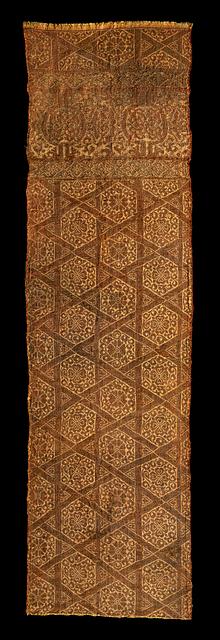
Fragment of a lampas-woven textile, silk and gilded lamella of animal substrate both spun around a silk core and woven flat
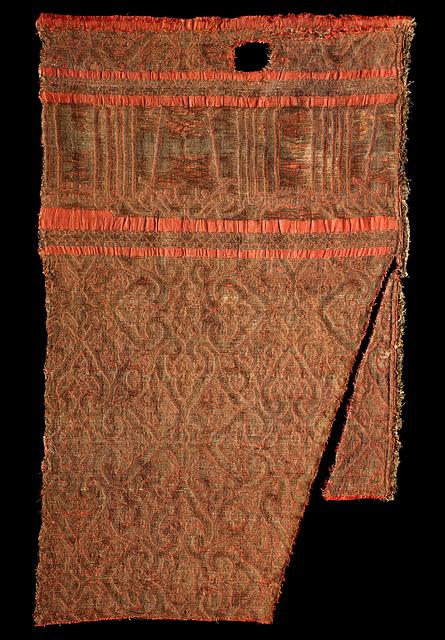
Fragment of a lampas-woven textile, silk and gilded lamella of animal substrate, both spun around a silk core and woven flat