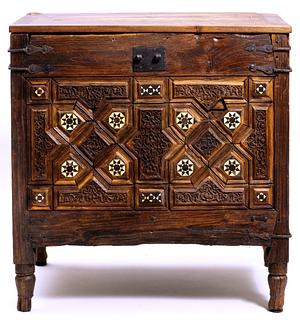
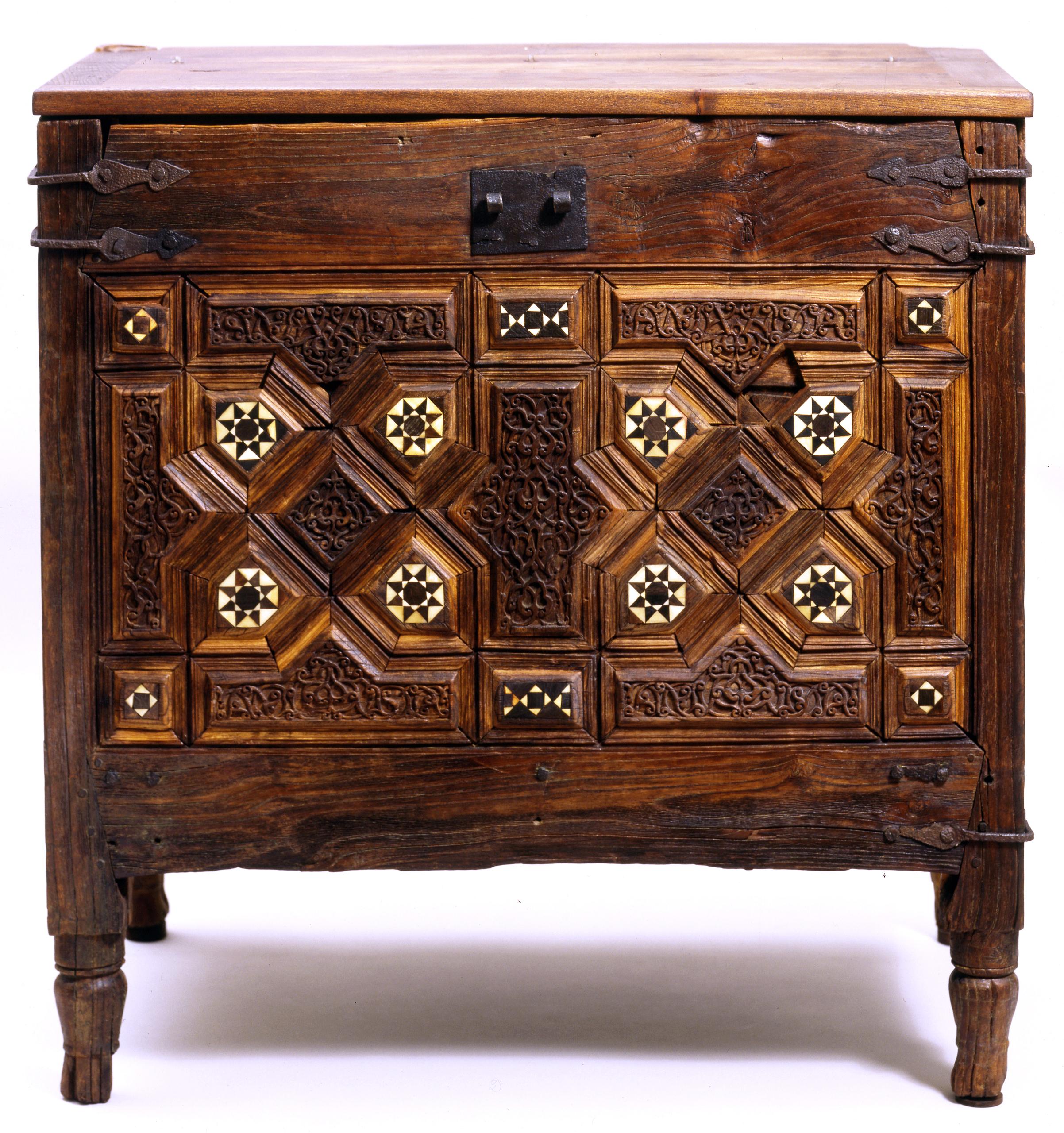
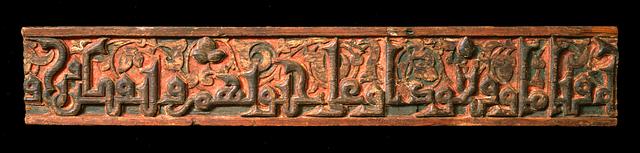
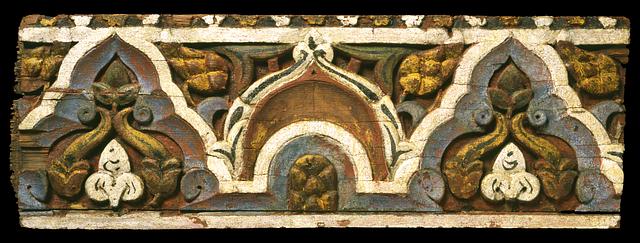
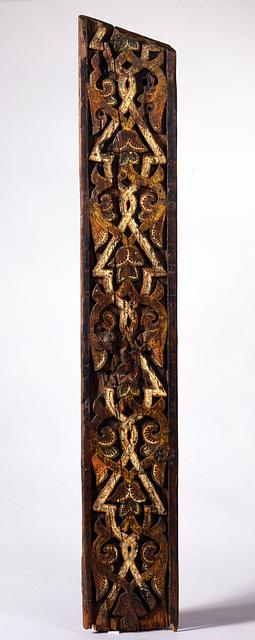
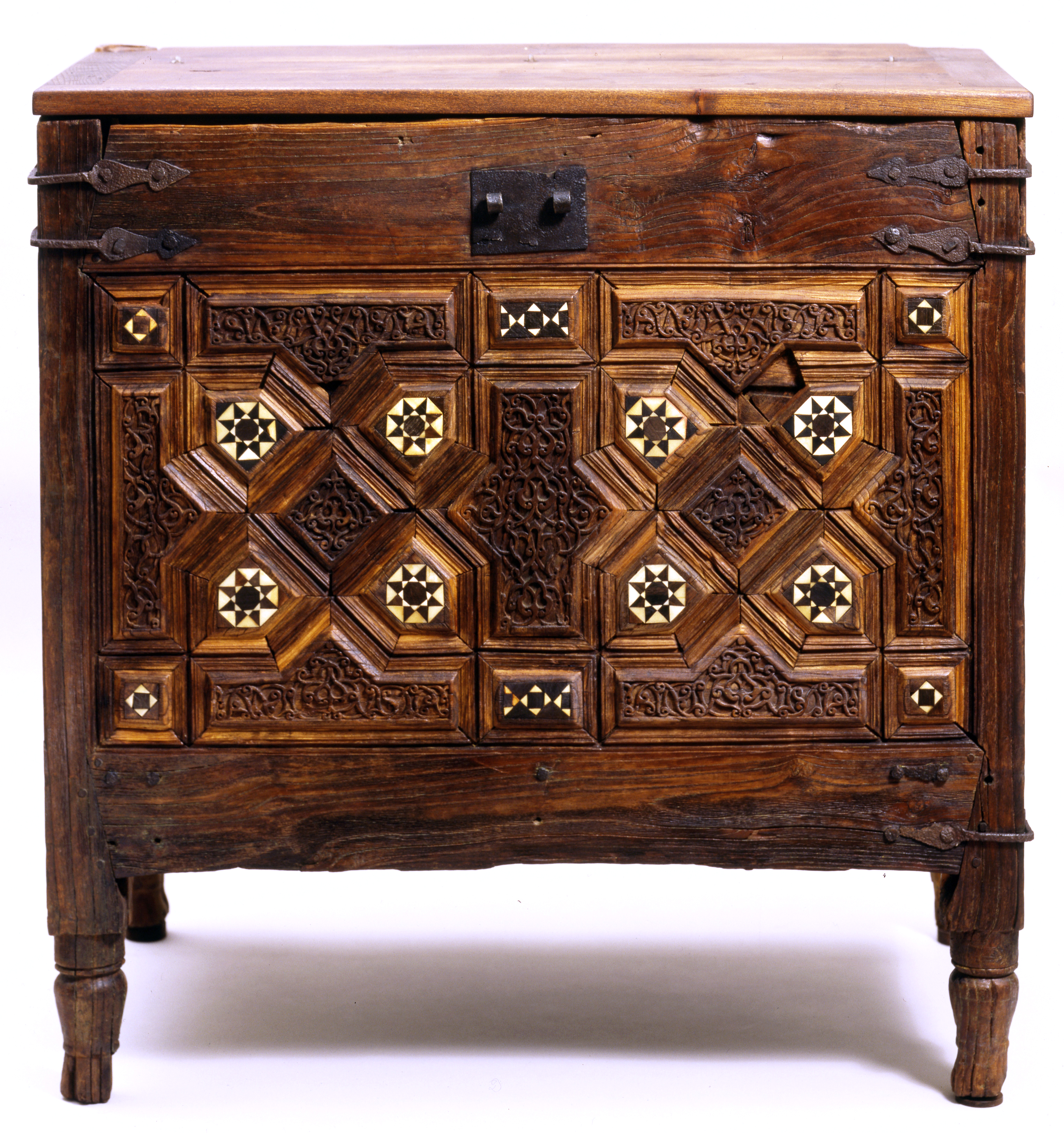
Storage chest, wood, carved and inlaid with ebony and bone. Modern lid and inlays partly modern
Iraq, Mosul; c. 1240
H: 81.2; W: 80; D: 50 cm
Inventory number 3/1993
Almost no furniture has survived from the Islamic Middle Ages, and it is unclear whether this unique chest was made for a mosque or a private home.
Remnants of yellow pigment and gold leaf indicate that the flat sections of the decoration on the front were originally surrounded by a golden color.
The carved arabesques are of the distinctive tortuous form that was widespread in the area around Mosul in the 13th century. Arabesques of this type area also found on the David Collection’s large lyre-shaped bronze door knocker (2/1993).
Remnants of yellow pigment and gold leaf indicate that the flat sections of the decoration on the front were originally surrounded by a golden color.
The carved arabesques are of the distinctive tortuous form that was widespread in the area around Mosul in the 13th century. Arabesques of this type area also found on the David Collection’s large lyre-shaped bronze door knocker (2/1993).
Published in
Published in
Kjeld von Folsach, Torben Lundbæk and Peder Mortensen (eds.): Sultan, Shah and Great Mughal: the history and culture of the Islamic world, The National Museum, Copenhagen 1996, cat.no. 69;
Kjeld von Folsach: Art from the World of Islam in The David Collection, Copenhagen 2001, cat.no. 428;
Mentioned in: Richard McClary: "Remembering the Imâm Yahyâ Abu al-Qâsim Mashhad in Mosul" in Hadeeth ad-Dar, 49, 2019, p. 16;
Kjeld von Folsach: Art from the World of Islam in The David Collection, Copenhagen 2001, cat.no. 428;
Mentioned in: Richard McClary: "Remembering the Imâm Yahyâ Abu al-Qâsim Mashhad in Mosul" in Hadeeth ad-Dar, 49, 2019, p. 16;