Pen case, wood decorated with tortoise shell, ivory, mother-of-pearl, ebony, and brass
Turkey; end of 16th century
H: 12.4; L: 35.2; Diam: 12.2 cm
Inventory number 14/2018
Pen cases or writing chests made of many different materials have always been produced with great care in the Islamic world, where the art of writing beautifully in particular was one of the most esteemed. This large case is no exception, and is one of the most splendid of its type. (See also 39/2000 and 35/1976.)
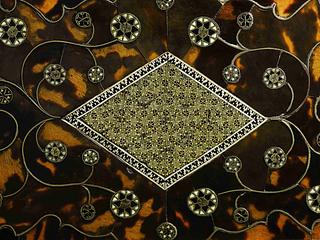
The pen case’s decoration is an expression of an eclectic style that incorporates influences from large parts of the Islamic world. The Ottoman Empire was at the peak of its power in the second half of the 16th century and had widely ramified trade links.
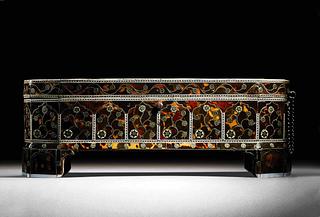
The rich katamkari inlays, consisting of little mosaic-like elements, was especially widespread in Iran (see 35/2000), while the stylized plants in niches bring to mind Indian textiles and works in stone. Corresponding niches – both those on the sides and on the feet – are also known from Turkish architecture. There is moreover a clear link to contemporary inlaid Ottoman furniture,1 while the extensive use of metal thread is unusual and is evidently known only from a bookbinding inlaid with tortoise shell dated to around 1560.2
The tray, the brass, and the painting inside are later additions and probably date to around 1840, when the pen case in Istanbul was acquired by a diplomat at the embassy of the Kingdom of the Two Sicilies.
The pen case’s decoration is an expression of an eclectic style that incorporates influences from large parts of the Islamic world. The Ottoman Empire was at the peak of its power in the second half of the 16th century and had widely ramified trade links.
The rich katamkari inlays, consisting of little mosaic-like elements, was especially widespread in Iran (see 35/2000), while the stylized plants in niches bring to mind Indian textiles and works in stone. Corresponding niches – both those on the sides and on the feet – are also known from Turkish architecture. There is moreover a clear link to contemporary inlaid Ottoman furniture,1 while the extensive use of metal thread is unusual and is evidently known only from a bookbinding inlaid with tortoise shell dated to around 1560.2
The tray, the brass, and the painting inside are later additions and probably date to around 1840, when the pen case in Istanbul was acquired by a diplomat at the embassy of the Kingdom of the Two Sicilies.
Published in
Published in
Sotheby’s, London, 20/4-2016, lot 161;
Footnotes
Footnotes
1.
Oliver Watson: “The case of the Ottoman Table” in Journal of The David Collection, 3, Copenhagen, 2010, pp. 23-53.
2.
J. M. Rogers and Rachel Ward: Süleyman the Magnificent, British Museum, London, 1988, p. 118.
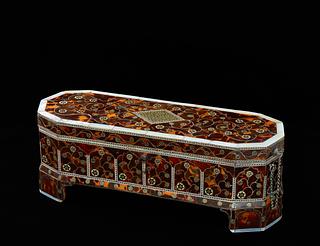_photo-Pernille-Klemp.jpg)
.jpg)
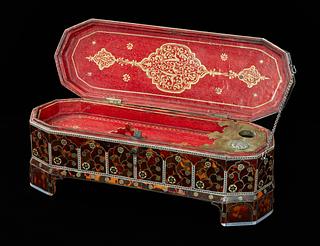_photo-Pernille-Klemp.jpg)
.jpg)
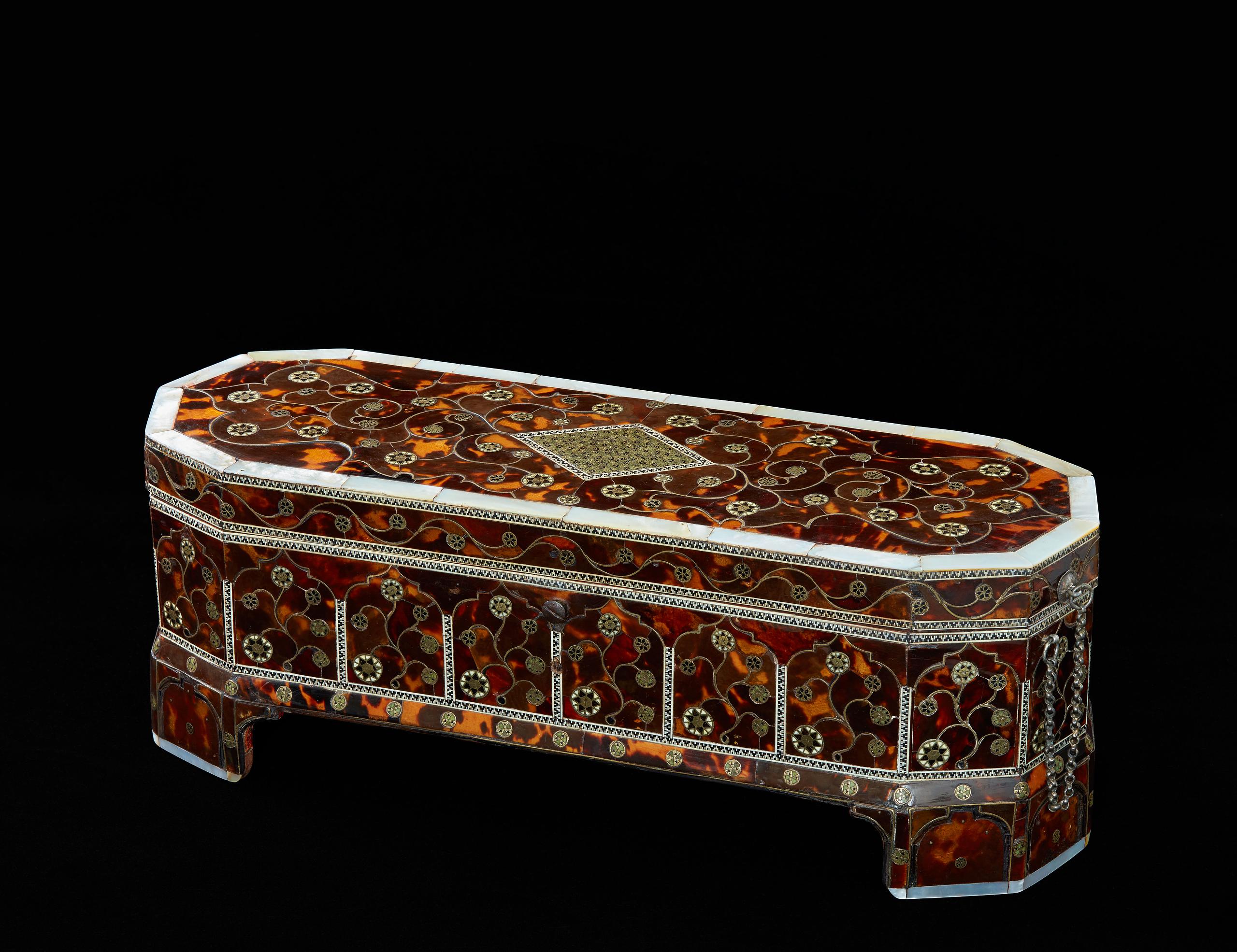_photo-Pernille-Klemp.jpg)
_photo-Pernille-Klemp.jpg?disposition=attachment)
Ivory, Wood, and Papier-mâché
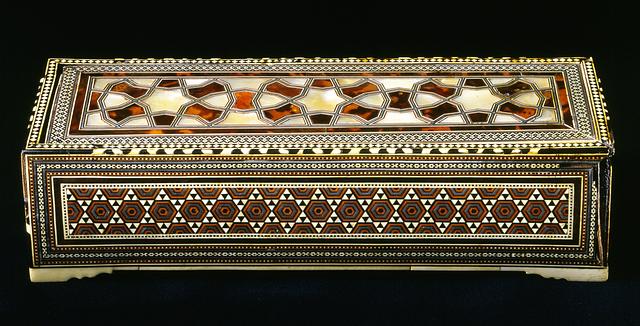
Pen case, wood, inlaid with ivory, mother-of-pearl, tortoise shell, ebony, and zinc
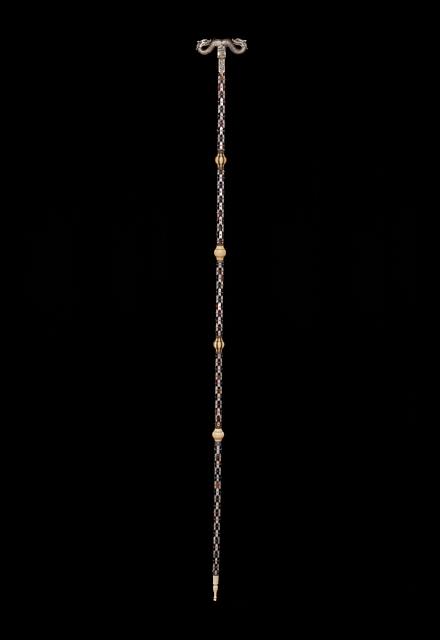
Wooden crozier mounted with plaques of tortoise shell and mother of pearl, with turned elements of ivory, and with a two-part top of cast silver
.-The-David-Collection_Copenhagen_Photo-Pernille-Klemp.jpg)
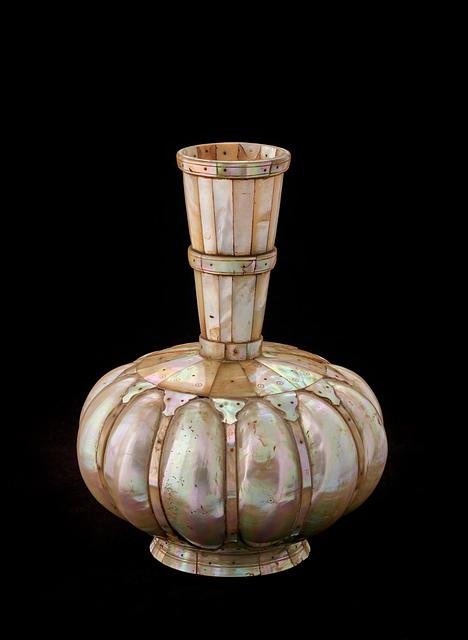
Bottle of mother-of-pearl and box of wood covered in leather
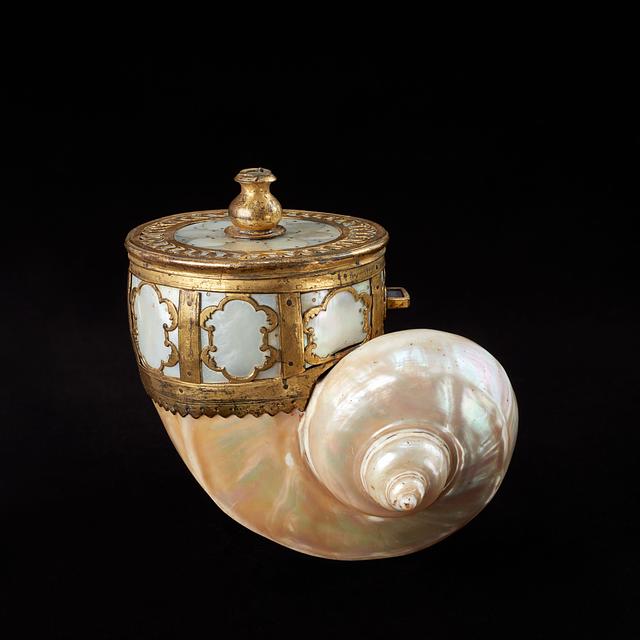
Powder horn made of a conch shell extended with mother-of-pearl, gilt copper and possibly wood