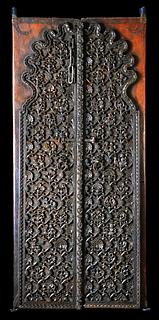
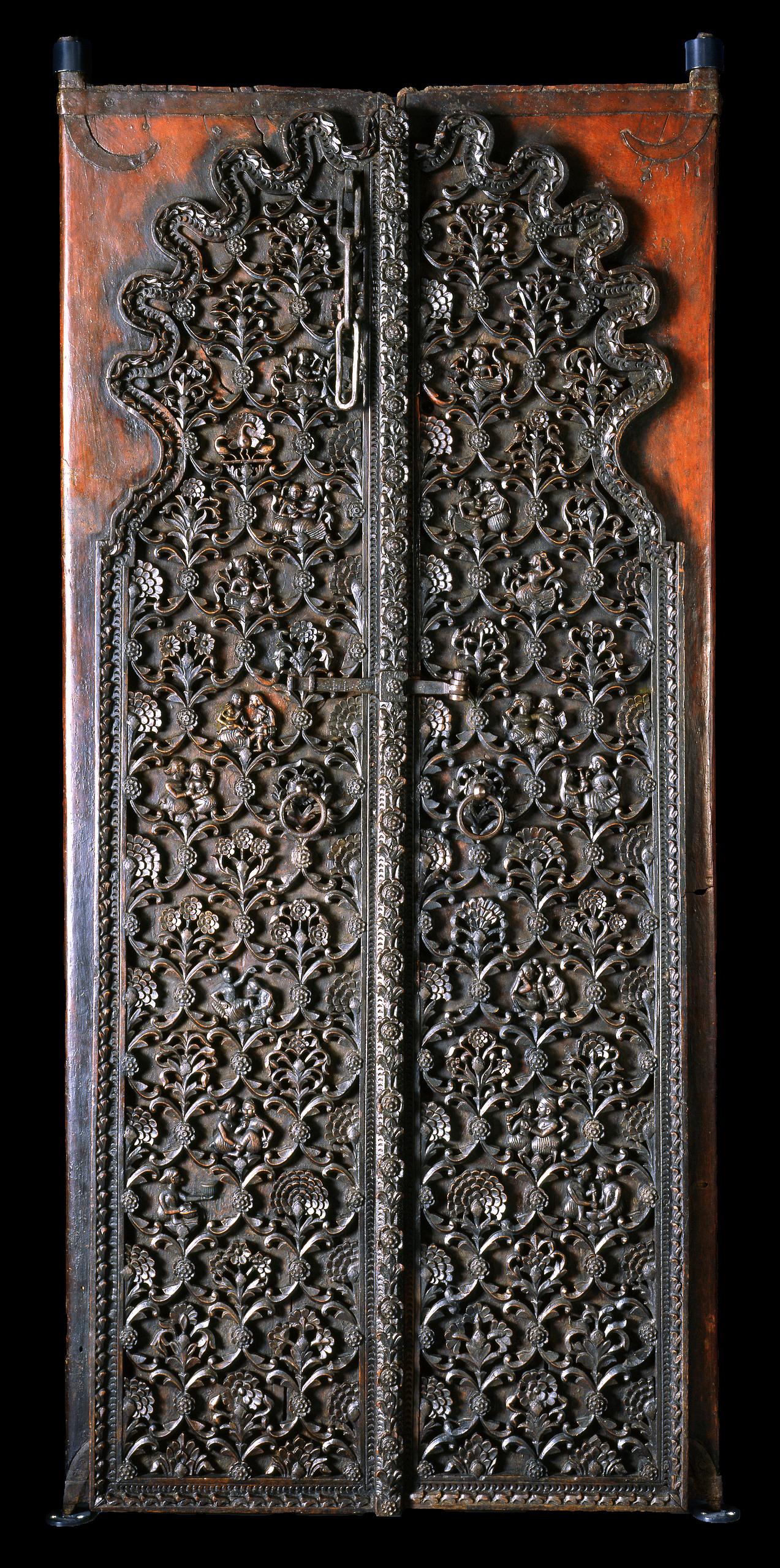
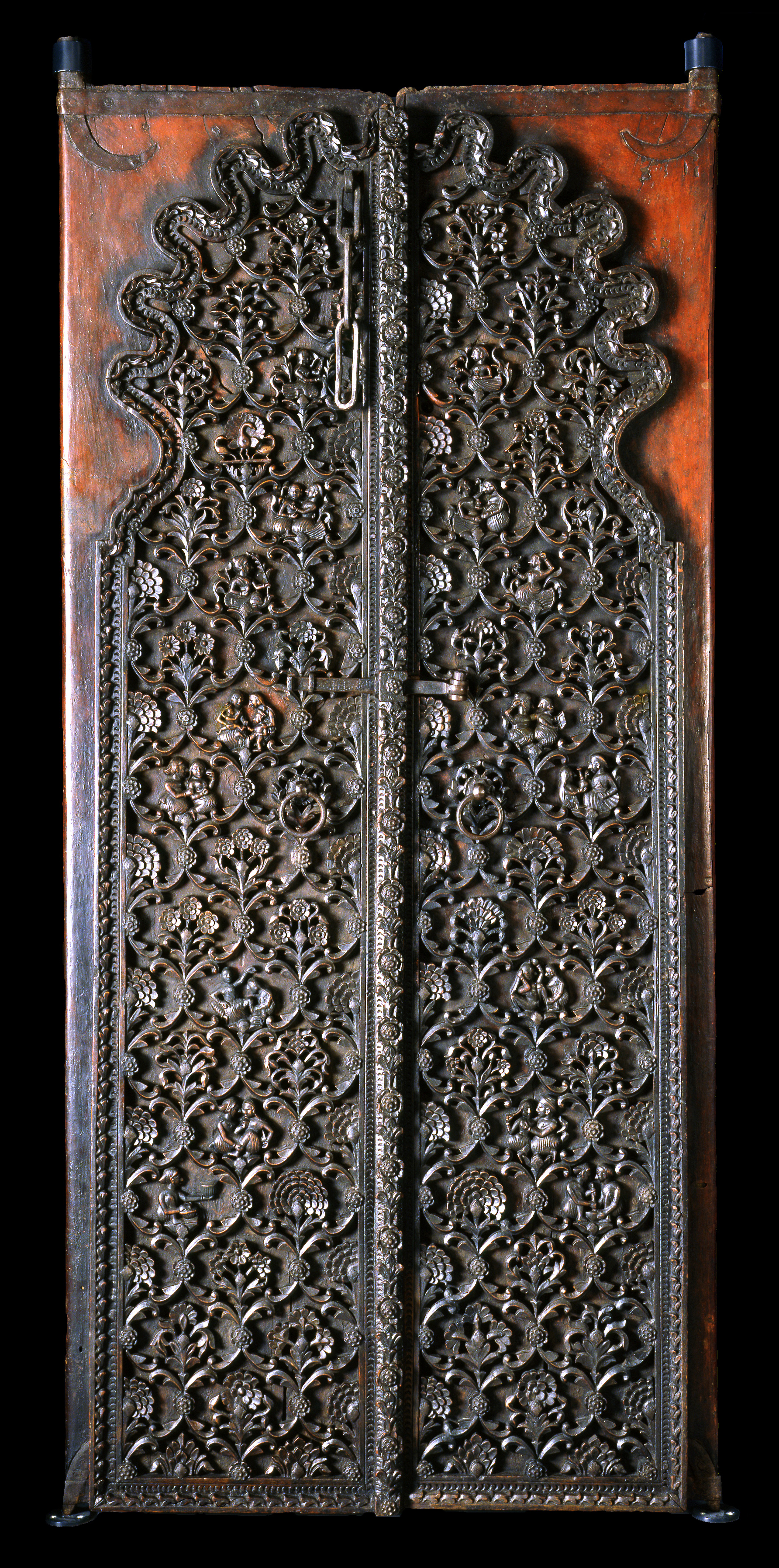
A pair of doors, wood, with applied wooden and iron ornamentation
India, Mewar; end of 18th century
H: 191; Overall W: 85 cm
Inventory number 14/1994
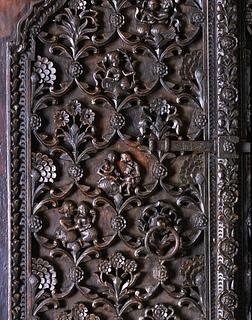
The doors feature vegetal ornamentation in a geometric pattern and end at the top with a lobed arch. These elements, which are characteristic of Mughal art, are combined in an original way with figurative motifs such as peacocks, individual figures in the process of doing household chores, and men and women in various intimate situations. The doors, which are said to come from a palace in the city of Udaipur, are typical of the art of Hindu Rajasthan, which in the 17th century and beginning of the 18th was under Mughal rule. Elements from Mughal art merged there with ancient local traditions of very rich decorations and figurative motifs.
Published in
Published in
Aman Nath and Francis Wacziarg: Arts and crafts of Rajasthan, Middletown 1987, reprint.1994, p. 211;
Kjeld von Folsach, Torben Lundbæk and Peder Mortensen (eds.): Sultan, Shah and Great Mughal: the history and culture of the Islamic world, The National Museum, Copenhagen 1996, cat.no. 314;
Kjeld von Folsach: Art from the World of Islam in The David Collection, Copenhagen 2001, cat.no. 447;
Kjeld von Folsach, Torben Lundbæk and Peder Mortensen (eds.): Sultan, Shah and Great Mughal: the history and culture of the Islamic world, The National Museum, Copenhagen 1996, cat.no. 314;
Kjeld von Folsach: Art from the World of Islam in The David Collection, Copenhagen 2001, cat.no. 447;