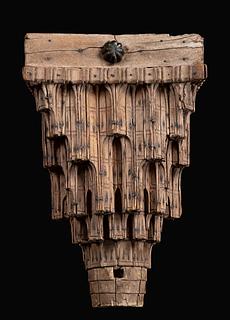
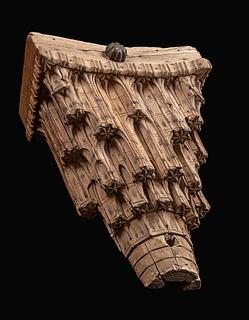
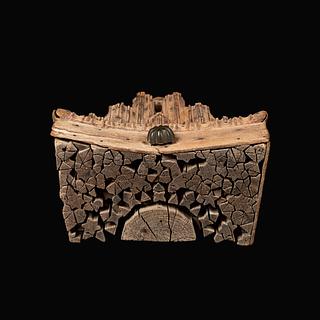
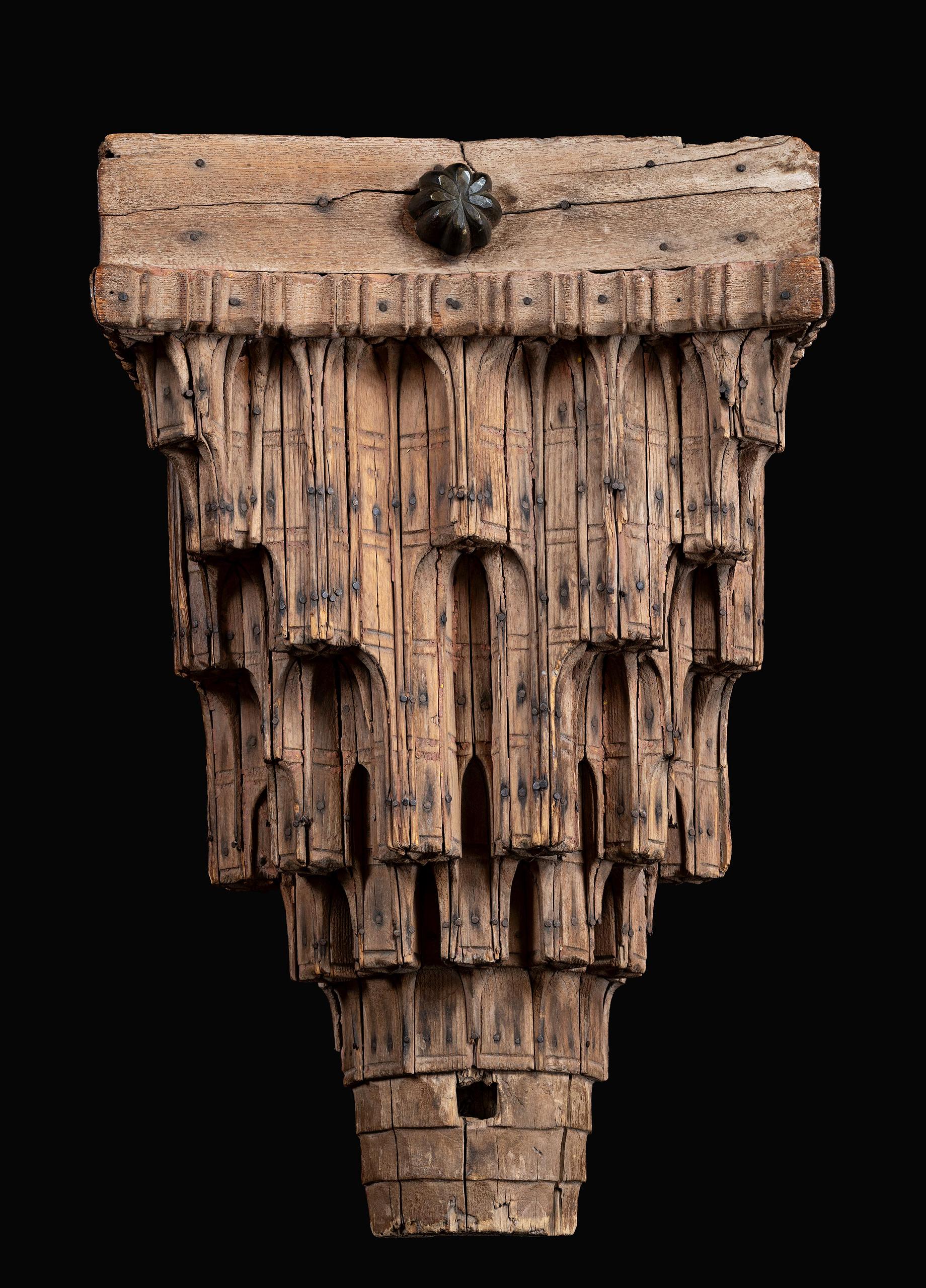
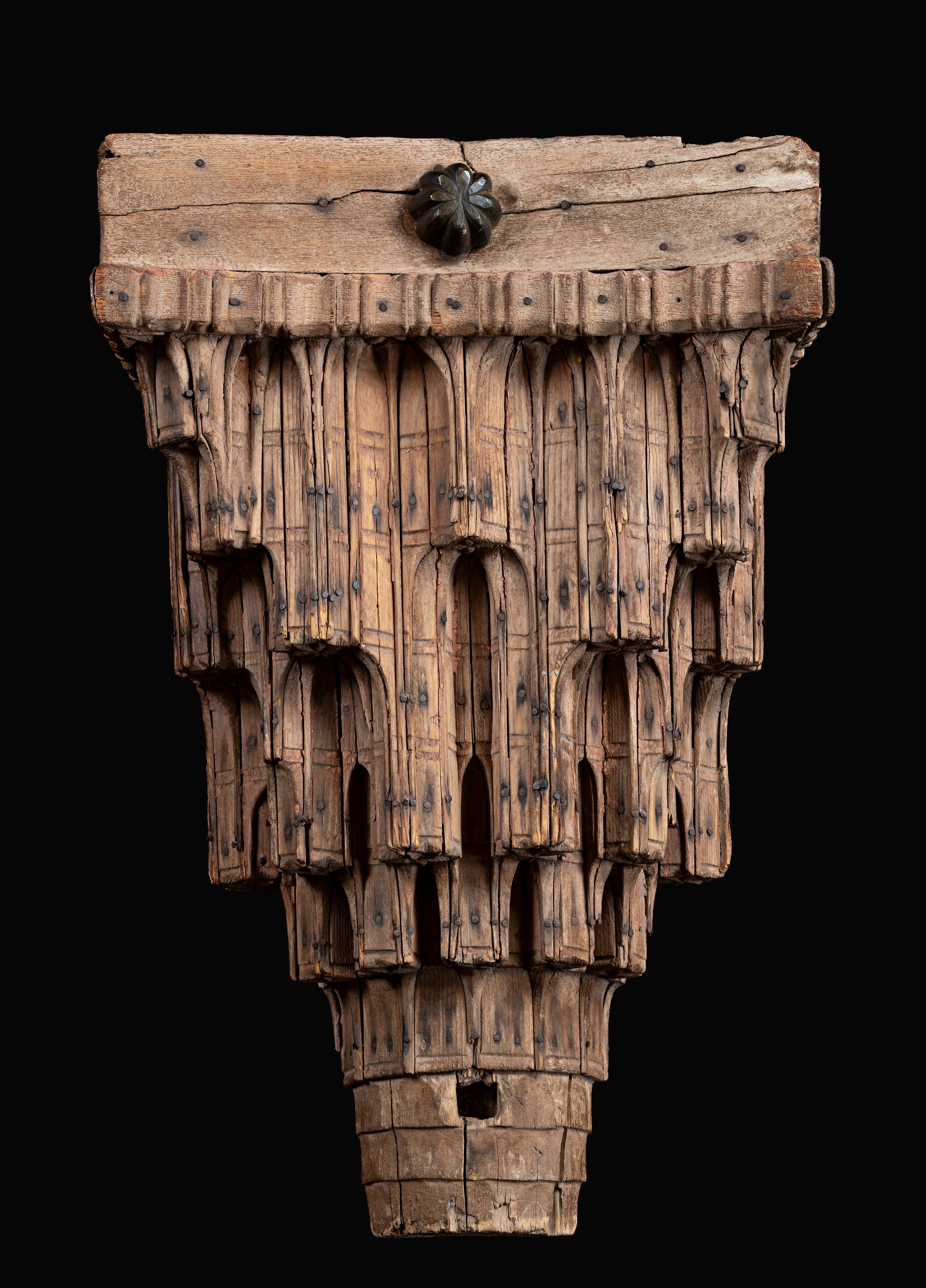
Wooden capital with bronze spikes
Iraq; 18th century
H: 53.5; W: 36; D: 19.5 cm
Inventory number 79/2003
The stalactite-like muqarnas decoration was developed in stucco as early as the end of the 9th century. It was soon one of the characteristic elements found in Islamic architecture from Spain in the west to India in the east, made of many different materials. The muqarnas was also used under the Ottomans in numerous contexts, for example for stone and wooden capitals.
This capital is related stylistically to the ones made for houses in Ottoman Baghdad. Together with a missing wooden half column, it originally served as a pilaster on a wall. The capital is made up of layers of strips – triangular, rhomboid, and star-shaped – attached to a piece of the semicircular half column.
This capital is related stylistically to the ones made for houses in Ottoman Baghdad. Together with a missing wooden half column, it originally served as a pilaster on a wall. The capital is made up of layers of strips – triangular, rhomboid, and star-shaped – attached to a piece of the semicircular half column.
Published in
Published in
Sheila S. Blair andJonathan M. Bloom (eds.): Cosmophilia. Islamic Art from the David Collection, Copenhagen, McMullen Museum of Art, Boston College, Boston 2006, cat.no. 59;