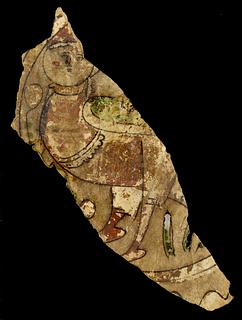
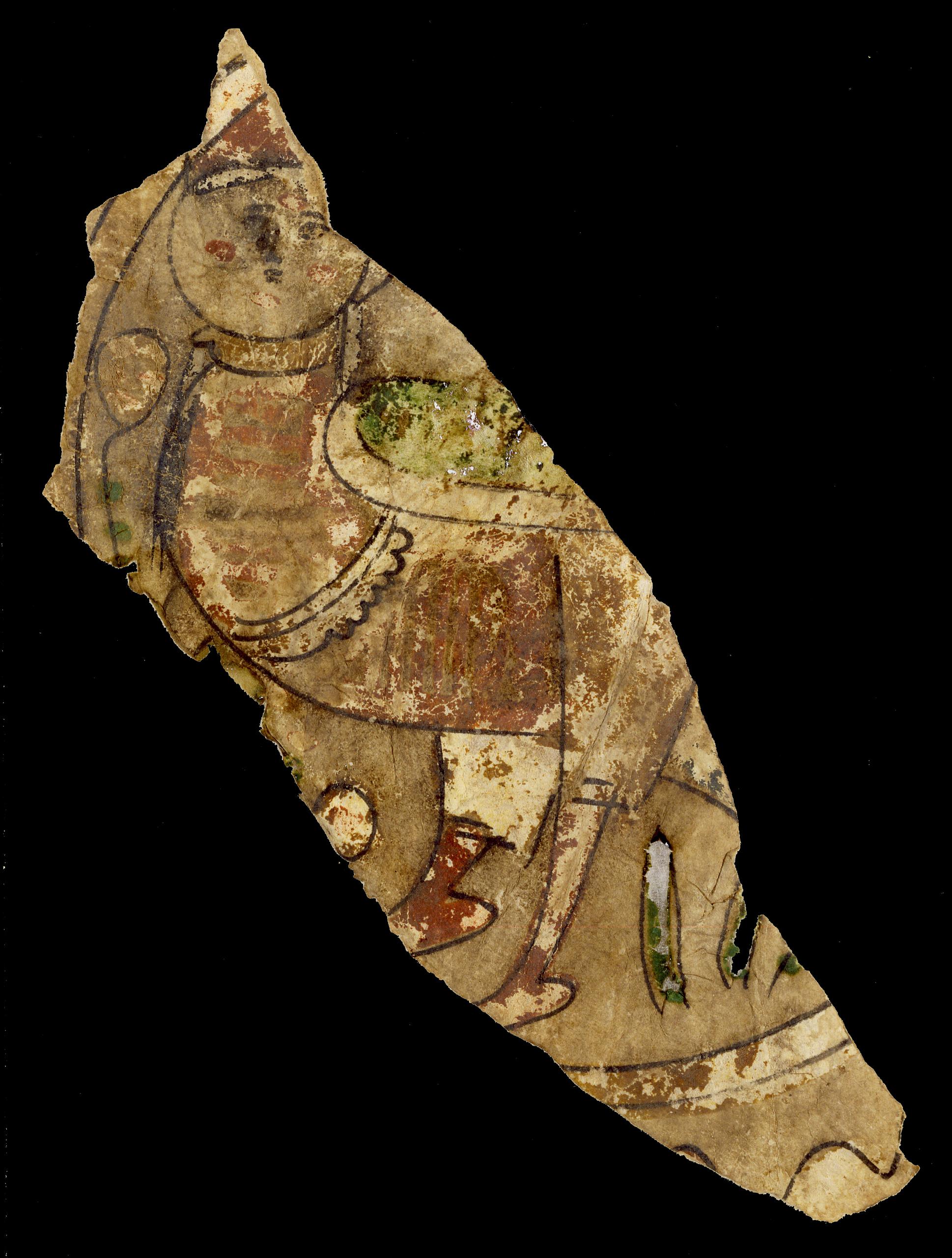
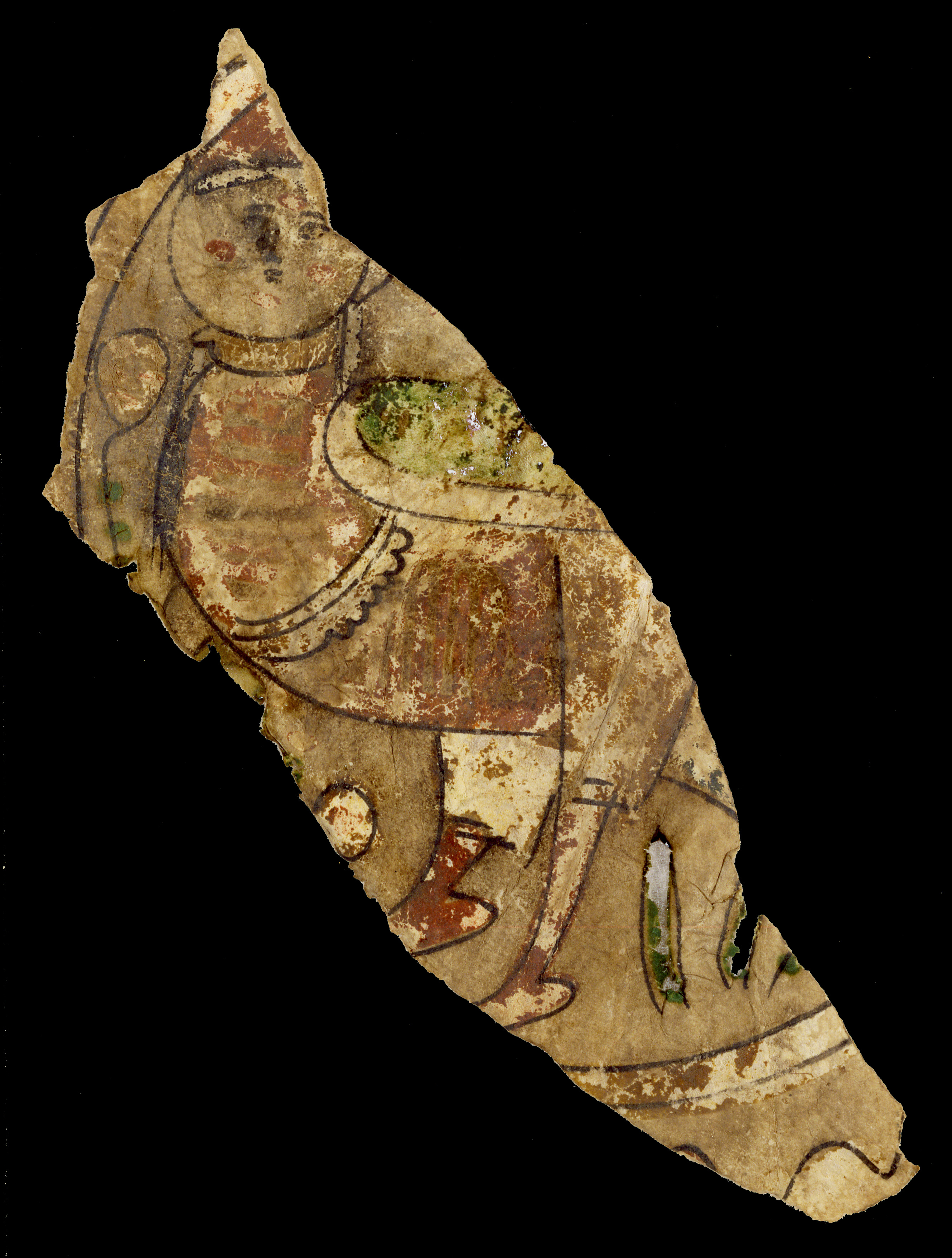
Fragment of a painting on paper. ‘A Harpy’
Egypt; 11th-12th century
20.5 × 7 cm
Inventory number 50/1977
Very few illustrated manuscripts have been preserved from the period before 1200, but it would be strange if there were not illustrations in some of the books that once stood in the great libraries of Abbasid Baghdad, Umayyad Cordoba, and Fatimid Cairo.
We know that monumental painting was used in palace architecture, and Fatimid pottery shows that there were competent painters.
We cannot determine the purpose of this fragment with the little colored drawing of a harpy (a mythical creature). Perhaps it came from a manuscript. Perhaps it was used as a model by a potter or a weaver.
We know that monumental painting was used in palace architecture, and Fatimid pottery shows that there were competent painters.
We cannot determine the purpose of this fragment with the little colored drawing of a harpy (a mythical creature). Perhaps it came from a manuscript. Perhaps it was used as a model by a potter or a weaver.
Published in
Published in
Kjeld von Folsach: Islamic art. The David Collection, Copenhagen 1990, fig. 2;
Kjeld von Folsach: Fabelvæsner fra Islams Verden, Davids Samling, København 1991, cat.no. 16;
Kjeld von Folsach: Art from the World of Islam in The David Collection, Copenhagen 2001, fig. 10;
Kjeld von Folsach, Joachim Meyer: The Human Figure in Islamic Art – Holy Men, Princes, and Commoners, The David Collection, Copenhagen 2017, fig. 28, p. 103;
Kjeld von Folsach: Fabelvæsner fra Islams Verden, Davids Samling, København 1991, cat.no. 16;
Kjeld von Folsach: Art from the World of Islam in The David Collection, Copenhagen 2001, fig. 10;
Kjeld von Folsach, Joachim Meyer: The Human Figure in Islamic Art – Holy Men, Princes, and Commoners, The David Collection, Copenhagen 2017, fig. 28, p. 103;
The Tulunids and the Fatimids
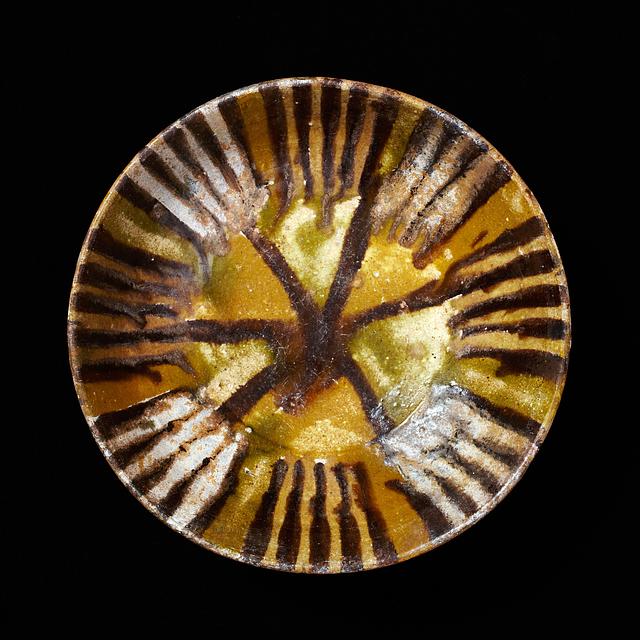
Earthenware bowl, covered with a thin, white slip and painted in yellow, green, and manganese under a transparent glaze. Fayyum type
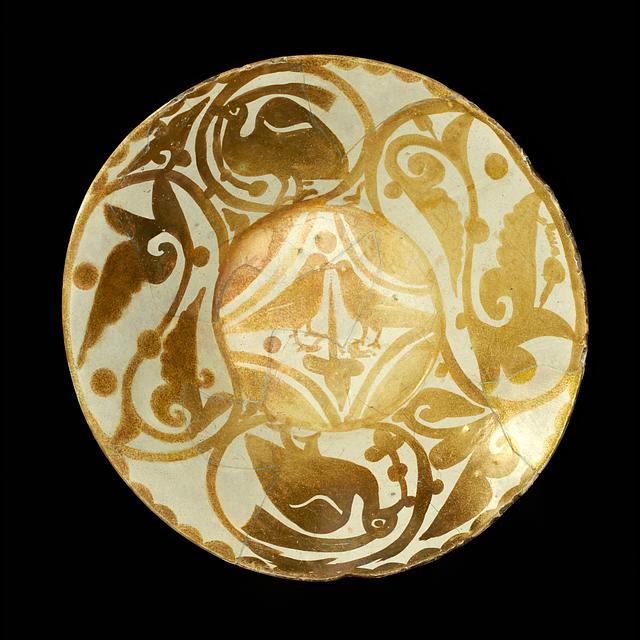
Fragmentary earthenware bowl, painted in lustre over an opaque, white glaze
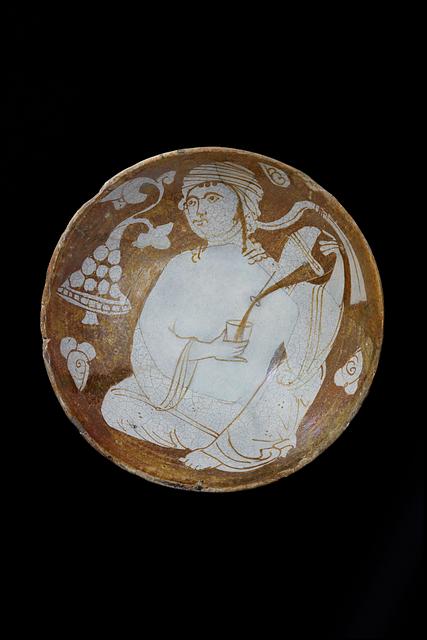
Earthenware bowl, painted in lustre over a white glaze
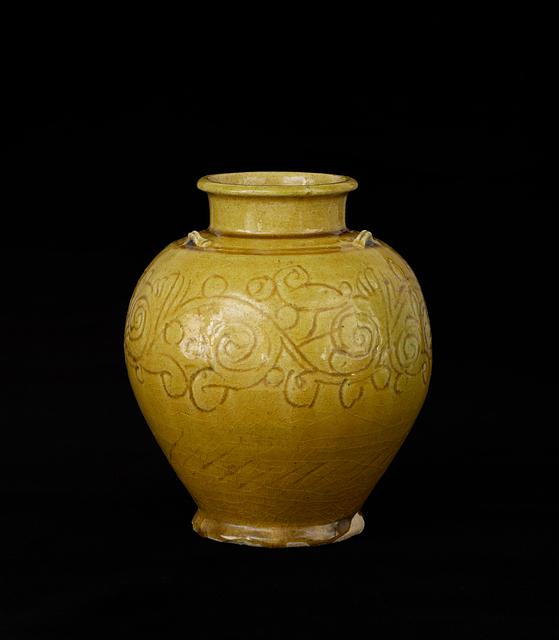
Fritware jar with incised decoration under yellow glaze