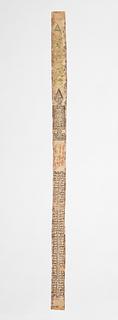
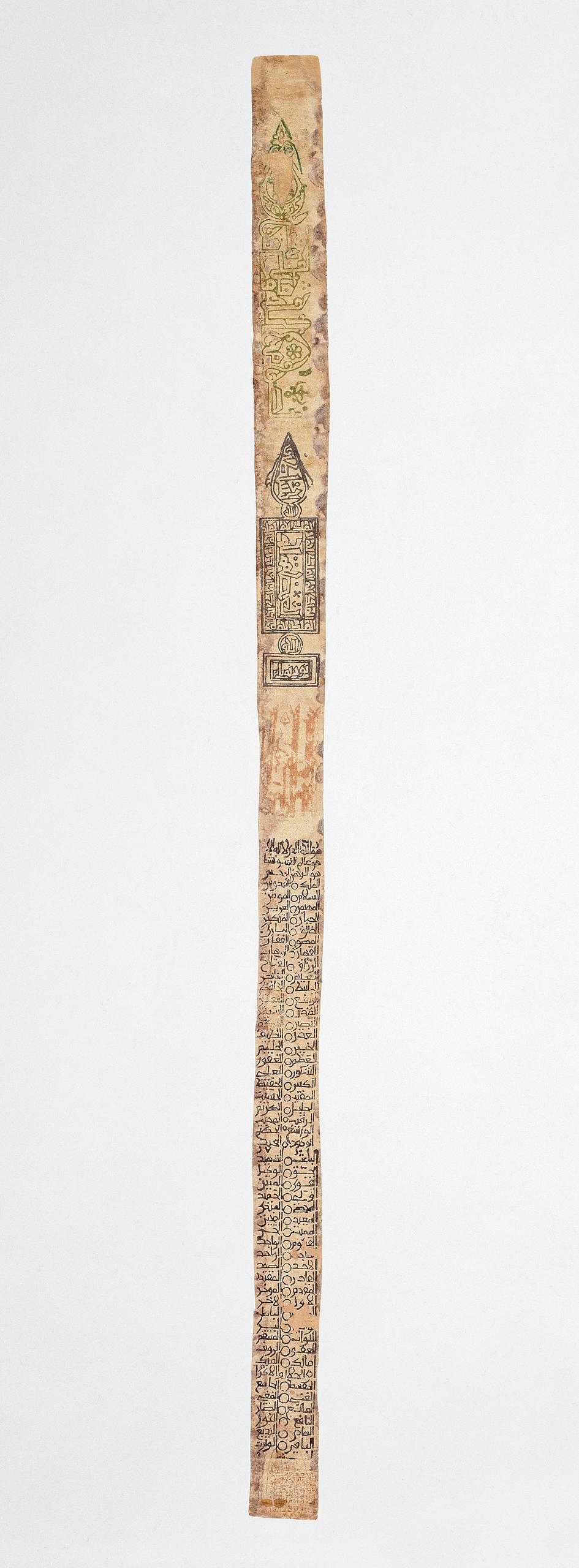
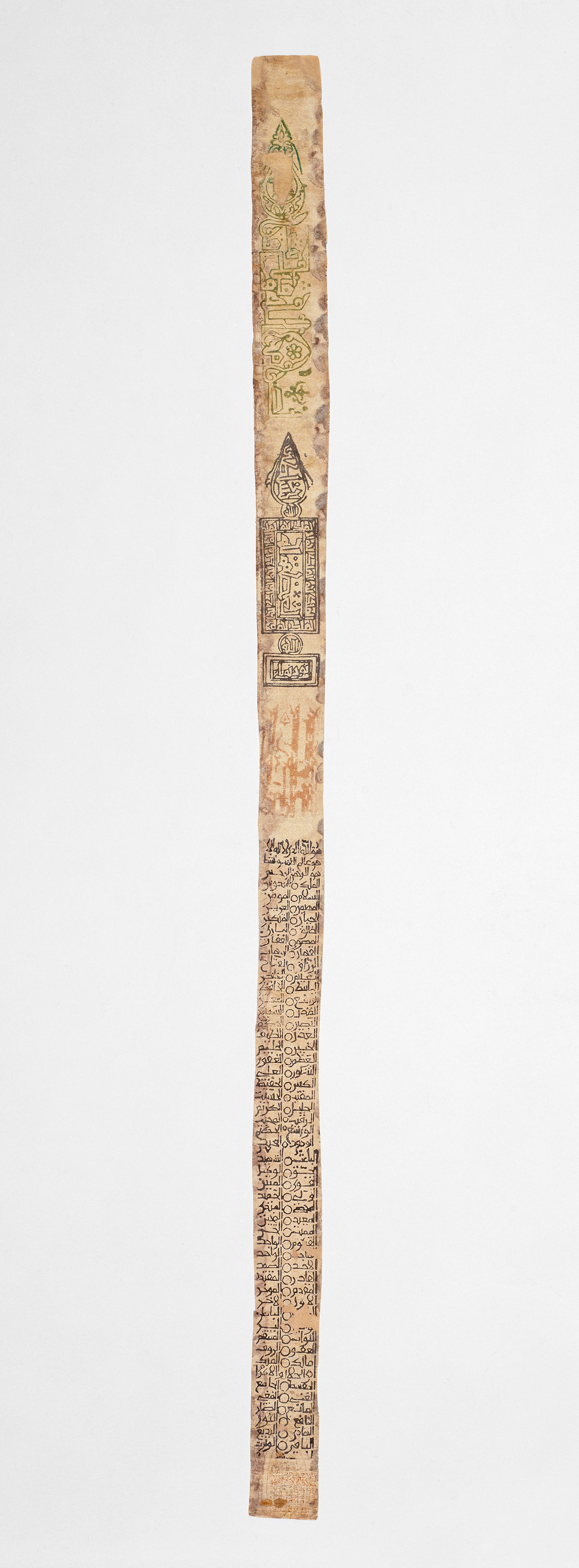
Amulet scroll (tarsh) with polychrome block print
Egypt, perhaps Iran; 10th-11th century
H: 86,6; W: 4,5 cm
Inventory number 85/2003
Amulet scrolls like this one, with brief printed quotations from the Koran and God’s 99 names, were probably not intended to be read, only enclosed in a good-luck charm. The text at the top – “God’s support and a speedy victory” – is known from Islamic armor, indicating that the scroll was intended for a warrior.
The printing technique employed for the tarsh was presumably adopted from China. The use of block printing for amulets stopped between the 15th and 18th century, possibly as a result of a popular Sufi tradition that baraka (luck and fortune) was best transmitted through the written and not the printed word.
The printing technique employed for the tarsh was presumably adopted from China. The use of block printing for amulets stopped between the 15th and 18th century, possibly as a result of a popular Sufi tradition that baraka (luck and fortune) was best transmitted through the written and not the printed word.
Published in
Published in
Ramsey Fendall: Islamic calligraphy, Sam Fogg Rare Books and Manuscripts, London 2003, cat. 22;
Sarah Kiyanrad: Gesundheit und Glück für seinen Besitzer: schrifttragende Amulette im islamzeitlichen Iran (bis 1258), Würzburg 2017, Abb. 2, p. 364;
Joachim Meyer: “Ornament or symbol. Around an early group of silver amulet cases in the David Collection” in Journal of the David Collection, 2021, 5, fig. 4, pp. 11-12;
Owen Davies: Art of the grimoire: an illustrated history of magic books and spells, London 2023, p. 99;
Joachim Meyer, Rasmus Bech Olsen and Peter Wandel: Beyond words: calligraphy from the World of Islam, The David Collection, Copenhagen 2024, cat. 120, pp. 292-293;
Sarah Kiyanrad: “A versatile amulet : doctors hate him - scribe cures back pain in one simple mindblowing trick” in Invisible East - Documents of the month, 5, 2025, fig. 8
Sarah Kiyanrad: Gesundheit und Glück für seinen Besitzer: schrifttragende Amulette im islamzeitlichen Iran (bis 1258), Würzburg 2017, Abb. 2, p. 364;
Joachim Meyer: “Ornament or symbol. Around an early group of silver amulet cases in the David Collection” in Journal of the David Collection, 2021, 5, fig. 4, pp. 11-12;
Owen Davies: Art of the grimoire: an illustrated history of magic books and spells, London 2023, p. 99;
Joachim Meyer, Rasmus Bech Olsen and Peter Wandel: Beyond words: calligraphy from the World of Islam, The David Collection, Copenhagen 2024, cat. 120, pp. 292-293;
Sarah Kiyanrad: “A versatile amulet : doctors hate him - scribe cures back pain in one simple mindblowing trick” in Invisible East - Documents of the month, 5, 2025, fig. 8
The Tulunids and the Fatimids
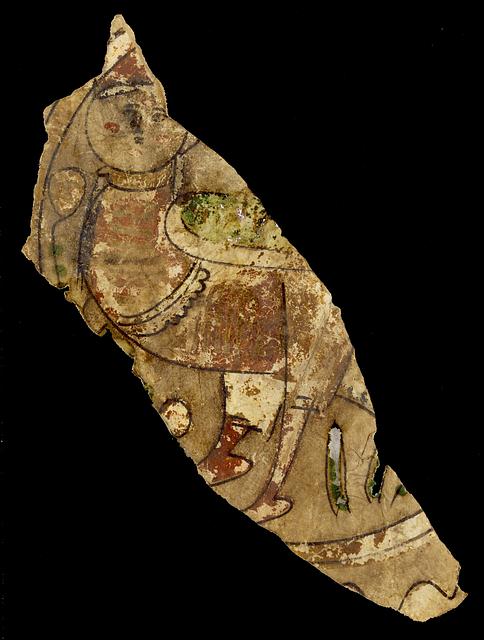
Fragment of a painting on paper. ‘A Harpy’
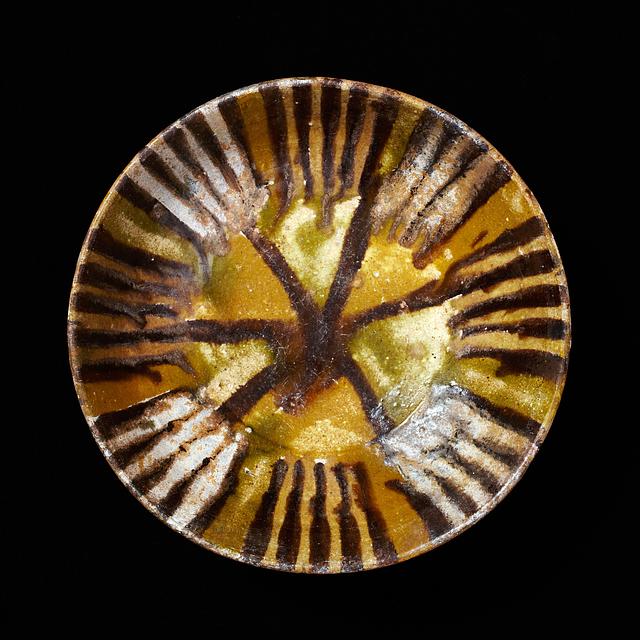
Earthenware bowl, covered with a thin, white slip and painted in yellow, green, and manganese under a transparent glaze. Fayyum type
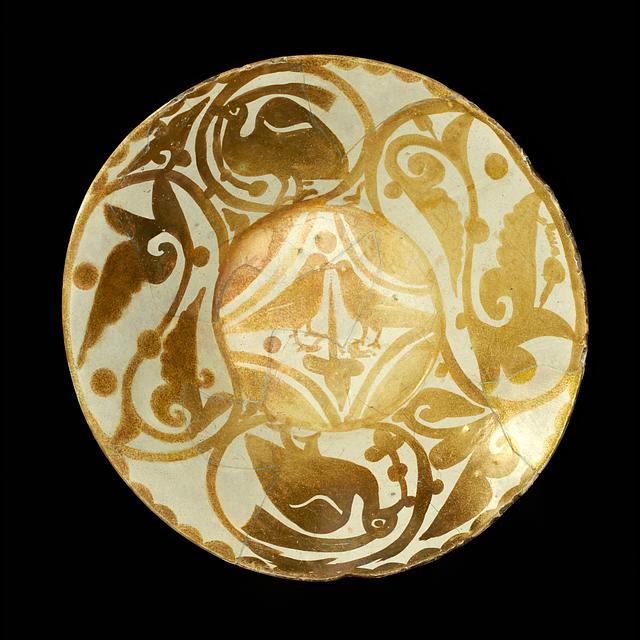
Fragmentary earthenware bowl, painted in lustre over an opaque, white glaze
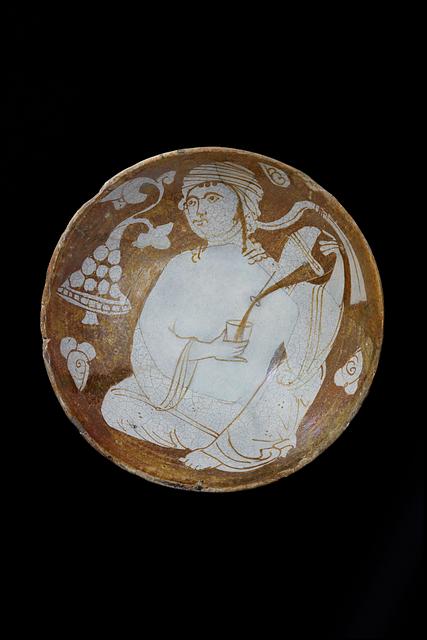
Earthenware bowl, painted in lustre over a white glaze