Albert Gottschalk (1866–1906)
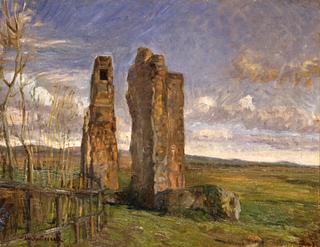
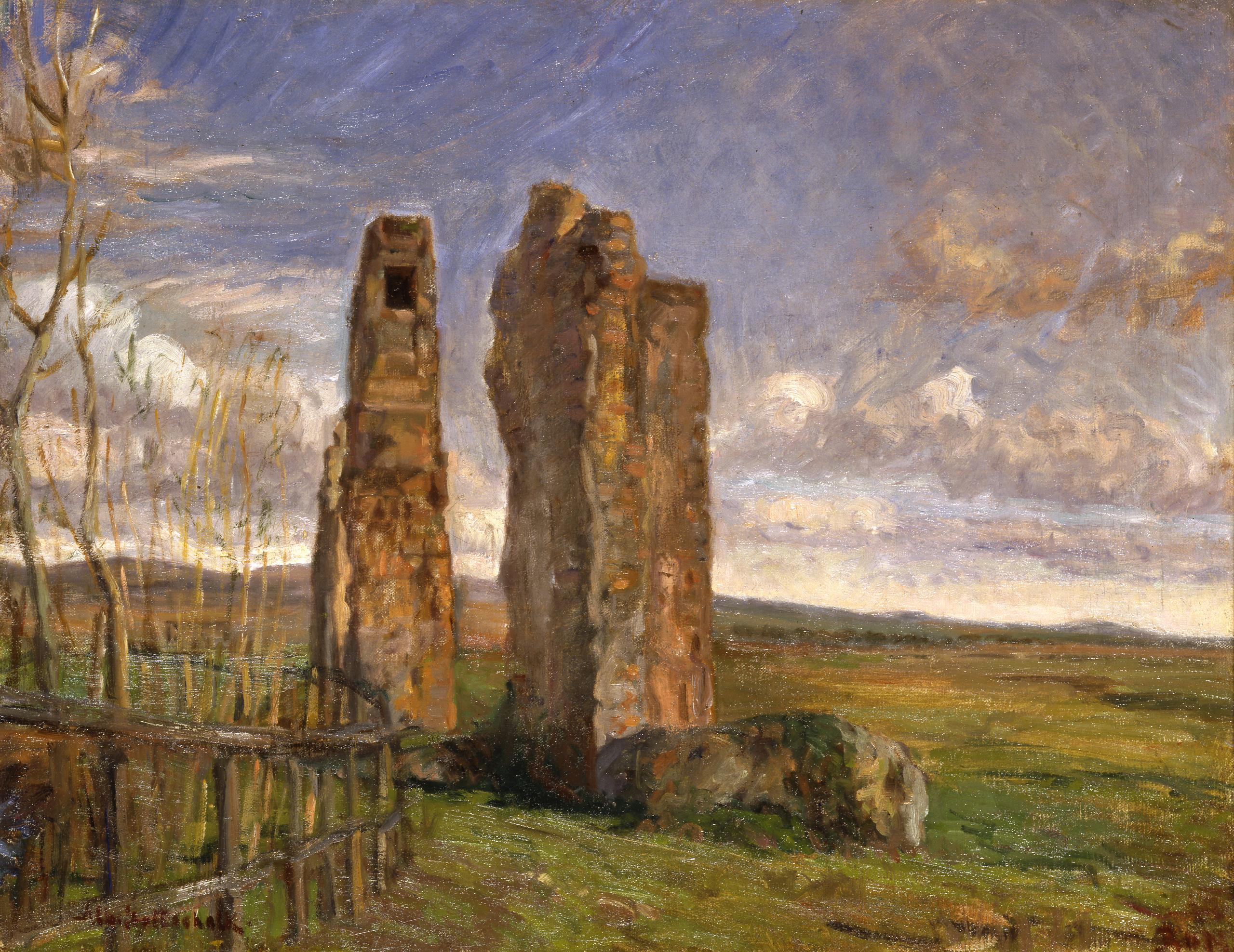
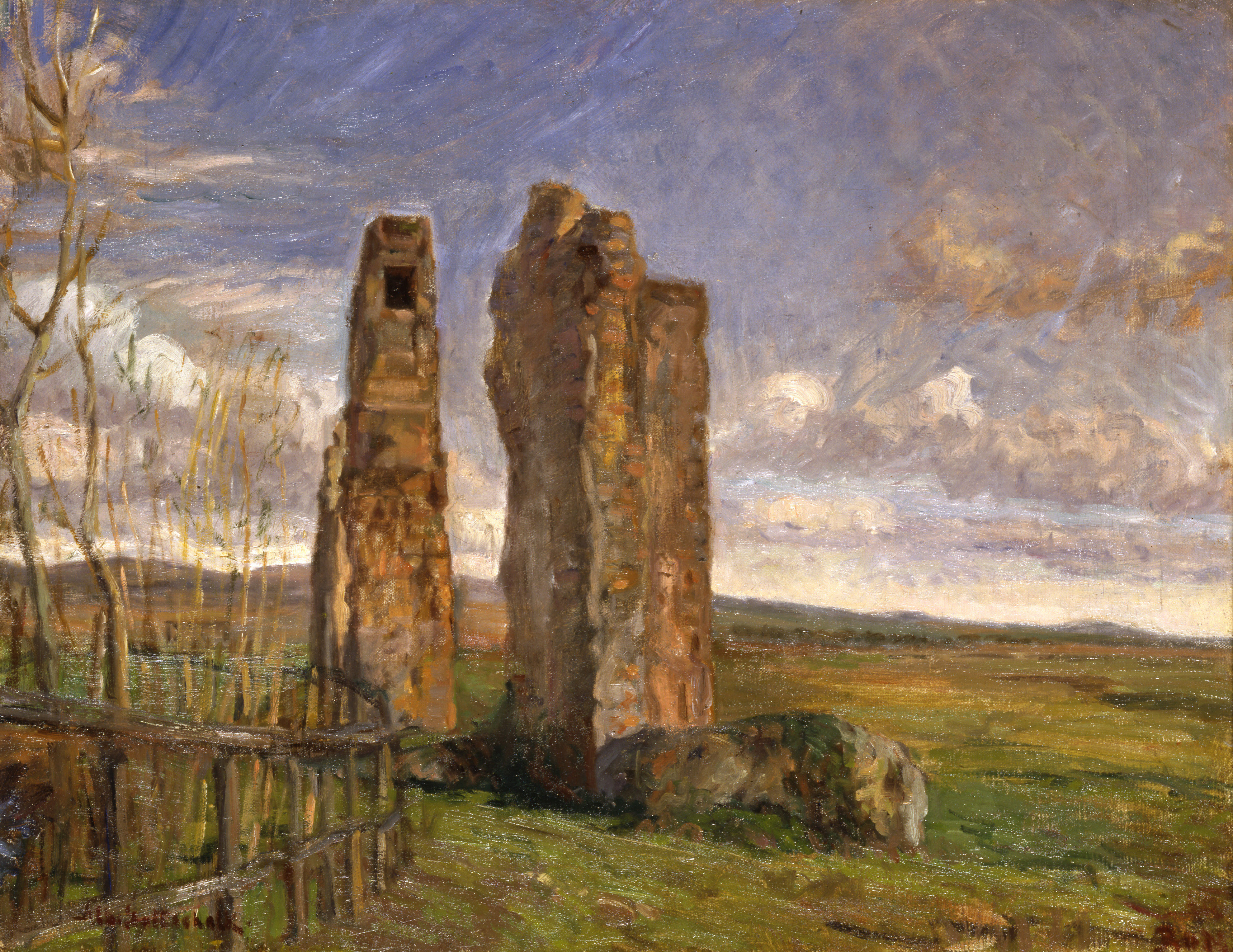
Ruins in Campagna, 1904
Oil on canvas
43.7 x 56.2 cm
Inventory number B 301
Albert Gottschalk often travelled abroad, but it left very few tangible traces in the form of paintings. One exception, however, is his trip to Rome in 1904, which spawned a number of remarkable and highly original paintings that are now considered highlights within his relatively short artistic oeuvre.
Gottschalk painted very few works depicting classical Rome. Instead, he found his subjects in the Roman Campagna, where he would often paint from the crack of dawn to late evening and in all kinds of weather, which was hard work – even for a skilled plein air painter. In a letter to his close friend and confidante, Gertrud Klamke, Gottschalk described the period in these terms: ‘The Campagna still has a hold on me – the bracing morning rides out there are certainly worth the suffering. But as the day wears on, oh, dear – and then a fever in the evening – and the heart palpitations, and yet I feel I shall have to stay a little longer anyway.’1
On the Campagna, Gottschalk was particularly fascinated by the ruins of ancient aqueducts and bridges, sometimes depicting them up close, at other times at a distance. He never sought to create representative depictions of the ruins. Instead, he chose curious, often oblique points of view that made it difficult to identify the individual monuments, allowing them instead to appear highly simplified as vertical blocks or rods. In this way he played down the historical significance otherwise attached to them.2
In Ruins in Campagna, the ruins rise out of a lush landscape with a low-lying horizon. As in B 299, Gottschalk emphasises a vertical division of the picture plane, with the ruins acting as central axes dividing the picture in two. On the right side is an open landscape with a low horizon line and the sky, its drifting clouds introducing a sense of movement. To the left is a fence and some slender tree trunks, their abrupt cropping as striking as the choice of point of view.
The painting was exhibited at the Den Frie Udstilling in 1905 alongside seven other works from Gottschalck’s trip to Italy. It was his largest total hang at Den Frie during his short life. The fever which he allegedly contracted during the many trips out to the Campagna followed him home to Denmark, where his health deteriorated. He would remain afflicted in last years of his life. He was later diagnosed with a glandular disorder in the throat, which eventually caused his death in February 1906.3
Gottschalk painted very few works depicting classical Rome. Instead, he found his subjects in the Roman Campagna, where he would often paint from the crack of dawn to late evening and in all kinds of weather, which was hard work – even for a skilled plein air painter. In a letter to his close friend and confidante, Gertrud Klamke, Gottschalk described the period in these terms: ‘The Campagna still has a hold on me – the bracing morning rides out there are certainly worth the suffering. But as the day wears on, oh, dear – and then a fever in the evening – and the heart palpitations, and yet I feel I shall have to stay a little longer anyway.’1
On the Campagna, Gottschalk was particularly fascinated by the ruins of ancient aqueducts and bridges, sometimes depicting them up close, at other times at a distance. He never sought to create representative depictions of the ruins. Instead, he chose curious, often oblique points of view that made it difficult to identify the individual monuments, allowing them instead to appear highly simplified as vertical blocks or rods. In this way he played down the historical significance otherwise attached to them.2
In Ruins in Campagna, the ruins rise out of a lush landscape with a low-lying horizon. As in B 299, Gottschalk emphasises a vertical division of the picture plane, with the ruins acting as central axes dividing the picture in two. On the right side is an open landscape with a low horizon line and the sky, its drifting clouds introducing a sense of movement. To the left is a fence and some slender tree trunks, their abrupt cropping as striking as the choice of point of view.
The painting was exhibited at the Den Frie Udstilling in 1905 alongside seven other works from Gottschalck’s trip to Italy. It was his largest total hang at Den Frie during his short life. The fever which he allegedly contracted during the many trips out to the Campagna followed him home to Denmark, where his health deteriorated. He would remain afflicted in last years of his life. He was later diagnosed with a glandular disorder in the throat, which eventually caused his death in February 1906.3
Published in
Published in
Fortegnelse Over Kunstværkerne Paa Den Frie Udstilling 1905, København 1905, cat.no. 62;
Fortegnelse over Albert Gottschalks arbejder: udstillede i Kunstforeningen i København, November-December 1906, København 1906, cat.no. 166, p. 12;
Albert Gottschalk, født i Stege 3. Juli 1866, død i København 13. Februar 1906, Den Frie Udstilling, Oktober 1930, København 1930, cat.no. 204, p. 30;
Erik Zahle: ”Malerisamlingens vækst” i C.L. Davids Samling, Tredie del, København 1958, pp. 128, 166-167;
C.L. David: C.L. Davids Samling, København 1960, p. 24;
Troels Andersen og Helle Behrndt: Albert Gottschalk: 1866-1906, Sophienholm, Lyngby 1988, p. 22;
Troels Andersen: Albert Gottschalk: 1866-1906, 2. rev. ed., Valby 2013, cat.no. 323, pp. 82, 87, 172;
Troels Andersen in Kjeld von Folsach and Nana Lund (eds.): Dansk kunst i Davids Samling – fra Philipsen til Saxbo, København 1995, cat.no. 63, pp. 154-155;
Gertrud Oelsner (ed.): I maleriets udkant - Albert Gottschalk (1866-1906) = Men denna eftermiddag = But this afternoon, Storstrøms Kunstmuseum og Faaborg Museum, Maribo 2002, pp. 25, 37, 42, cat.no. 55, pl. 30, p. 109;
Fortegnelse over Albert Gottschalks arbejder: udstillede i Kunstforeningen i København, November-December 1906, København 1906, cat.no. 166, p. 12;
Albert Gottschalk, født i Stege 3. Juli 1866, død i København 13. Februar 1906, Den Frie Udstilling, Oktober 1930, København 1930, cat.no. 204, p. 30;
Erik Zahle: ”Malerisamlingens vækst” i C.L. Davids Samling, Tredie del, København 1958, pp. 128, 166-167;
C.L. David: C.L. Davids Samling, København 1960, p. 24;
Troels Andersen og Helle Behrndt: Albert Gottschalk: 1866-1906, Sophienholm, Lyngby 1988, p. 22;
Troels Andersen: Albert Gottschalk: 1866-1906, 2. rev. ed., Valby 2013, cat.no. 323, pp. 82, 87, 172;
Troels Andersen in Kjeld von Folsach and Nana Lund (eds.): Dansk kunst i Davids Samling – fra Philipsen til Saxbo, København 1995, cat.no. 63, pp. 154-155;
Gertrud Oelsner (ed.): I maleriets udkant - Albert Gottschalk (1866-1906) = Men denna eftermiddag = But this afternoon, Storstrøms Kunstmuseum og Faaborg Museum, Maribo 2002, pp. 25, 37, 42, cat.no. 55, pl. 30, p. 109;
Footnotes
Footnotes
1.
Troels Andersen: Albert Gottschalk 1866-1906, Valby 2013, p. 123.
2.
Gertrud Oelsner (ed.): I maleriets udkant. Albert Gottschalk (1866-1906), Storstrøms Kunstmuseum and Faaborg Museum, Maribo 2002, pp. 24–27.
3.
Troels Andersen: Albert Gottschalk 1866-1906, Valby 2013, p. 82. The letter is dated 10.04.1904.
Paintings and drawings
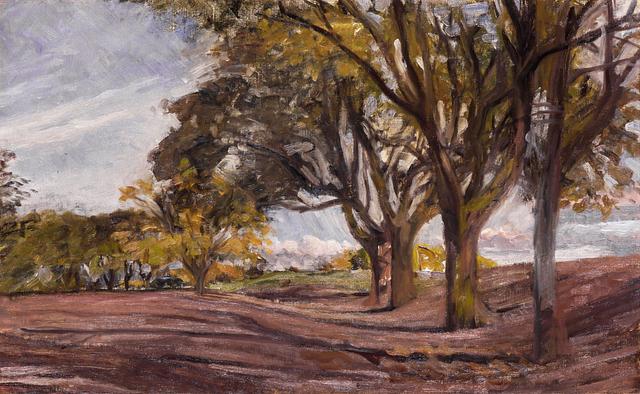
Albert Gottschalk (1866–1906)
Chestnut Avenue at the Hermitage, 1905?
Oil on canvas
Chestnut Avenue at the Hermitage, 1905?
Oil on canvas
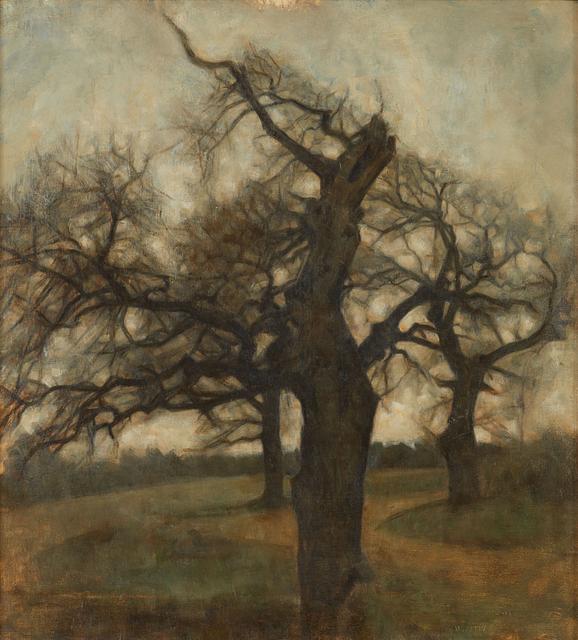
Svend Hammershøi (1873–1948)
Oak Trees near Vordingborg, 1917
Oil on canvas
Oak Trees near Vordingborg, 1917
Oil on canvas
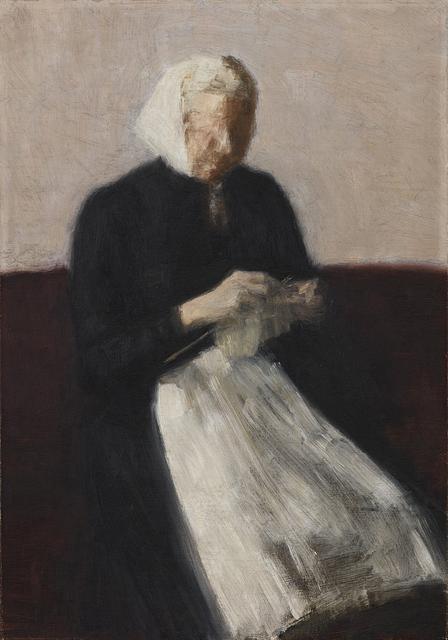
Vilhelm Hammershøi (1864–1916)
Woman Knitting. The Artist’s Mother, 1889
Oil on canvas
Woman Knitting. The Artist’s Mother, 1889
Oil on canvas
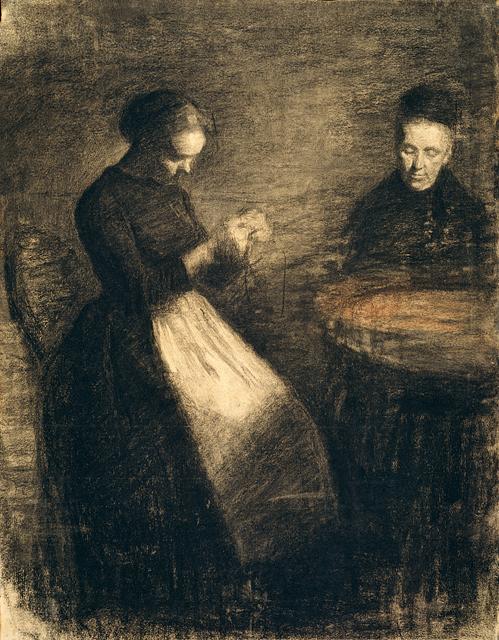
Vilhelm Hammershøi (1864–1916)
Evening in the Drawing Room. Two Women at a Round Table, 1891
Lead and chalk on paper
Evening in the Drawing Room. Two Women at a Round Table, 1891
Lead and chalk on paper