Agnes Lunn (1850–1941)
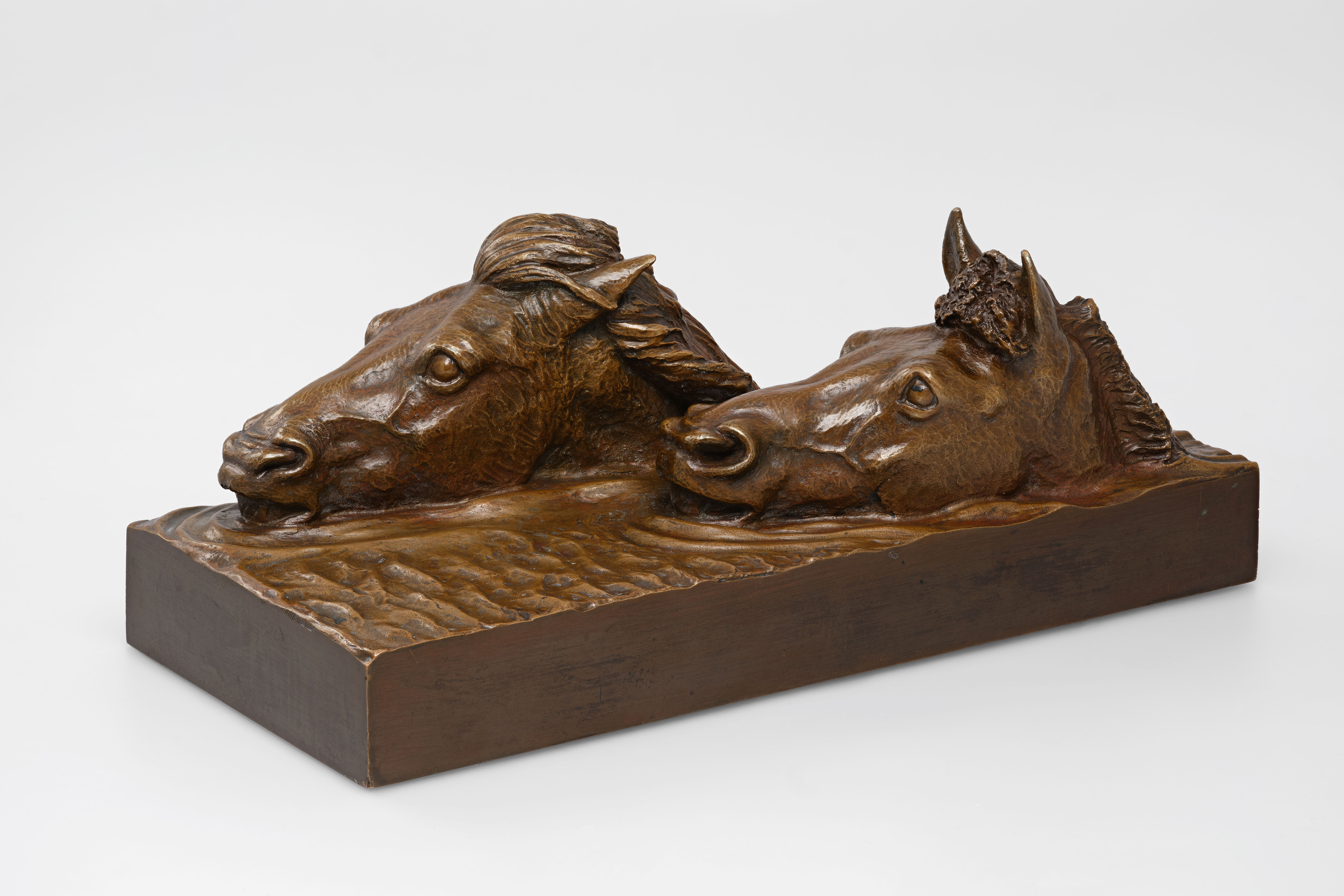
Two Horses Swimming, 1906
Bronze
8.5 x 22.1 x 10.3 cm
Inventory number B 150
Agnes Lunn sat on the committee of women artists who, in the spring of 1888, fought for women’s right to academic education. They directed their criticism directly at the Royal Danish Academy of Fine Arts in Copenhagen, which only offered teaching to male students. With broad political support, the Art School for Women was established in the autumn of 1888.1 Agnes Lunn herself attended the school in the winter of 1889–90 and it was here she had the opportunity to train as a sculptor, side by side with her friend Anne Marie Carl-Nielsen (1863–1945). Speaking about this shift in interest from painting to sculpture, she later stated, in 1925: ‘I was going to paint some horses in motion and could not get it right. That prompted me to pick up sculpture instead’.2
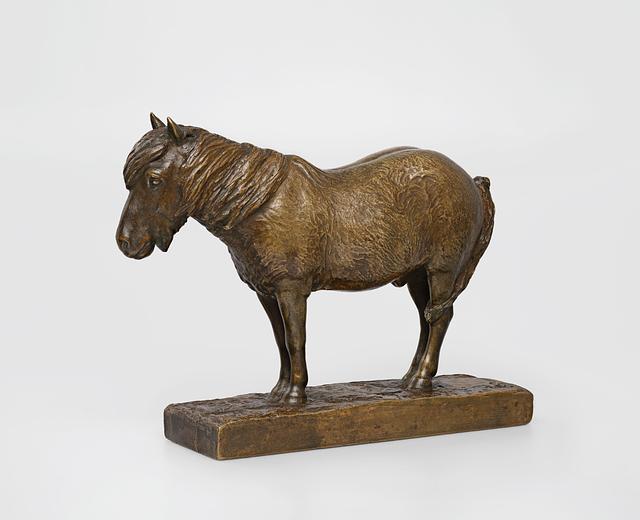
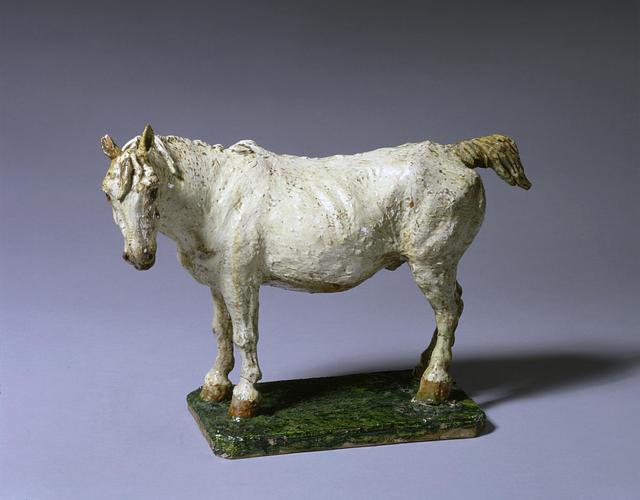
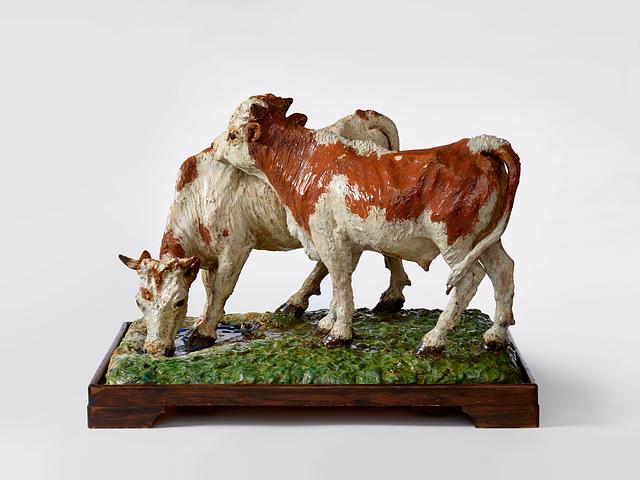
Agnes Lunn worked with sculptures throughout her life, always in a statuette format. She modelled her pieces plein-air – directly in front of her chosen model – or in her living room, which doubled as a studio.3 Her favourite subjects were animals, especially horses, and she had a unique gift for making them alive in their individuality.
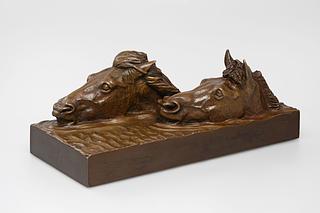
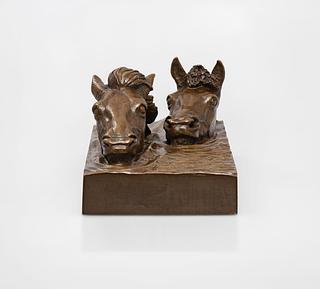
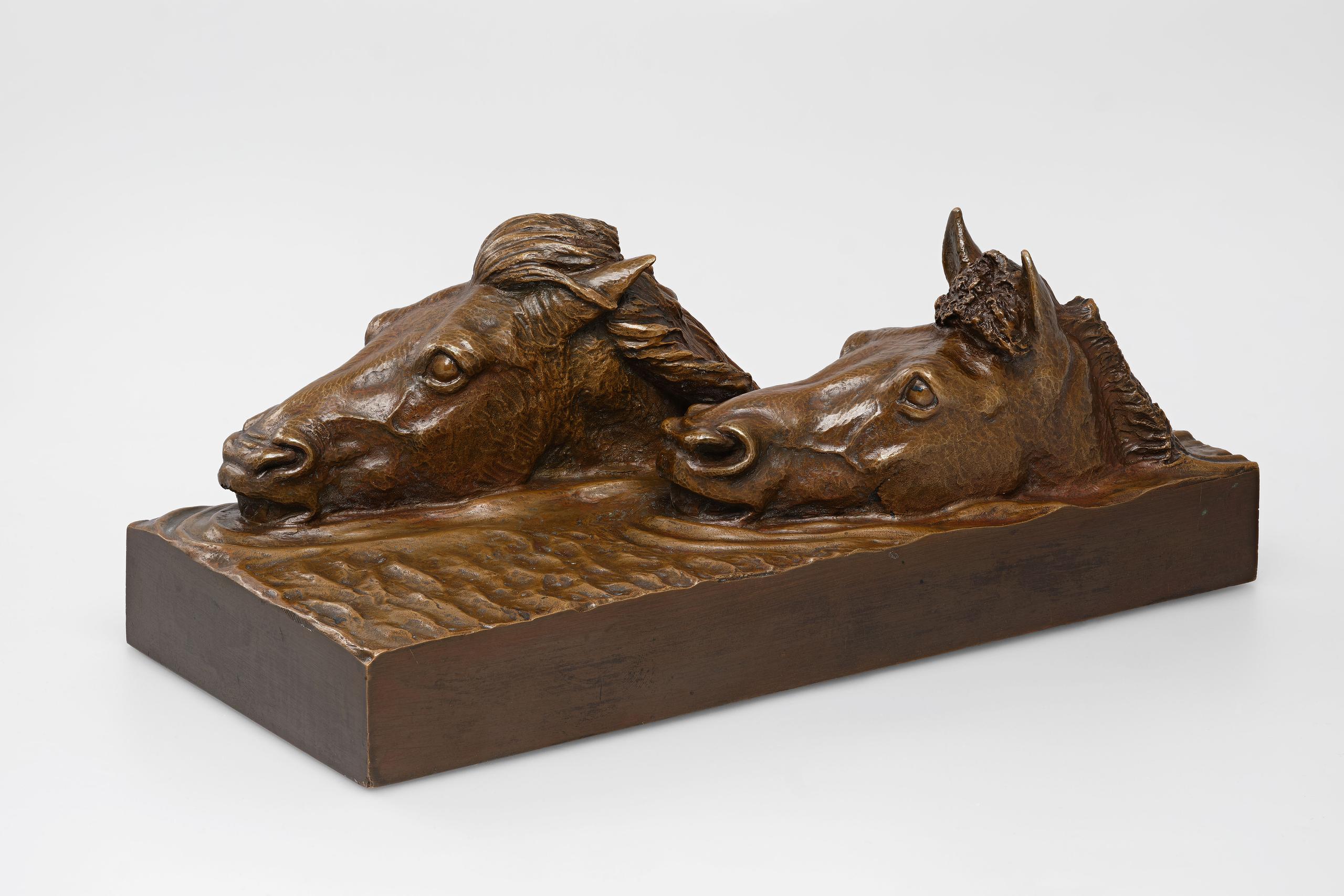
The bronze statuette, Two Horses Swimming, shows two horses swimming in a troubled sea, up against a fierce wind. Flared nostrils, open mouths and wind-blown manes reveal that the two horses are exerting themselves in the water. As always, Agnes Lunn has studied her subject closely, rendering it in a naturalistic manner with a keen eye for detail. Notice how the two horses are far from alike. The front one, with its ears laid back, is clearly putting in a focused and concentrated effort, maintaining a forward movement. By contrast, the rear horse with ears erect seems to be struggling along as its body seemingly weighing it down.
The statuette, which in many ways represents a radical approach to its subject matter, was a gift from Agnes Lunn to C.L. David, who used it as a paperweight.
Agnes Lunn worked with sculptures throughout her life, always in a statuette format. She modelled her pieces plein-air – directly in front of her chosen model – or in her living room, which doubled as a studio.3 Her favourite subjects were animals, especially horses, and she had a unique gift for making them alive in their individuality.
The bronze statuette, Two Horses Swimming, shows two horses swimming in a troubled sea, up against a fierce wind. Flared nostrils, open mouths and wind-blown manes reveal that the two horses are exerting themselves in the water. As always, Agnes Lunn has studied her subject closely, rendering it in a naturalistic manner with a keen eye for detail. Notice how the two horses are far from alike. The front one, with its ears laid back, is clearly putting in a focused and concentrated effort, maintaining a forward movement. By contrast, the rear horse with ears erect seems to be struggling along as its body seemingly weighing it down.
The statuette, which in many ways represents a radical approach to its subject matter, was a gift from Agnes Lunn to C.L. David, who used it as a paperweight.
Published in
Published in
Lollo Fogelström and Louise Robbert (eds.): De drogo til Paris. Nordiska konstnärinnor på 1880-talet, Liljevalchs Konsthall, Stockholm 1988, cat.no. 190;
Niels Oxenvad: Agnes Lunn. Maleri og Skulptur, Carl Nielsen Museet, Odense 1992, cat.no. 26;
Niels Oxenvad in Kjeld von Folsach and Nana Lund (eds.): Dansk kunst i Davids Samling – fra Philipsen til Saxbo, Davids Samling, København 1995, cat.no. 41, s. 112-113;
Eva Pohl: Gennembrud: kvinder i dansk kunst fra 1600-tallet til i dag, København 2021, pp. 93-94;
Karen Benedicte Busk-Jepsen: ”An Uphill Struggle. Danish Women Sculptors’ Quest for an Education” in Linda Hinners (ed.): Nordic Women Sculptors at the Turn of the 20th Century. Formation, Visibility, Self-Creation, Nationalmuseum, Stockholm 2022, pp. 113;
Niels Oxenvad: Agnes Lunn. Maleri og Skulptur, Carl Nielsen Museet, Odense 1992, cat.no. 26;
Niels Oxenvad in Kjeld von Folsach and Nana Lund (eds.): Dansk kunst i Davids Samling – fra Philipsen til Saxbo, Davids Samling, København 1995, cat.no. 41, s. 112-113;
Eva Pohl: Gennembrud: kvinder i dansk kunst fra 1600-tallet til i dag, København 2021, pp. 93-94;
Karen Benedicte Busk-Jepsen: ”An Uphill Struggle. Danish Women Sculptors’ Quest for an Education” in Linda Hinners (ed.): Nordic Women Sculptors at the Turn of the 20th Century. Formation, Visibility, Self-Creation, Nationalmuseum, Stockholm 2022, pp. 113;
Footnotes
Footnotes
1.
Niels Oxenvad in Kjeld von Folsach and Nana Lund (eds.): Dansk kunst i Davids Samling – fra Philipsen til Saxbo, København 1995, p. 112.
2.
Interview on the occasion of Agnes Lunn’s fiftieth anniversary as exhibitioner, Nationaltidende, 3/10 1925. See Niels Oxenvad in Kjeld von Folsach and Nana Lund (eds.): Dansk kunst i Davids Samling – fra Philipsen til Saxbo, København 1995, p. 112.
3.
Karen Benedicte Busk-Jepsen: ‘An Uphill Struggle. Danish Women Sculptors’ Quest for an Education’ in Linda Hinners (eds.): Nordic Woman Sculptors at the Turn of the 20th Century. Formation, Visibility, Self-Creation, Nationalmuseum, Stockholm 2022, pp. 112–113.