Dish; faience
Kastrup Faience Manufactory, 1755–1781
Diam: 40 cm
Inventory number NF 60
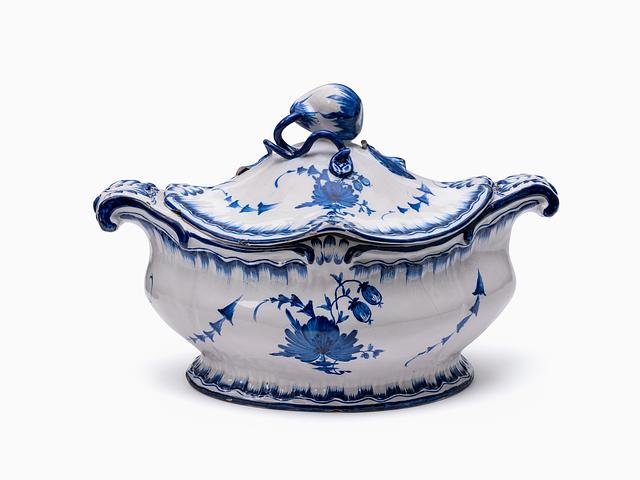
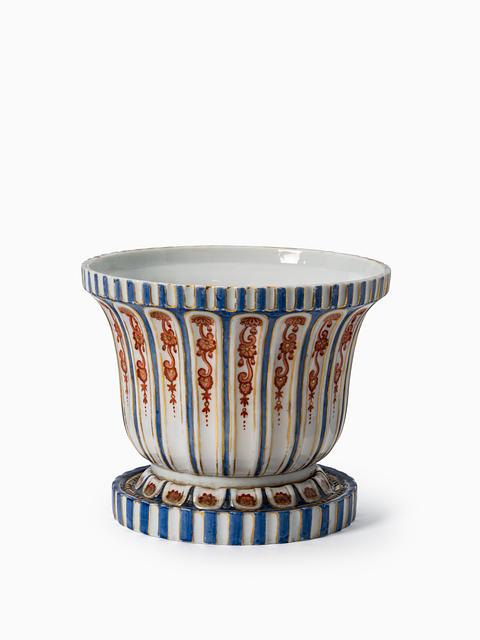
As part of his industrial complex Kastrupværk in Kastrup near Copenhagen, the German-born stonemason and architect Jacob Fortling (1711–1761) founded a faience manufactory in the early 1750s. The production, which was based on clay from the Baltic Island of Bornholm and lime from the small island of Saltholm in Øresund, began in earnest in 1755. The manufactory quickly became successful, building a product range that included table-top trays, dishes, lidded bowls and terrines, desk sets, centrepieces, tiles and decorative vases.
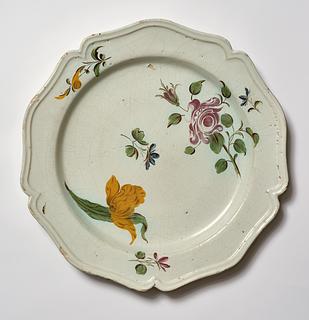
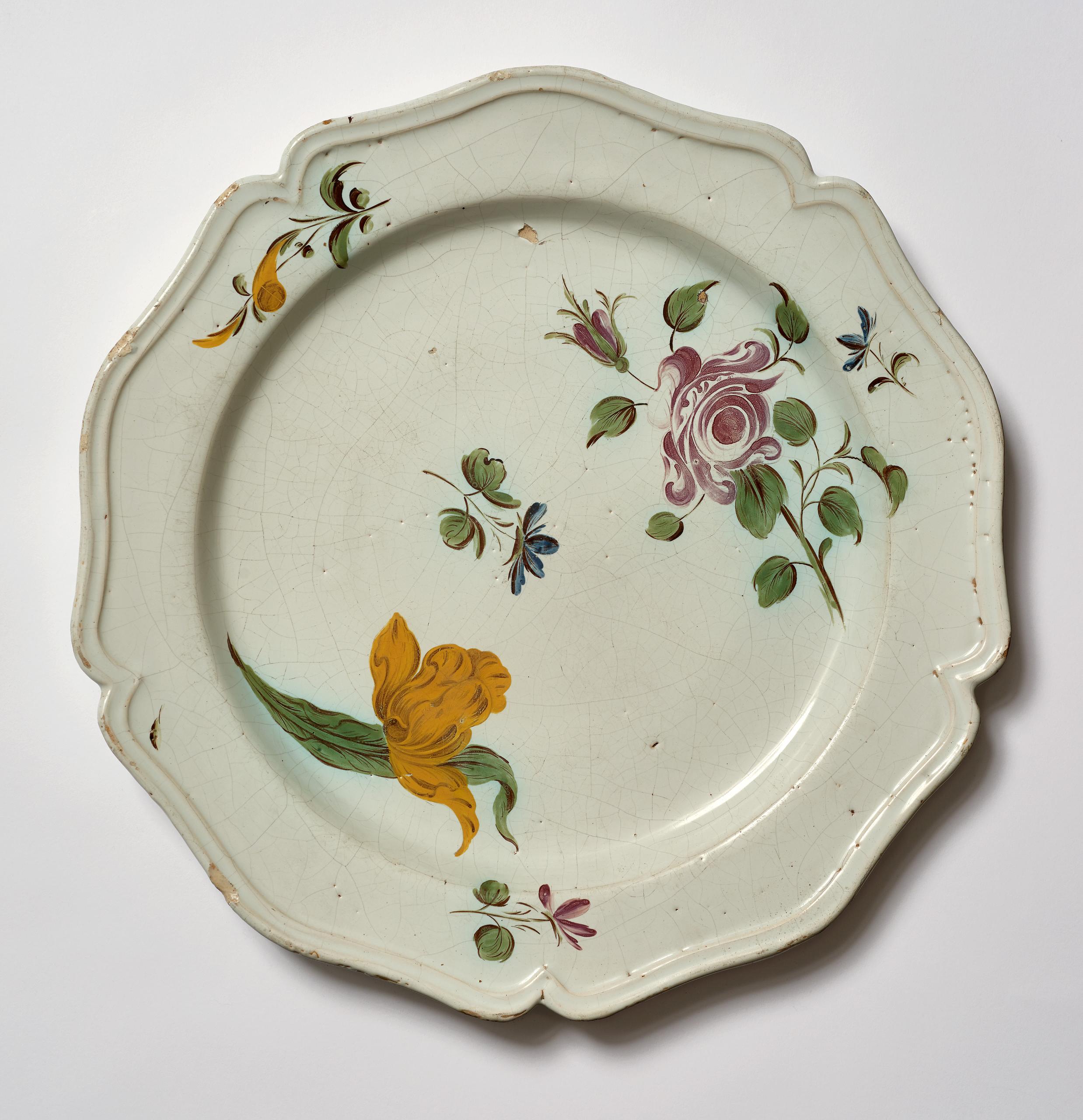
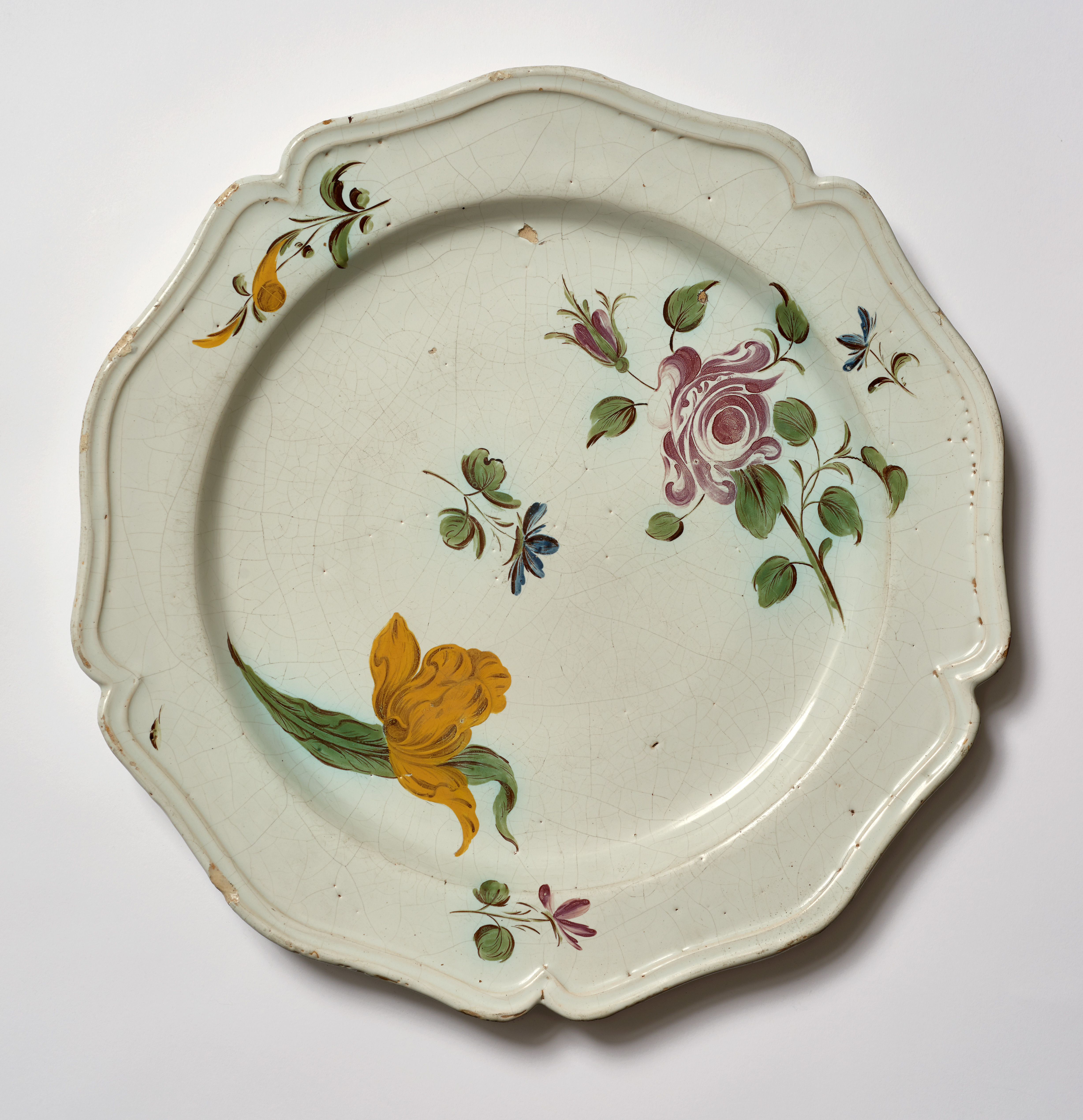
The early period of the Kastrup Faience Manufactory is characterised by the polychrome floral motifs also found on this large round dish with a double fluted rim. The shape is modelled on that of a silver dish: a typical trait of the time, as faience factories would often imitate metalware (S 561). The decoration consists of a yellow tulip and a delicate red rose in addition to three sprinkled flower and leaf designs in various colours. The dish was most likely part of one of the manufactory’s dinnerware sets.1
The David Collection is home to six objects from the manufactory in Kastrup. All were acquired by the museum’s founder, C.L. David.
The early period of the Kastrup Faience Manufactory is characterised by the polychrome floral motifs also found on this large round dish with a double fluted rim. The shape is modelled on that of a silver dish: a typical trait of the time, as faience factories would often imitate metalware (S 561). The decoration consists of a yellow tulip and a delicate red rose in addition to three sprinkled flower and leaf designs in various colours. The dish was most likely part of one of the manufactory’s dinnerware sets.1
The David Collection is home to six objects from the manufactory in Kastrup. All were acquired by the museum’s founder, C.L. David.
Footnotes
Footnotes
1.
As suggested by Jørgen Ahlefeldt-Laurvig in his book Københavnske fajancer fra 1700-tallet, Københavns Bymuseum, Copenhagen 1974, cat. 152, p. 27. Another author, Kai Uldall, only mentions the possibility that the Kastrup Faience Manufactory may have been working on parts for a polychrome dinnerware set – a theory based on the shape and decoration of surviving muffle-fired faience pieces. See Kai Uldall: Gammel dansk fajence. Fra fabriker i kongeriget og hertugdømmerne, Copenhagen 1961, p. 65.