Table-top tray; faience and painted wood
Store Kongensgade Faience Manufactory, 1749–1771
Tray: H: 81; W: 53 cm
Table: H: 69; L: 87.8; W: 59.6 cm
Table: H: 69; L: 87.8; W: 59.6 cm
Inventory number NF 1
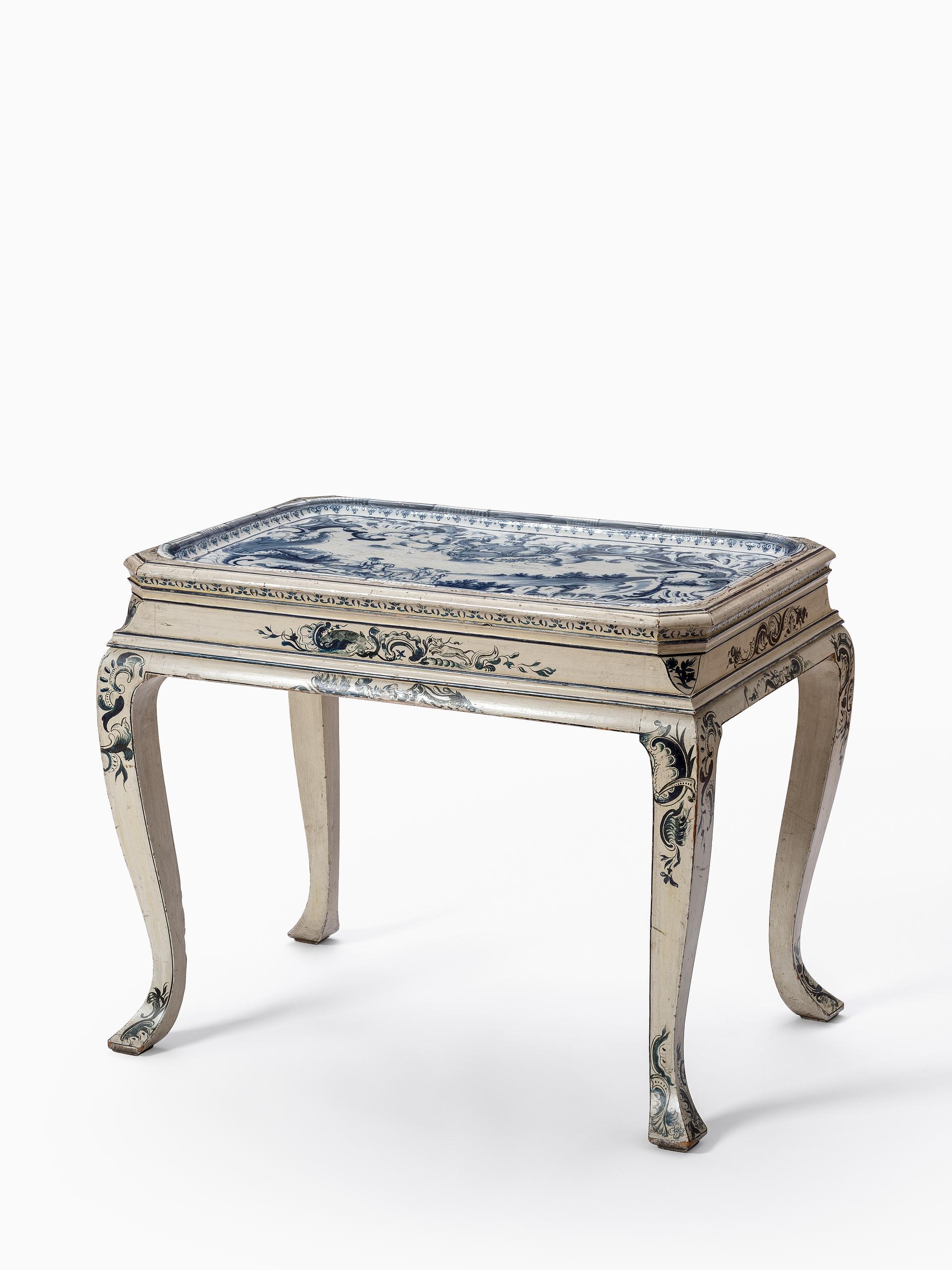
Faience table-top trays are among the largest pieces produced by the Store Kongensgade Faience Manufactory in Copenhagen. They were intended to be mounted on or embedded in a table designed to hold tea sets and especially tea machines. As a material, faience was well suited to being in the proximity of boiling water, thereby avoiding the damage often done to well-polished precious wood tabletops in the past when flat plateaus (NF 46) or trays were used as coasters. Safer and more practical, table-top trays reached high levels of artistic quality in terms of shape and decoration.1
The table-top trays from the Store Kongensgade factory are characterised by their size, the decorations in blue and the rich variety of their decorative designs, which usually involve framed, richly varied picture fields. They appear to have been manufactured and sold in large numbers, prompting other factories in the Nordic countries to become interested in launching similar productions. Nevertheless, the table-top trays from Store Kongensgade remained popular. The fact that such a large number have survived to our present day presumably owes much to the fact that many (still) sit well protected in tables, protecting them from chipping and large cracks.2
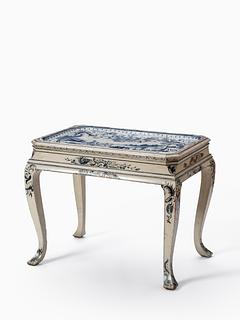
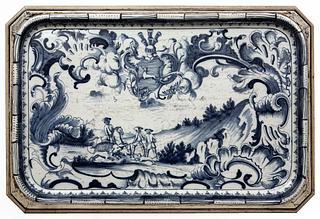
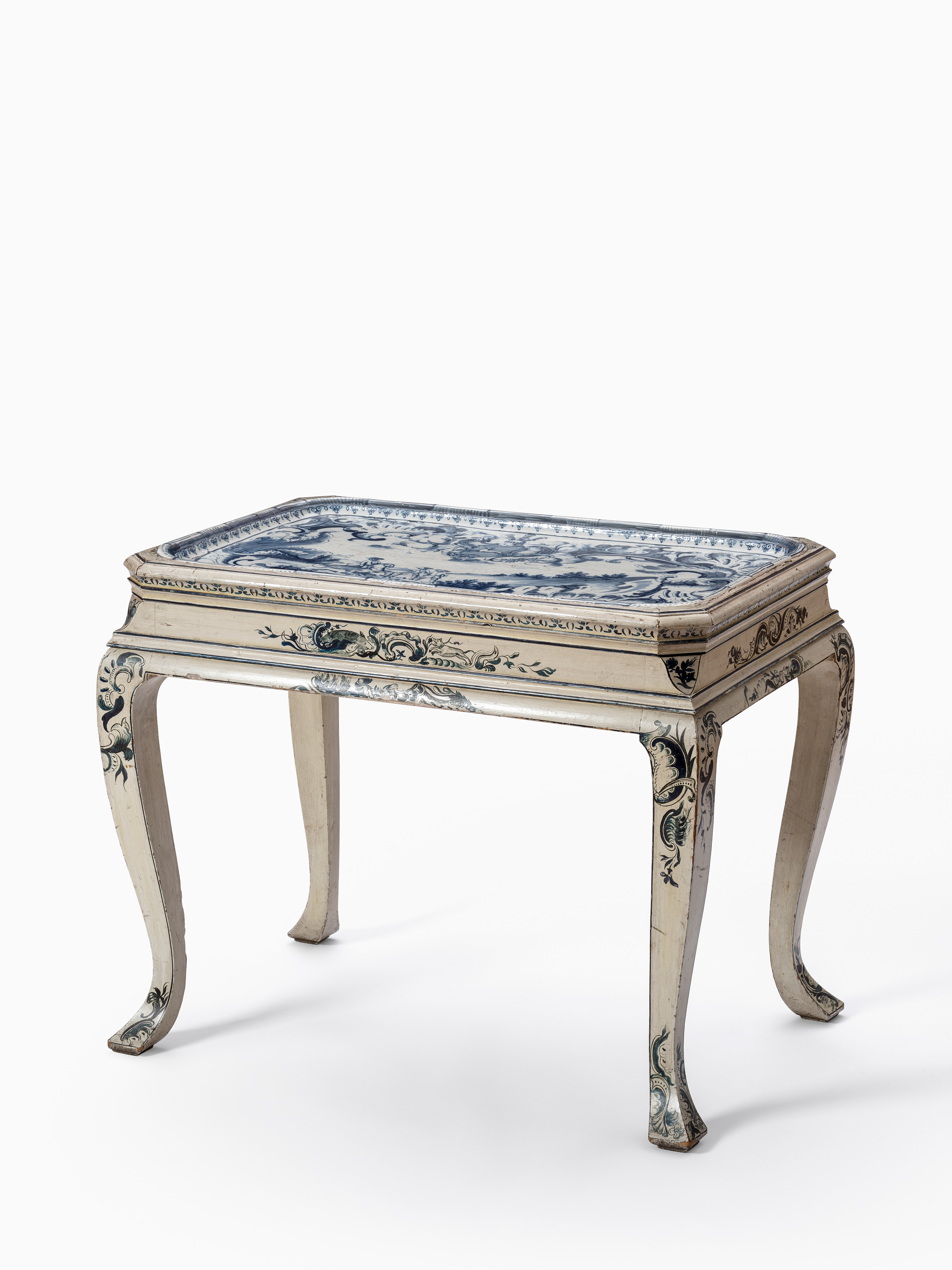
The rectangular table-top trays in The David Collection is mounted in a painted wooden table. It has rounded corners and a high edge with a rounded profile, indicating that it was made during the time when Christian Gierløf was director of the Store Kongensgade Faience Manufactory, specifically the period 1749–1771.3 The decoration consists of a central landscape scene focusing on a boar hunt. The scene is framed by rocailles incorporating the arms of the Blome family, featuring a leaping dog. Like so many other table-top trays, this one is unsigned.
In addition to this table-top trays, The David Collection is home to five others from the Store Kongensgade Faience Manufactory. They were all acquired by the museum’s founder, C.L. David.
The table-top trays from the Store Kongensgade factory are characterised by their size, the decorations in blue and the rich variety of their decorative designs, which usually involve framed, richly varied picture fields. They appear to have been manufactured and sold in large numbers, prompting other factories in the Nordic countries to become interested in launching similar productions. Nevertheless, the table-top trays from Store Kongensgade remained popular. The fact that such a large number have survived to our present day presumably owes much to the fact that many (still) sit well protected in tables, protecting them from chipping and large cracks.2
The rectangular table-top trays in The David Collection is mounted in a painted wooden table. It has rounded corners and a high edge with a rounded profile, indicating that it was made during the time when Christian Gierløf was director of the Store Kongensgade Faience Manufactory, specifically the period 1749–1771.3 The decoration consists of a central landscape scene focusing on a boar hunt. The scene is framed by rocailles incorporating the arms of the Blome family, featuring a leaping dog. Like so many other table-top trays, this one is unsigned.
In addition to this table-top trays, The David Collection is home to five others from the Store Kongensgade Faience Manufactory. They were all acquired by the museum’s founder, C.L. David.
Published in
Published in
Danske Fajancer fra det 18. Aarhundrede, Det danske kunstindustrimuseum, København 1931, cat. 182;
C.L. David: ”Fajancefabriken i Store Kongensgade” in C.L. Davids Samling, Tredje del, København 1958, pp. 15-16 and 33;
C.L. David: C.L. Davids Samling, København 1960, p. 48 (mentioned);
Jørgen Ahlefeldt-Laurvig and Kai Uldall: Fajencer fra fabriken i St. Kongensgade, København 1970, fig. 65, p. 158;
Dansk kunst og kunsthåndværk, Davids Samling, København 1972, p. 32, pl. 25;
Jørgen Ahlefeldt-Laurvig: Københavnske fajancer fra 1700-tallet, Københavns Bymuseum, København 1974, cat. 152, p. 27;
Verner Jul Andersen: Dansk kunst og kunsthåndværk, Davids Samling, København 1983, cat. 128, p. 51;
Lars Dybdahl (ed.): Dansk designhistorie, 1, København 2023, p. 55;
C.L. David: ”Fajancefabriken i Store Kongensgade” in C.L. Davids Samling, Tredje del, København 1958, pp. 15-16 and 33;
C.L. David: C.L. Davids Samling, København 1960, p. 48 (mentioned);
Jørgen Ahlefeldt-Laurvig and Kai Uldall: Fajencer fra fabriken i St. Kongensgade, København 1970, fig. 65, p. 158;
Dansk kunst og kunsthåndværk, Davids Samling, København 1972, p. 32, pl. 25;
Jørgen Ahlefeldt-Laurvig: Københavnske fajancer fra 1700-tallet, Københavns Bymuseum, København 1974, cat. 152, p. 27;
Verner Jul Andersen: Dansk kunst og kunsthåndværk, Davids Samling, København 1983, cat. 128, p. 51;
Lars Dybdahl (ed.): Dansk designhistorie, 1, København 2023, p. 55;
Footnotes
Footnotes
1.
As described by Jørgen Ahlefeldt-Laurvig and Kai Uldall in their book Fajencer fra fabriken i St. Kongensgade, Copenhagen 1970.
2.
Jørgen Ahlefeldt-Laurvig and Kai Uldall: Fajencer fra fabriken i St. Kongensgade, Copenhagen 1970, pp. 137–140.
3.
Kai Uldall: Gammel dansk fajence. Fra fabriker i kongeriget og hertugdømmerne, Copenhagen 1961, p. 43. The pieces created during the factory’s first decades had tall edges and straight corners.
Danish Ceramics
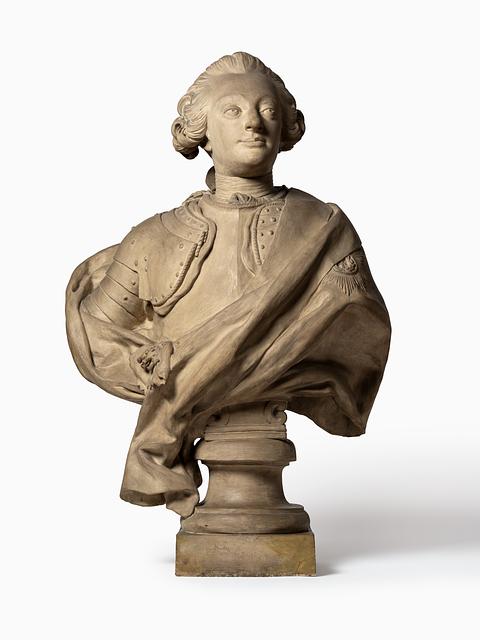
Jacques-Francois-Joseph Saly (1717–1776)
Bust of Frederik V, 1754/1760
Terracotta, Kastrup Faience Manufactory
Bust of Frederik V, 1754/1760
Terracotta, Kastrup Faience Manufactory
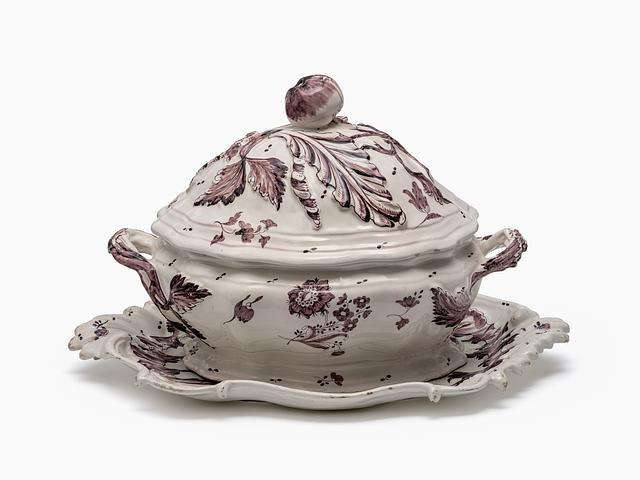
Tureen with underdish of faience
Schleswig Manufactory, 1758–1780
Schleswig Manufactory, 1758–1780
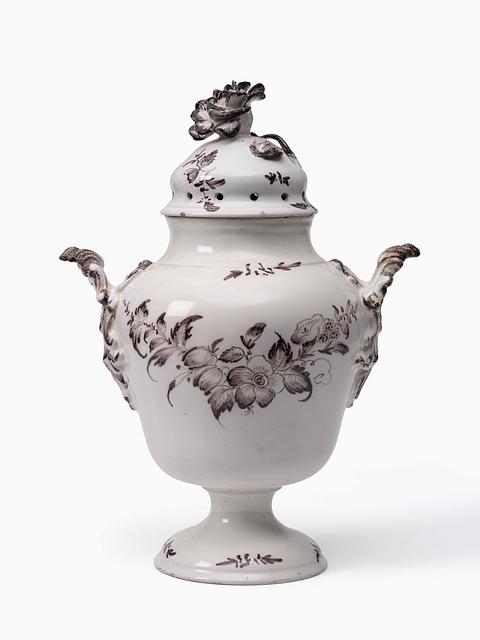
Potpourri vase; faience
Stockelsdorf Manufactory, 1771–1786
Stockelsdorf Manufactory, 1771–1786
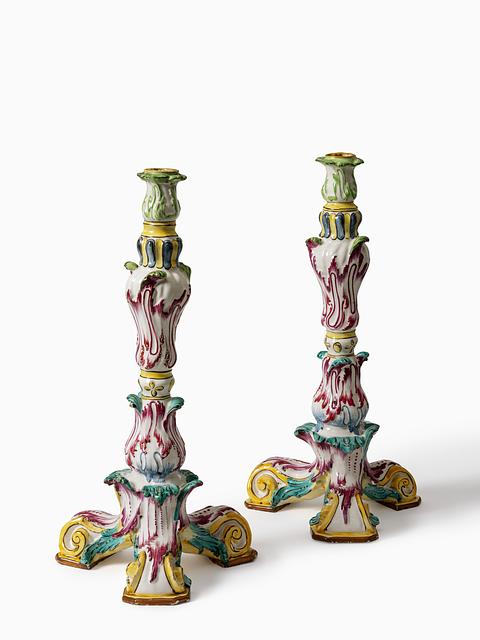
A pair of altar candlesticks; faience
Eckernförde Manufactory, 1765–1766
Eckernförde Manufactory, 1765–1766