Jacques-Francois-Joseph Saly (1717–1776)
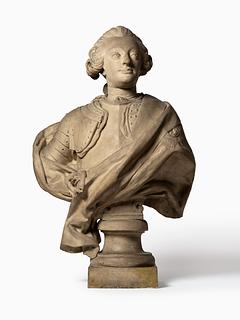
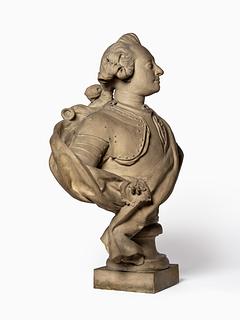
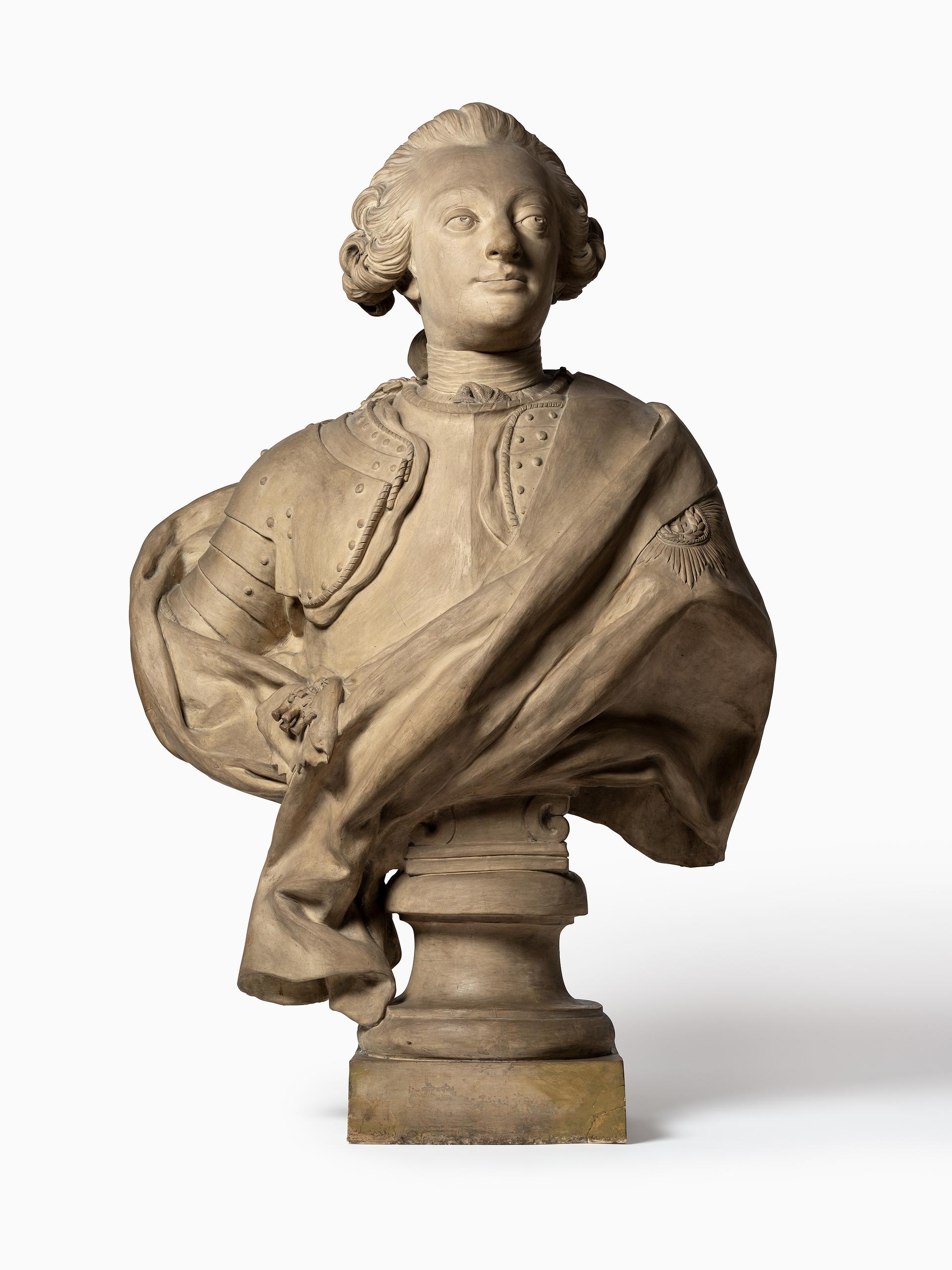
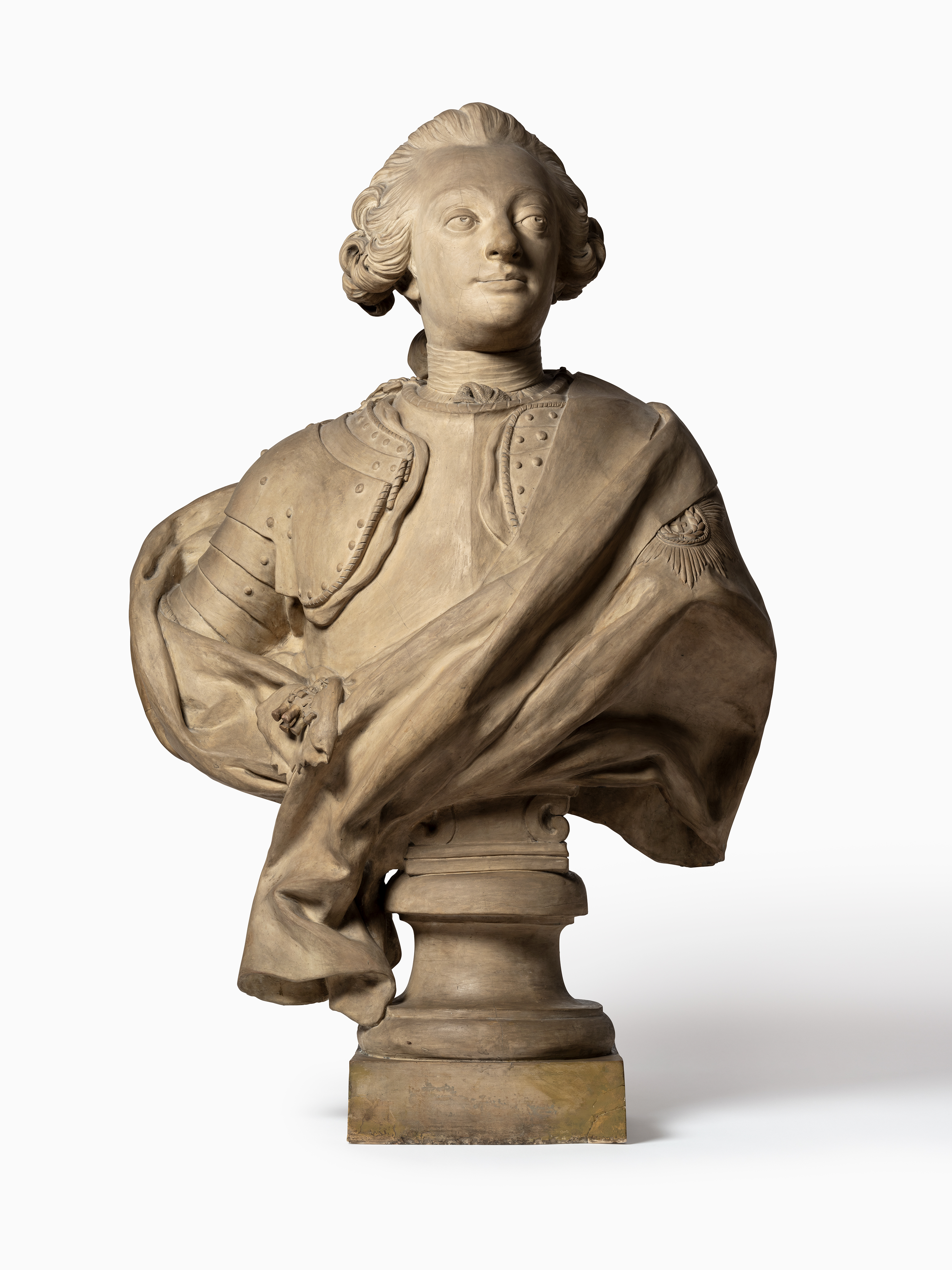
Bust of Frederik V, 1754/1760
Terracotta, Kastrup Faience Manufactory
H: 101 cm
Inventory number B 416
The French sculptor Jacques-Francois-Joseph Saly came to Copenhagen in 1753, having been commissioned to create an equestrian statue of the Danish king, Frederik V (1723–1766). The sculpture was to stand in the centre of Amalienborg Slotsplads in Copenhagen’s new district, Frederiksstaden. Saly began by designing a large bust of the king, which is now regarded as a form of preparatory work paving the way for the equestrian statue. The bust was the first work that Saly created in Denmark and presented to the king, in all likelihood to demonstrate his prowess to the monarch.1
Different versions of Saly’s bust of Frederik V exist, showing variations in terms of design, size and material. The bust in The David Collection is considered a 1:1 reproduction of the cast of Saly’s sculpted bust from 1754.2 of unglazed terracotta, it was created at the faience manufactory in Kastrup, where the bust was reproduced around 1760.3
Saly’s portrait of Frederik V has an official air and is typical of the time. The powerful, absolute ruler is shown wearing armour that emphasises his position as a military leader. In the mid-eighteenth century, this was the established way of depicting divinely appointed monarchs. The Order of the Elephant, its insignia visible on the loosely draped cloak, indicates the king’s high rank and status. Furthermore, Frederik V’s head is slightly raised and turned, a trait consistent with the alert expression cultivated in the period’s portraiture.
During his twenty-one years in Denmark, Saly also created other works besides this bust and the famous equestrian statue of the king. In his capacity as director and professor at the Royal Danish Academy of Fine Arts, he took on tasks such as devising the designs for several of the Academy’s medals. He also created busts, including one of Lord Chamberlain A.G. Moltke and one of the court painter C.G. Pilo.
Different versions of Saly’s bust of Frederik V exist, showing variations in terms of design, size and material. The bust in The David Collection is considered a 1:1 reproduction of the cast of Saly’s sculpted bust from 1754.2 of unglazed terracotta, it was created at the faience manufactory in Kastrup, where the bust was reproduced around 1760.3
Saly’s portrait of Frederik V has an official air and is typical of the time. The powerful, absolute ruler is shown wearing armour that emphasises his position as a military leader. In the mid-eighteenth century, this was the established way of depicting divinely appointed monarchs. The Order of the Elephant, its insignia visible on the loosely draped cloak, indicates the king’s high rank and status. Furthermore, Frederik V’s head is slightly raised and turned, a trait consistent with the alert expression cultivated in the period’s portraiture.
During his twenty-one years in Denmark, Saly also created other works besides this bust and the famous equestrian statue of the king. In his capacity as director and professor at the Royal Danish Academy of Fine Arts, he took on tasks such as devising the designs for several of the Academy’s medals. He also created busts, including one of Lord Chamberlain A.G. Moltke and one of the court painter C.G. Pilo.
Footnotes
Footnotes
1.
John Erichsen and Emma Salling: Fyrste og hest: rytterstatuen på Amalienborg: Udstillingskatalog, Københavns Bymuseum, Copenhagen 1976, p. 43
2.
The whereabouts of the original model, meaning the first plaster cast made from Saly’s original clay sculpture, are unknown. It was presumably the bust handed over by Saly to the Royal Danish Academy of Fine Arts, where it was inventoried in 1759. However, the piece is no longer at the Academy. The marble version, which many call the original work, was installed at Christiansborg Palace, where it was destroyed in the palace fire of 1794. See for example John Erichsen and Emma Salling: Fyrste og hest: rytterstatuen på Amalienborg: Udstillingskatalog, Københavns Bymuseum, Copenhagen 1976, pp. 43–44.
3.
A corresponding piece is on display at SMK (National Gallery of Denmark): Jacques Francois Joseph Saly, King Frederik V, 1754, cast c. 1760, inv.no. KMS5655.