The Begtiginid Rulers of Irbil, c. 540-630 H/1145-1233 AD
Legend & Design
Legend & Design
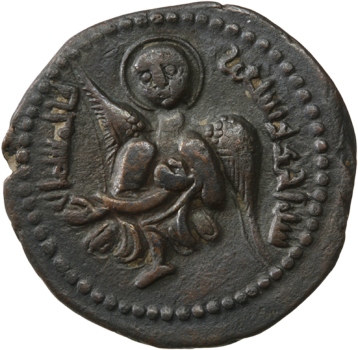
Obverse
Field
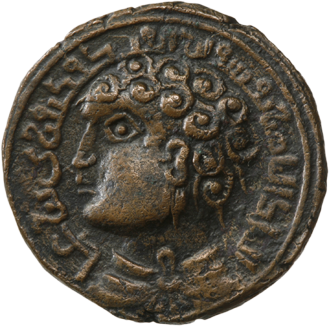
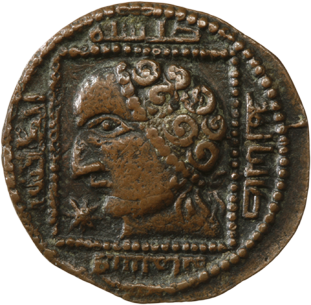
clean-shaven, curly-headed bust facing to left
Margin
al-malik al-nasir yusuf ibn ayyub kukburi ibn ‘ali
“the Victorious King, Yusuf ibn Ayyub, Kukburi ibn ‘Ali”
Reverse
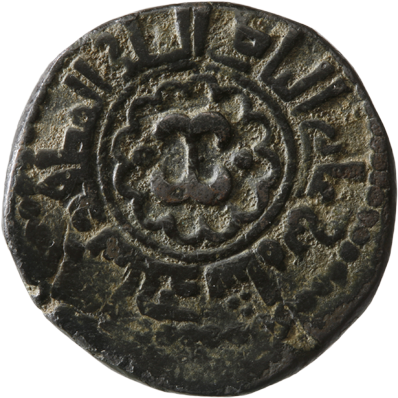
Field
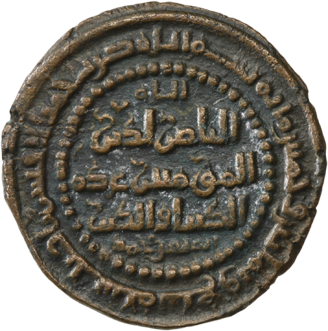
within pearled circle allah / al-nasir li-din / al-mu’minin ‘uddat / al-dunya wa’l-din / amir abu nasr muhammad
(the second line omits the word amir from the caliph’s title)
“God, Defender of the Faith of the Faithful, ‘Uddat al-Dunya wa’l-Din, Commander, Father of Victory, Muhammad”
Margin
bism allah duriba hadha’l-fals bi-irbil sana sab‘ wa thamanin wa khams mi’a
“in the name of God this fals was struck in Irbil the year seven and eighty and five hundred”
Historical Note
Historical Note
The Begtiginids were a Turkmen family from north-eastern Iraq, who were first in the service of the Zangids, then vassals of the Ayyubid ruler Saladin, and finally they became independent rulers under the Abbasid Caliphate. Their founder, Zayn al-Din ‘Ali ibn Begtigin, was a military commander and a loyal servant of the Zangids, who was rewarded with extensive lands around Irbil and then Sinjar and Harran.
After Zayn al-Din’s death in 563 H (1168 AD) his inheritance was divided between two sons. Zayn al- Din Yusuf received Irbil, while Muzaffar al-Din Gökburi was granted Harran.
When Yusuf died in 586 (1190), Saladin gave Harran to his own brother, Taqi al-Din ‘Umar, and in compensation made Gökburi ruler of the entire province of Irbil, which he held until his death in 630 (1233).
It is likely that Gökburi struck this handsome coin to mark his assumption of power in Irbil and to demonstrate his loyalty to his overlord and friend Saladin, as well as the Abbasid Caliph al-Nasir li-Din Allah and the heir to the caliphate, ‘Uddat al-Din Abu Nasr Muhammad, the future Caliph al-Zahir.
The curly-headed bust on the obverse would have pleased the people of Irbil, most of whom were Christian. Gökburi, who was exceptionally capable and well regarded for his concern for the social and cultural welfare of his subjects, died at the age of eighty-one, after a reign of forty-four years.
As he had no heir, he bequeathed his lands to the Caliph al-Mustansir probably to prevent his various neighbours from laying their hands on them.
Most of the good that Gökburi accomplished during his reign was destroyed when the Mongols sacked Irbil only four years after his death, in 634 (1237).
Copper coins of this weight and diameter are generally described as copper dirhams, even though the legend reads hadha’l-fals (fals meaning copper coin).