The Lu’lu’id Rulers of Mosul, 631-660 H/1234-1262 AD
Legend & Design
Legend & Design
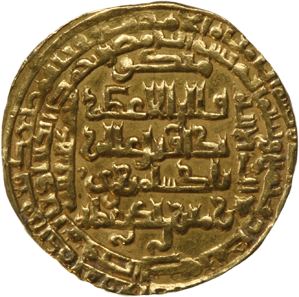
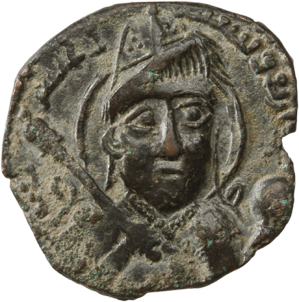
Obverse
Field
mungka/ qa‘an al-a‘zam / khudawand-i ‘alam / padshah-i ru-yi / zamin zuyyida ‘azmuhu
“Möngke, the Supreme Qa‘an, Ruler of the World, Emperor of the Face of the Earth, may his greatness be exalted”
upwards on right la ilah illa allah
“no god but God”
downwards on left muhammad rasul allah
“Muhammad is the messenger of God”
Inner margin
bism allah duriba hadha’l-dinar bi’l-mawsil sana thaman wa khamsin wa sittmi’a
“in the name of God this dinar was struck in Mosul the year eight and fifty and six hundred”
Outer margin
bism allah lillah al-‘amr min qabl wa min ba‘d wa yawma’idhin yafrahu al-mu’minin bi-nasr allah
“the command is God’s, past and future, and on that day the faithful will rejoice in the victory granted by God”
Sura 30 (Rum), vv. 4-5
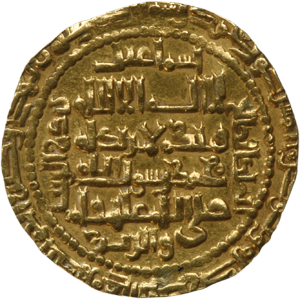
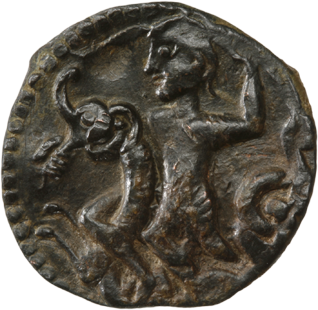
Reverse
Field
la ilah illa allah / wahdahu la sharik lahu / muhammad rasul allah / salla allah ‘alayhi wa sallam
“no god but God unique, he has no associate, Muhammad is the messenger of God, may God’s blessing and peace be upon him”
upwards at 3:00: al-malik al-salih, downwards at 9:00: rukn al-dunya,
across at 6:00: wa’l-din, across at 12:00: isma‘il
“the King al-Salih, Pillar of the World and the Faith, Isma‘il”
Margin
muhammad rasul allah arsalahu bi’l-huda wa din al-haqq li-yuzhirahu ‘ala al-din kullihi wa law kariha al-mushrikun
“Muhammad is the messenger of God who sent him with guidance and the religion of truth that he might make it supreme over all other religions even though the polytheists may detest it”
Sura 9 (al-Tawba), v. 33
Historical Note
Historical Note
Badr al-Din Lu‘lu‘ had frequently been coerced into providing the Mongols with supplies and equipment for their military forays into the Jazira, and he was forced into helping them in this way for their assault on Baghdad in 656 H (1258 AD). His son, al-Salih Rukn al-Din Isma‘il, had even been sent to lead a military contingent from Mosul in Hulagu’s Mongol army.
After Hulagu reconfirmed Badr al-Din’s authority over Mosul, he sent more troops to support the Mongols, this time led by all three of his sons. On the death of their wise and ancient father in 657 (1258), only a year after the fall of the Abbasids, Badr al-Din’s lands were divided among all three of his sons.
Isma‘il was given Mosul, ‘Ali received Sinjar and Ishaq the Jazira. However, it was only three years before all these territories came under Mongol control, and all three of them fled for asylum with the Mamluks in Egypt.
Following the conquest of Baghdad, Badr al-Din had quickly acknowledged his allegiance to the Great Khan Möngke, Hulagu’s overlord and brother, by giving his name and grandiloquent titles pride of place on his last coinage.
Isma‘il usually used the same obverse die that had been used by his father in 656 and on his own first coinage of 657, but on this rare gold dinar, struck in 658 (1259-1260), he dared to show his own religious feelings by flanking the pagan Möngke’s name and titles with the kalima in tiny letters to right and left.
On the reverse he inscribed it much more prominently, and asked for God’s blessing on the Prophet Muhammad. This exceptional emphasis on the kalima may well have been Isma‘il’s way of purifying an Islamic coin on which he was obliged to place the name of an unbeliever.