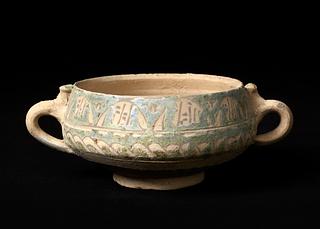
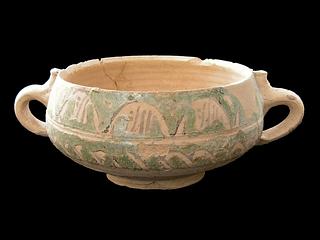
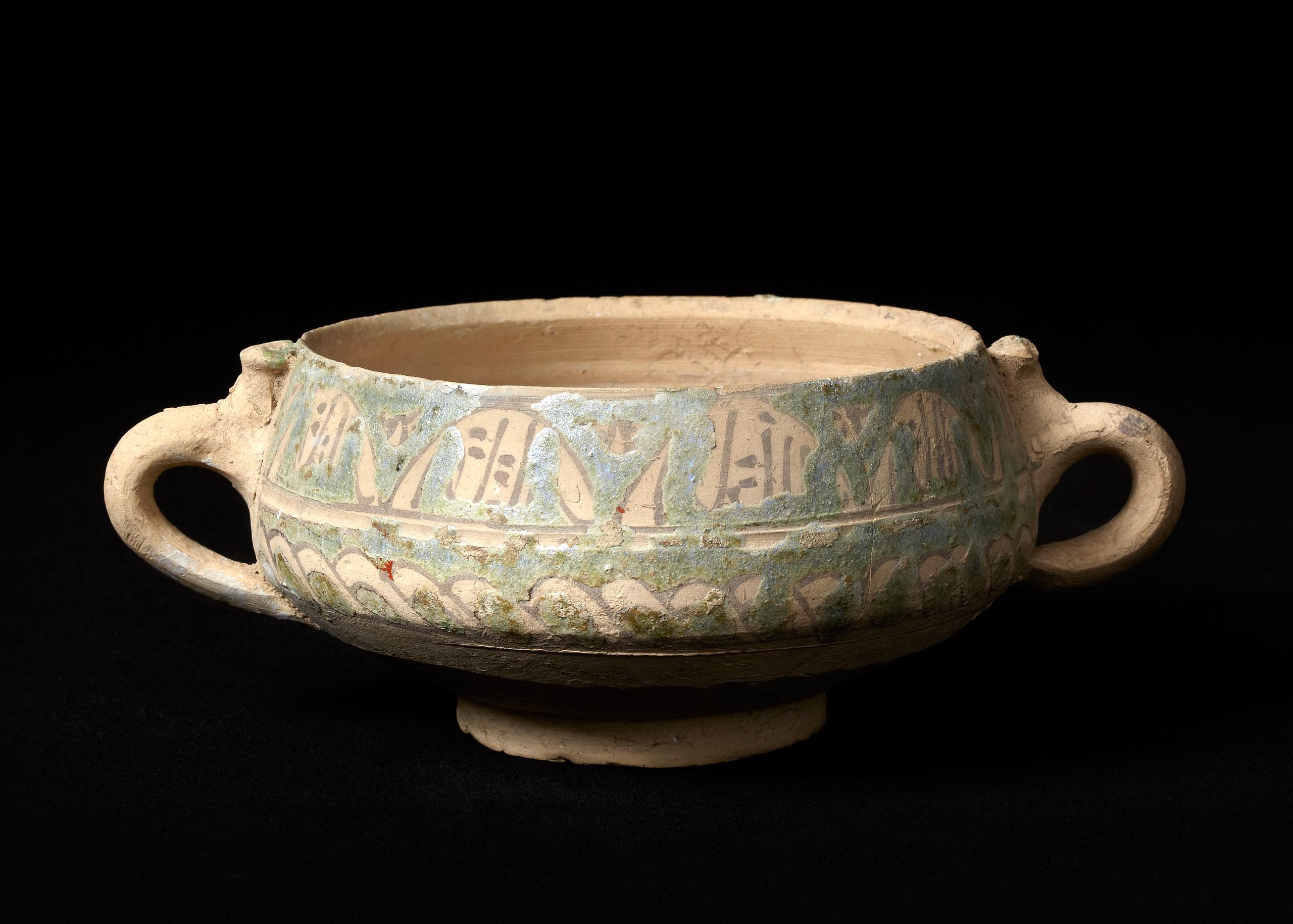
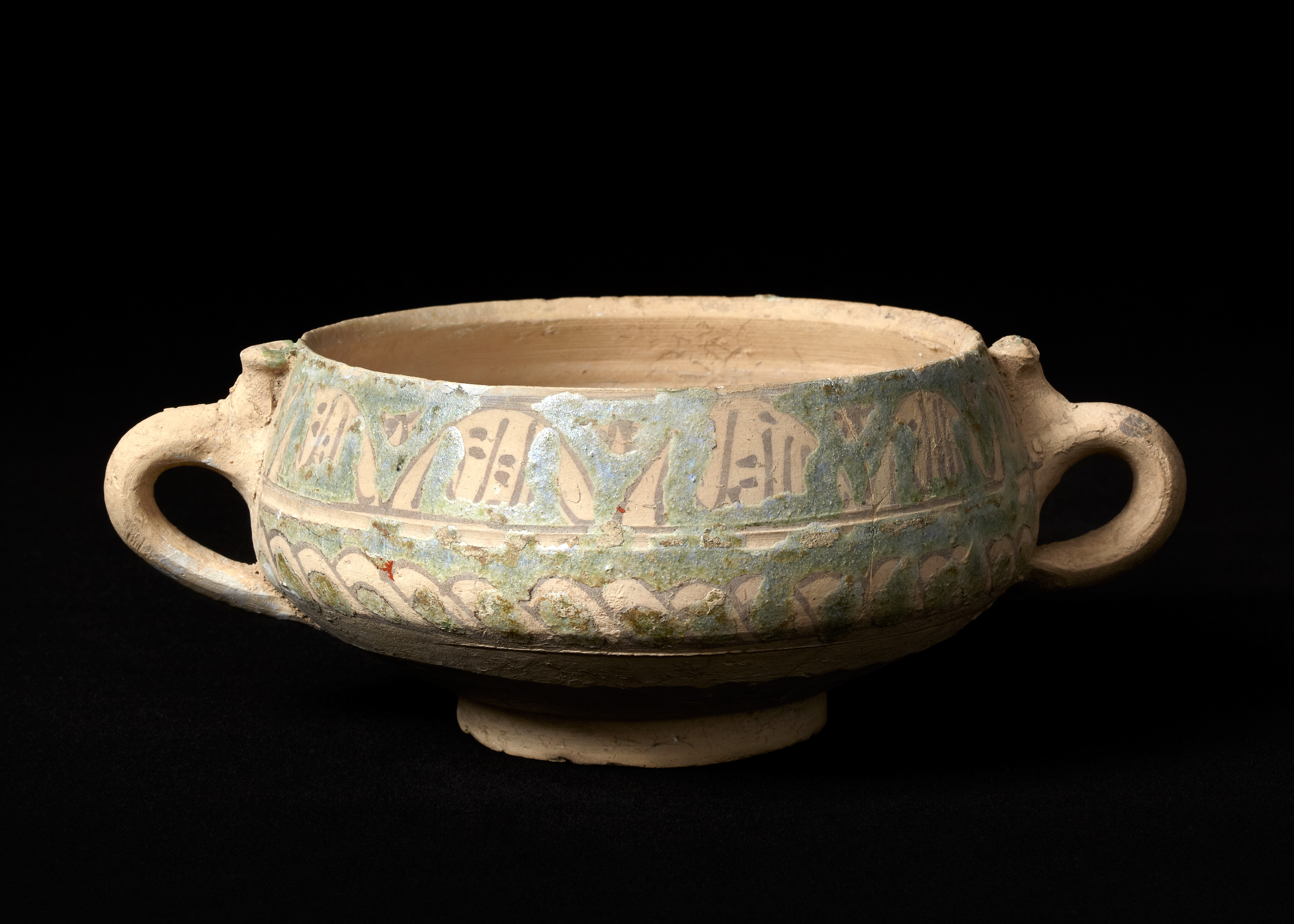
Earthenware bowl with handles, painted with a green and manganese glaze
Spain; 12th century
H: 8.1; Diam withour handle: 17 cm
Gift of Højesteretssagfører C. L. Davids Legat for Slægt og Venner
Gift of Højesteretssagfører C. L. Davids Legat for Slægt og Venner
Inventory number 37/2005
The shape and rather coarse decoration, displaying areas with and without green glaze, are typical of pottery from 12th-century Muslim Spain. Technically, this is a preliminary stage of cuerda seca, in which glazed areas are kept separate by contouring them with a greasy substance. When the piece is fired, the substance burns down into a black “dry cord” that can be scraped away, though it often leaves a dark trace.
On this bowl, the dark manganese color served this purpose. It was also used as an independent decorative element in the uppermost arched band, where the vertical dark strokes comprise a kind of pseudo-calligraphy.
On this bowl, the dark manganese color served this purpose. It was also used as an independent decorative element in the uppermost arched band, where the vertical dark strokes comprise a kind of pseudo-calligraphy.
Published in
Published in
Sotheby’s, London, 12/10-2005, lot 55;
Farzaneh Pirouz-Moussavi: Cerámica entre dos mares: De Bagdad a la talavera de Puebla = Clay between two seas: from Baghdad to the talavera of Puebla, Mexico 2017, s. 69;
Farzaneh Pirouz-Moussavi: Cerámica entre dos mares: De Bagdad a la talavera de Puebla = Clay between two seas: from Baghdad to the talavera of Puebla, Mexico 2017, s. 69;
Ceramics
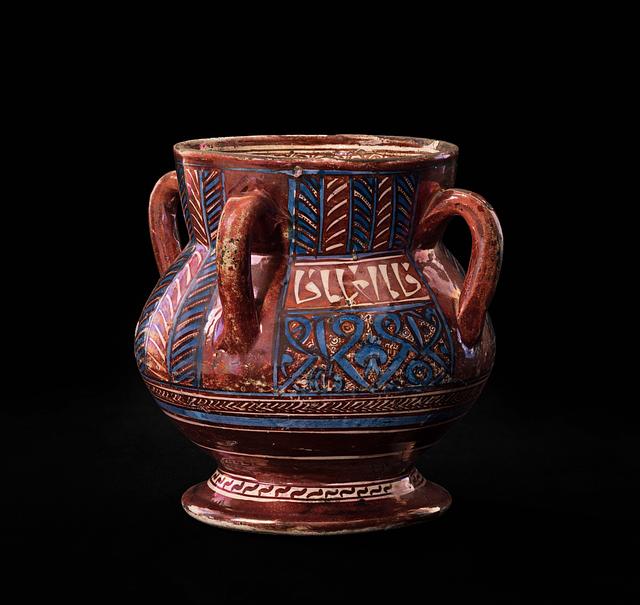
Earthenware jar painted with blue in and with lustre over an opaque white glaze
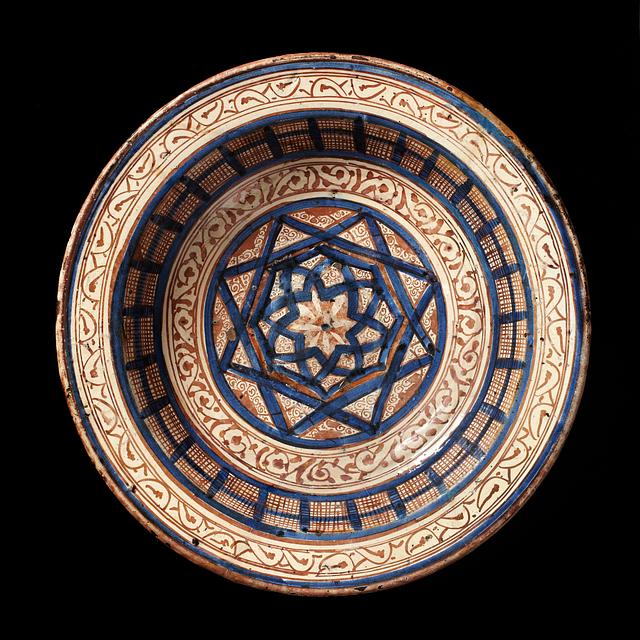
Earthenware dish, painted with lustre over, and in blue in, an opaque, white glaze
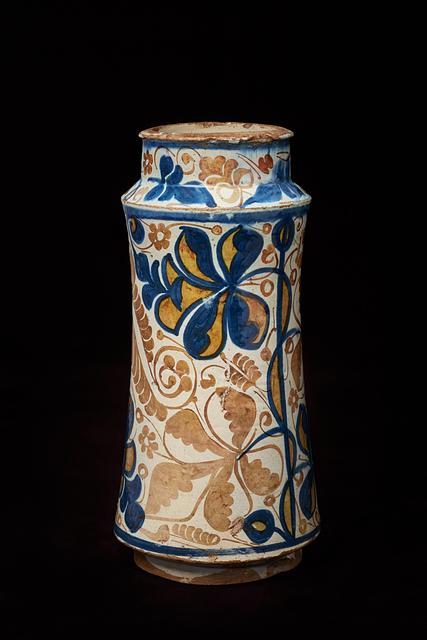
Earthenware albarello, painted in blue in, and with two tones of lustre over, an opaque, white glaze
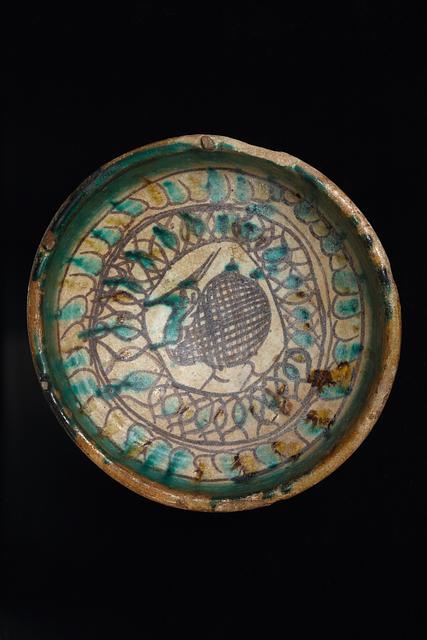
Earthenware bowl, covered with a white slip and painted in manganese, yellow, and green under and in a transparent glaze