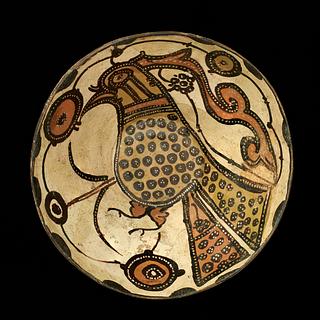
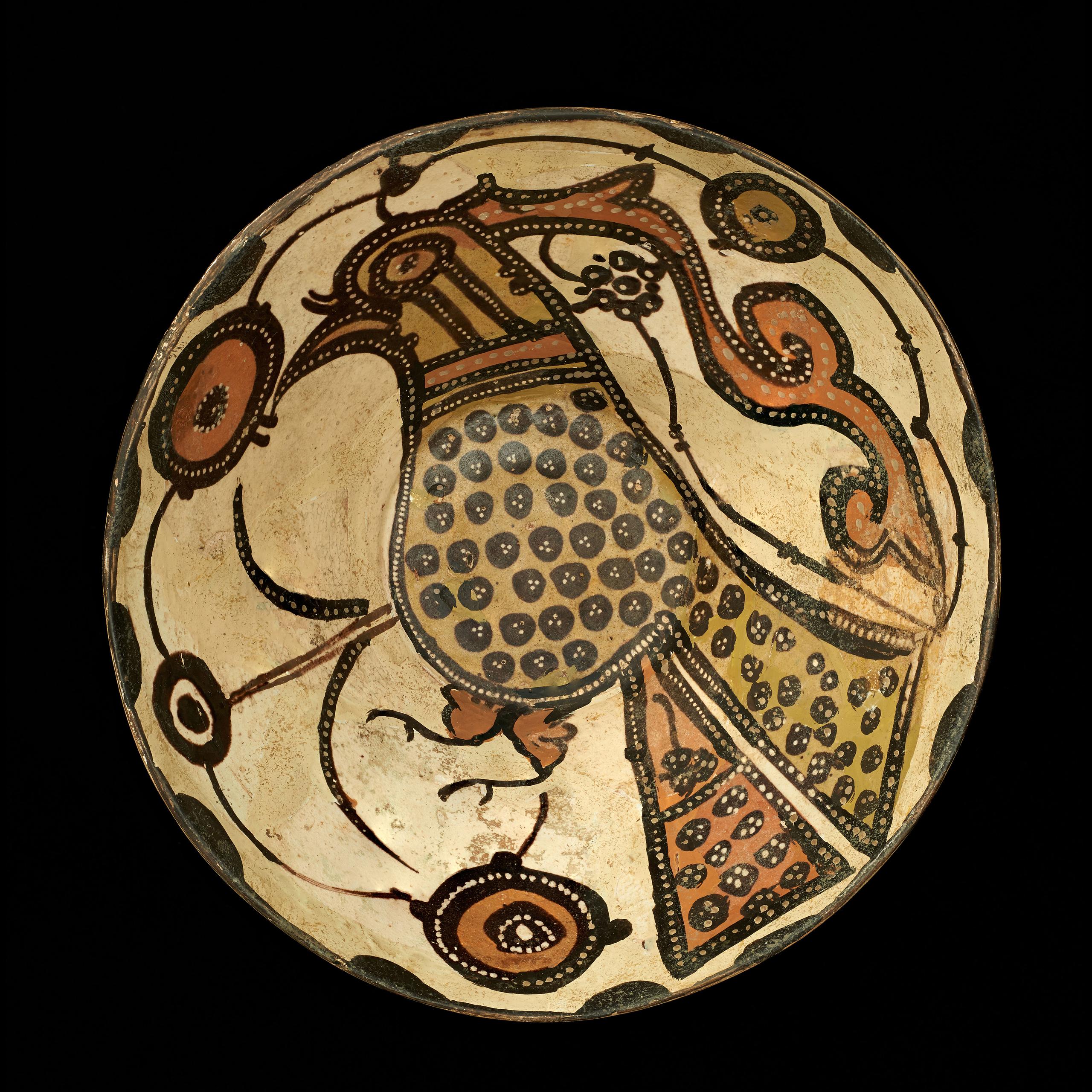
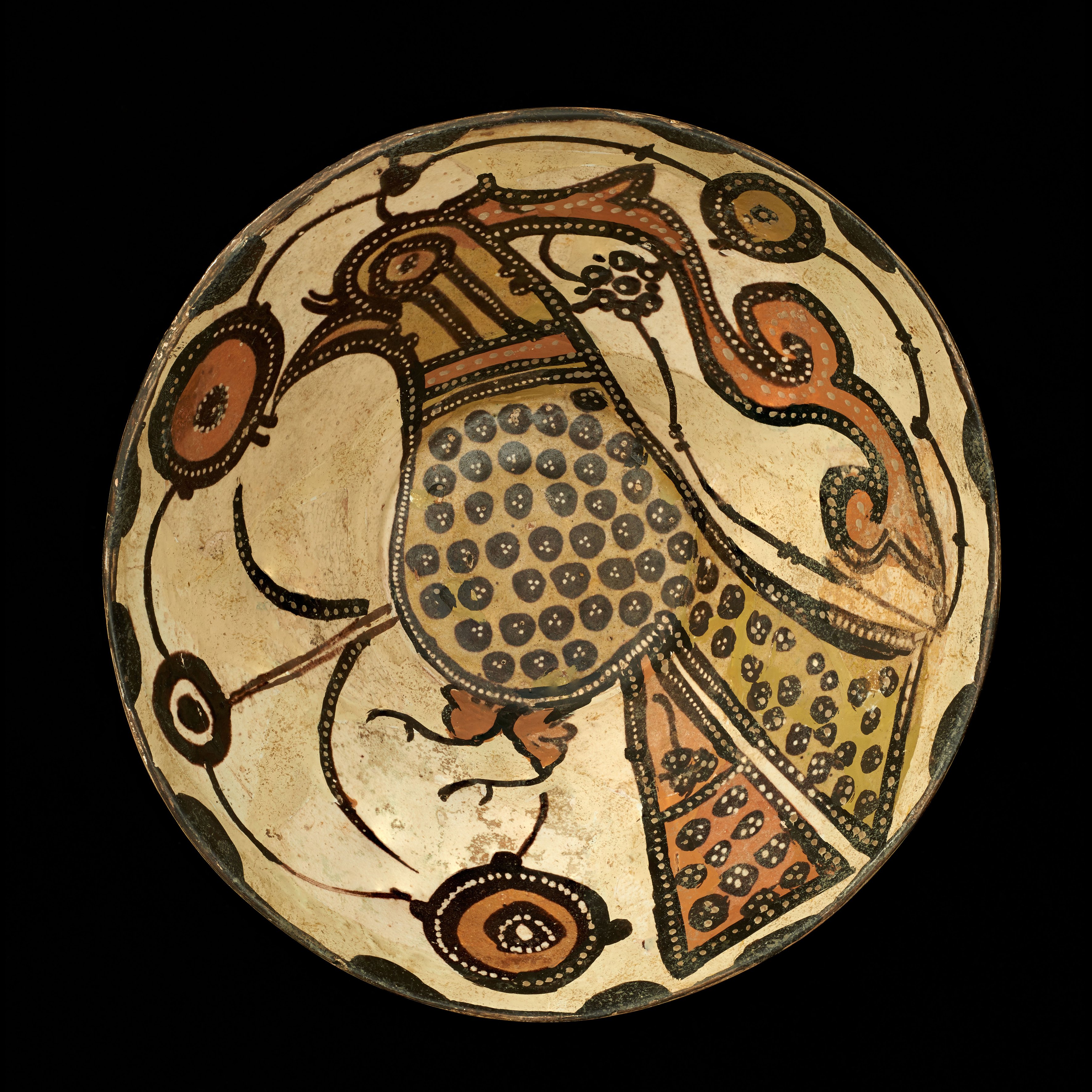
Earthenware bowls covered with a whitish slip and painted with colored slips under a transparent glaze
Iran; 11th century
H: 9; Diam: 19 cm
Inventory number 9/1964
This bowl is “Sari ware,” the traditional term that refers to the town of Sari in northern Iran where it was previously assumed that pottery of this distinctive type was made. This has not been confirmed, and modern excavations have in fact shown that the type was made in Gorgan among other places.
Sari ware is known for its characteristic palette and monumental figurative depictions, especially of birds. Sari ware does not, however, have the same high quality as other Samanid pottery, and it is assumed that it was a fairly late, provincial product.
Sari ware is known for its characteristic palette and monumental figurative depictions, especially of birds. Sari ware does not, however, have the same high quality as other Samanid pottery, and it is assumed that it was a fairly late, provincial product.
Ceramics
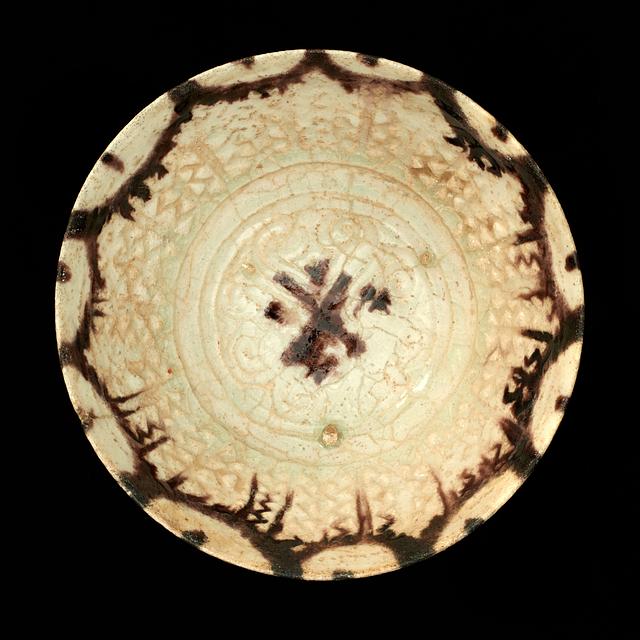
Fritware bowl, molded and painted in manganese in a transparent glaze (Bamiyan type)
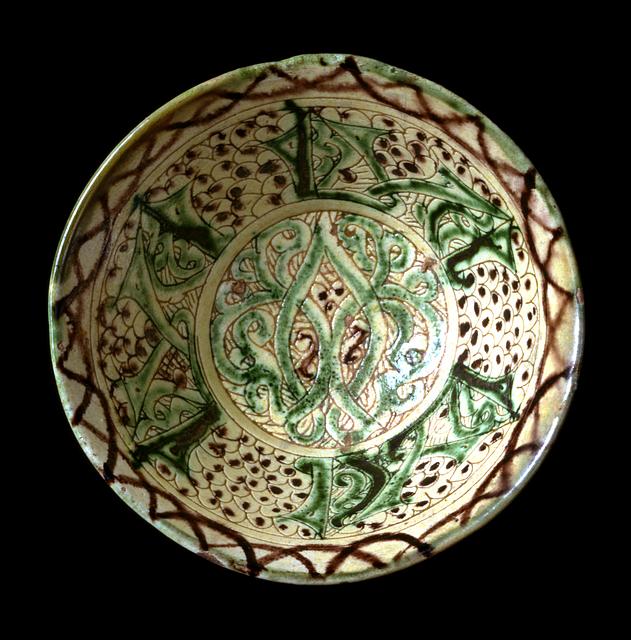
Earthenware bowl with incised decoration in a white slip and painted in green and manganese in a yellowish glaze (Bamiyan type)
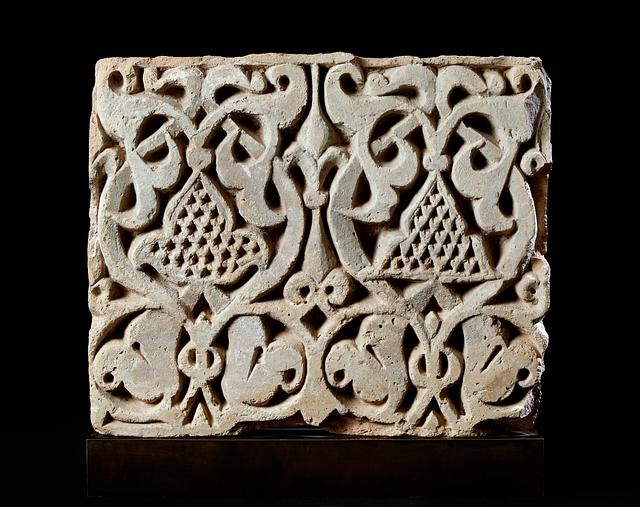
Architectural relief, carved, unglazed earthenware
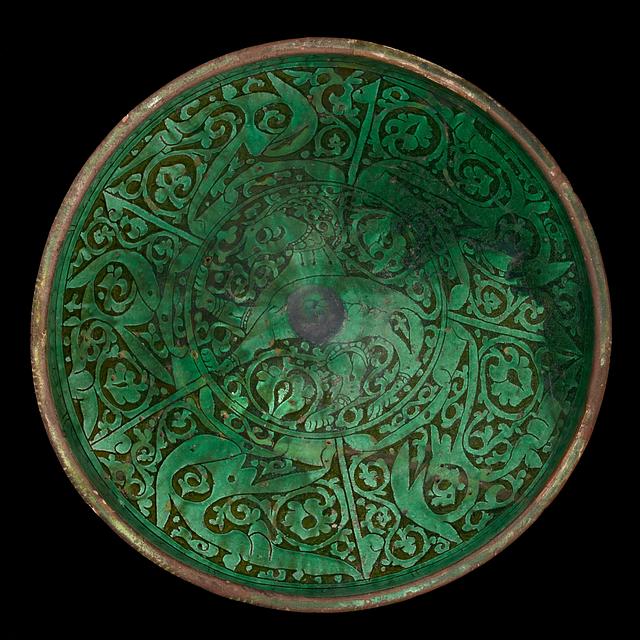
Earthenware bowl, with carved decoration in a white slip under a green glaze. Garrus type