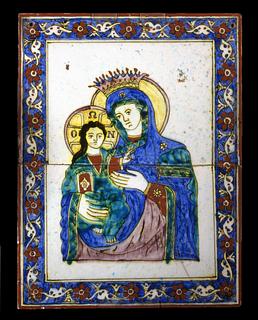
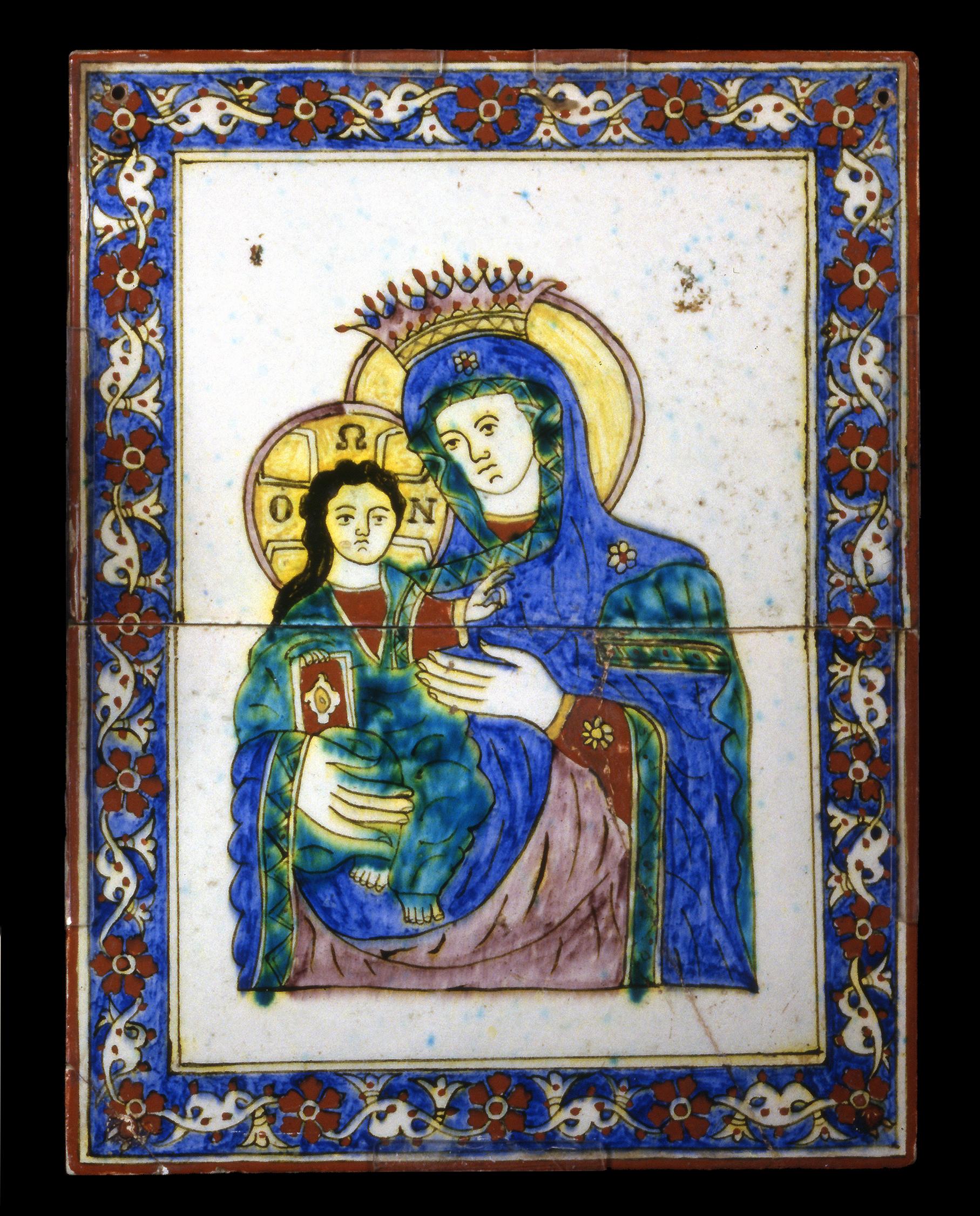
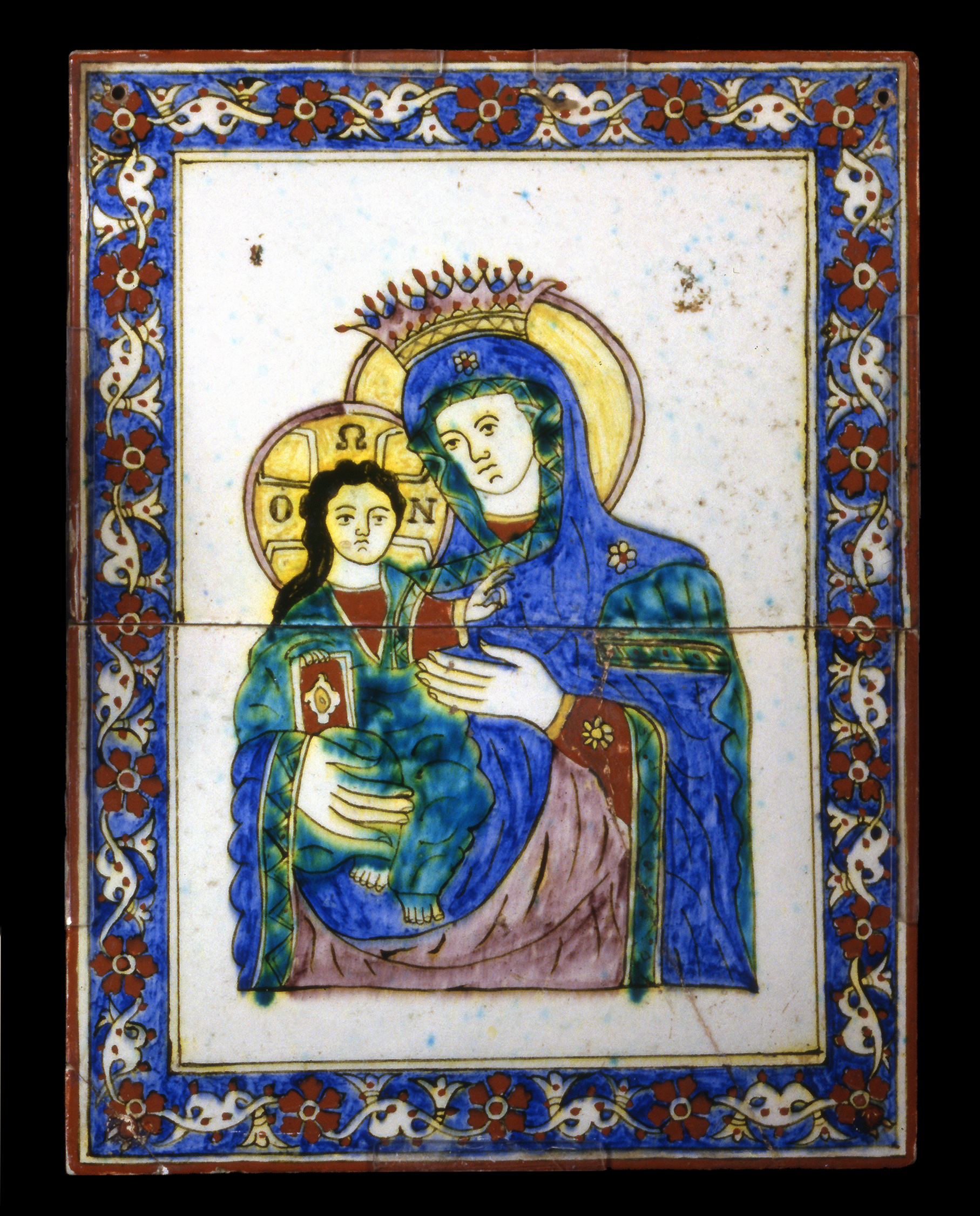
Fritware tile, in two parts, with polychrome decoration under a transparent glaze
Turkey, Kütahya; 18th-19th century
H: 33; W: 25 cm
Inventory number 37/1974
The quality of ceramics from Iznik declined in the 17th century. At the same time, it faced competition from another production center, Kütahya, which had many potters with an Armenian background. In the course of the 18th century, Kütahya developed a distinctive expression that is perhaps clearest in the pieces that were made for the Ottoman Empire’s Christian communities. The palette of these pieces is more polychrome, often uneven, and more transparent; yellow had become an important color.
The figurative devotional image Virgin and Child was painted in a simple style that was naturally based on Christian iconography. Many related tiles can be seen in the Armenian Cathedral of St. James in Jerusalem.
The figurative devotional image Virgin and Child was painted in a simple style that was naturally based on Christian iconography. Many related tiles can be seen in the Armenian Cathedral of St. James in Jerusalem.
Published in
Published in
Kjeld von Folsach: Islamic art. The David Collection, Copenhagen 1990, cat.no. 211;
Kjeld von Folsach, Torben Lundbæk and Peder Mortensen (eds.): Sultan, Shah and Great Mughal: the history and culture of the Islamic world, The National Museum, Copenhagen 1996, cat.no. 318;
Kjeld von Folsach: Art from the World of Islam in The David Collection, Copenhagen 2001, cat.no. 289;
Calouste Gulbenkian Museum: The rise of Islamic art, 1869-1939, Calouste Gulbenkian Museum, Lisbon 2019, cat.no. 16, p. 86;
Kjeld von Folsach, Torben Lundbæk and Peder Mortensen (eds.): Sultan, Shah and Great Mughal: the history and culture of the Islamic world, The National Museum, Copenhagen 1996, cat.no. 318;
Kjeld von Folsach: Art from the World of Islam in The David Collection, Copenhagen 2001, cat.no. 289;
Calouste Gulbenkian Museum: The rise of Islamic art, 1869-1939, Calouste Gulbenkian Museum, Lisbon 2019, cat.no. 16, p. 86;
Ceramics
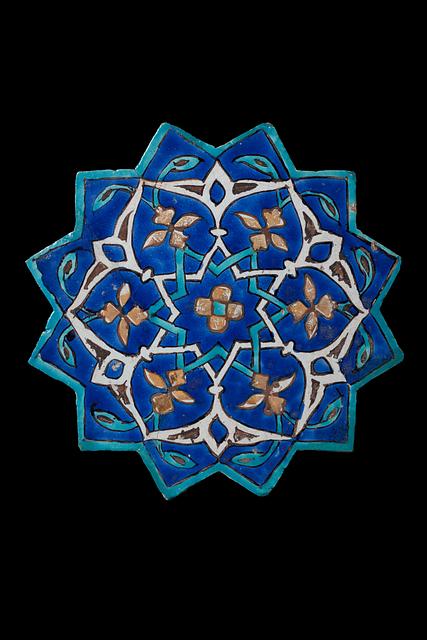
Fritware tile, painted in polychrome glazes and gold leaf. Cuerda seca technique
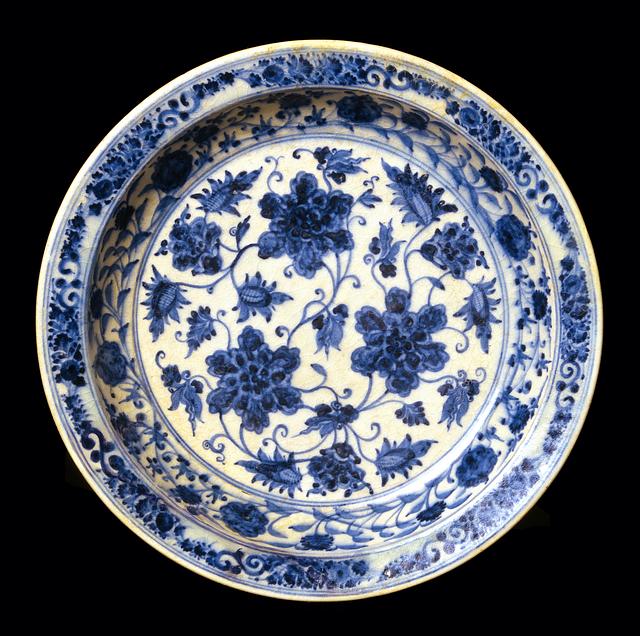
Fritware dish, painted in blue under a transparent glazeur
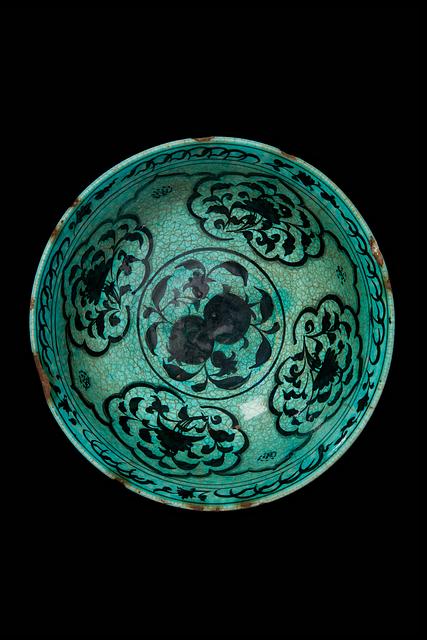
Fritware bowl, painted in black under a transparent, turquoise glaze
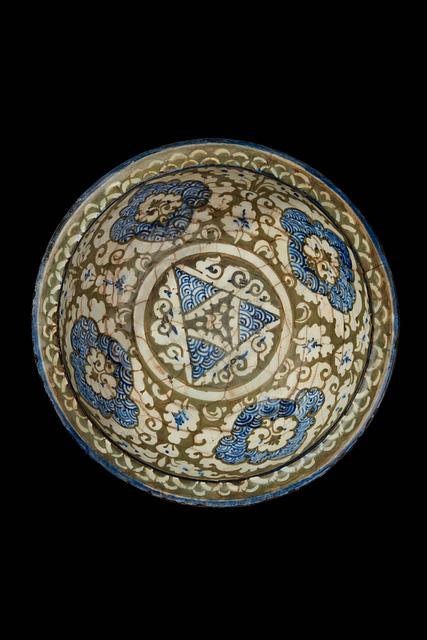
Fritware bowl, covered with a white slip and painted in olive green and blue under a transparent glaze