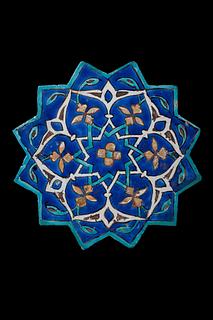
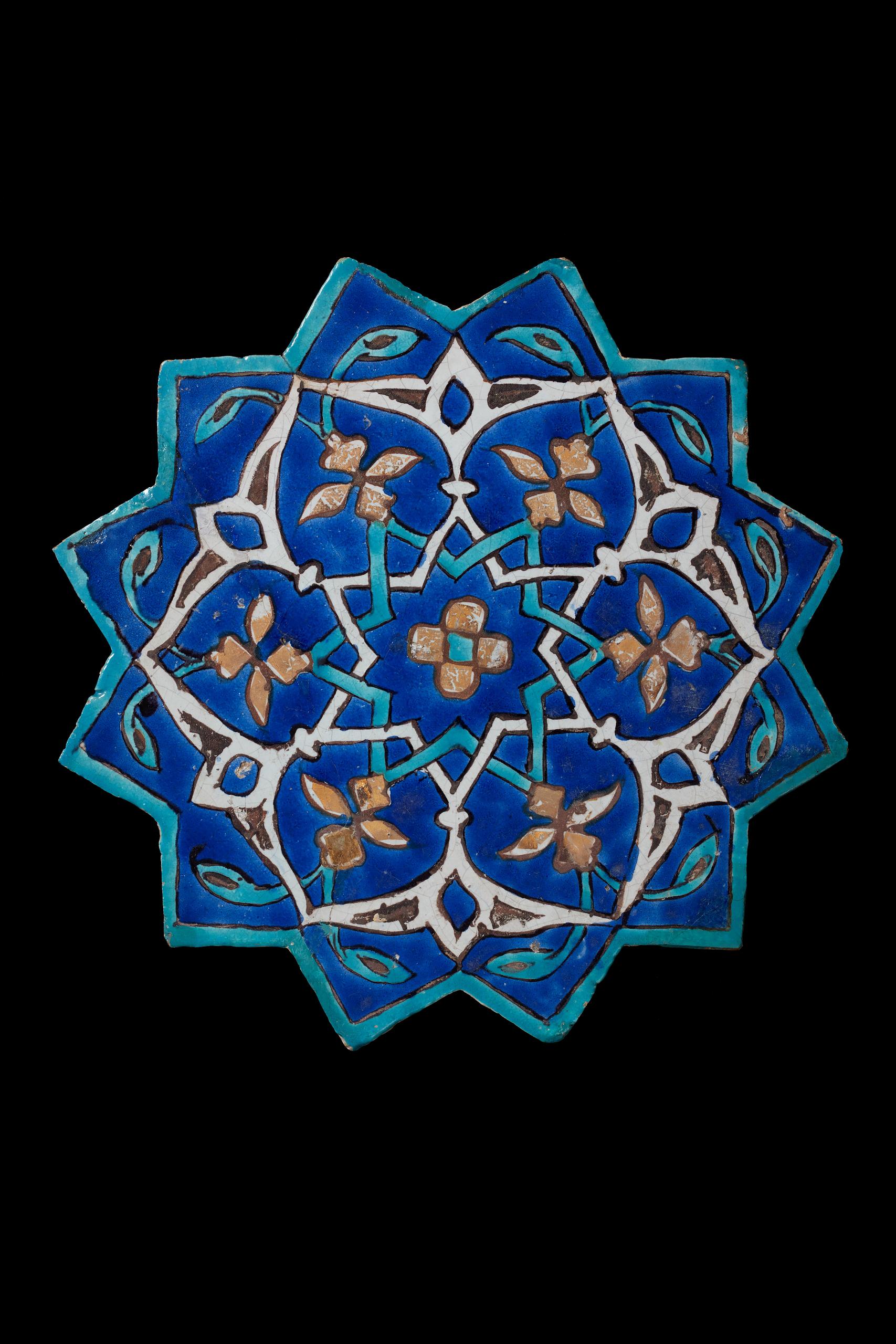
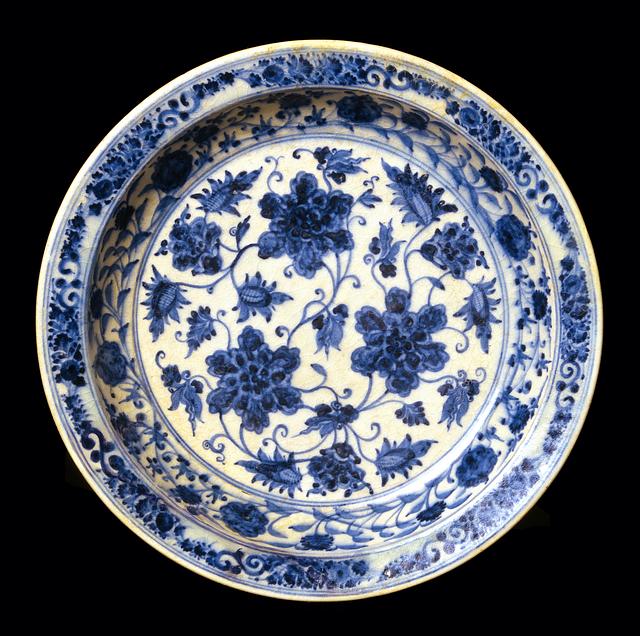
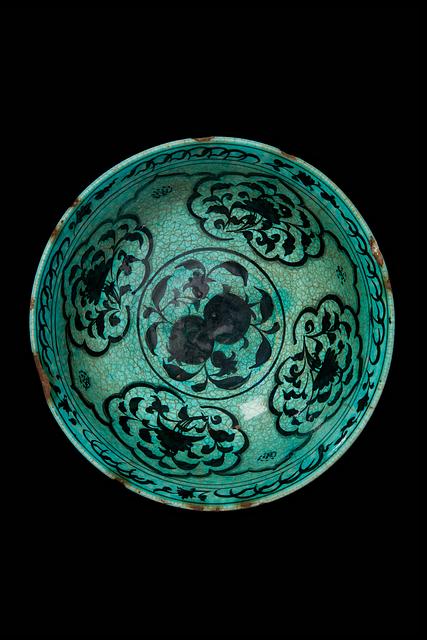
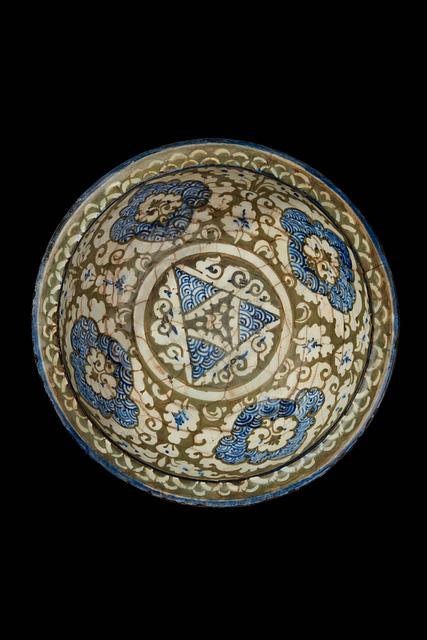
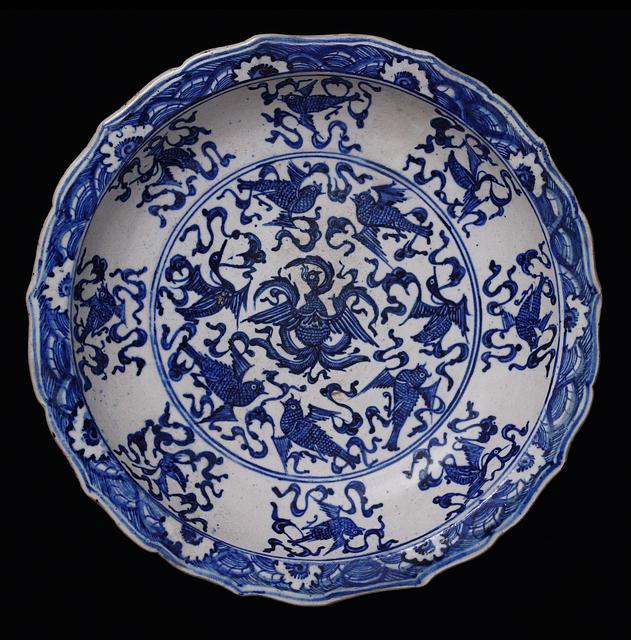
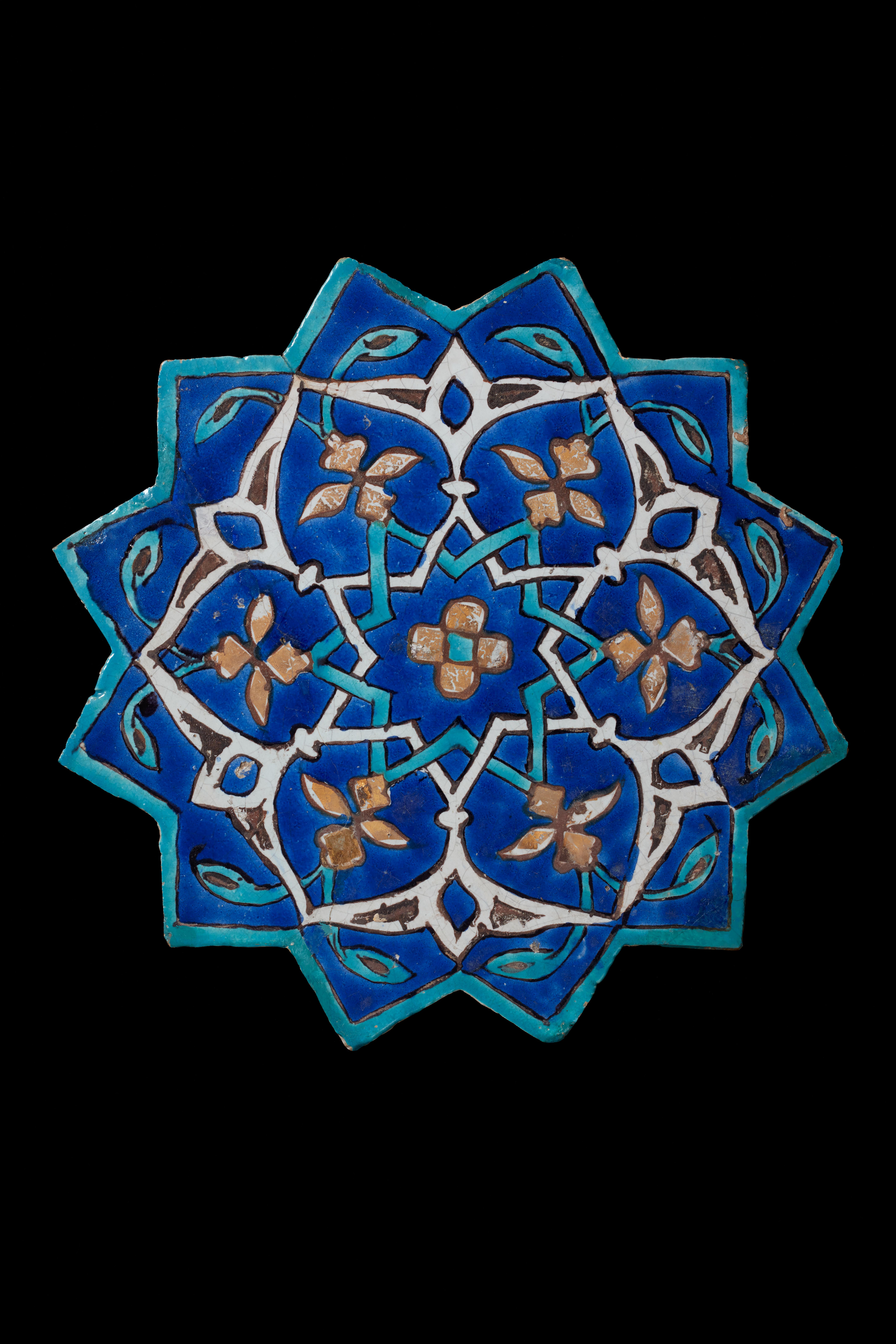
Fritware tile, painted in polychrome glazes and gold leaf. Cuerda seca technique
Iran; c. 1440
Diam: 35 cm
Inventory number 27/1967
Twelve-pointed stars like this one decorated the Ghiyathiyya madrasa in Khargird, in northeastern Iran, finished in around 1442.
The tile was made using the cuerda seca technique. The design was first drawn with a greasy substance that prevented the glazes from melting together. After firing, the design resembles a “dry cord,” as the Spanish designation indicates, and it was probably in Andalusia or North Africa that the technique was in fact developed in the course of the 11th century. The method did not appear in the eastern Islamic region until the 15th century.
The tile was made using the cuerda seca technique. The design was first drawn with a greasy substance that prevented the glazes from melting together. After firing, the design resembles a “dry cord,” as the Spanish designation indicates, and it was probably in Andalusia or North Africa that the technique was in fact developed in the course of the 11th century. The method did not appear in the eastern Islamic region until the 15th century.
Published in
Published in
Art from the World of Islam. 8th-18th century, Louisiana, Humlebæk 1987, cat.no. 180;
Kjeld von Folsach: Islamic art. The David Collection, Copenhagen 1990, cat.no.159;
Kjeld von Folsach, Torben Lundbæk and Peder Mortensen (eds.): Sultan, Shah and Great Mughal: the history and culture of the Islamic world, The National Museum, Copenhagen 1996, cat.no. 257;
Kjeld von Folsach: Art from the World of Islam in The David Collection, Copenhagen 2001, cat.no. 226;
Kjeld von Folsach: Islamic art. The David Collection, Copenhagen 1990, cat.no.159;
Kjeld von Folsach, Torben Lundbæk and Peder Mortensen (eds.): Sultan, Shah and Great Mughal: the history and culture of the Islamic world, The National Museum, Copenhagen 1996, cat.no. 257;
Kjeld von Folsach: Art from the World of Islam in The David Collection, Copenhagen 2001, cat.no. 226;