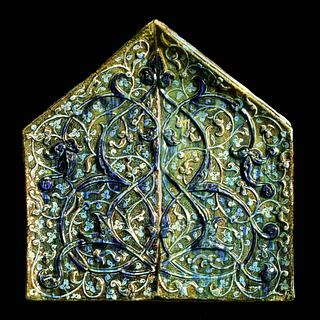
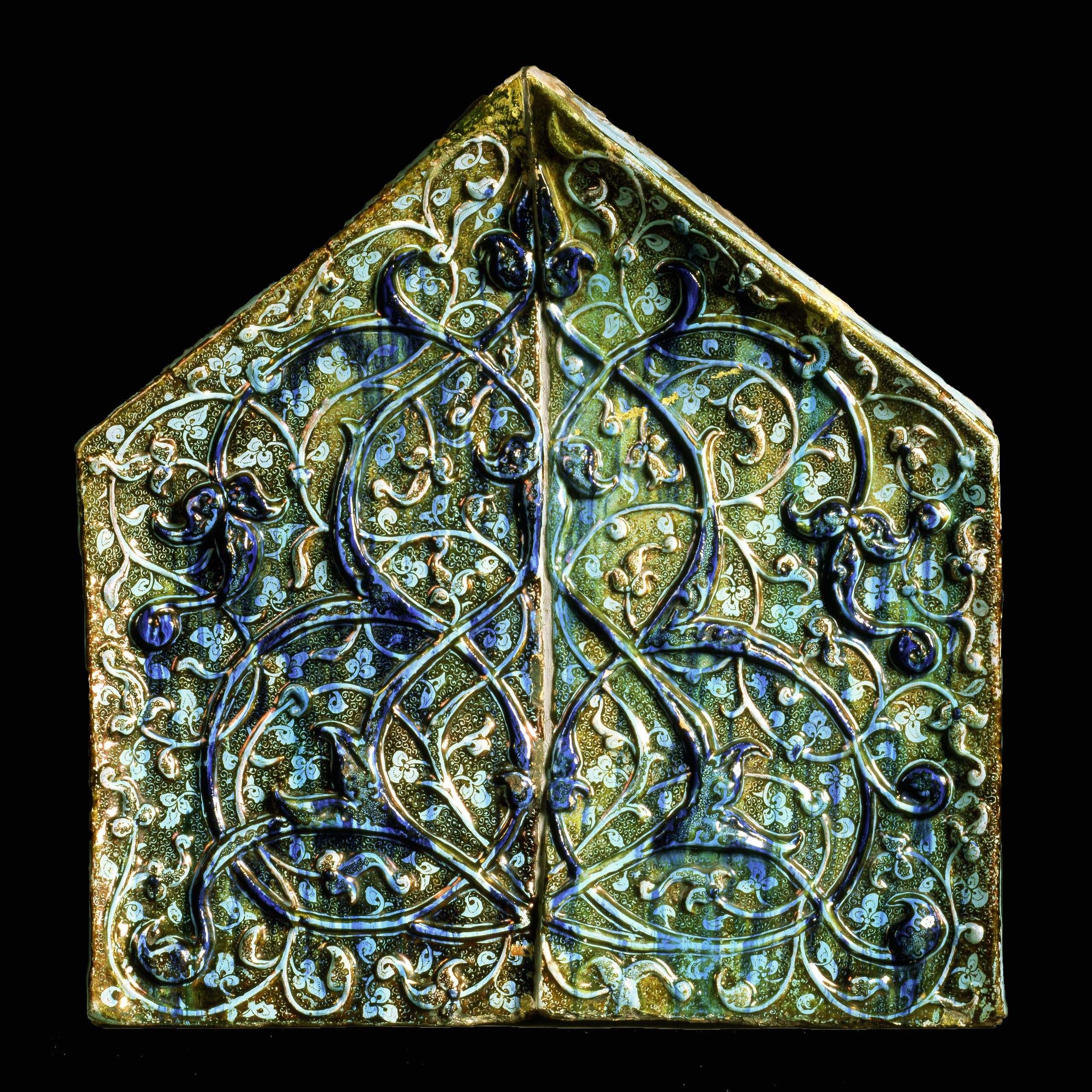
Fritware mihrab tile, cast in two parts and painted in blue and turquoise in, and in lustre over, an opaque, white glaze
Iran, Kashan; end of 13th century
H: 76; W: 74 cm
Inventory number 1/1968
The two tiles made up the central top of a ceramic mihrab (prayer niche) that might originally have consisted of up to 80 individual pieces. Similar monumental compositions were produced in Kashan between c. 1200 and 1340. The glaze, which has run, shows that the pieces were fired upright, as a result of which the very large tiles became “warped.”
The decoration lies on three levels. The upper level has an almost symmetrically organized, blue arabesque in high relief; the middle has a more freely modeled turquoise arabesque; and the bottom level has a myriad of little leaves and curlicues masked off in the lustre or incised into it.
The decoration lies on three levels. The upper level has an almost symmetrically organized, blue arabesque in high relief; the middle has a more freely modeled turquoise arabesque; and the bottom level has a myriad of little leaves and curlicues masked off in the lustre or incised into it.
Published in
Published in
C .L. Davids Samling. Fjerde Del : Jubilæumsskrift 1945-70, København 1970, cat.no. 1, p. 194;
André Leth: Davids Samling. Islamisk kunst = The David Collection. Islamic Art, København 1975, p. 54;
The arts of Islam : Hayward gallery, 8 April - 4 July 1976, London 1976, cat.no. 373;
Annika Richert (ed.): Islam: konst och kultur / art and culture, Statens historiska museum, Stockholm 1985, p. 139, cat.no. 14;
Tsugio Mikami: Islamic pottery, Tokyo 1986, cat.no. 215, p. 167;
Art from the World of Islam. 8th-18th century, Louisiana, Humlebæk 1987, cat.no. 132;
Rachel Hasson: “Some characteristics of medieval Iranian jewellery” in Na'ama Brosh (ed.): Jewellery and goldsmithing in the Islamic world: International Symposium, the Israel Museum, Jerusalem 1987, Jerusalem 1991, (drawing) fig. 16, p. 58;
Kjeld von Folsach: Islamic art. The David Collection, Copenhagen 1990, cat.no.124;
Kjeld von Folsach, Torben Lundbæk and Peder Mortensen (eds.): Sultan, Shah and Great Mughal: the history and culture of the Islamic world, The National Museum, Copenhagen 1996, cat.no. 55;
Kjeld von Folsach: Art from the World of Islam in The David Collection, Copenhagen 2001, cat.no. 206;
Sheila S. Blair and Jonathan M. Bloom (eds.): Cosmophilia. Islamic Art from the David Collection, Copenhagen, McMullen Museum of Art, Boston College, Boston 2006, cat.no. 64;
André Leth: Davids Samling. Islamisk kunst = The David Collection. Islamic Art, København 1975, p. 54;
The arts of Islam : Hayward gallery, 8 April - 4 July 1976, London 1976, cat.no. 373;
Annika Richert (ed.): Islam: konst och kultur / art and culture, Statens historiska museum, Stockholm 1985, p. 139, cat.no. 14;
Tsugio Mikami: Islamic pottery, Tokyo 1986, cat.no. 215, p. 167;
Art from the World of Islam. 8th-18th century, Louisiana, Humlebæk 1987, cat.no. 132;
Rachel Hasson: “Some characteristics of medieval Iranian jewellery” in Na'ama Brosh (ed.): Jewellery and goldsmithing in the Islamic world: International Symposium, the Israel Museum, Jerusalem 1987, Jerusalem 1991, (drawing) fig. 16, p. 58;
Kjeld von Folsach: Islamic art. The David Collection, Copenhagen 1990, cat.no.124;
Kjeld von Folsach, Torben Lundbæk and Peder Mortensen (eds.): Sultan, Shah and Great Mughal: the history and culture of the Islamic world, The National Museum, Copenhagen 1996, cat.no. 55;
Kjeld von Folsach: Art from the World of Islam in The David Collection, Copenhagen 2001, cat.no. 206;
Sheila S. Blair and Jonathan M. Bloom (eds.): Cosmophilia. Islamic Art from the David Collection, Copenhagen, McMullen Museum of Art, Boston College, Boston 2006, cat.no. 64;
Ceramics
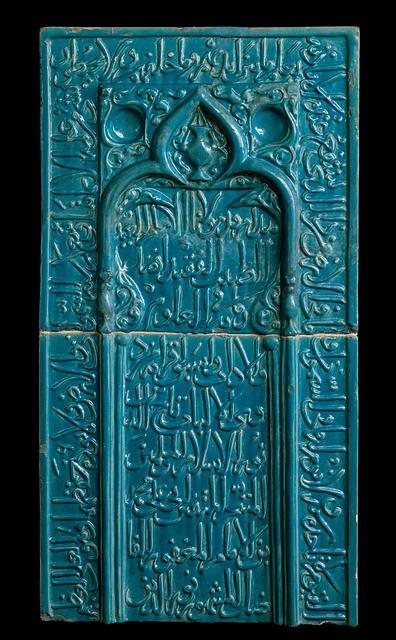
Fritware tombstone, cast in two pieces and covered with an opaque, turquoise glaze
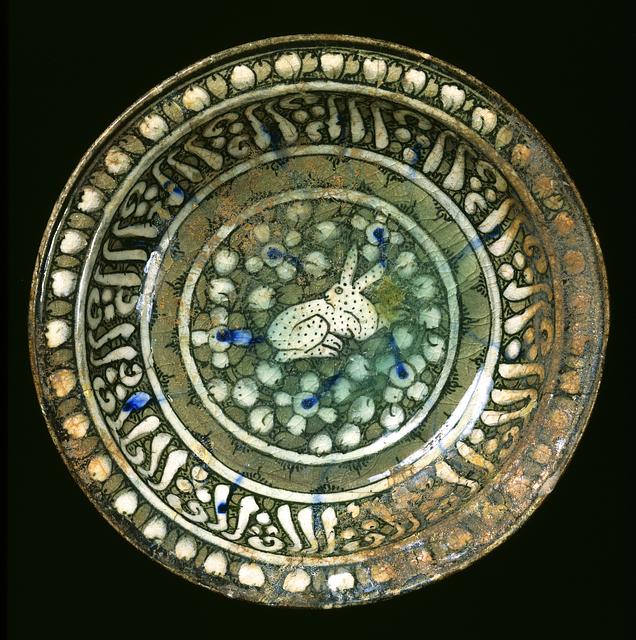
Fritware dish, painted with a white and gray slip and in blue and black under a transparent glaze. Sultanabad type
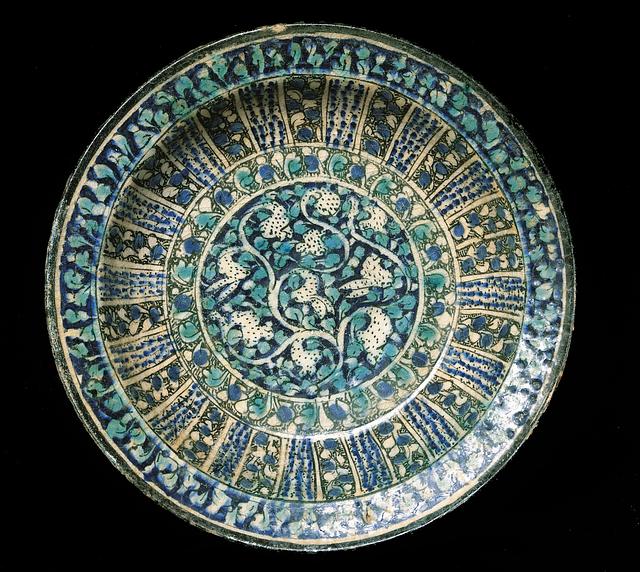
Fritware dish, painted in turquoise, blue, and black under a transparent glaze. Sultanabad type
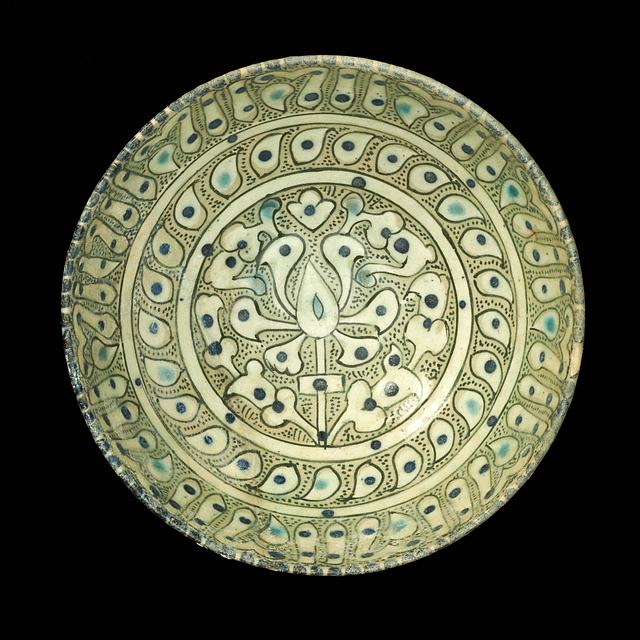
Fritware bowl, painted with a gray and white slip and in black, blue, and turquoise under a transparent glaze