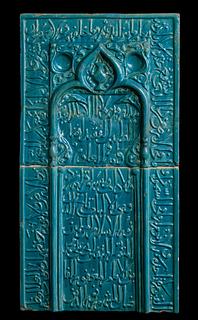
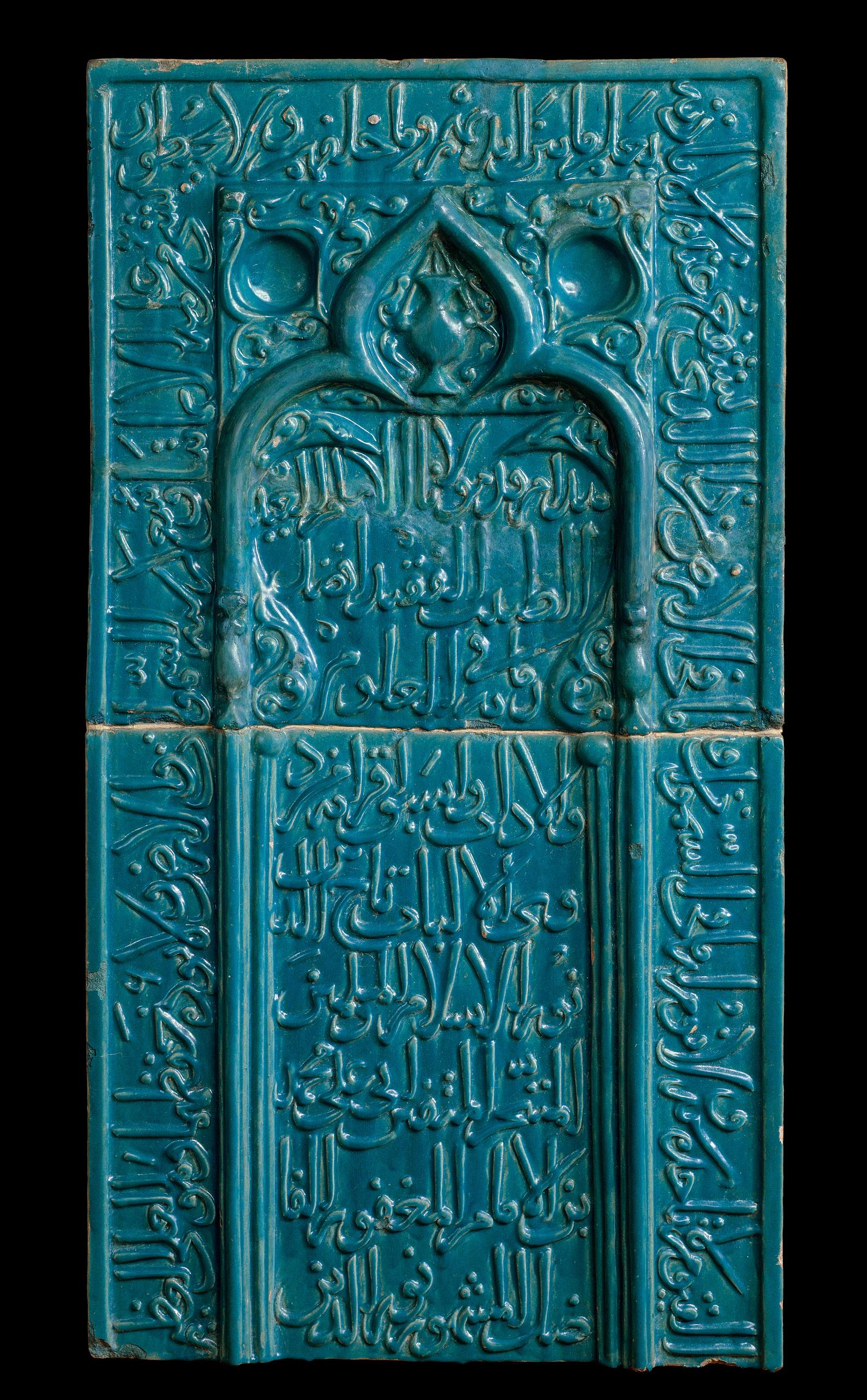
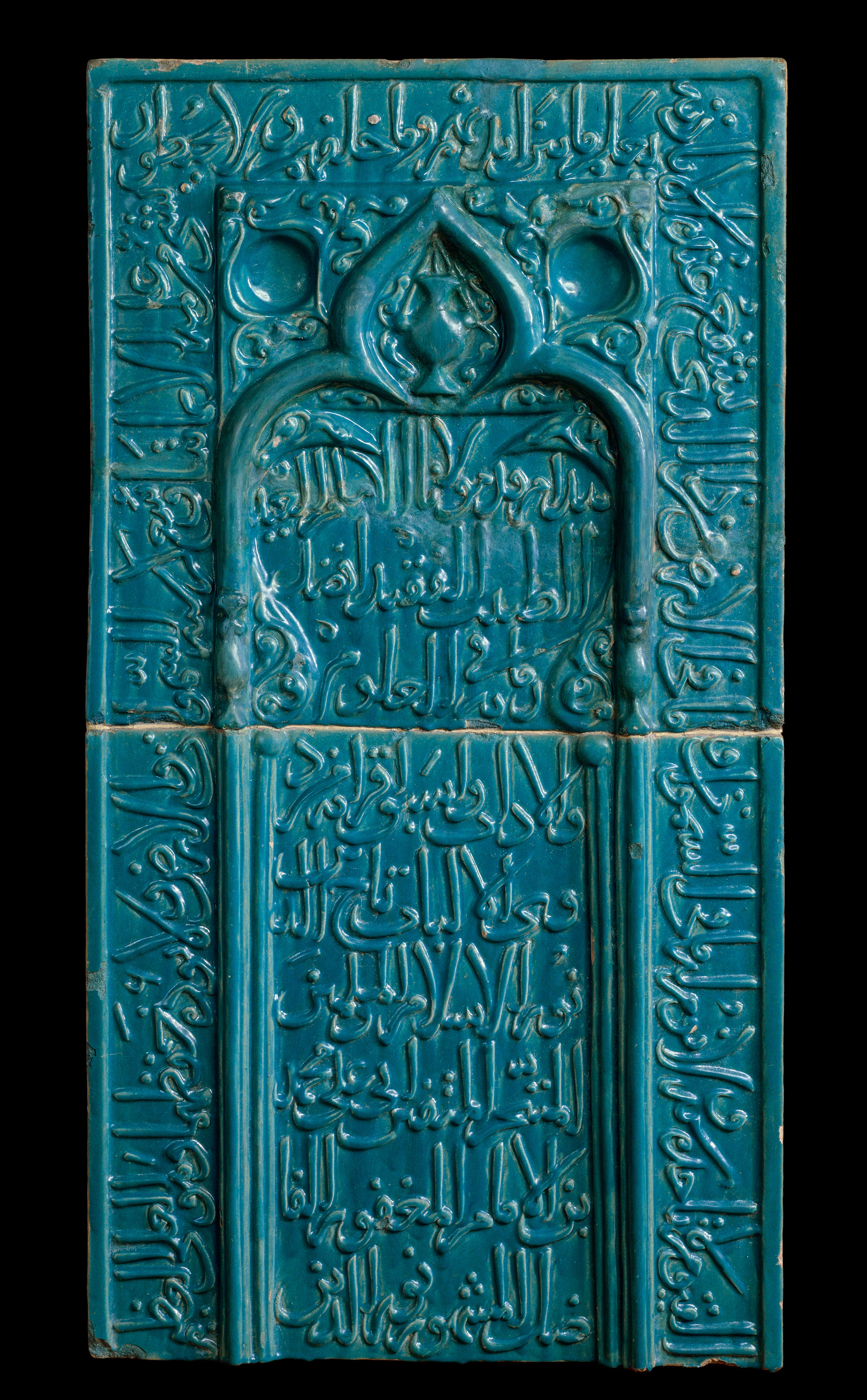
Fritware tombstone, cast in two pieces and covered with an opaque, turquoise glaze
Iran; c. 1300
H: 118,5; W: 53; D: c. 8 cm
Inventory number Isl 107
From about the 13th century, it became common to use especially turquoise, glazed tiles as memorial plaques or tombstones proper. This tombstone probably comes from a mausoleum, where it was embedded in a wall. It is incomplete, as the lowest third is missing. The text in the central panel does say, however, that it was raised to the physician Abu Ali Muhammad, “his age’s most knowledgeable about science and good behavior … the crown of religion, the light of Islam and the Muslims.”
The central section is shaped like a mihrab (prayer niche) with a mosque lamp. Quotations from the “throne verse” in the Koran’s sura 2 are inscribed around the edges.
The central section is shaped like a mihrab (prayer niche) with a mosque lamp. Quotations from the “throne verse” in the Koran’s sura 2 are inscribed around the edges.
Published in
Published in
C .L. Davids Samling. Fjerde Del : Jubilæumsskrift 1945-70, København 1970, nr. 2, pp. 194-195;
André Leth: Davids Samling. Islamisk kunst = The David Collection. Islamic Art, København 1975, pp. 35-36;
Kjeld von Folsach: Islamic art. The David Collection, Copenhagen 1990, cat.no.127;
Kjeld von Folsach, Torben Lundbæk and Peder Mortensen (eds.): Sultan, Shah and Great Mughal: the history and culture of the Islamic world, The National Museum, Copenhagen 1996, cat.no. 373;
Kjeld von Folsach: Art from the World of Islam in The David Collection, Copenhagen 2001, cat.no. 209;
André Leth: Davids Samling. Islamisk kunst = The David Collection. Islamic Art, København 1975, pp. 35-36;
Kjeld von Folsach: Islamic art. The David Collection, Copenhagen 1990, cat.no.127;
Kjeld von Folsach, Torben Lundbæk and Peder Mortensen (eds.): Sultan, Shah and Great Mughal: the history and culture of the Islamic world, The National Museum, Copenhagen 1996, cat.no. 373;
Kjeld von Folsach: Art from the World of Islam in The David Collection, Copenhagen 2001, cat.no. 209;
Ceramics
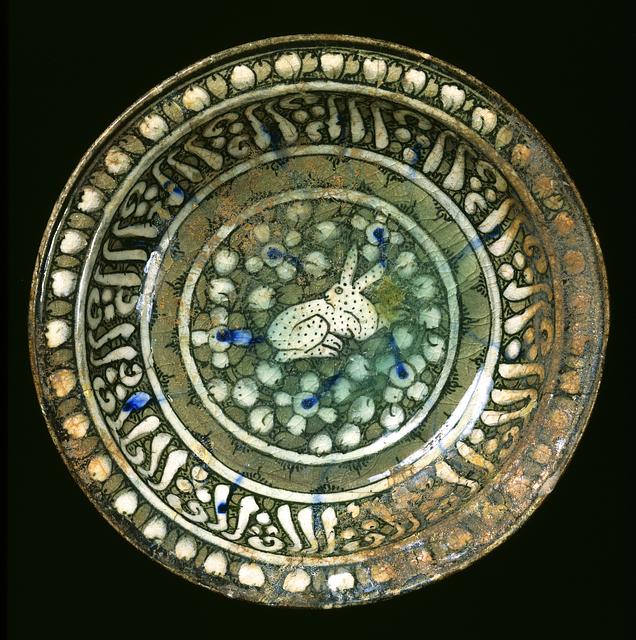
Fritware dish, painted with a white and gray slip and in blue and black under a transparent glaze. Sultanabad type
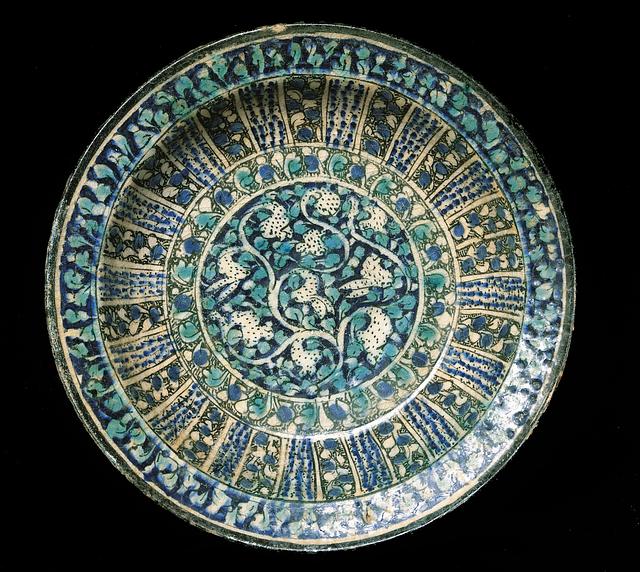
Fritware dish, painted in turquoise, blue, and black under a transparent glaze. Sultanabad type
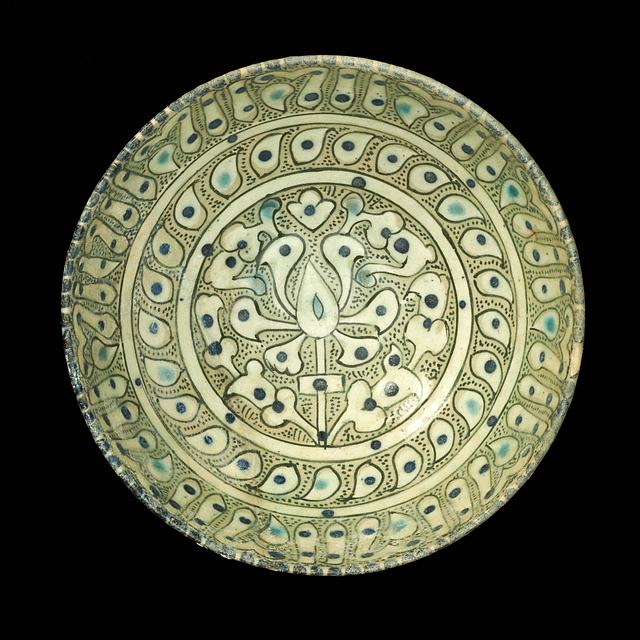
Fritware bowl, painted with a gray and white slip and in black, blue, and turquoise under a transparent glaze
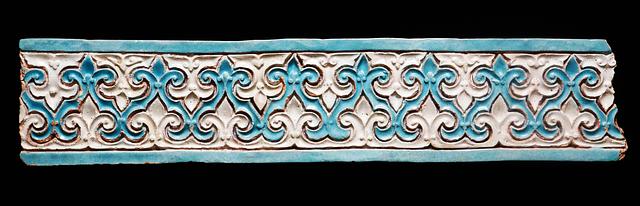
Earthenware frieze, with carved ornamentation painted in white, turquoise, and a manganese glaze