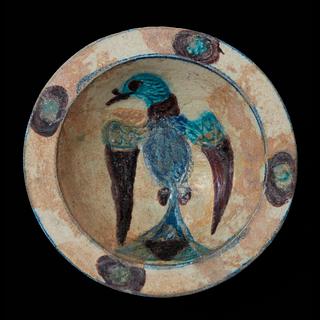
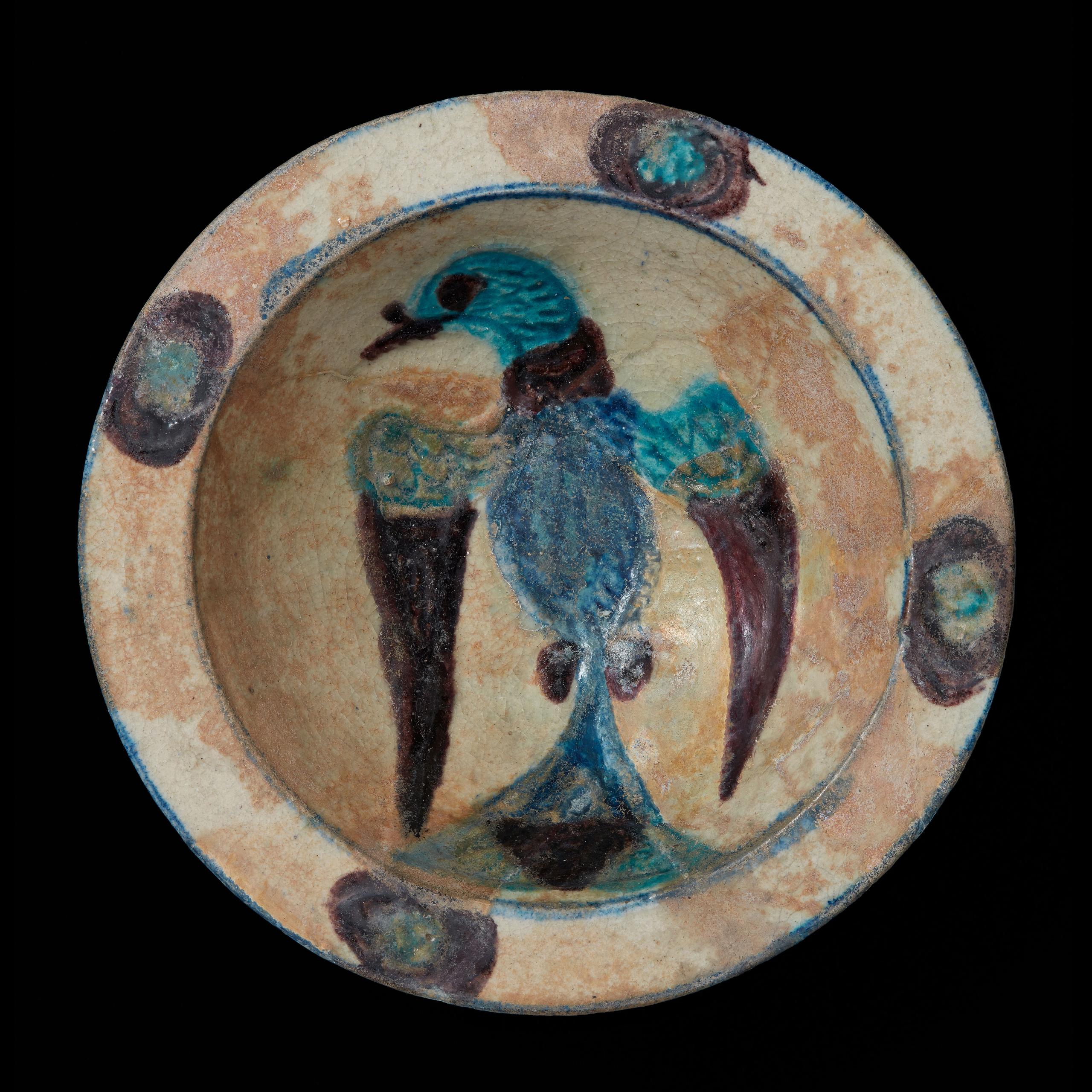
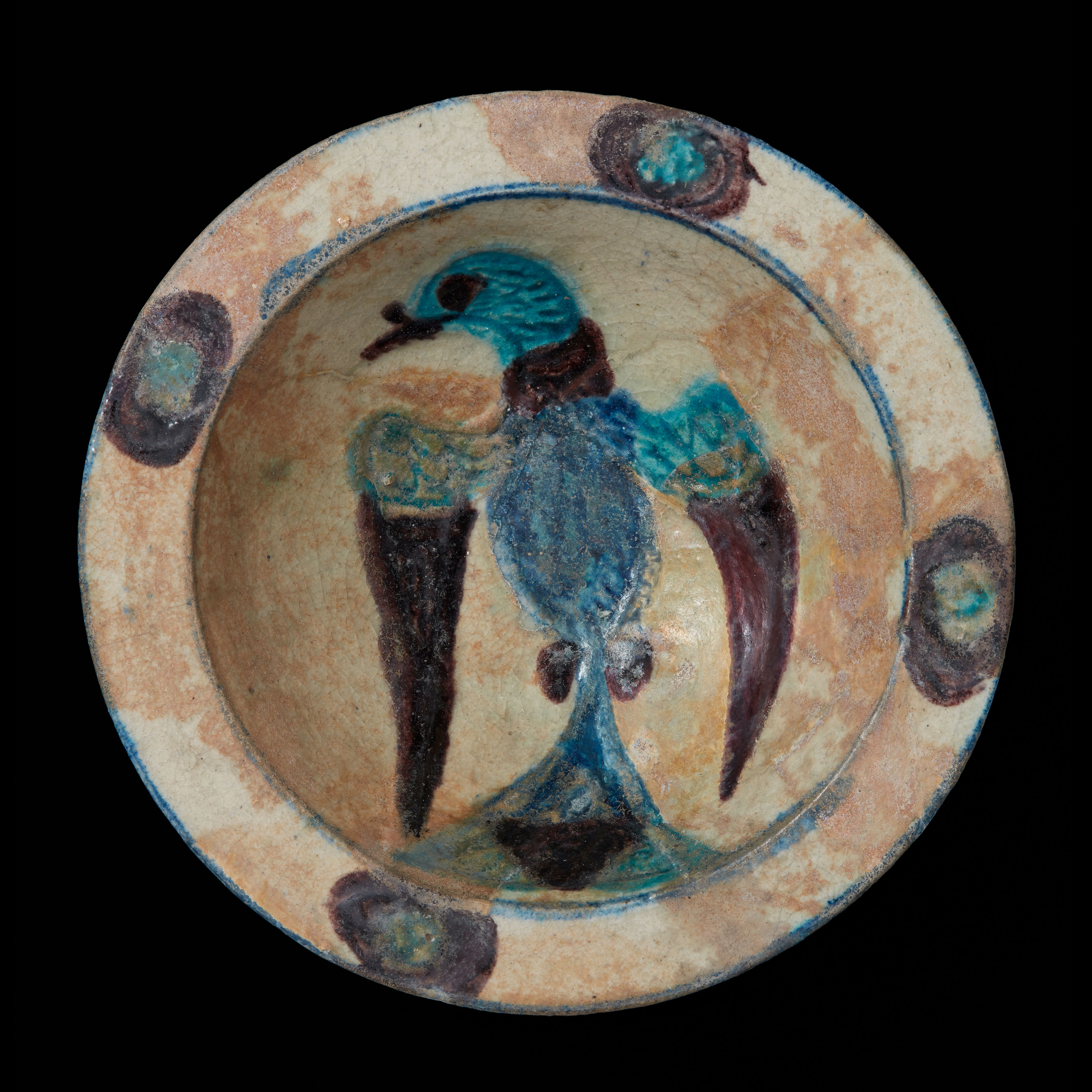
Fritware dish, with carved decoration and painted in blue, turquoise, and manganese under a transparent glaze. Laqabi type
Syria, Raqqa?; 2nd half of 12th century
H: 7.5; Diam: 27.3 cm
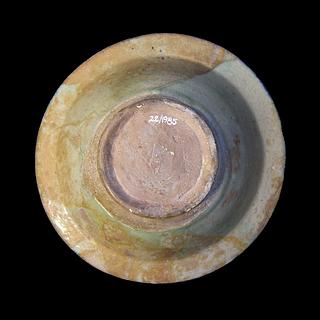
Inventory number 22/1985
Laqabi ware can be considered a forerunner of true underglaze painting. The incised decoration not only highlights the motif, but also to some extent separates the glazes of different colors – at least on a horizontal surface. The type might have been made in both Syria and Iran, but the form of this bowl, with the flat rim, clearly denotes a Syrian origin.
Heraldic animals and mythical creatures are often found on contemporary Zangid, Ayyubid, and Artuqid coins and in art, and motifs of this kind were also popular in the Christian crusader states in Palestine.
Heraldic animals and mythical creatures are often found on contemporary Zangid, Ayyubid, and Artuqid coins and in art, and motifs of this kind were also popular in the Christian crusader states in Palestine.
Published in
Published in
Art from the World of Islam. 8th-18th century, Louisiana, Humlebæk 1987, cat.no. 84;
Kjeld von Folsach: Islamic art. The David Collection, Copenhagen 1990, cat.no. 133;
Kjeld von Folsach, Torben Lundbæk and Peder Mortensen (eds.): Sultan, Shah and Great Mughal: the history and culture of the Islamic world, The National Museum, Copenhagen 1996, cat.no. 126;
Kjeld von Folsach: Art from the World of Islam in The David Collection, Copenhagen 2001, cat.no. 191;
Anne-Marie Keblow Bernsted: Early Islamic pottery: materials and techniques, London 2003, fig. 66, p. 42 and figs. 68-69, p. 43;
Alfried Wieczorek, Mamoun Fansa, Harald Meller (eds.): Saladin und die Kreuzfahrer, Landesmuseum für Vorgeschichte, Halle, Mainz 2005, cat.no. B. 57;
Kjeld von Folsach: Islamic art. The David Collection, Copenhagen 1990, cat.no. 133;
Kjeld von Folsach, Torben Lundbæk and Peder Mortensen (eds.): Sultan, Shah and Great Mughal: the history and culture of the Islamic world, The National Museum, Copenhagen 1996, cat.no. 126;
Kjeld von Folsach: Art from the World of Islam in The David Collection, Copenhagen 2001, cat.no. 191;
Anne-Marie Keblow Bernsted: Early Islamic pottery: materials and techniques, London 2003, fig. 66, p. 42 and figs. 68-69, p. 43;
Alfried Wieczorek, Mamoun Fansa, Harald Meller (eds.): Saladin und die Kreuzfahrer, Landesmuseum für Vorgeschichte, Halle, Mainz 2005, cat.no. B. 57;
Ceramics
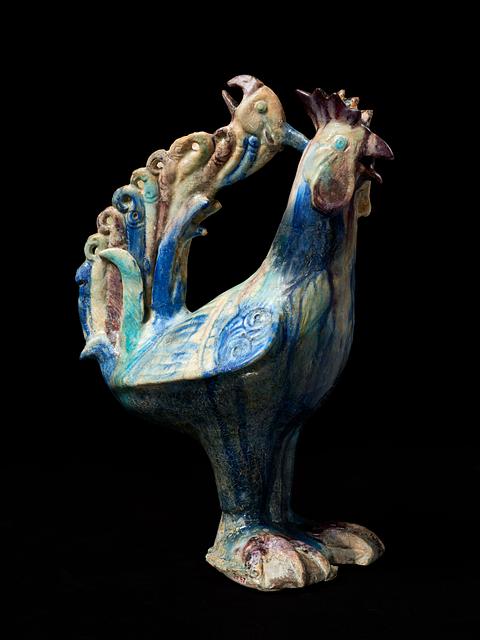
Cock, cast, modeled and carved fritware, painted in blue, turquoise, and manganese under a transparent glaze
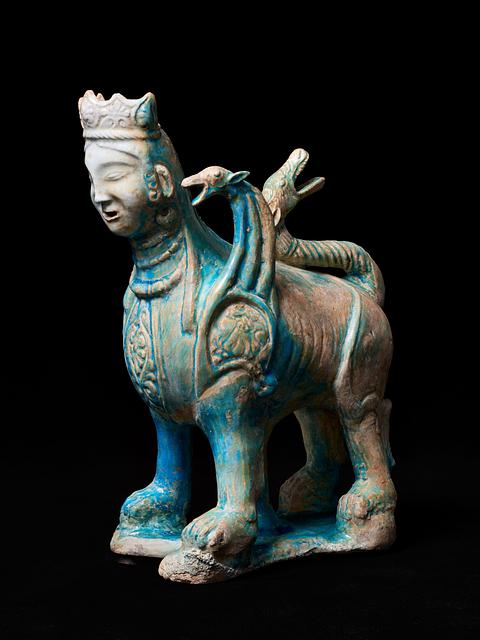
Sphinx, cast, modeled, and carved fritware painted in an opaque white and a turquoise glaze
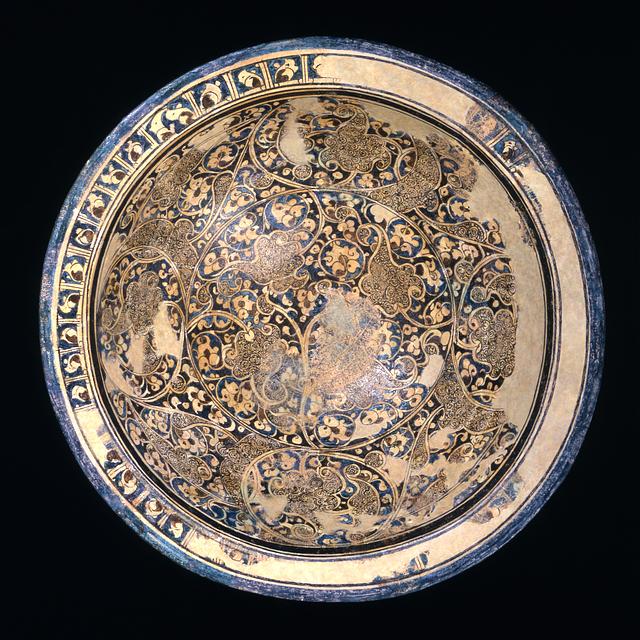
Fritware dish, painted in blue, black, and brownish red under a transparent glaze
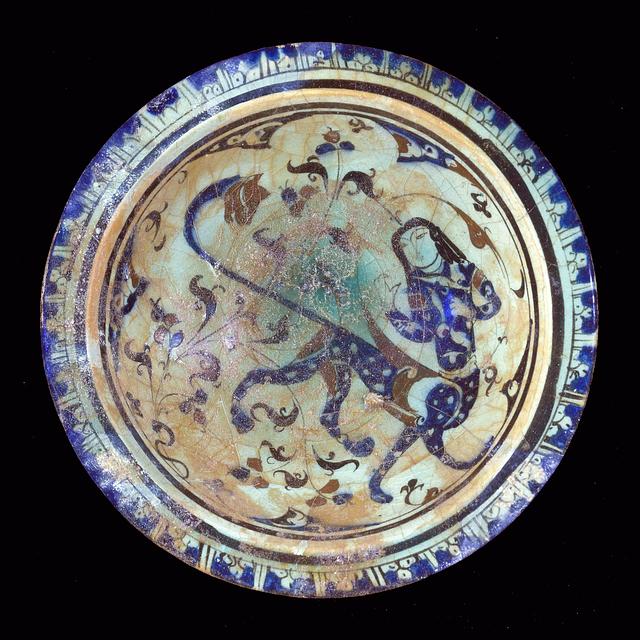
Fritware dish, painted in blue, black, and reddish brown under a transparent glaze