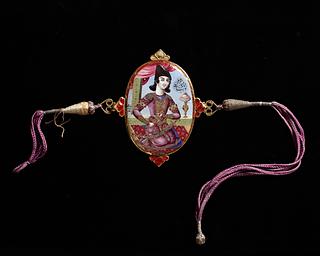
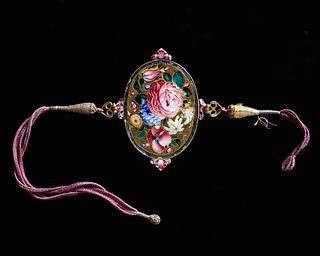
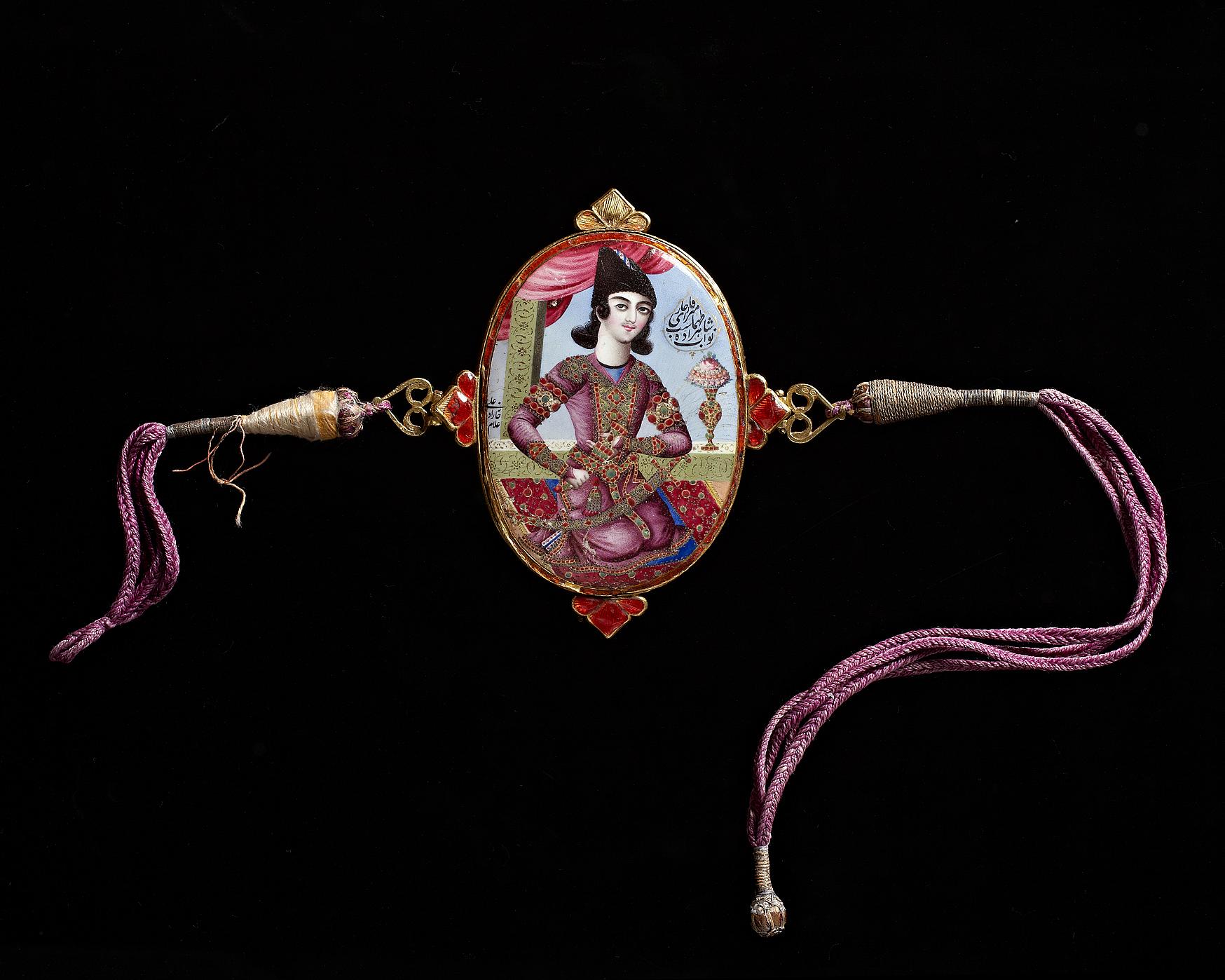
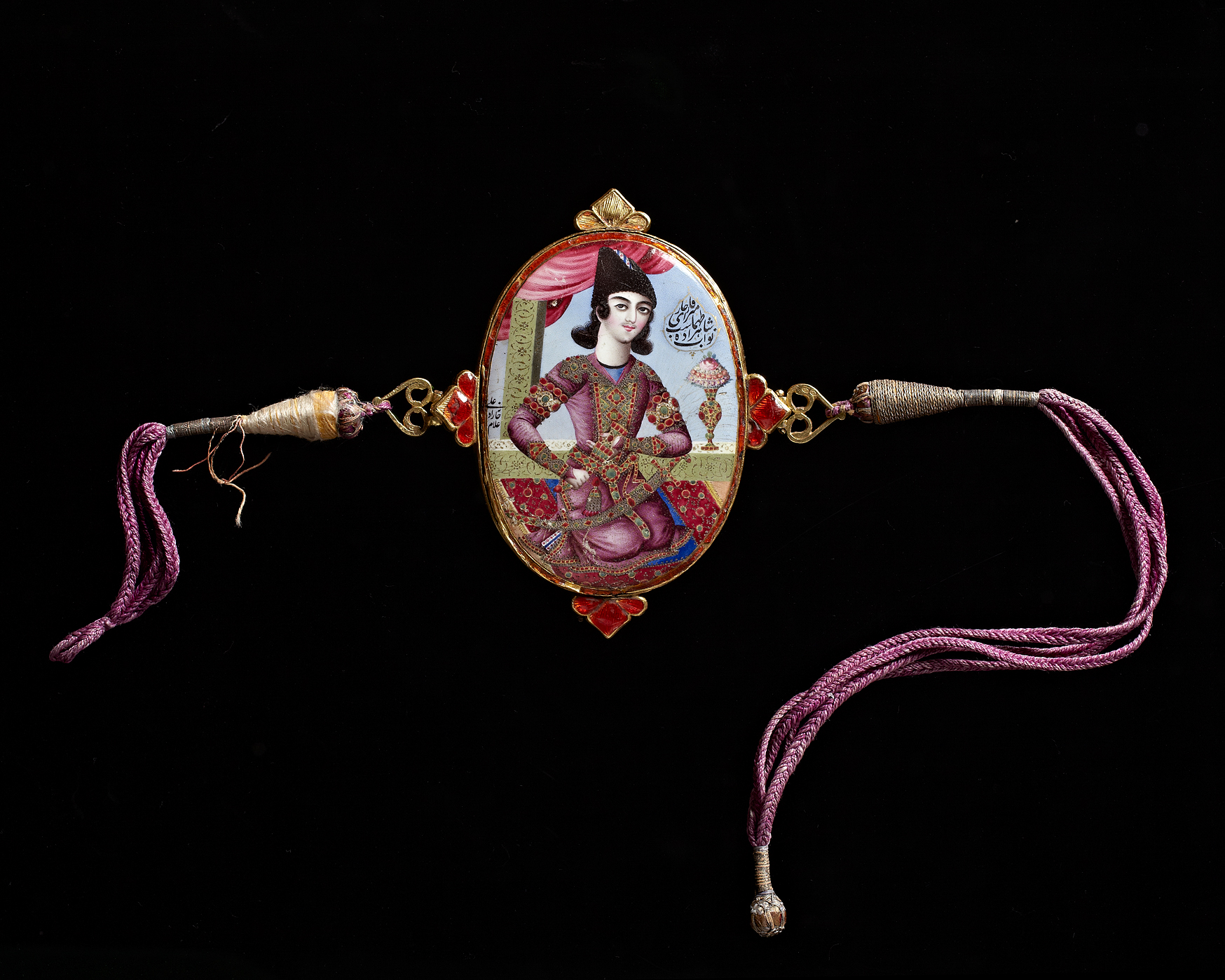
Armlet (bazuband), gold, inlaid and enameled, with cords of cotton and metal thread
Iran; c. 1820
H: 8.3; W: 6.5 cm
Inventory number 23/2010
Armlets were used by both men and women in India and Iran from the 17th century. They especially took the form of jeweled bands, and a princely bazuband could hold numerous and large gemstones, as we can see on the miniature on the front of this armlet. According to the inscription, it depicts Prince Tahmasp Mirza, grandson of the ruling Fath Ali Shah. The portrait of the shah’s son, Muhammad Ali Mirza, is on the armlet’s pendant, which does not belong to the museum. As Muhammad Ali Mirza was governor of Kermansha, the two bazubands were probably worn by one of the Qajar family’s faithful subjects in this Iranian province.
Although the armlet is quite elaborately executed – both front and back – it is a less costly version of the jeweled bazubands. The enamellist signed his work on the left: Ali Ghulam Khanezad.
Although the armlet is quite elaborately executed – both front and back – it is a less costly version of the jeweled bazubands. The enamellist signed his work on the left: Ali Ghulam Khanezad.
Published in
Published in
Drouot-Richelieu, Paris, 10/12-2010, lot 5;
Kjeld von Folsach: Flora islamica: plantemotiver i islamisk kunst, Davids Samling, København 2013, cat.no. 61;
Kjeld von Folsach: Flora islamica: plantemotiver i islamisk kunst, Davids Samling, København 2013, cat.no. 61;