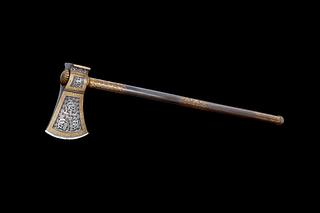
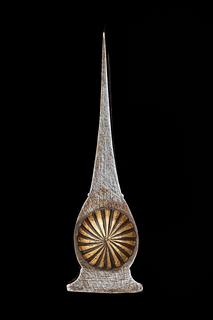
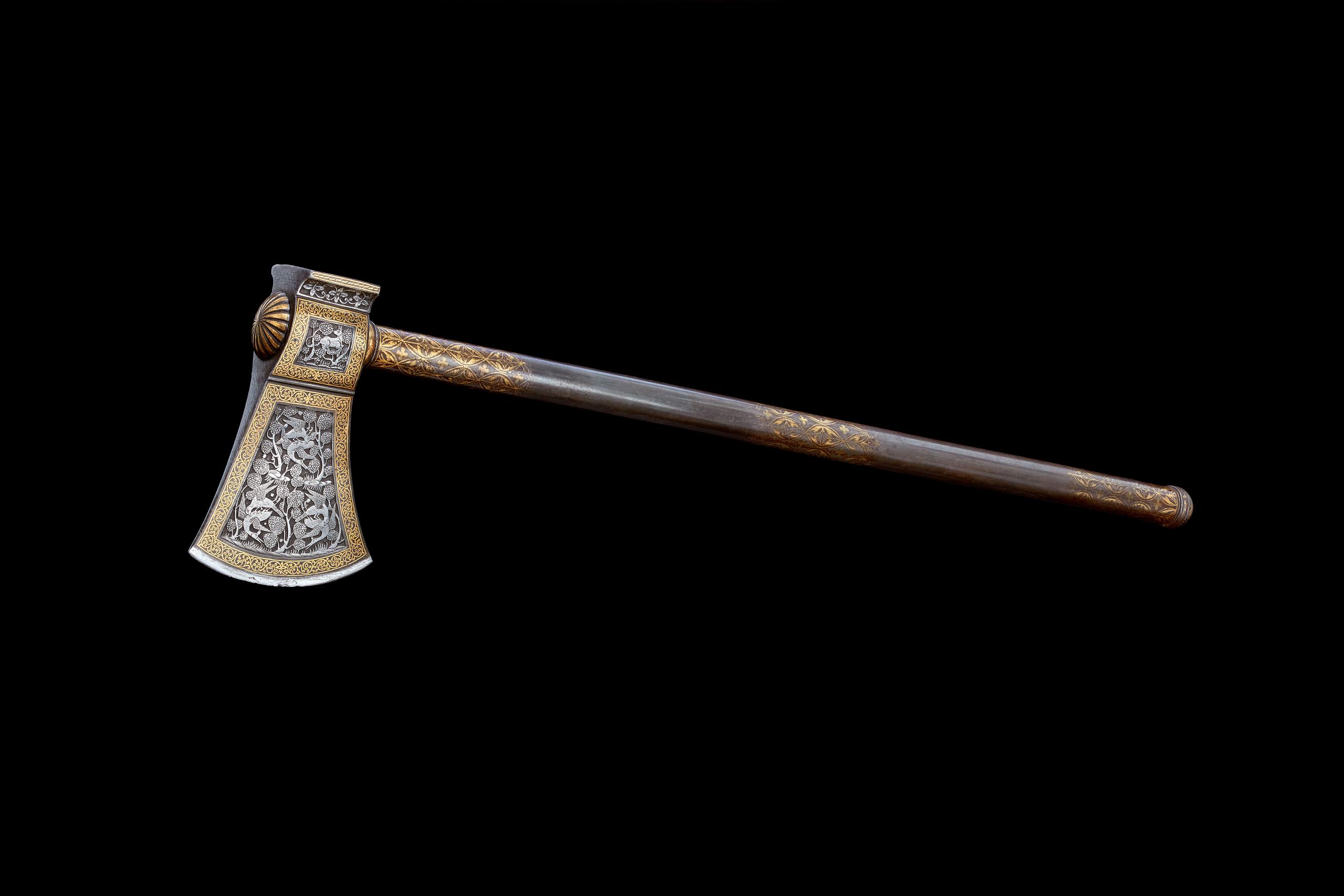
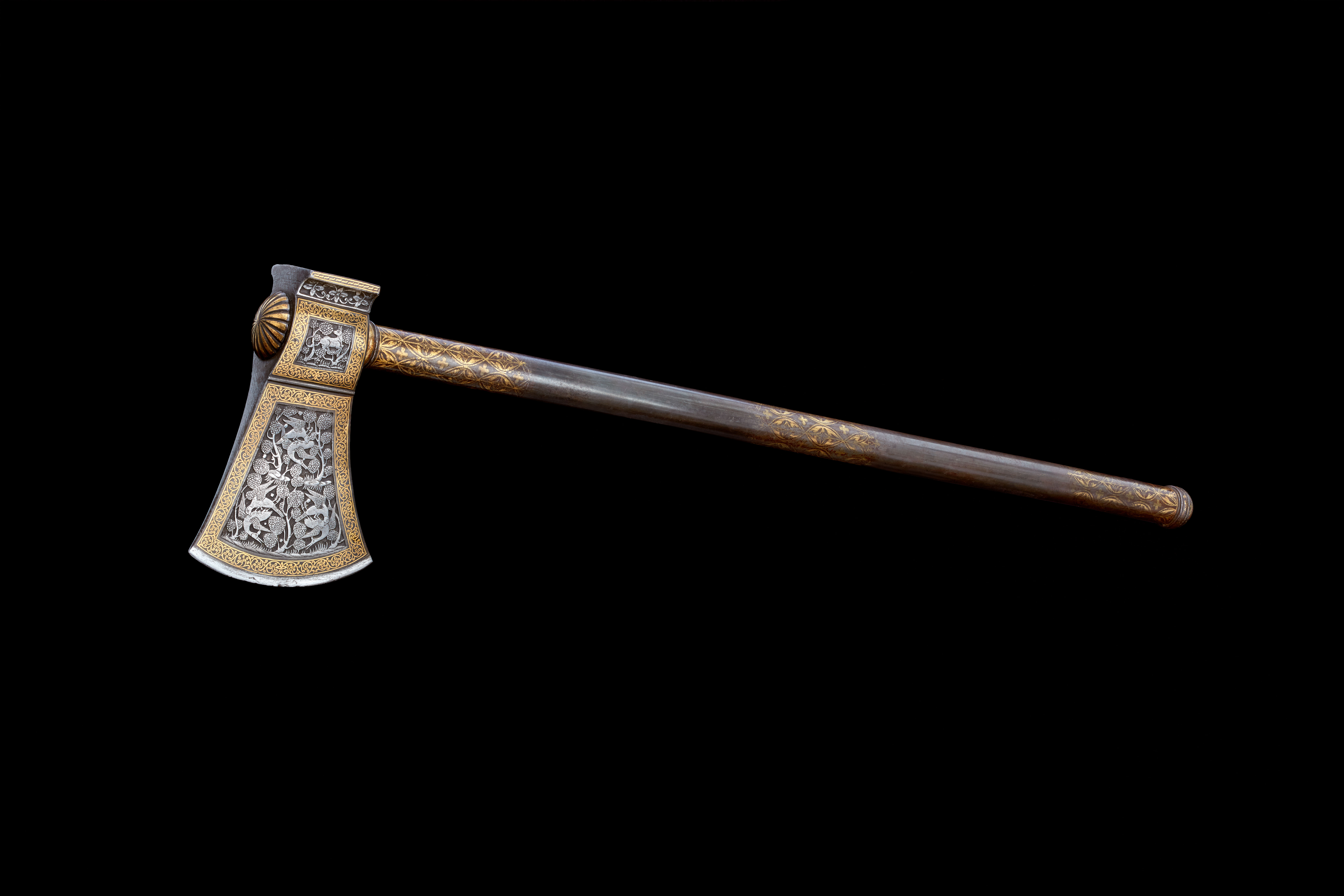
Axe of engraved and punched steel inlaid with gold; shaft of steel overlaid with gold
Iran; 1152 H = 1739–40. The shaft possibly later
L: 56.5 cm
Inventory number 36/2019
Known as a saddle axe (tabarzin in Persian), this type of weapon was popular for close combat in India, Iran and the Ottoman Empire between the sixteenth and nineteenth centuries. As the name suggests, the axe is intended for mounted fighting, and it could be placed in a sling at the front of the saddle when not in use.
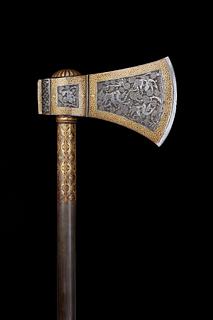
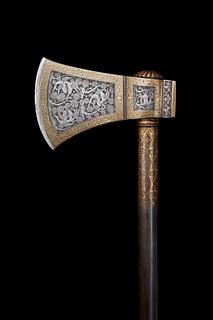
Except for the top and the edge itself, the entire axe head is decorated with animal motifs done as reliefs with engraved and punched details. The main decoration on each side of the blade consists of a large relief depicting a forest landscape with birds of prey attacking herons. A frequent motif in Islamic art, such scenes symbolise the ruler’s power.
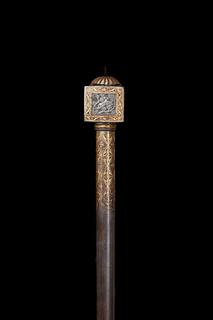
The reliefs are framed by meandering floral patterns in inlaid gold, forming a refined contrast to the cool tones of the steel. The shaft, on the other hand, is more sparsely decorated with a thin layer of overlaid gold (koftgari) and is probably of later date.
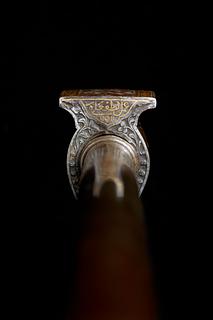
Beneath the butt of the axe is a signature inlaid in gold, proclaiming it the work of the weaponsmith Lotf Ali and dating it to 1739–40. Lotf Ali was active in the period around 1730–40 and may have worked in Isfahan. Among other things, he is known to have made at least nine other surviving axes decorated in the same style, and several later forgeries also bear his name, testifying to his reputation as a skilled craftsman.1
Except for the top and the edge itself, the entire axe head is decorated with animal motifs done as reliefs with engraved and punched details. The main decoration on each side of the blade consists of a large relief depicting a forest landscape with birds of prey attacking herons. A frequent motif in Islamic art, such scenes symbolise the ruler’s power.
The reliefs are framed by meandering floral patterns in inlaid gold, forming a refined contrast to the cool tones of the steel. The shaft, on the other hand, is more sparsely decorated with a thin layer of overlaid gold (koftgari) and is probably of later date.
Beneath the butt of the axe is a signature inlaid in gold, proclaiming it the work of the weaponsmith Lotf Ali and dating it to 1739–40. Lotf Ali was active in the period around 1730–40 and may have worked in Isfahan. Among other things, he is known to have made at least nine other surviving axes decorated in the same style, and several later forgeries also bear his name, testifying to his reputation as a skilled craftsman.1
Published in
Published in
Peter Finer: 2019 Asian catalogue [online], s. 20-21, kat.nr. 10;
Kjeld von Folsach, Joachim Meyer and Peter Wandel: Fighting, Hunting, Impressing. Arms and Armour from the Islamic World 1500-1850, The David Collection, Copenhagen 2021, cat.no. 24;
Kjeld von Folsach, Joachim Meyer and Peter Wandel: Fighting, Hunting, Impressing. Arms and Armour from the Islamic World 1500-1850, The David Collection, Copenhagen 2021, cat.no. 24;
Footnotes
Footnotes
1.
An exhaustive account of the known works of Lotf Ali can be found in A.S. Melikian-Chirvani: ‘The tabarzīns of Lotf ‘alī’ in Robert Elgood (ed.): Islamic Arms and Armour, London 1979, pp. 116–135 and in Melisande Bizoirre: ‘Prestige de la hache et haches de prestige: production et usage des tabarzins en Iran et en Inde au XVIIIe siecle’, Les Cahiers de l’Ecole du Louvre, 13, 2019 .