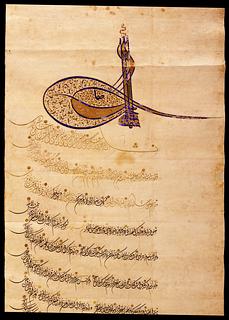
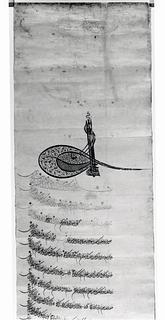
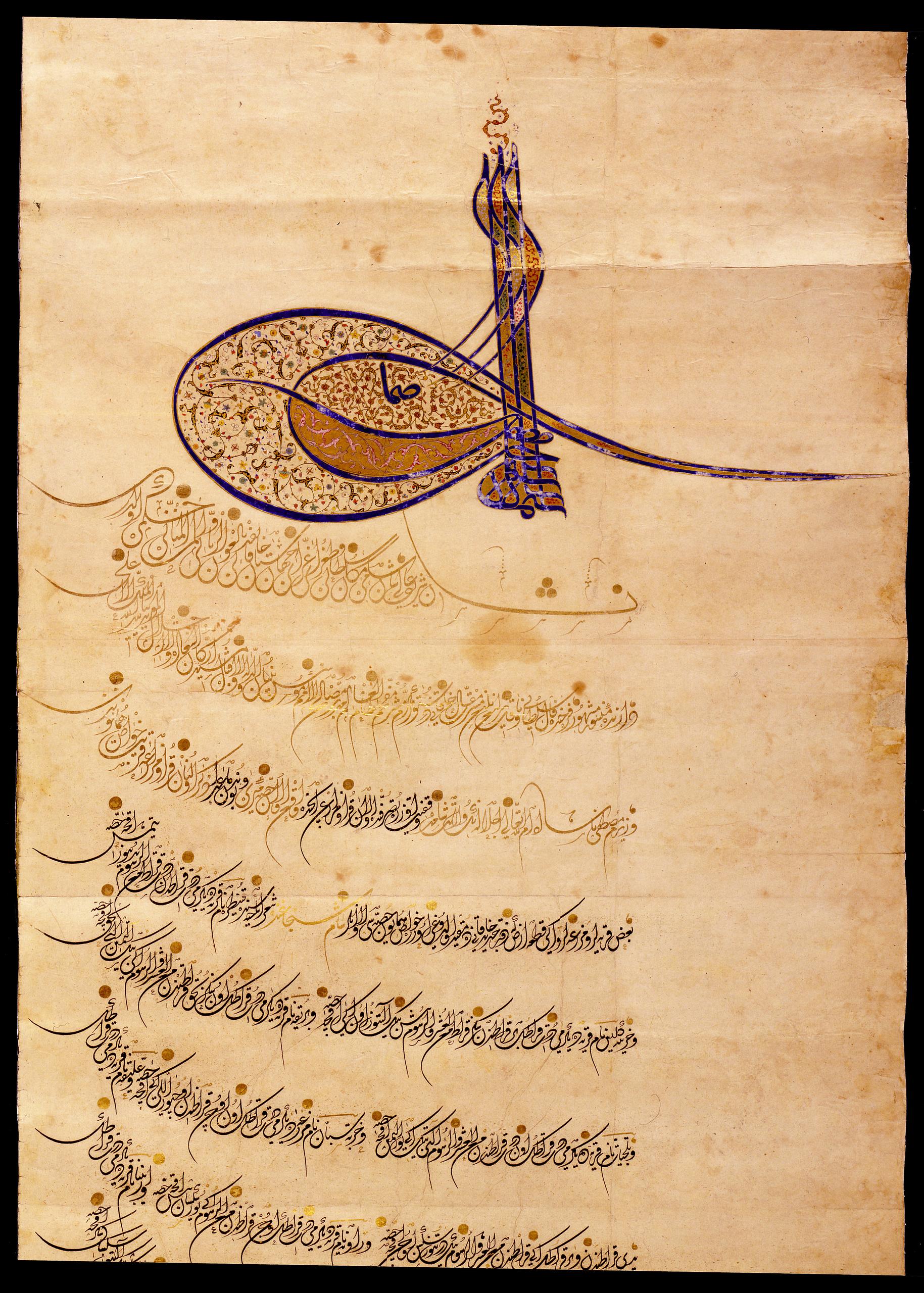
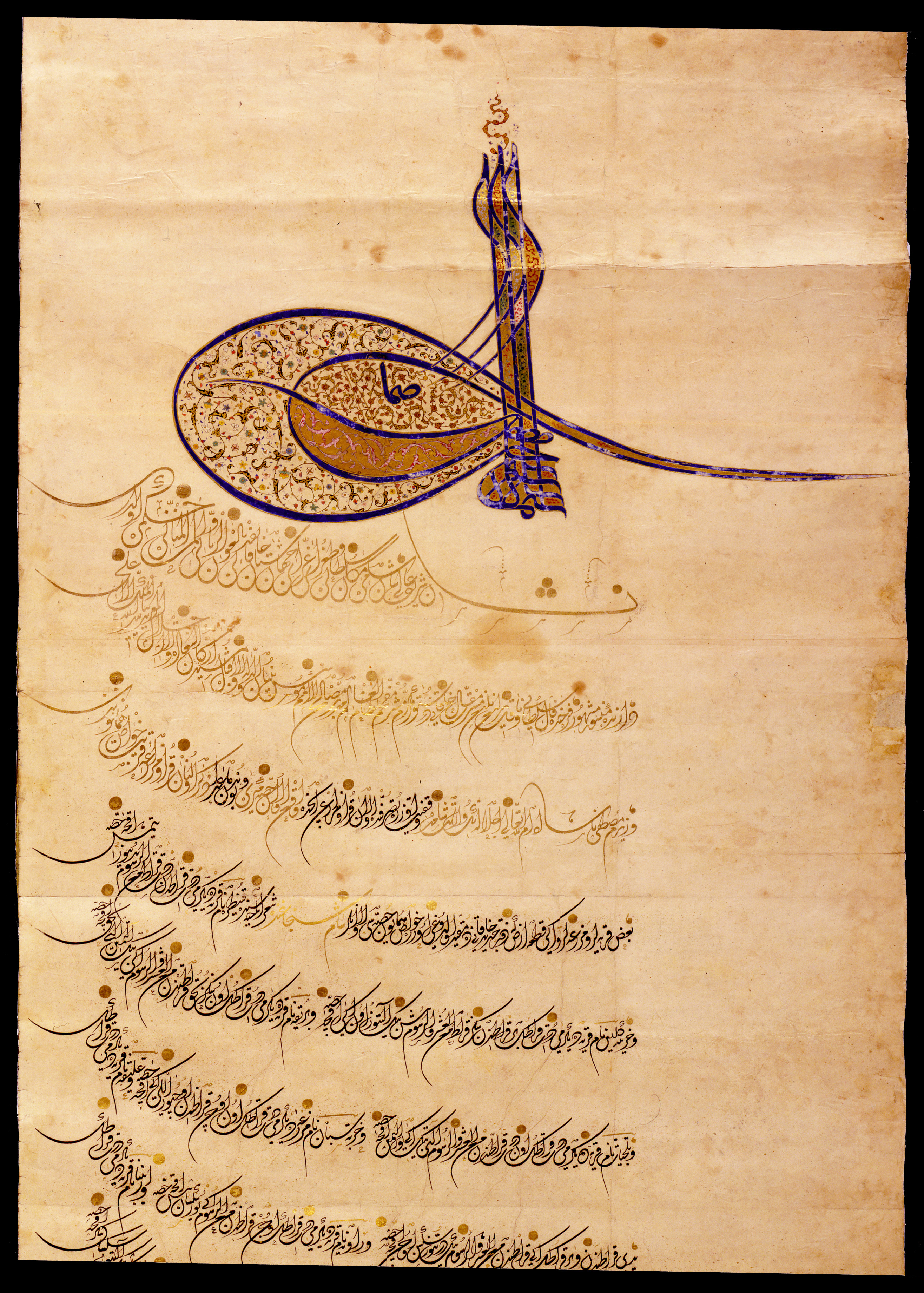
A firman (imperial decree), paper, written in Divani
Istanbul, Turkey; 981 H = 1573
L: 295; W: 56 cm
Inventory number 51/2002
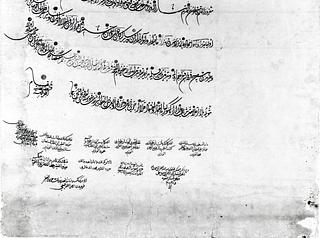
The Ottoman imperial decree – firman – consists of the decree itself, frequently written in the chancellery script, Divani, with the signatures of the officials below and the signature of the ruling sultan in the form of an intricate tughra above.
The compact lowermost section of the tughra here holds the names of Sultan Selim II. The three distinctive upstrokes and beautifully illuminated, curving sections, in contrast, are found on all imperial tughras. The firmans from the reigns of Suleyman the Magnificent and his son Selim II are considered the most beautiful.
In this firman, Selim’s vizier, Mustafa Pasha, is given various holdings for his services.
The compact lowermost section of the tughra here holds the names of Sultan Selim II. The three distinctive upstrokes and beautifully illuminated, curving sections, in contrast, are found on all imperial tughras. The firmans from the reigns of Suleyman the Magnificent and his son Selim II are considered the most beautiful.
In this firman, Selim’s vizier, Mustafa Pasha, is given various holdings for his services.
The Ottomans
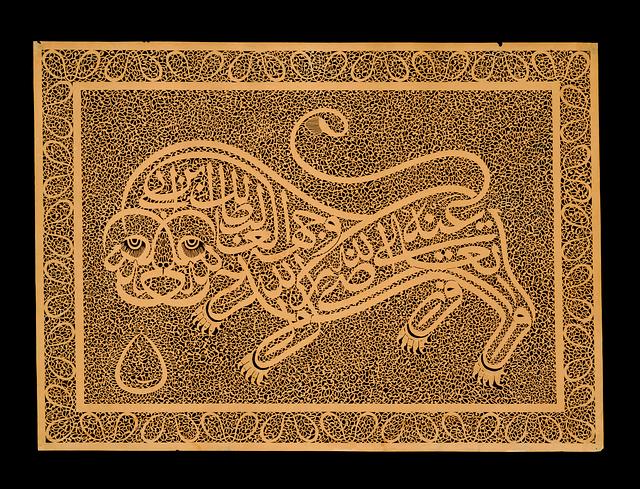
Paper cut with a calligraphic lion
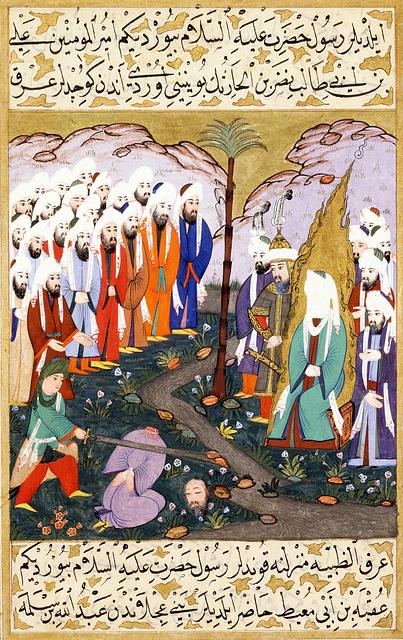
Miniature from volume 4 of a copy of Mustafa al-Darir’s Siyar-i-Nabi (Life of the Prophet). ’Ali Beheading Nadr ibn al-Harith in the Presence of the Prophet Muhammad’
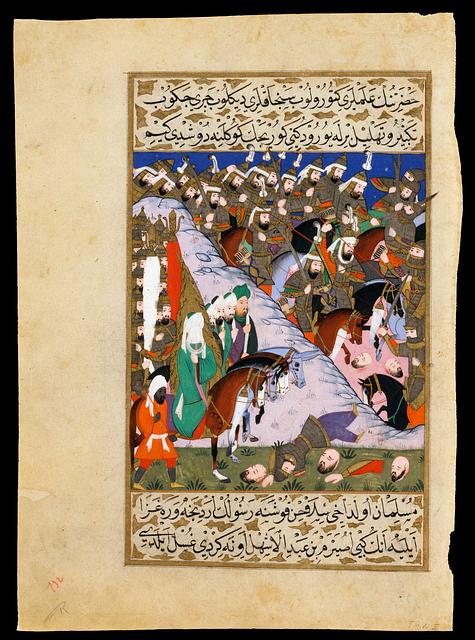
Miniature from volume 4 of a copy of Mustafa al-Darir’s Siyar-i Nabi (Life of the Prophet). ’The Prophet Muhammad and the Muslim Army at the Battle of Uhud’
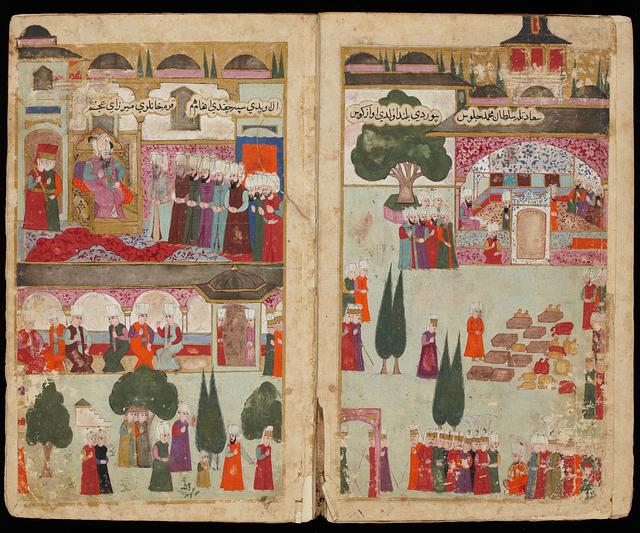
Manuscript written by Seyyid Lokman on Mehmed III’s Campaign in Hungary. First double miniature fol. 15v-16r, ’Mehmed III’s Coronation in the Topkapi Palace in 1595’