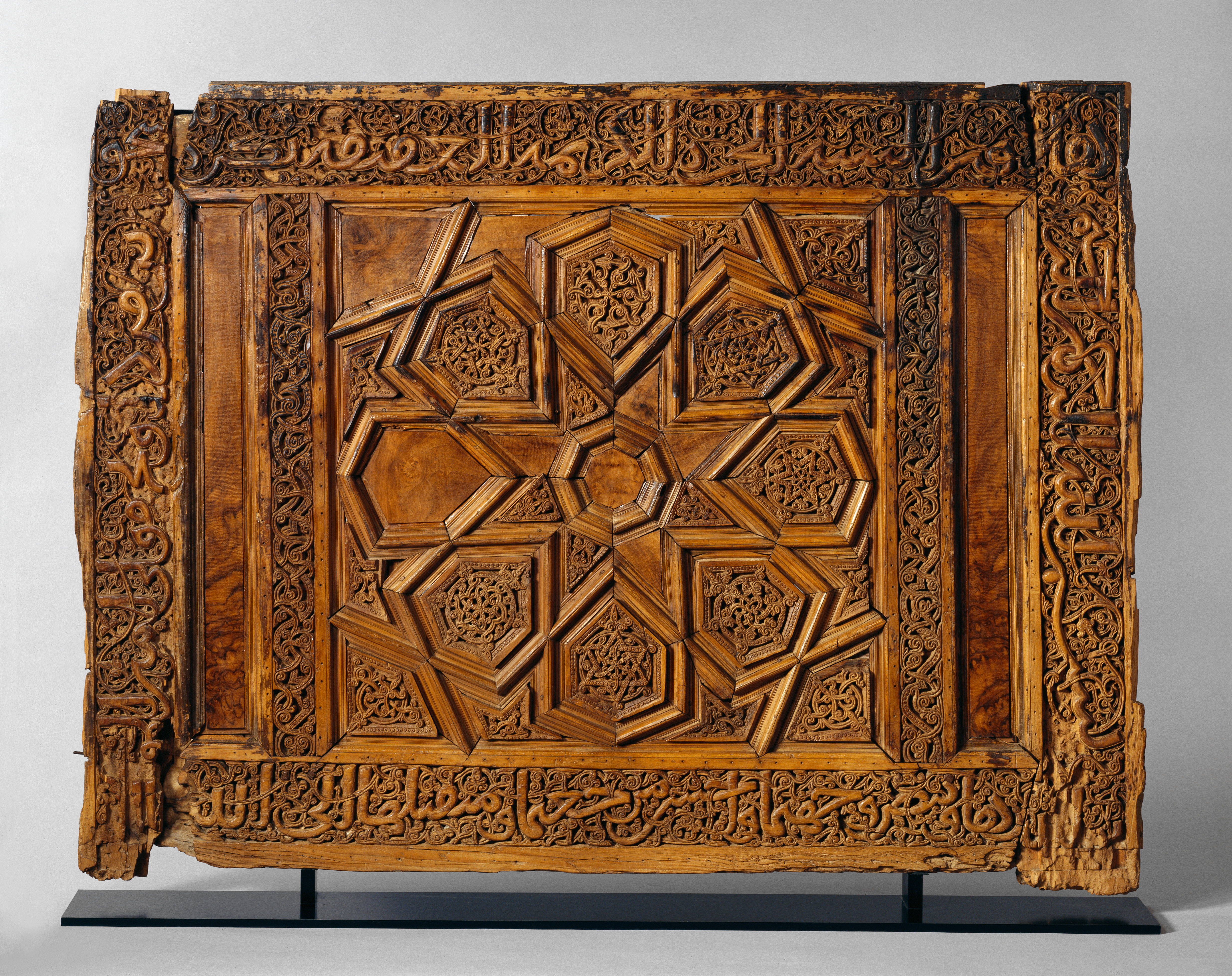
Side of a cenotaph (sanduq), carved wood
Iran or Central Asia; c. 1100
H: 112; W: 157 cm
Inventory number 1/2004
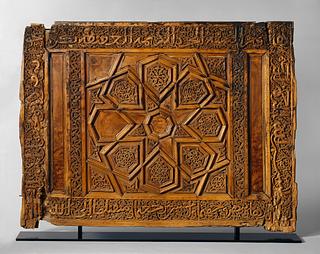
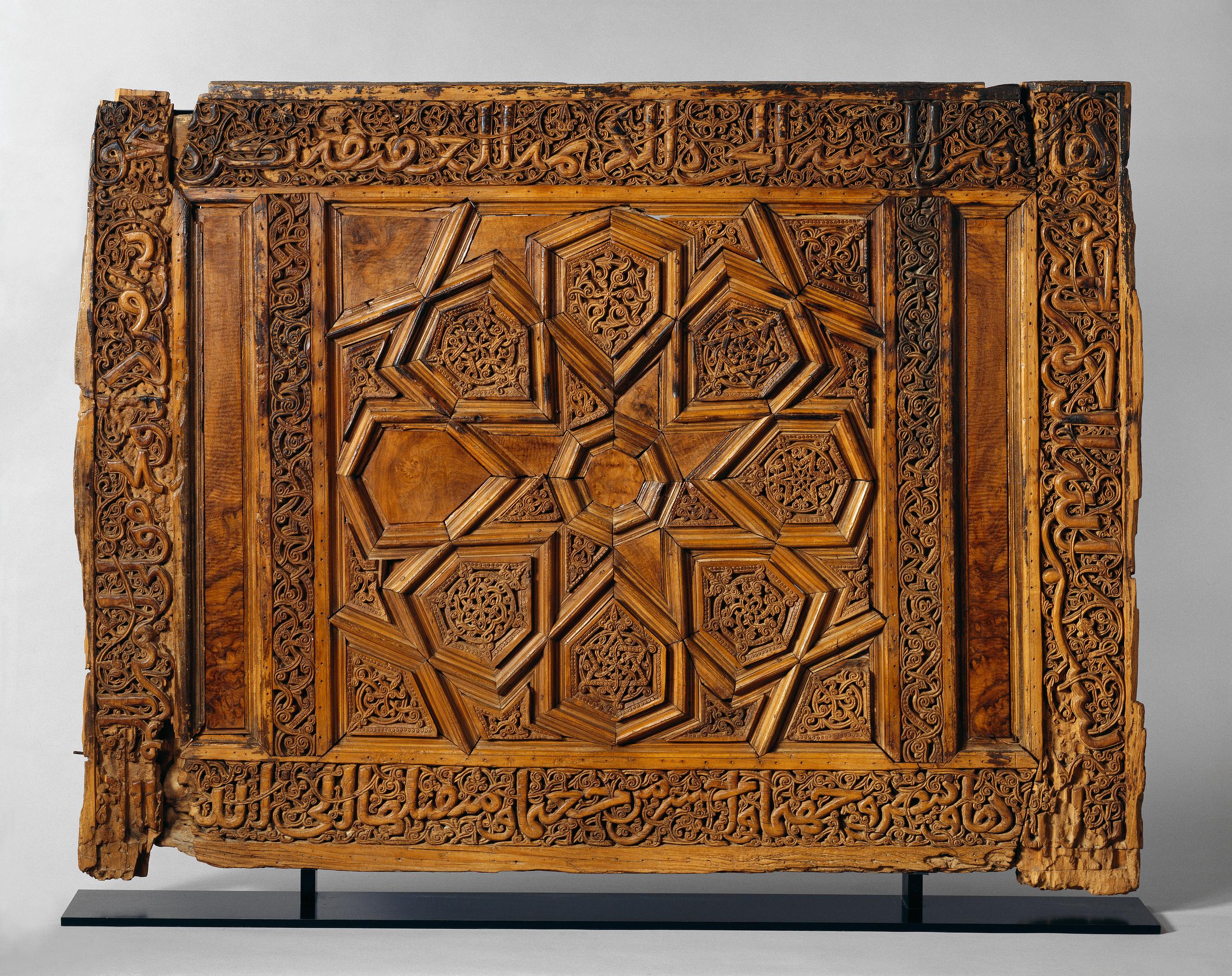
The wooden panel made up one of the narrow sides of a large, box-shaped structure, called a sanduq, that was placed over a grave as a monument to the deceased.
Both the central section’s polygon panels and the inscription bands were masterfully carved. Entwined foliage on these bands forms the background for a cursive inscription that flows in great, thick letters, as if it had been squeezed from a tube.
The script is linked with the foliage by tendrils that wind up and down around the letters, creating a complicated structure of interwoven layers. The inscription identifies the deceased as “Bikra, the daughter of Ishaq, the son of Mardawij.”
Both the central section’s polygon panels and the inscription bands were masterfully carved. Entwined foliage on these bands forms the background for a cursive inscription that flows in great, thick letters, as if it had been squeezed from a tube.
The script is linked with the foliage by tendrils that wind up and down around the letters, creating a complicated structure of interwoven layers. The inscription identifies the deceased as “Bikra, the daughter of Ishaq, the son of Mardawij.”
Published in
Published in
Sheila S. Blair and Jonathan M. Bloom (eds.): Cosmophilia. Islamic Art from the David Collection, Copenhagen, McMullen Museum of Art, Boston College, Boston 2006, cat.no. 116;
Catherine B. Asher: Delhi's Qutb complex : the minar, mosque and Mehrauli, Mumbai 2017, fig. 1.9, p. 19;
Brian Wichmann, David Wade: Islamic design: a mathematical approach, Basel 2017, fig. 17.2, pp. 186-187;
Catherine B. Asher: Delhi's Qutb complex : the minar, mosque and Mehrauli, Mumbai 2017, fig. 1.9, p. 19;
Brian Wichmann, David Wade: Islamic design: a mathematical approach, Basel 2017, fig. 17.2, pp. 186-187;