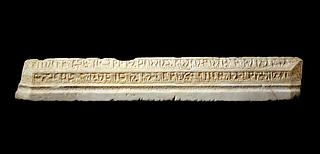
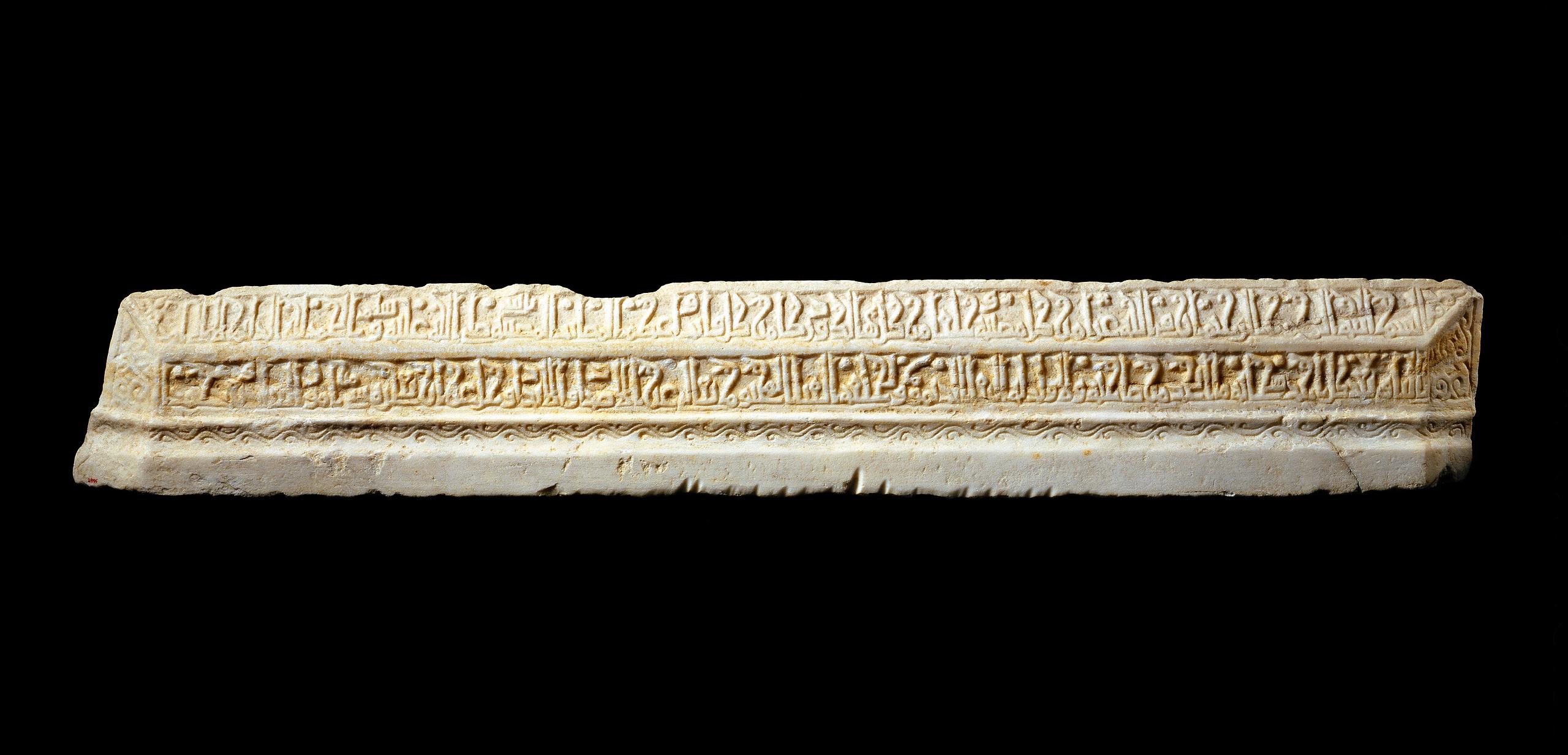
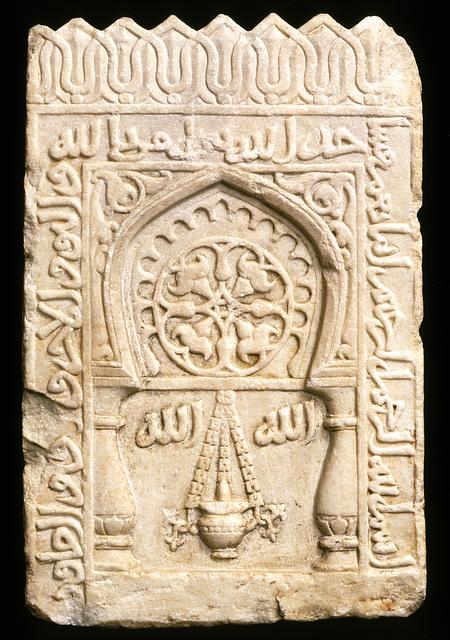
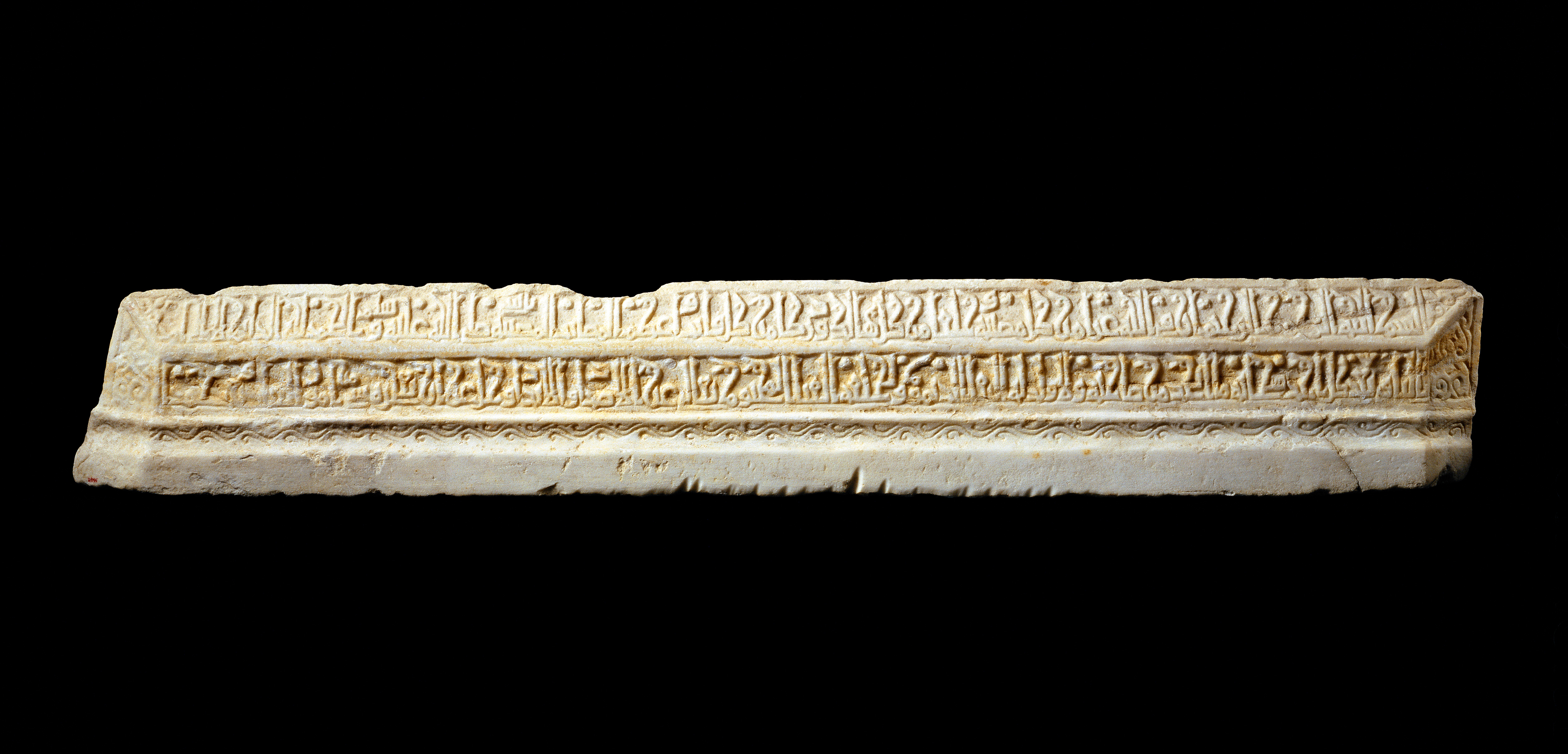
Tombstone, marble, carved with a Kufi inscription
Tunisia; 1072
L: 134; W: 10.5; H: 21 cm
Inventory number 3/1996
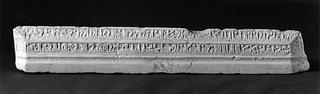
The tombstone is one of a group that is known from the Tunisian and Sicilian regions from around the 11th-12th century. It has an oblong, prismatic shape that mimics a sarcophagus with a hipped lid. The ends are pointed, perhaps to create the effect of perspective, so that both ends of the sarcophagus can be seen simultaneously from the long side.
In addition to passages from the Koran, the inscription in what is called the floral Kufi style tells us, “This is the grave of Mihna, daughter of Musa ibn Umran al-Uthmani. She died on Wednesday at noon on the last day in the month of Du’l Qadi in the year 465” – which corresponds in the Christian calendar to August 7, 1072.
In addition to passages from the Koran, the inscription in what is called the floral Kufi style tells us, “This is the grave of Mihna, daughter of Musa ibn Umran al-Uthmani. She died on Wednesday at noon on the last day in the month of Du’l Qadi in the year 465” – which corresponds in the Christian calendar to August 7, 1072.
Published in
Published in
Kjeld von Folsach: Art from the World of Islam in The David Collection, Copenhagen 2001, cat.no. 388;
Assadullah Souren Melikian-Chirvani (ed.): The world of the Fatimids, Aga Khan Museum, Toronto [2018], p. 355;
Assadullah Souren Melikian-Chirvani (ed.): The world of the Fatimids, Aga Khan Museum, Toronto [2018], p. 355;