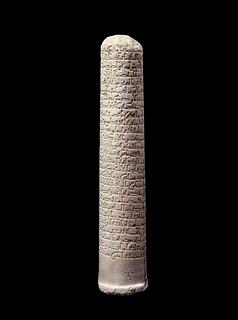
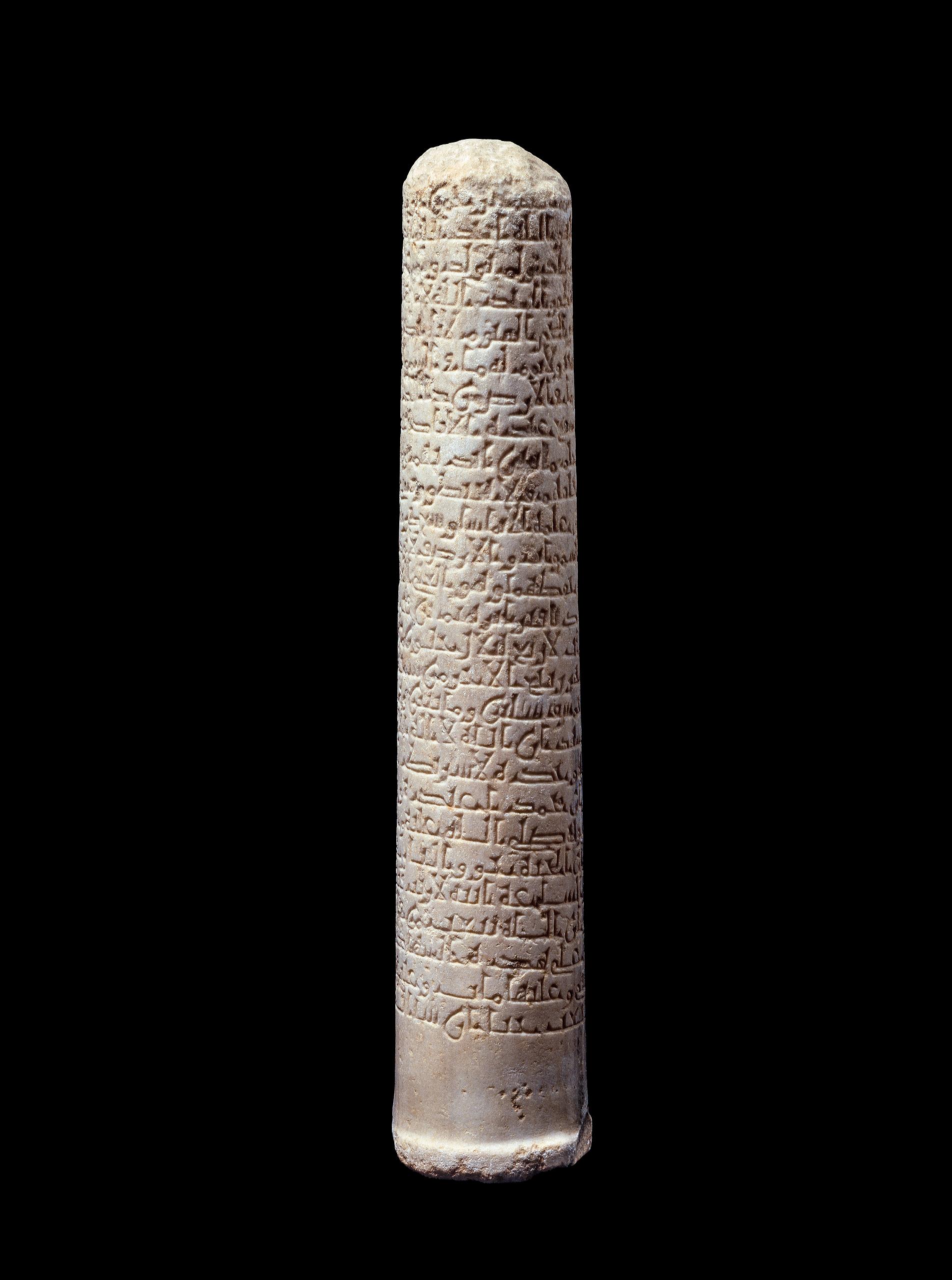
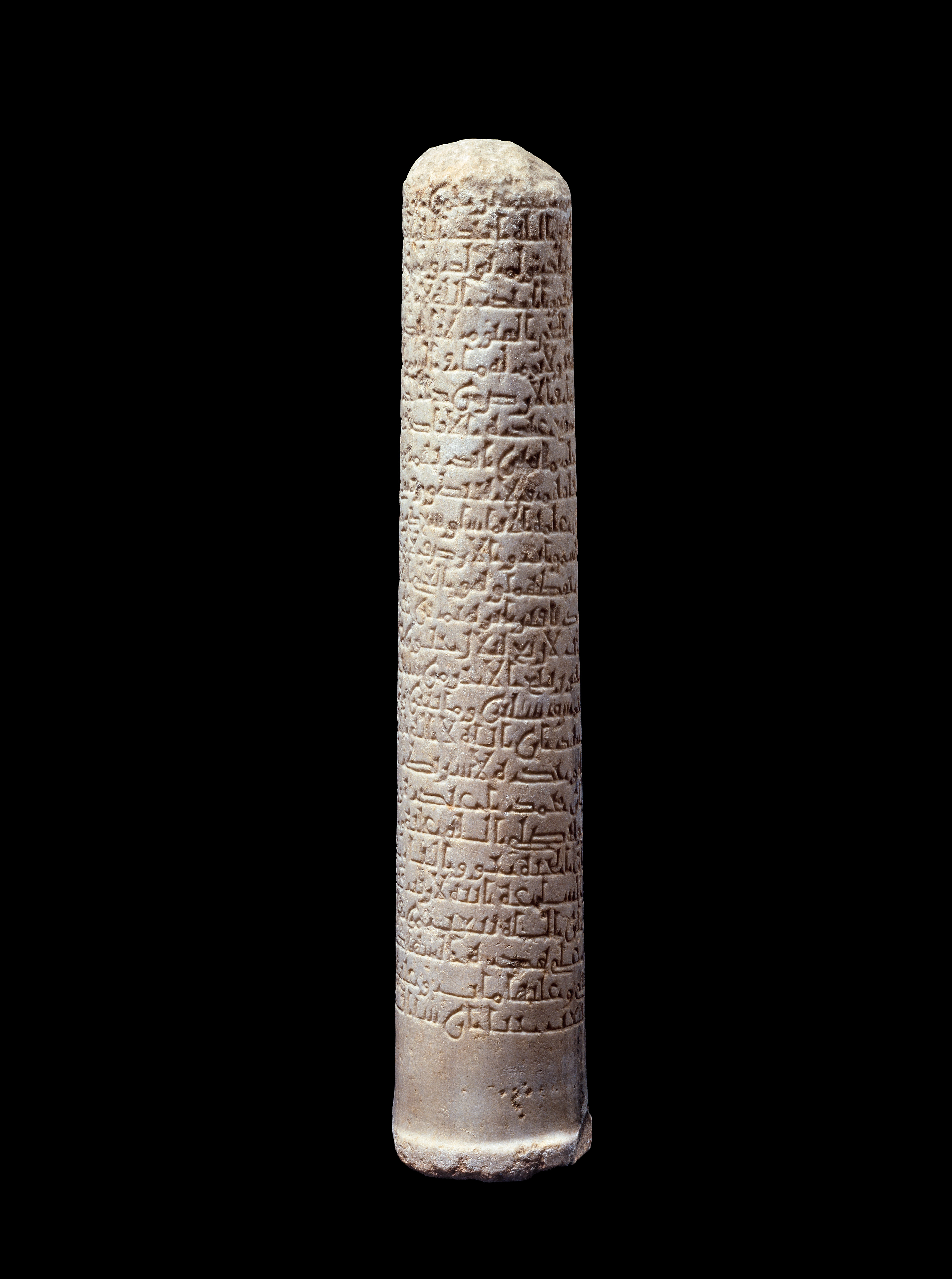
Stele, marble, with a carved Kufi inscription
Tunisia; Rabia al-akhar 265 H = December 878
H: 90 cm
Inventory number 4/1994
The stele belongs to a group that was erected in cemeteries in Kairouan in Tunisia in the 9th century, making use of the shafts of antique marble columns that were found in abundance in the area, which was previously a Roman province. A Kufi inscription was carved on the stele with the appropriate passages from the Koran, the name and death date of the departed, and the profession of faith.
This stele was erected to Ibraham ibn Muhammad, who died in December 878. At this point, the Tunisian lands were ruled by the Aghlabids, and Kairouan, with its great mosque, was one of the most important theological centers in North Africa.
This stele was erected to Ibraham ibn Muhammad, who died in December 878. At this point, the Tunisian lands were ruled by the Aghlabids, and Kairouan, with its great mosque, was one of the most important theological centers in North Africa.
Published in
Published in
Kjeld von Folsach, Torben Lundbæk and Peder Mortensen (eds.): Sultan, Shah and Great Mughal: the history and culture of the Islamic world, The National Museum, Copenhagen 1996, cat. 191;
Kjeld von Folsach: Art from the World of Islam in The David Collection, Copenhagen 2001, cat. 387;
Joachim Meyer, Rasmus Bech Olsen and Peter Wandel: Beyond words: calligraphy from the World of Islam, The David Collection, Copenhagen 2024, cat. 113, p. 284;
Kjeld von Folsach: Art from the World of Islam in The David Collection, Copenhagen 2001, cat. 387;
Joachim Meyer, Rasmus Bech Olsen and Peter Wandel: Beyond words: calligraphy from the World of Islam, The David Collection, Copenhagen 2024, cat. 113, p. 284;